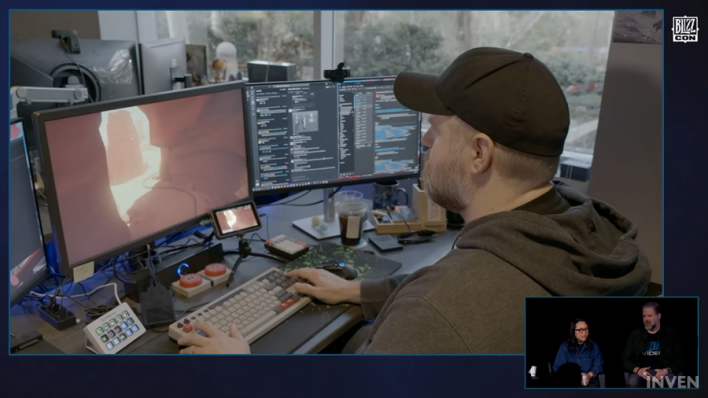
The importance of trailers in the gaming industry hardly needs emphasizing. A well-crafted trailer can instantly captivate gamers with just a few minutes of video. This is why game developers pour their absolute soul into trailers, which serve as the debut stage for their titles.
However, a significant gap from the actual game is problematic, as it can easily lead to criticism of 'trailer fraud.' Minimizing the gap with the real game while showcasing a compelling look that makes gamers who watch the video want to play it themselves is the biggest challenge gameplay trailers face.
Blizzard is widely recognized as a master of trailers. From various expansions of World of Warcraft to Overwatch and the latest title, Diablo IV, the studio has consistently captivated gamers with impactful trailers whenever a new project is unveiled.
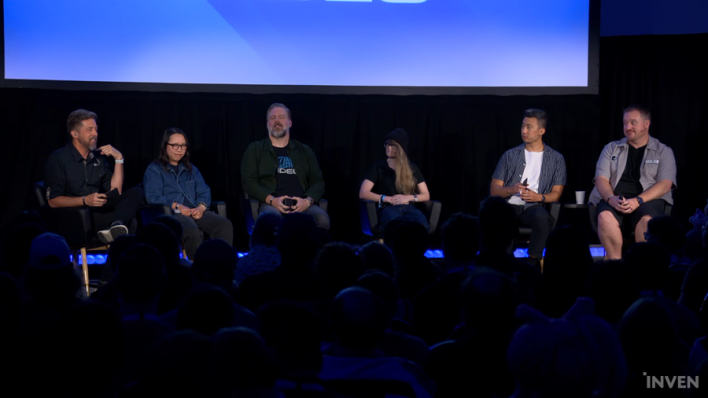
At BlizzCon 2026, a session titled 'TrailerCraft' was held to offer a glimpse into Blizzard's trailer production know-how. Project directors and game capture artists from Blizzard Video introduced the tools and workflows they use in actual production, explaining the process behind completing a single gameplay trailer.
Looking Like the Game, but Looking Cooler Than the Game
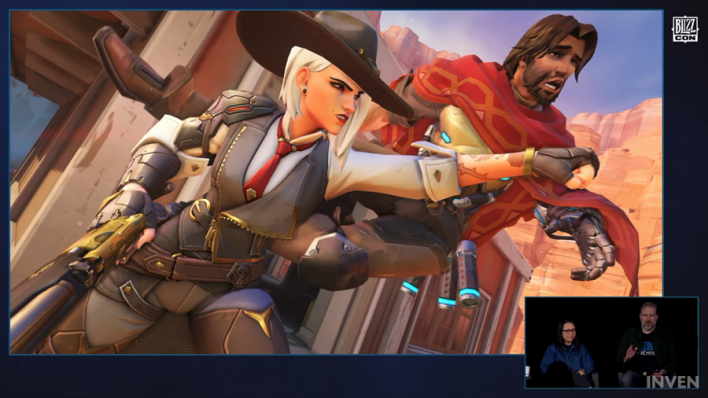
Blizzard Video is an organization comprising about 50 artists. It produces video content tailored for various platforms and purposes, including gameplay trailers, streams, console footage, social media content, and in-game videos. The first point they emphasized was the difference between a 'gameplay trailer' and standard cinematic videos.
Unlike pre-rendered cinematics or in-game cutscenes that use pre-built 3D models and sets, gameplay trailers fundamentally utilize assets existing in the actual game. They take elements used in the real game—such as characters, environments, animations, voice lines, and sound—and present them in a more dramatic fashion.
Ultimately, the goal is to create something that 'looks and feels like the game while appearing even more impressive than the actual game.' Without straying too far from what players will encounter when they first launch the game, they must effectively deliver the game's charm and key features within a short video.
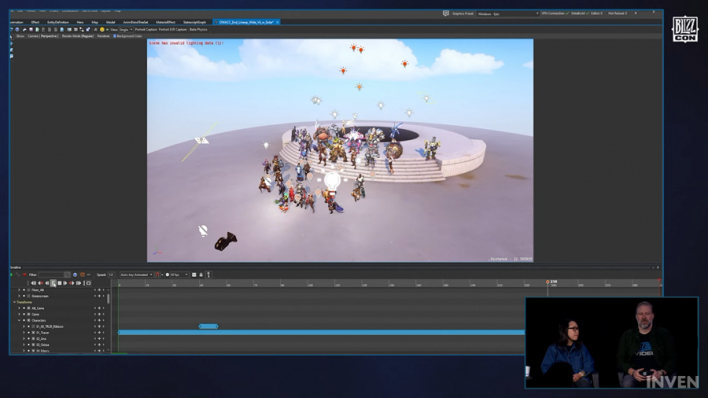
The problem is that this work does not begin after the game is finished. Capture artists at Blizzard Video often work on games that are actively in development. It is common for them to encounter environments made of grey blocks, temporary animations, or unfinished effects and textures.
Because of this, simply being good at playing games is not enough for a game capture artist. While playing the game themselves, they must understand new areas, characters, and abilities to decide what to show, while simultaneously finding the best camera positions and movements from a cinematic perspective.
In fact, camera angles and UIs designed for player convenience in the actual game can sometimes get in the way during a trailer. Instead of a camera that helps players easily assess combat situations, a viewpoint that highlights character movements or attacks may be required, and UI elements needed for gameplay often have to be removed for a cleaner shot.
Internal Tools Built to Create Desired Shots
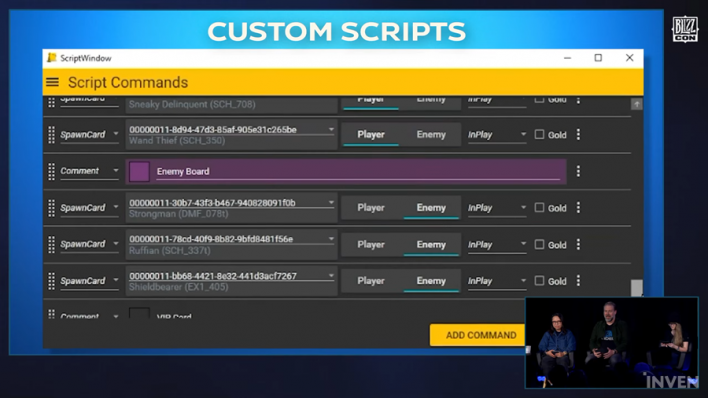
To achieve this, Blizzard utilizes a variety of internal tools. These range from fly and ghost modes to god mode, infinite resources, and the ability to freely spawn characters and items. This allows artists to move to locations inaccessible during normal gameplay or recreate specific situations as many times as needed.
In Hearthstone, artists can adjust mana and cards at will to recreate specific scenarios, while in World of Warcraft, they can place desired characters and creatures at specific locations and freely customize their skins or equipment.
Slow-motion features are also used effectively. In unoptimized development builds, complex combat scenes are filmed at slow speeds and then adjusted back to the desired speed during editing. This allows them to secure more precise action even in unstable development environments.
There are also times when in-game elements are directly modified. A prime example is lighting. While natural lighting is important for an environment where players spend hours playing, trailers require dedicated lighting to separate specific characters from the background or emphasize key targets.
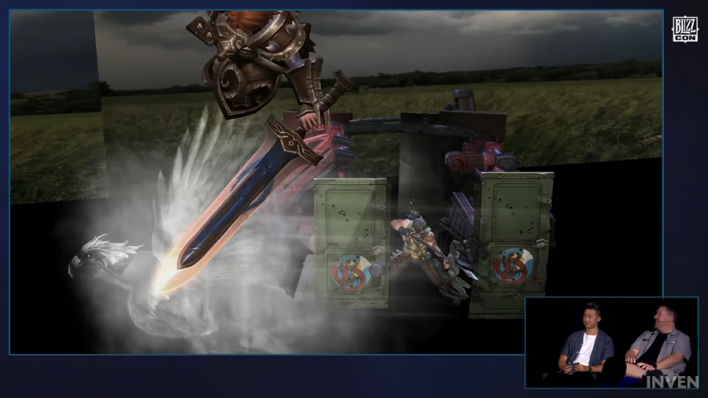
When necessary, map editors are used to create spaces or objects that do not exist in the game. In some Heroes of the Storm trailers, elements non-existent in the actual game—such as a wrestling ring or a helicopter—were custom-built in collaboration with the dev team and combined with existing assets to craft a cohesive scene.
What matters here is less about 'the ability to create what doesn't exist' and more about 'how to utilize what already exists.' By combining assets present in the real game in different ways and custom-building only necessary elements, they produce scenes that could never be seen in regular gameplay.
What Took 13 Artists 8 Hours Is Now Done by One
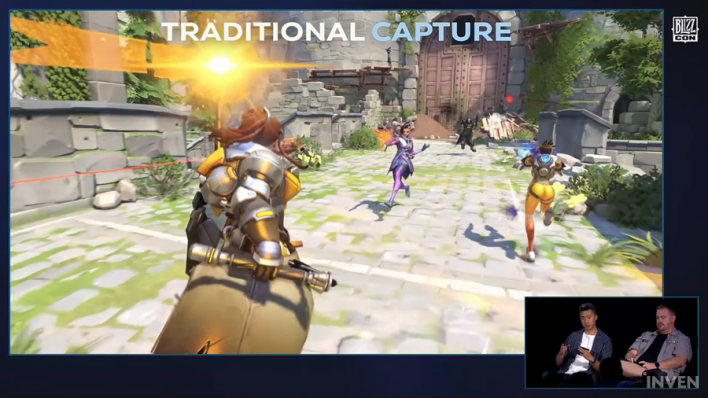
In Overwatch, where multiple characters appear simultaneously, more complex techniques are required. In the past, each hero appearing on screen was controlled by a separate capture artist. If even one person missed their timing, the entire scene had to be re-filmed from scratch. In fact, a 6-v-6 scene for Overwatch in 2018 required 13 artists and took 8 hours.
To solve this, Blizzard developed a tool called 'Audition Entity.' This method allows a single capture artist to sequentially record each hero's actions and stack them into a single scene. After recording the first hero's action, the second hero reacts to that movement, followed by adding a third hero's actions to complete the shot.
Scenes created this way are refined in detail using a 'Sequencer.' Artists can adjust character animations, camera movements, effects, and timing, with the added benefit of being able to accurately replay the exact same scene at any time.
Utilizing this tool allows for cinematic moments that cannot be seen in the actual game. By taking existing character animations and camera work, stitching different scenes together, and combining character movements with camera angles in new ways, artists can generate completely fresh action sequences using assets already in the game.
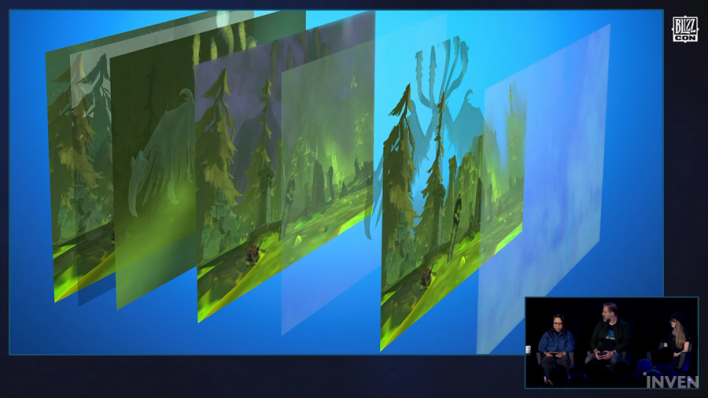
Extracting data for post-production is another critical step. Blizzard uses passes like Depth Pass to separate characters from backgrounds, adding depth of field and various visual effects. These extracted layers undergo work by the graphics team to be finalized into the finished trailer shot.
From Rough Sketch to Final Scene
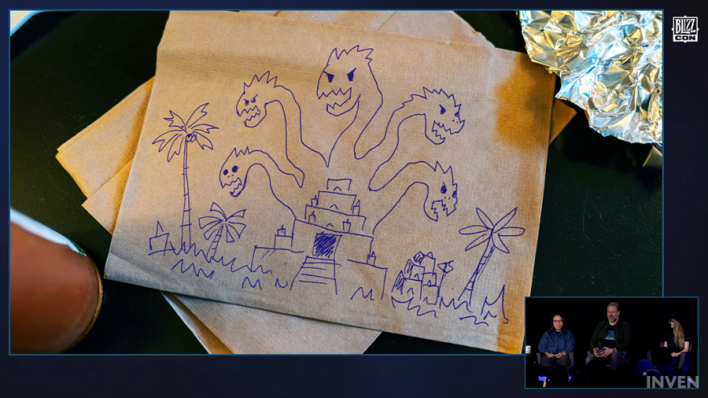
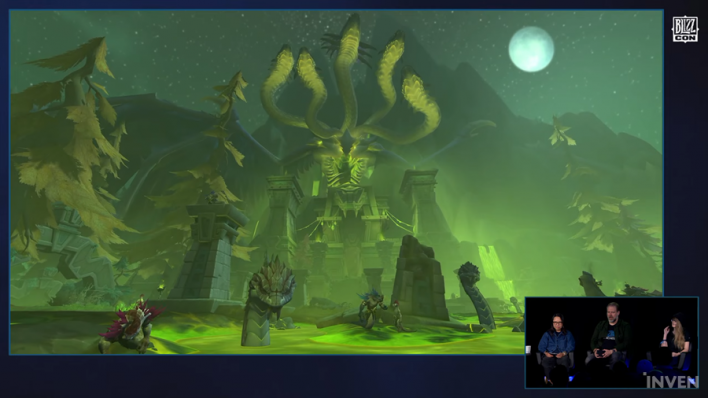
The session also revealed the process behind creating an actual World of Warcraft trailer. To portray the new raid boss Ulrotek as a massive monster, the team started with a simple sketch before setting up suitable background environments and camera movements.
Following feedback that the scene looked empty, surrounding enemies and environmental elements were added. Furthermore, Ulrotek—which consists of multiple body parts—was manipulated piece by piece to function as one gigantic creature, combining various animations to implement movements never seen in the base game.
Finally, multiple depth passes alongside character and background layers were extracted, passing through post-production by the graphics team to complete the final scene. There was a striking difference between the initial rough sketch and the scene used in the actual trailer, illustrating just how much iteration and collaboration are required to finish a single shot.
'Authenticity' Is as Important as Cool Scenes
Another element Blizzard emphasized was 'authenticity.' No matter how spectacular a scene is created, it must not stray too far from the actual game. After all, a gameplay trailer is ultimately a video showing the game players will actually experience.
Of course, not every project goes perfectly. During the presentation, the speakers humorously shared instances where weapons or equipment different from the actual game appeared in trailers or unintended elements were included, sparking wild community theories. Even minor mistakes that occur while trying to showcase the game at its best rarely escape the sharp eyes of gamers.
In the end, creating a gameplay trailer is far from simply pressing the record button while playing a game. It is a process of deeply understanding a game in development, controlling various in-game elements at will, and composing shots through a cinematic lens—even modifying the game itself if necessary to bring out its most compelling look.
The core of game capture, as described by Blizzard Video, lies in balancing between showing the game 'as it is' and 'showcasing its charm in the best possible light.' Countless dev tools, capture techniques, and artistic instincts ultimately aim for a single goal: making players who watch the trailer feel, "I want to play that game myself."