This article is the third installment following Making Games with Vibe Coding Part 1 and Part 2.
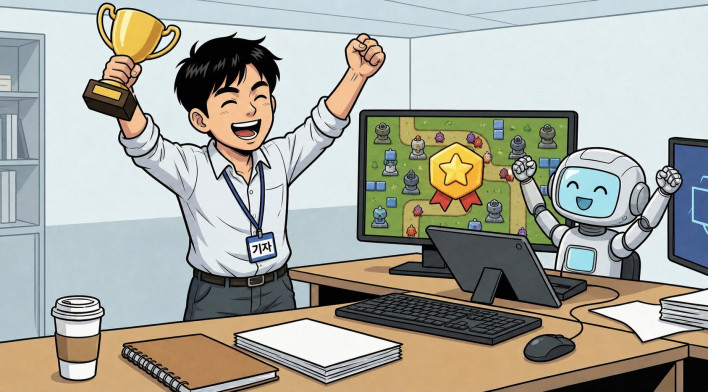
There was good news.
'Twilight Mountain Defense,' a game I created, won the Grand Prize at the 'In-house AI Game Development Contest 2026.' Since I was publishing a series of articles under the theme 'Making Games with Vibe Coding,' this contest came with unusually heavy pressure.
I had never learned game development or coded before, but because I felt I had put in enough effort, I really wanted to place in the competition. The results turned out much better than expected. To be honest, I was thrilled.
However, the joy didn't last long.
"Congratulations. Also, there's an AI game development event coming up in August called 'OpenAI Game Builders Seoul.' You should enter with that game."
"Pardon?"
"We'll give you time off from work duties and support you with AI tools."
"...Okay."
And just like that, the game development project I thought was over started all over again.
Deciding to Remake the Grand Prize-Winning Game from Scratch
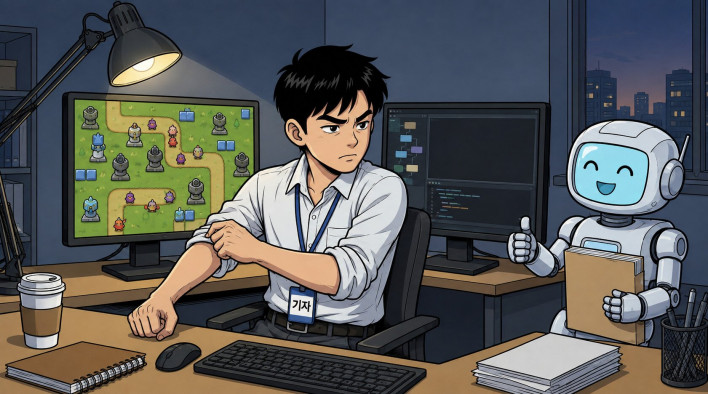
Though flustered, I didn't hate the idea.
Making the first game was genuinely fun. I was completely hooked on the process of shaping it step by step through iterative conversations with the AI, bringing what I imagined to life one by one.
Now I was being offered an opportunity to remake the game with guaranteed work hours dedicated to it. There was no reason to refuse.
The problem was time. There were only about two weeks left until submission. Looking at the entry criteria, simply tweaking the existing game didn't seem like it would cut it.
The event required submitting a game prototype developed with Codex alongside the development experience. While utilizing an existing project was allowed, 'Twilight Mountain Defense' had been built primarily using Claude. So I decided to take this opportunity to rebuild it from scratch with Codex.
Since I was rebuilding it anyway, I decided to try something new. Instead of creating a single HTML file this time, I decided to use a proper game engine. I chose the Godot engine, which has been frequently mentioned among indie developers recently.
My interest in the Godot engine stemmed from an interview I conducted in the past with a solo developer. Having left Nexon to develop games independently, he rated Godot as a fairly good engine for indie game development. The thought of trying it out someday had stuck with me ever since.
Of course, I don't know how to use a game engine (laughs). So the AI had to "do it for me." Fortunately, Codex responded that it could build a web game using the Godot engine.
Now I had two goals to achieve in two weeks.
First, rebuild 'Twilight Mountain Defense' from scratch using Codex.
Second, complete a browser-playable game using the unfamiliar Godot engine.
And so, the development of my second game began.
Coding and Image Generation at Once... The Codex Advantage
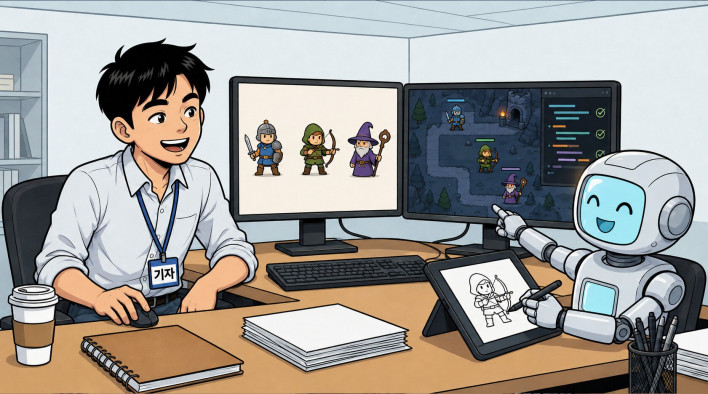
Working with Codex was far better than expected—so much so that I thought, "It can even do this?"
First, building a game with the Godot engine. I didn't even know the difference between nodes and scenes. After downloading the Godot engine and providing Codex with the installation path and project location, Codex executed the engine directly to carry out the work. All I had done was download the engine, but before I knew it, I was making a game with a game engine. Haha.
Another great aspect was the seamless workflow. When creating the original game, I relied on Claude for code and game systems, while graphics were generated using separate image AI tools like Grok. Switching back and forth between two AIs was extremely tedious. Downloading images, removing backgrounds, and adjusting sizes were all done manually. I had to feed those images into Claude, get feedback, and repeat the generation process multiple times.
With Codex, everything from character design to background removal, resizing, game integration, and code editing happened within a single workflow. When I requested, "Make the Pyromancer throw flames and the Cryomancer spread ice," it adjusted not only the visuals but also the attack effects and damage mechanics altogether.


There was also a huge difference in graphical work.
Previously, I had to manually remove the background of AI-generated images myself. Lacking professional image-editing skills, background colors were often left around character outlines, or parts of hair and weapons got cut off. Enlarging the images in-game made those flawed cutouts stand out even more clearly.
This time, I entrusted image creation, post-processing, and game integration all to Codex. Comparing character proportions and sizes against each other, scaling up small units, and scaling down large units were all handled based on the actual in-game display.
As a result, character outlines became much cleaner, and despite differing tiers and classes, the art style gained a cohesive look as if from a single unified game.
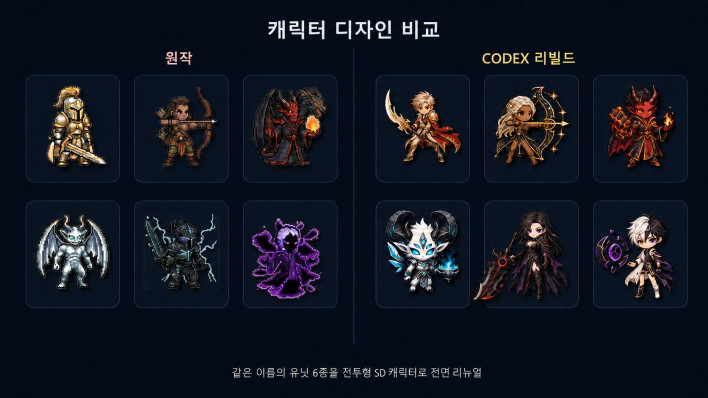
I didn't just change the characters. Key moments that players remember most vividly—such as obtaining high-tier units or boss entrances—were also revamped.




While Codex was superior in almost every aspect compared to before, it had weak points as well. What I disliked in particular was the BGM.
"Keep the original melody, but arrange it like a game orchestra."
Moments later, the music played—and it sounded like a ghost wailing.
"This isn't it. Try again."
Even after regenerating it several times, the music barely improved. While part of it was that the original game's cheap arcade BGM vibe happened to hit just right, it made me realize that crafting and selecting a truly memorable melody is still an area where human intuition matters. After all, choosing what sounds good to human ears is ultimately up to us.
Lastly, one thing I must mention is Codex's debugging capability. Because it tested execution and checked for errors after every task before delivering results, instances where I discovered bugs and had to request fixes dropped drastically compared to before. Its generous usage limit was another compelling advantage that won me over.
The Completed Game... Codex Calculated a 70% Chance of Reaching the Finals
After around 70 iterations of minor and major tweaks, I completed the game.
Ahead of submission, I asked Codex:
"What are the chances of passing the first preliminary round with this game?"
Codex evaluated the game in considerable detail.
It cited as strengths that the game could be played directly in a browser and that core gameplay hooks—summoning, combining, obtaining Mythic tier units, and clutch moments—were clear. It analyzed that compared to the original, character models, monsters, attack effects, UI, and boss staging were vastly improved, and that actual gameplay footage along with the creation narrative ("A reporter with zero coding experience rebuilt a game with Codex") were compelling enough to attract judges' interest.
There were weaknesses too. As the Random Defense genre is inherently familiar, its first impression might lack perceived originality; in late-game stages, the sheer volume of units, monsters, and visual effects cluttering the screen could cause visual clutter; and as a web build made in a short period, stability and optimization remained variables.
Synthesizing these factors, Codex's prediction was as follows:

It didn't just throw out numbers. It explained why there was a chance of passing, where points might be deducted, and what needed further refinement right before submission. The analysis was so detailed that I began to harbour some expectations.
However, that 70% hid a key underlying assumption. With limited public information, Codex referenced similar hackathon cases and assumed a participation size of around 80 teams. Since this contest selected 40 teams for the finals, it simply assumed nearly half would advance.
Anxiously Awaited Result: Elimination... The Competition Was Far Tougher
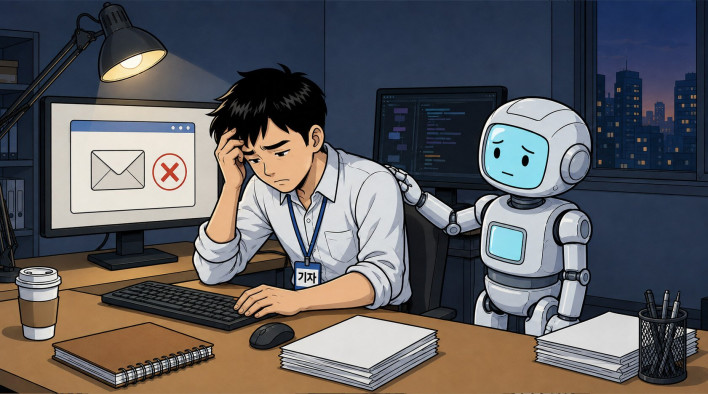
After waiting through the entire weekend, the result I received was elimination.
It was disappointing. I had spent a long time rebuilding the game and was confident it was better than the original. Right after checking the result, I wondered if the commonality of the Random Defense genre and weaknesses in originality had held me back.
Of course, I couldn't know the exact reason for rejection. The evaluation criteria disclosed by the organizers consisted of five areas: playability, originality, collaboration with Codex, release potential, and presentation. It was likely selected based on a synthesis of multiple factors rather than a single metric.
Only after the elimination was confirmed did I learn that the scale of participation was far larger than expected. According to social media posts by OpenAI personnel, over 1,000 teams applied for 'OpenAI Game Builders Seoul.' Based on the over 1,000 teams metric, the simple selection rate for the 40 finalist teams was under 4%, with competition ratio exceeding 25 to 1. It was an entirely different scale from my initial assumption of 40 out of 80 teams.
Furthermore, many active game developers reportedly participated in teams. Hearing this made me realize how naive I was—like a frog in a well—to expect reaching the finals participating alone.
Still, I'm Glad I Remade It
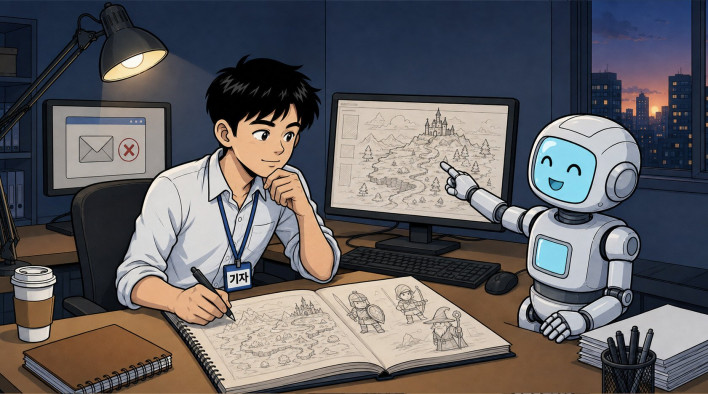
Although the outcome was disappointing, the journey was enjoyable.
It was a truly satisfying challenge in that I took a game I lovingly created and evolved it this far. I completed a web game using the Godot engine for the first time, remade every character and monster, and implemented combinations, augments, boss presentations, automated testing, and an EX Infinite Mode. While making the game, I was completely absorbed, minding nothing else. With a bit of exaggeration, I felt that making the game was even more fun than playing it myself.
It would have been even better to advance to the finals, but one cannot always get the desired outcome. Now that I've discovered the joy of making games, I feel I can try tackling other genres next time.
The series on AI game development with vibe coding across three parts seems to have reached its conclusion. It took a long time, yet resulted in only three articles. I am left with some regret thinking I could have been more diligent or written more entertainingly.
Still, I am glad to wrap up the series with a tangible result. If given another opportunity to develop a game through vibe coding someday, I would gladly take on the challenge again. Thank you to everyone who followed along with this journey.


Sort by:
Comments :0