
Valve has advised developers concerned about AI clone games to focus on building a community and delivering steady updates. The company explained that the trust built with users serves as the strongest barrier against clones, and that features and personality added continuously through updates cannot be easily copied like a single mechanic. Speaking at the developer event "Steam Indie Connect" on October 27, Valve's Steam business team stated that "making the real version the best version" has long been Valve's guiding principle.
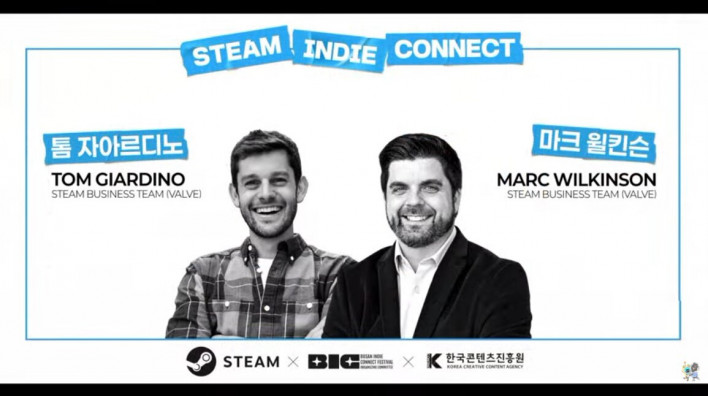
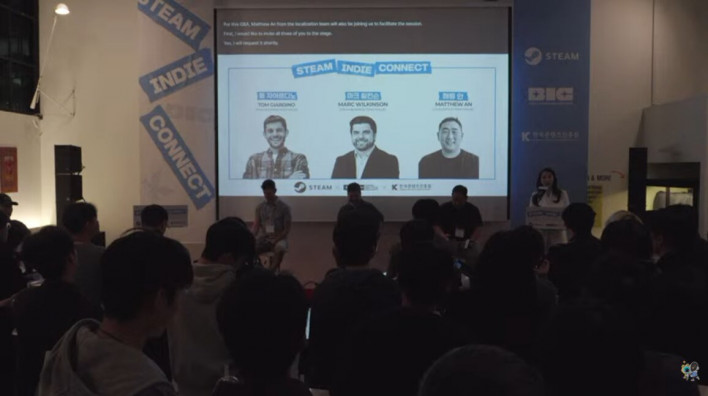
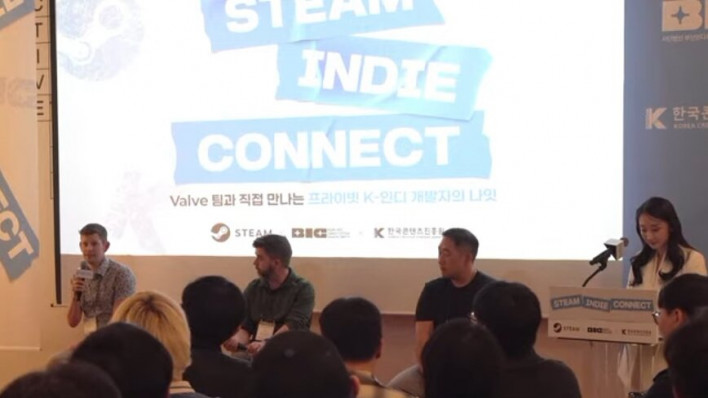
The event was co-hosted by Valve, the Busan Indie Connect Festival Organizing Committee, and the Korea Creative Content Agency (KOCCA). Tom Giardino and Marc Wilkinson from Valve's Steam business team took the stage, while Matt from the localization team—which oversees translations for Steam and Valve games in 30 languages—joined for the Q&A session. Amid an influx of AI-generated games, it was an occasion where Valve staff directly explained to Korean developers how Steam handles visibility and curation.
"Launch Is Not the Finish Line, but the Starting Line"
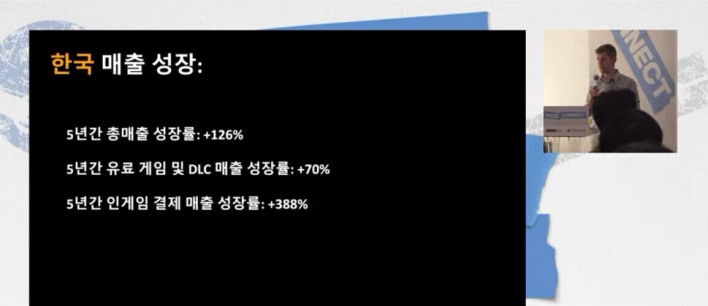
Tom Giardino opened the presentation with an overview of Steam's current status. According to the presentation materials, Steam, which launched on September 12, 2003, recently recorded a peak of 43.5 million concurrent users worldwide. Total Steam revenue in Korea grew by 126% over the past five years, with premium game and DLC revenue increasing by 70% and in-game purchase revenue surging by 388% over the same period.
He went on to walk through the launch preparation process—from coming soon pages, demos, Next Fest, and playtests to setting official release dates and build reviews—stating that "launch feels like the finish line, but it is actually the starting line." He also advised developers not to rely solely on Steam, but to utilize consoles, other PC stores, Discord, and social media together.
Marc Wilkinson introduced new tools. Key examples included the "Wishlist Data API," which delivers wishlist data by period, country, and language based on specified App IDs and date ranges, and the "Personalized Calendar," which became an official feature after testing in Steam Labs. The Personalized Calendar recommends upcoming titles wishlisted by players with similar gaming preferences; games must have an official release date set to be visible here.
Threatening Emails Saying "We'll Clone It with AI and Release It First" — Valve's Answer
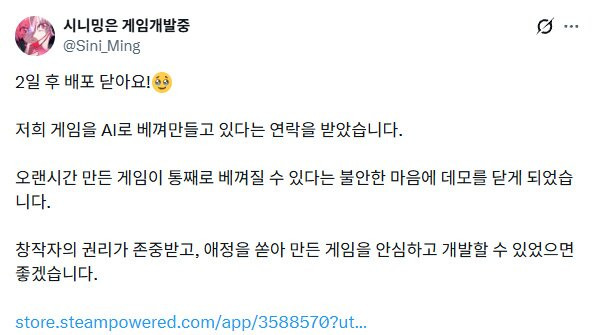
Questions regarding AI cloning began with concrete threats. One developer shared that indie developers have recently been receiving extortion emails threatening, "If you don't pay, we'll copy your game with AI and release it first." While understanding the advice to showcase games before release, the developer asked if Steam had any protective measures in place, noting that such threats make developers hesitate.
Tom Giardino expressed regret, saying he was hearing about such extortion cases for the first time. He then addressed Valve's principles regarding new technologies. "We don't want to be gatekeepers telling developers which tools they should or shouldn't use," he said, emphasizing that whether to use AI in development is a choice for developers to make.
However, he noted that clone games were a problem long before AI. Spotting an interesting concept at Next Fest and quickly making a similar game or chasing trends existed before; AI has simply accelerated the pace.
He outlined two challenges facing developers. The first is community. Setting up a studio homepage, building relationships with players, and cultivating personality and trust serve as the first line of defense against clones, whether AI was involved or not. However, he added that because this takes time and does not happen automatically, it alone is not enough.
The second is continuous improvement. He emphasized that this challenge is equally important whether for a small indie developer worried about AI clones or for Valve operating "Dota."
As evidence, he pointed to Valve's philosophy on anti-piracy. Valve has historically not been aggressive with DRM or anti-piracy measures. Instead, the focus has been on making the legitimate product the best version available, and Valve views AI cloning through the same lens. "Rather than relying on a single mechanism that someone can easily copy," Giardino said, "you must continue to grow your game by adding features, personality, and creativity that stem from your own perspective as a developer."
While drawing a line on extortion itself, he kept communication channels open. He noted that such extortion is closer to an issue for law enforcement rather than one for a gaming platform to resolve. Still, he added, "If you report such cases to us, we want to look into them and help in whatever way we can."
'AI Slop' Hitting Next Fest: "First Two Days Are Random Exposure"
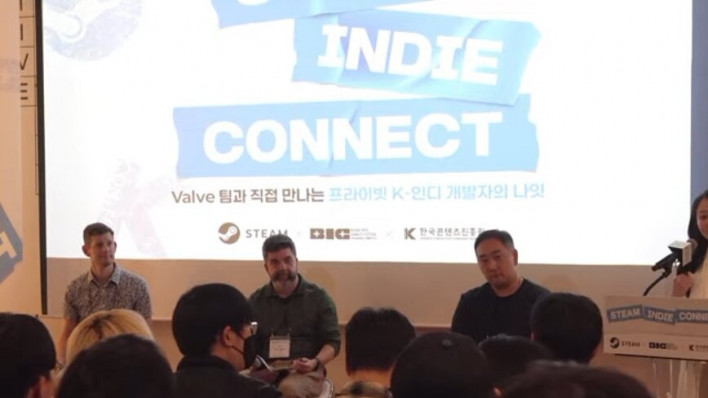
The issue of AI slop (low-quality games made with AI) was also brought up. A developer who recently participated in Next Fest mentioned complaints on community forums and social media regarding the sheer volume of low-quality games, noting that they themselves experienced disappointing results. The developer asked if Valve was aware of this issue and whether solutions would be in place for the next Next Fest.
Marc Wilkinson explained the visibility structure of Next Fest. During the first two days of the event, games are shown to players virtually at random. After that, personalized recommendations kick in, displaying more games that individual players are likely to enjoy and buy. He noted that many articles complaining about a flood of low-quality games were written based solely on what was seen during those first two days.
He also explained why the event starts randomly: to prevent gaming of the system by entering early for instant visibility, and to give every game a fair chance to be seen at Next Fest. "We recognize that as a trade-off, some low-quality games get exposed," he said. "We are fully aware of the situation, and many of our staff are deliberating on how to address this problem."
Tom Giardino pointed out the shift in scale. Just three years ago, Valve had to persuade developers to participate, saying "there are only 50 or 100 titles, so you should definitely join," but now participating titles number in the thousands. "The pendulum has swung to the other side," he remarked.
He also noted that the criteria for success vary from game to game. Some developers rejoice at gaining 10,000 wishlists through Next Fest because it triples their existing count, while others are disappointed after getting 50,000 because it falls short of expectations. "As a platform operator, we cannot define what success means for each individual game," he said, explaining that Valve chose to keep the doors open for both Next Fest and seasonal sales while continuously refining page layouts and arrangements.
He added that these concerns are not new. When "Steam Greenlight" launched about 14 years ago, developers asked if Greenlight games could be filtered out. When "Steam Direct," the current self-publishing model, was introduced, there were requests to add a checkbox to hide Steam Direct titles. Each time, rather than turning developers away or trying to pre-screen good games from bad ones, Valve chose to improve the shopping experience.
"We don't think we're perfect and there is plenty of room for improvement," Giardino said. "However, making Steam a smarter, more dynamic platform rather than restricting developer access is the starting point of our philosophy."
"Wishlists Unrelated to Visibility — A Thermometer for Measuring Marketing"
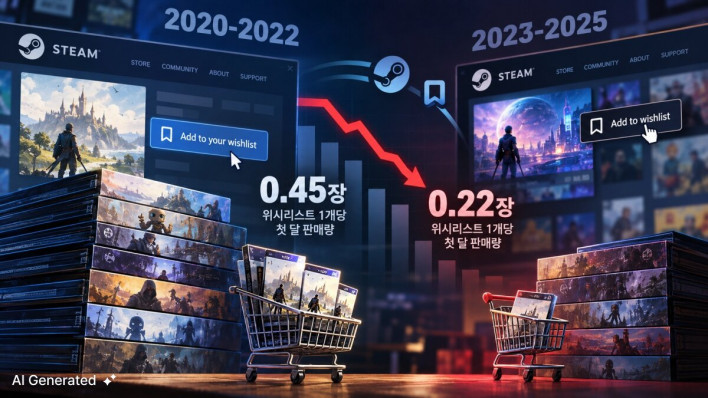
© Source: Game marketing consultant Chris Zukowski
Questions regarding visibility shifted to wishlists and the Personalized Calendar. One developer noted that because Steam's main page historically featured top-selling new releases, studios became fixated on "wishlist farming," elevating the importance of publishers who help with it. Suggesting that the Personalized Calendar's personalized recommendations will become key to indie game exposure, the developer asked about Valve's intentions for growing this feature and what developers should prepare for.
Marc Wilkinson corrected common misconceptions about wishlists. He explained that while wishlists are a good indicator of marketing performance, they do not affect Steam visibility. "What drives exposure is the number of people buying and playing the game," he emphasized. He shared examples of a game with 3 million wishlists at launch that saw declining sales and fell off the top charts due to poor user experience, as well as a game with almost no wishlists that achieved massive success. Advising against wishlist farming, he urged developers to focus on making great games.
Tom Giardino redefined the utility of wishlists, pointing out that many developers do not utilize wishlists sufficiently to measure marketing effectiveness. For instance, checking whether wishlists increased after running ads, posting TikTok videos for a week to gauge response, and then testing different methods on other platforms. This is because a strategy that worked for a studio's first game might not work years later for its second. "Treat wishlists not as a magic number you must hit, but as a thermometer and speedometer to gauge the effectiveness of your actions," he advised.
He also detailed the design intent behind the Personalized Calendar. While only select users experienced it during its Steam Labs phase, transitioning into an official feature will generate significantly more player response data. He explained that this feature differs from other Steam tools in that it centers on recency. While top store recommendations or top-sellers lists include games from years ago like 'GTA 5' or 'Tactical Breach Wizards,' the Personalized Calendar is virtually the only space dedicated exclusively to newly released titles.
He did not hide its limitations either. Once one to two weeks pass after launch, Personalized Calendar exposure does not return. After that comes the hard work of sales, DLC, and game updates. Nevertheless, he said the Personalized Calendar is designed to reach deep into Steam's back catalog. "It doesn't matter whether a game is a global top seller. What matters is whether there are sufficient signals that it will appeal to you personally," he said, committing to continuously refine the feature so games don't need to be top sellers to connect with their audience.
Dilemmas Over Tags and Solo Options: "A Design Choice, Not a Business Choice"
Questions regarding tags were also raised. A developer working on a game centered around co-op for two or more players asked whether a single-player tag or solo option significantly impacts wishlist conversion rates or refund rates, and how best to communicate on the store page if the game remains multiplayer-only.
Marc Wilkinson replied that specific genres or features do not guarantee success. Steam hosts players who enjoy VR, single-player, and multiplayer games alike, and titles that strictly require playing with others, such as 'It Takes Two,' have achieved great success. Ultimately, he said, it comes down to game quality.
Tom Giardino noted that major titles like 'Marathon' and 'ARC Raiders' face the same dilemma balancing players who want to play solo versus those who play with friends. He stated that because Valve has not analyzed wishlist conversion rates by genre or game type, he could not confidently say whether adding a single-player tag increases conversions. Instead, he cited Valve's 'Left 4 Dead' as an example. While best played with three friends, not everyone always has friends to join, making it a design challenge to deliver a near-multiplayer experience even for solo players.
He advised that if a studio has the budget and resources to build AI bot teammates that deliver a multiplayer-like feel, they should take that path; if not, they should make a decisive cut. "In the end, it's a design choice, not a business choice," he said, adding that having a single-player checkbox is not a prerequisite for success.
He also shared tips for selecting tags. Giardino suggested referencing competing titles, as their tags, supported languages, and features are nearly all public. If making a game similar to 'XCOM' or 'Star Wars: Zero Company', he advised examining not only those flagship titles but also lower-profile games that compete more directly. When top tags are broad categories like Action, Indie, or Strategy, around 100,000 games share those same tags, so it is better to find specific tags that highlight the game's unique identity.
He also recommended partnering with developers of competing games—asking whether Brazilian Portuguese support was effective, which translation agency was used, cross-promoting through "collaborative bundles," or recommending similar games to each other's fanbases. He noted that the global indie developer community is surprisingly open.
86% of Sales from Korea: "Find Local Champions"
Concerns about expanding globally were also brought up. A developer who released a co-op multiplayer game in Early Access shared that while sales grew, 86% came from Korea. Despite engaging influencers in Japan, Germany, and the U.S., driving overseas sales post-launch through Steam's built-in features proved difficult, leading the developer to ask how to promote an already released game abroad. When Tom Giardino inquired about language support, the developer replied that the store page was translated into every language supported by Steam, and the in-game text was localized into 16 to 17 languages beyond Korean, complete with LQA.
Tom Giardino acknowledged language as a major barrier, but noted that some games naturally perform extraordinarily well in specific countries due to the nature of their content—such as farming simulators selling heavily in Germany or Poland even without German or Polish support. However, he noted such cases are rare and engaging games generally enjoy balanced popularity across regions. Marc Wilkinson highlighted regional pricing, noting that while developers set prices, Steam operates a regional pricing recommendation system for small teams lacking resources to monitor markets individually, making region-appropriate pricing a factor in success.
"Expanding beyond your home player base is inherently difficult," Giardino reassured. "It doesn't mean your team is doing something wrong." He noted that Brazilian studios, too, often see a large portion of their player base coming from Brazil. He observed that games succeeding beyond their home market usually had local "champions" in new regions—not agency marketing or paid ads, but local streamers, journalists, or YouTube reviewers. He advised finding local figures in large markets like Germany, the U.S., Canada, Australia, France, and China who will champion the game.
He also stressed localizing update announcements. He pointed out that games offering multi-language support at launch often post Steam Event notices or feature updates solely in English, missing out on players in countries like Korea and Japan.
Matt affirmed that starting with store page translation was the right call. He likened localization to a "chicken-and-egg" problem: it's unclear whether there are no customers because of a lack of translation, or whether customers will appear once localized, carrying financial risk. Therefore, he recommended gathering as much data as possible using tools like the Wishlist Data API to inform decisions. He also noted the shift where AI translation enables adding 30 languages at once. Furthermore, adding that market conditions vary across regions like Japan, Thailand, and Indonesia, he advised researching whether a genre resonates in a given market before deciding on launch plans and resource investment.
Publisher and Steamworks Permissions: "Many Features Already Exist"
Friction around using Steamworks with publishers was also discussed. One developer pointed out that indie studios lacking marketing and localization experience frequently sign with publishers, but because Steamworks is tied to account structures, unnecessary information or personal data often gets exposed to publishers. The developer suggested a feature allowing developers to grant publisher permissions strictly within the scope of their contract.
Tom Giardino explained that features for sharing sales data viewing rights and App ID access already exist. However, because every contract involves different levels of relationships and varying account owners, it remains tricky for Valve to manage. He identified developer education as one of the biggest challenges. At events like this, Valve receives requests to let publishers view sales data, when in reality that feature has been around for a long time. He welcomed feedback, expressing a desire to make improvements if developers share specific permission issues.
The CEO of a VR game development studio asked whether VR game curation, visibility, and policies would change following Valve's launch of its new hardware, "Steam Frame". He added that there is anxiety among VR fans that Valve might be abandoning VR.
"We still believe in virtual reality," Giardino replied. He noted that many Steam Frame users are using the Frame as a display to play standard games in their library rather than VR titles. He diagnosed the problem facing VR as a "chicken-and-egg" situation: developers wait for a larger VR market, while players wait for more VR games. Meanwhile, games outside VR are becoming increasingly diverse and high quality, competing for players' time and money. He explained that the constant arrival of new games every week—like 'Escape from Tarkov'—presents the biggest challenge for VR developers.
He stated that Valve views Steam Frame as one piece of the VR ecosystem. He explained that Valve put considerable effort into the 'Steam Link' app for Meta Quest and OpenXR support so that users who bought headsets from other companies could still join the SteamVR ecosystem. He candidly addressed hardware component pricing as well, noting that rising component costs like RAM and memory raised prices for all hardware, including Valve's, despite their desire to lower the price of Steam Frame to attract new users. "Moments when we could have welcomed many new customers became reasons to wait or hesitate on VR," he said, adding, "I feel sorry to VR developers."
The significance of this event lay in hearing directly from the platform operators about how Steam works. As revealed in the Q&A, topics such as random exposure during the first two days of Next Fest, wishlists not influencing visibility rankings, and Personalized Calendar exposure being limited to the first 1–2 weeks post-launch were key points developers wondered about regarding performance. Marc Wilkinson himself noted that there are many misconceptions surrounding wishlists.
Of course, Valve did not present a definitive solution to the issues of AI slop and cloning. Addressing low-quality games at Next Fest remained at the stage of being aware and deliberating on it. However, Valve drew clear lines on what it will and will not do, while also pointing out what areas fall within developers' own control. From community and updates to quality and design choices, the answer Valve provided ultimately pointed back to the game itself.