Regardless of how high fan expectations are or how well they are met, the Pokémon series has established itself as a global mega-IP, selling over 10 million copies with every mainline release. It is a prime example of the power of a strong IP, and it is clearly a 'killer title' that drives hardware sales and one that fans consistently purchase, no matter what. That value has been maintained throughout the long history of Nintendo and The Pokémon Company.
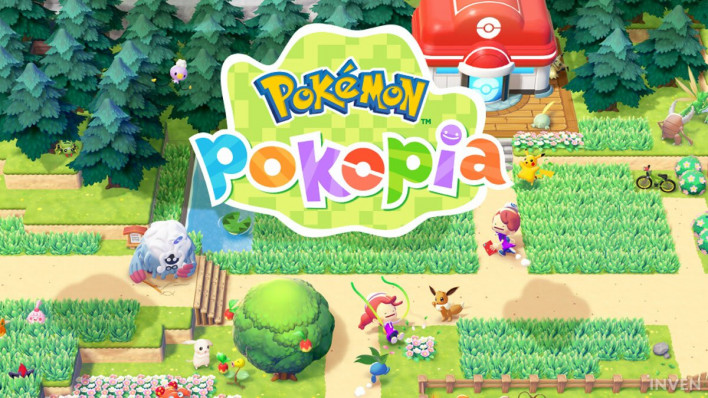
Within that long history, Pokémon Pokopia tells a story that is only possible because it is not a mainline title. It is a story that sometimes makes you ponder deeper themes than any other entry in the series. At the same time, it lets you write your own story as freely as if you were playing Animal Crossing, Minecraft, or Dragon Quest Builders, as if those deep questions didn't matter at all.
The game proves it through its own existence. It shows that you can prompt deep thought and reflection just by letting players spend peaceful moments with infinitely cute Pokémon, without needing to force a didactic narrative. Pokémon Pokopia is a title that opens up all the possibilities available to a spin-off. At the same time, it serves as a new potential for the Pokémon franchise and offers a profound reflection on what Pokémon has been until now.
● Contains some story spoilers.
A World Without Humans
Is This a Pokémon Utopia
Celebrating its 30th anniversary, the Pokémon series has spent its long history perfecting the relationship between humans and Pokémon. The story began with the vague goal of becoming a 'Pokémon Master.' Through the completion of the Pokédex and conquering the League, Pokémon have been portrayed in various ways: as subjects of research, tools for battle, the closest companions to humans, and parts of nature. Within those stories, the relationship between humans and Pokémon in the Pokémon world was inseparable.
Pokémon Pokopia re-examines that relationship from the ground up. In a world where all humans have vanished for unknown reasons and only Pokémon remain, is it truly a 'Pokopia'—or rather, a utopia? The peaceful world the game presents makes it seem as though a world without humans might be one that brings true happiness to Pokémon.
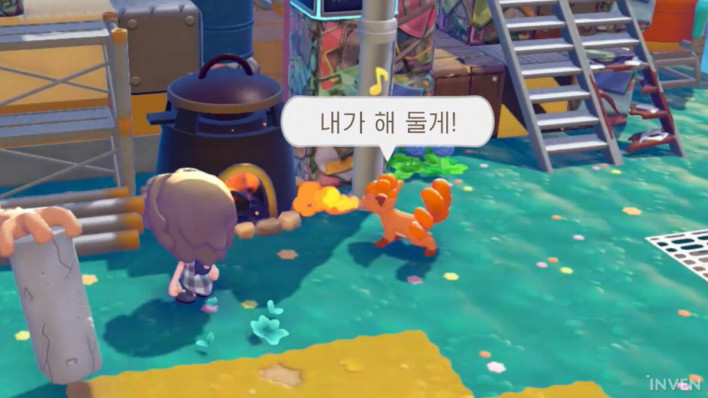
The game's trailers and the documents left behind by the vanished humans clearly imply that humans no longer live here. Consequently, the Pokémon do not rely on humans but survive through nature and their own inherent abilities. Fire-type Pokémon light firewood to warm themselves on cold nights, and Pokémon that prefer darkness find habitats in caves. A world where they live according to their natural abilities is peaceful beyond measure.

There are no battles where Pokémon fight to prove their skills, nor is there any reason to be beaten to a pulp just to be captured. Like the 'Pokémon Mystery Dungeon' series, the Pokémon speak in a language the player can understand and live peacefully without major worries. Even Pokémon that might have had to avoid each other due to opposing types talk freely and find each other's strengths. They play, explore what they are curious about, and sometimes find satisfaction in self-improvement. In these stories, Pokémon understand and forgive each other without major conflict.
A prime example is Machoke, who usually uses Geodude as a dumbbell for exercise. Machoke asks the protagonist, Metamon, to find a Geodude, but the Geodude asks Metamon to take its place because it finds it hard to hold back its laughter whenever Machoke uses it for exercise. When you approach Machoke as a Geodude, Machoke apologizes for using it for exercise without knowing how it felt, and suggests they stay friends.
The emotional arc of Pokémon Pokopia is not built on escalating conflict, but is filled with what might be trivial worries and curiosities. And that is one of the reasons why Pokémon live happily in a world without humans.

In fact, Pokémon Pokopia is designed around the stages of restoration and care, where Pokémon themselves restore the region and protect one another. Other games that pay homage to the Pokémon world often feature extreme portrayals of monsters being used as tools, which can be seen as an extension of the mainline concept of commanding Pokémon in battle. However, every process in Pokopia is based on requests and voluntary cooperation, not commands.

The Pokémon trust and follow Metamon, who provides them with a place to live and takes the initiative to build a better world. Because of this, they willingly water the ground, light fires, and grind and refine materials. The protagonist, Metamon, also works to resolve the inconveniences of various Pokémon and mimics their abilities to make the world a better place to live. The core content of the game lies in this pursuit of a better life for Pokémon and resolving their needs, depicting a world where all Pokémon view the world and solve problems from the same perspective, as equals.
Metamon, the Most Human Pokémon
What Separates Pokémon from Humans
This seems to provide an answer to the initial question. It is a reversal of the repeated narrative in the mainline series that humans and Pokémon must coexist. Although it was eventually revealed that there were false claims behind it, the early Team Plasma, led by N, argued that Pokémon might be beings exploited by humans. Thus, Pokémon are genuinely happy in a place without humans.
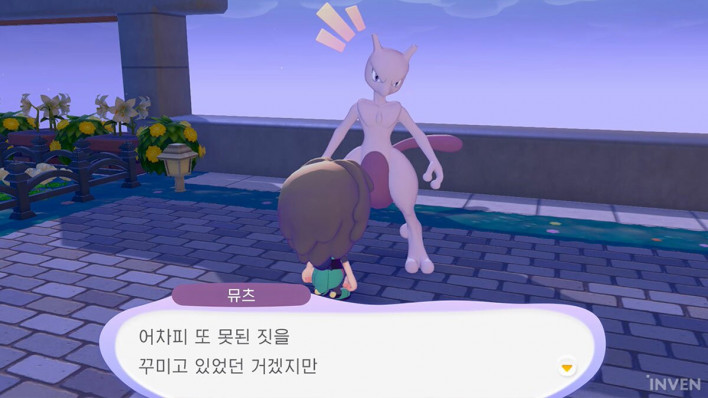
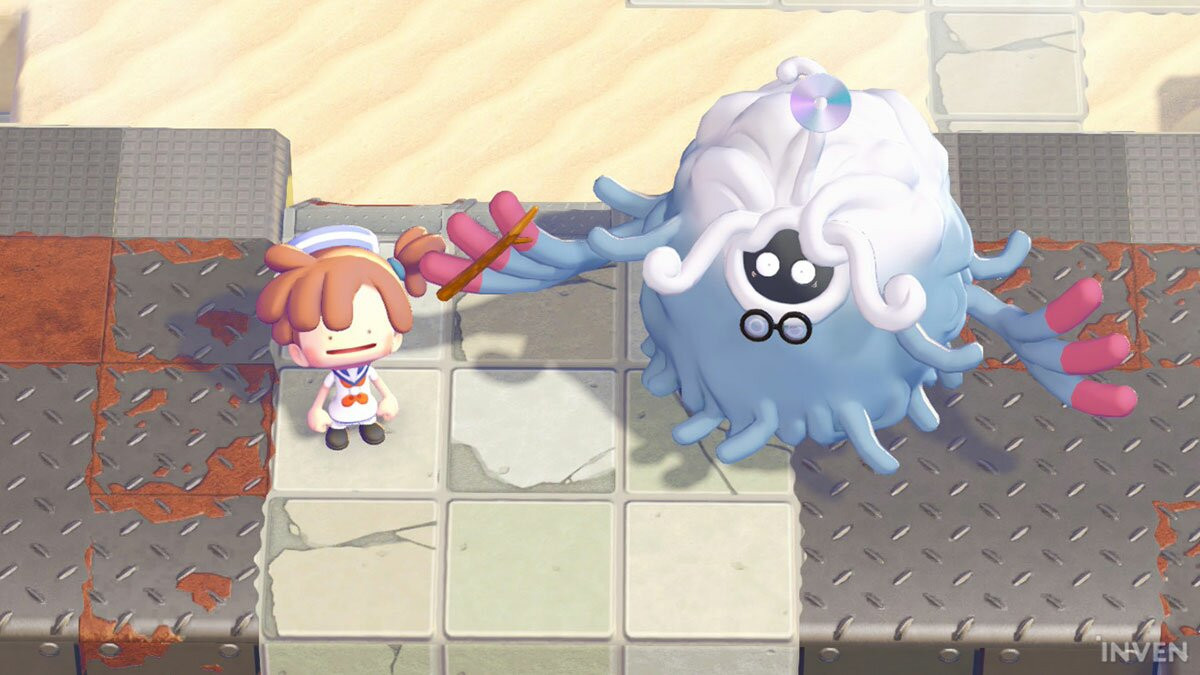
Of course, some Pokémon, including Dr. Tangrowth, are working to create a world where humans can return, but they live happy lives even without humans—or perhaps, precisely because they are gone. The Legendary Pokémon that appear in various places in the game openly state that the world has become a better place to live because humans are gone.
In this way, Pokopia constantly raises the question of whether humans are truly necessary in the Pokémon world.
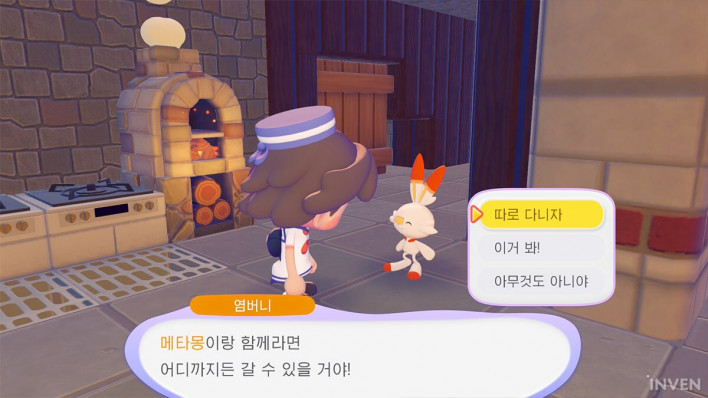
However, the existence of Metamon, the subject of the story and the protagonist, makes one rethink the presence and significance of humans in the Pokémon world. Missing its owner so much that it has transformed into the appearance of its former trainer, Metamon is portrayed as a paradoxical being—a Pokémon that exerts power by mimicking a human.
As Shigeru Ohmori, who was in charge of the game concept and direction, noted, making Metamon the protagonist was inevitable from a game design perspective, as it is a being that can use human tools unlike other Pokémon, and can transform into a human. Narratively, this makes Metamon a Pokémon that can handle tools, design, and lead other Pokémon, much like a human. This was the role of a trainer during the time when humans and Pokémon coexisted, and the game reveals throughout that Metamon is trying to follow in the footsteps of that trainer role.
The existence of Metamon, who is a Pokémon yet the most human-like, goes beyond simply replacing a person. As the last human left in the world, and as a Metamon mimicking that human, the other Pokémon rely on it and follow it as a leader. The relationship between Metamon and the Pokémon is based on cooperation rather than command, but that cooperation starts from following a human-like leader. In the process of gaining leadership and trust within Pokémon society, it brings to mind the heavy, age-old topic of defining humanity.
Thus, the Pokémon world without humans and the existence of Metamon mimicking a human within it implicitly contain a thematic consciousness about humans and Pokémon.
The philosophical discussion revealed by the developers regarding the connection between trust with Pokémon and the game system is one thing. But going a step further, the subject receiving this is not a third party watching a video, but the player themselves. The player is Metamon, acting proactively in the game. Depending on whether you immersed yourself in the player who views Pokémon as a human, or focused on the Pokémon themselves who want to find humans in a world where they have disappeared, the relationship between humans and Pokémon in the game can be perceived in completely different ways.
This is possible because the game does not intentionally push the values and themes of the central narrative. No matter how freely you think about becoming a Metamon or a Pokémon, if the game pushes the player with a didactic story, it is difficult for thoughts to expand. Even though Pokémon Pokopia has relatively clear background explanations and descriptions of situations, it allows players to not think deeply about them, and even if they dig deeper, it does not force a clear answer.
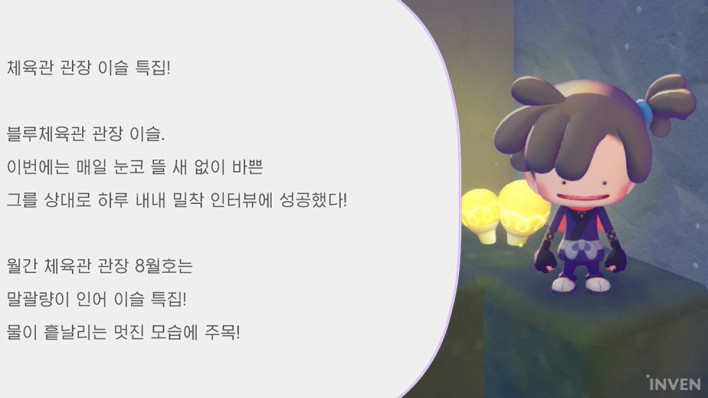
And it leads to thematic consciousness
And even without this thematic consciousness, the game allows players to experience it through its incredibly fun design and IP utilization alone. In fact, that is why it makes people think more, and conversely, why it has become a work that can be approached as a separate, standalone game.
Gameplay Solidified by Pokémon
Pokémon-ness' Created by the IP
Pokémon Pokopia was co-developed by Game Freak, which developed the Pokémon series, and Koei Tecmo's Omega Force.
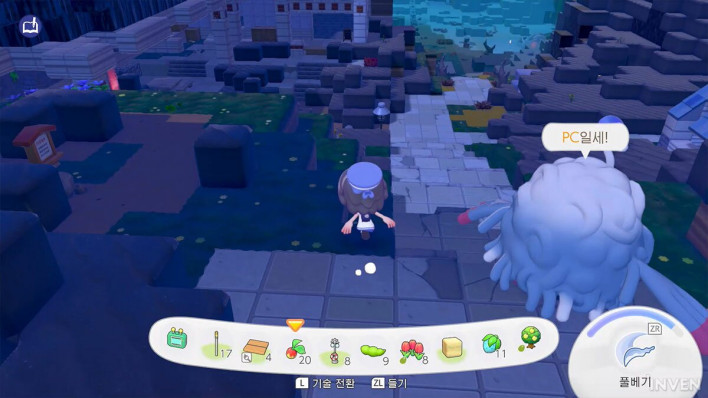
In particular, as Omega Force was responsible for the core of the actual gameplay, the essence of the game feels like an expansion of the already well-polished Dragon Quest Builders 2. Many of the shortcomings of the original Dragon Quest Builders, produced by Square Enix's internal studio, were resolved in the second installment, which was outsourced to Omega Force, and the fun of the game was further enhanced.
The core of Dragon Quest Builders 2 is carried over into Pokémon Pokopia. A world made of countless voxel blocks, like Minecraft. You freely break and build to create and expand your own base. You reuse the destroyed voxel pieces, and eat or combine various materials to transform them into new items to grow into a better base.
Layered on this foundation is the Pokémon IP and Animal Crossing. In particular, Pokémon is not just a skin added to an existing game. It is used as a device that makes the game design even more special. The protagonist, Metamon, starts as a being that has transformed into a human and can only use a few tools left behind by humans. However, as it absorbs the abilities of Pokémon one by one, it becomes an important being that will change the world.
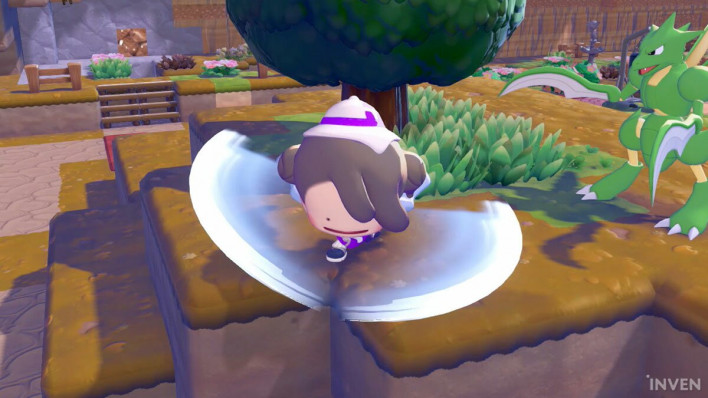

Water Gun learned from Squirtle wets dry land, and Leafage learned from Bulbasaur creates grassy fields on moist ground. Cut learned from Scyther fells trees, and various blocks can be broken through Rock Smash taught by Hitmonchan. In the mid-to-late game, you can float on water like Lapras or fly through the sky like Dragonite. Because you have to utilize the abilities learned through various Pokémon, meeting Pokémon acts as a core that encompasses both the expansion of the adventure area and the expansion of the base.
Furthermore, actions that Metamon cannot learn on its own, such as building according to blueprints, turning clay into bricks, or processing sand into glass, are carried out with the help of Pokémon. As written above, the utilization of Pokémon abilities is depicted as a request, not a command. Of course, since the game itself puts a lot of effort into convenience, they do not refuse requests unless they are doing something specific or are hungry. However, the description of helping each other under a relationship of trust plays a big part in maintaining the soft and peaceful tone of the game.
In fact, the happy appearance of Pokémon, which is not noticeable when you are busy pushing the story and running around to collect materials, is one of the joys that only Pokopia provides. The sight of them chatting and chasing each other freely looks like watching innocent children.
As Pokémon are beings that provide growth, expansion, and emotional satisfaction even in a world without battles, it is important to create an environment where more Pokémon can live. And this is depicted not by capture, but by creating their preferred habitats and having them come on their own. For example, Capoeira visits if you place a first-aid kit on a table and put out a punching bag, and Torkoal visits if you install moss near a cave hot spring.
Configuring residences for countless Pokémon and creating appropriate locations are some elements of a crafting game, but they are also used as a kind of puzzle and an element that makes you think about appropriate strategic placement. Sometimes you find new types of habitats without hints. It's not just about building a house and stuffing residents into it, but about adding the consideration of creating a place where Pokémon, who are also residents, would want to visit.
In the narrative that builds up as Pokémon visit their habitats, Pokémon become the starting point of the narrative and the center of the story experience led by the player. Centered on the project to turn humans back into humans by Dr. Tangrowth and Metamon, the stories of countless Pokémon spread out in small ways, filling the play experience.
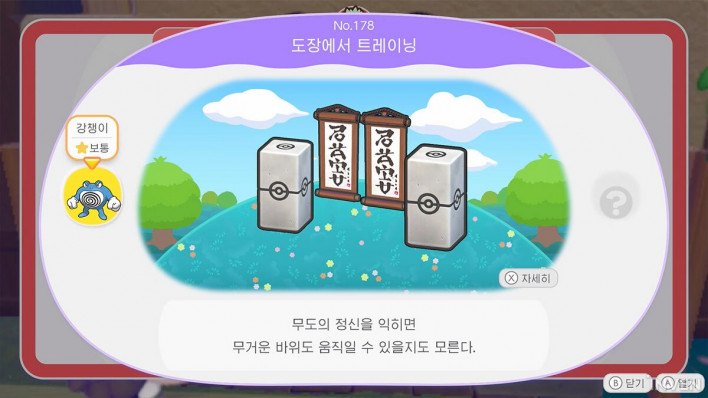
...a narrative of coexistence with Pokémon and puzzle elements simultaneously, without capture
Immersion Created by Leisure
Another reason why Pokopia resembles Animal Crossing
Structurally, it has the gameplay characteristics of Dragon Quest Builders 2, but as it is refined around the Pokémon IP, Animal Crossing stands out even more. By excluding battles and dramatic conflicts and focusing more on the weight of a 'cozy game'—often called a healing game—the gameplay experience has grown in value as a life simulator that gradually fills a desolate space, like Animal Crossing.
The value of the buildings the player constructs is based on visual satisfaction rather than effectiveness. This places weight on the experience as a reconstruction-centered life simulation where you mingle with other animal neighbors and make the village a living space. It is not just because it is a cozy game or a life simulation released as a Nintendo Switch 2 exclusive, but because the core game fun-dispersion structure is the same. Except for the main narrative, the foundation is leisurely play that gradually changes the world through resource collection, crafting, furniture or block placement, festivals, and events.
There are cases where it takes real time, sometimes as long as a day, for a building to be completed, but the fact that it doesn't block time-slipping by changing the device's date and leaves it to the player's choice is also very Animal Crossing-like. Of course, when such a one-day building is created, you don't need to change the date immediately; it is enough to spend time collecting materials by being active in other areas.

In addition to the completely free area of 'Blank Village,' each area is implemented by expanding with different backgrounds and vegetation. It is not a completely open world, and each area is divided and must be moved through gates, but the different gameplay and zone compositions are maintained, and equipment and items are carried over. If Pokémon are characters and stories, the four regions and their expansion mean the reconstruction of the Pokémon world.
This leads to a sense of narrative achievement, and even as a cozy game, it leads to a sense of pride in having cultivated the world yourself. As you unlock new areas and new crafting recipes, you start to use electricity and move quickly over long distances by minecarts, cable cars, or elevators, and you can also feel the technological expansion. Furthermore, among various satisfactions, the fact that content utilization is achieved through the communion between the player and Pokémon without the automation elements that are popular these days is also a section that creates a play experience structure that is different from but the same as Animal Crossing.
Furthermore, the appearance of areas that have lost their old names, such as Cerulean City, Vermilion City, and Pewter City, and BGM that revives memories of the past greet the player. For fans who remember Pokémon games set in the Kanto region, it adds a new flow of narrative: the changes in the world they once knew, and the new flow of reviving it as a new space where Pokémon live.
A calm game atmosphere and a Pokémon world that keeps memories of the past. And the protagonist, who lives as a Pokémon within it, creates room to think about and delve into the truth of the world and heavy themes amidst the narrative and expanding reconstruction with each Pokémon. The peaceful play and experience led by Pokémon and the player actually make you immerse yourself in the story and worldview.
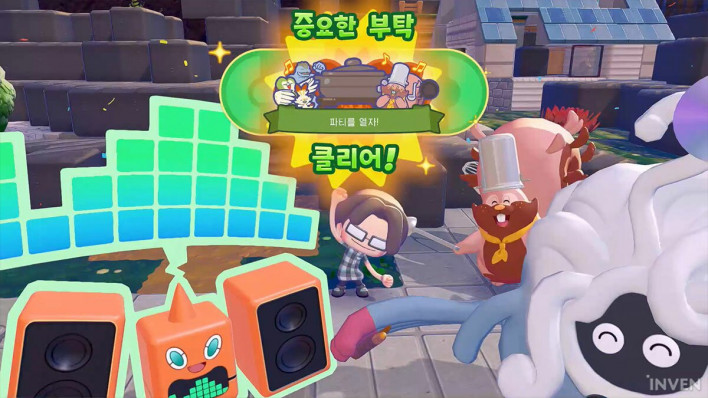
The reason this experience is not burdensome is that the game design fits steadily with the player's learning process. Just when you feel that your inventory space is lacking in the early stages of gameplay, it provides an opportunity for expansion to a new area and inventory expansion through a PC. The inventory is expanded to four rows of three during the story, and even then, all identical items are stacked, allowing you to carry more items.
And this is cleverly connected to the supply of resources. All items are designed based on recipes, making it easy to help with resource acquisition and strategic placement for long-term material storage and utilization. Pokémon are in charge of acquiring, transforming, and building these resources, and the distribution of habitats has also been made so that they can be brought in without omission in each region.
New features, convenience elements, and recipes that open up just when the game progress feels blocked or frustrating give the player a positive signal that the game is being played smoothly. In fact, the developers are inducing this by giving major guidelines. Also, the overall composition of the game makes it easy to induce the progress of play because the core loop of the game—creating habitats, building relationships with Pokémon, learning skills, or raising the village grade to move to new habitats or new areas—is clear.
Anyway, this clever game design and convenience make the game easier to approach and further push the player to create more expanded areas.
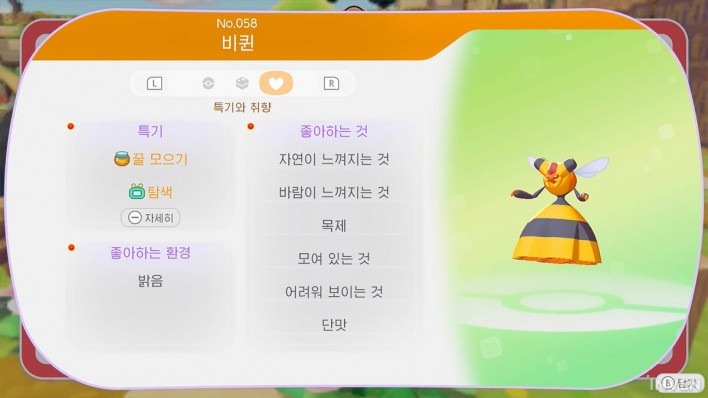
Pokémon Pokopia proved how excellent it can be when familiar play grammar is refined to fit a core IP like Nintendo. The improved graphics level that can be shown by being produced as a Nintendo Switch 2 exclusive are also all satisfactory. In particular, as a cozy life simulator without battles, exceptional RPG growth, or factory content such as automation elements, the variation that the Pokémon IP has brings the effect of lowering the threshold of approach to similar genres.

Of course, it is a pity that it is difficult to classify or store items due to excessive item provision and the resulting convenience curve, and that very convenient mouse operation is not applied to all content. However, these few shortcomings are not prominent enough to overturn the satisfaction with the gameplay. To that extent, the gameplay is solid, and the calm interaction with Pokémon and the heavy concerns that follow in the meantime make Pokémon Pokopia more valuable.
If there is Donkey Kong Banana as a title that first opened the possibilities of the Nintendo Switch 2 as an exclusive title, Pokémon Pokopia is clearly a core title that opens the next chapter with leisure and peace, just as Animal Crossing did. And I am still looking forward to the story to be experienced after the ending.
And I look forward to my own story after that
- Implications of the coexistence of Pokémon and humans
- Creative approach created by human-like Metamon
- A weight class created solely by the fun of the game itself
- A Pokémon-centered narrative possible because it is a Pokémon IP
- Pokémon's behavior and descriptions that make you happy just by looking at them
- Game design solidified by convenience & clever loops
- Limited application of convenient mouse operation
- Time system that is frustrating when aiming for a fast clear
- Organization that becomes cumbersome due to many items
Review Platform: NSW2 (Release Version)