No customer wants to relearn how to use chopsticks from scratch every time they visit a new restaurant. Just as the essence of a restaurant is its food, the essence of a football management game ultimately lies in the gameplay experience of managing a club. This is the answer delivered by developer Sports Interactive (SI)—which suffered severe growing pains from a radical UI overhaul in 'Football Manager 26' (FM26)—through 'Football Manager 27' (hereafter FM27), scheduled for official release on the 11th.
Ahead of its official release, FM27, which debuted through a five-day free 'Launch Preview' starting October 30, focused on returning a familiar control environment to players. In place of unnecessary control friction, it introduced features that deepen the core decisions of a manager. From the 'Tactical Effectiveness' system, which considers how well the squad can execute tactics, to realistic transfer decisions by club staff and prospects, as well as crowd visuals that capture the matchday atmosphere, the game significantly elevates the density of football simulation.
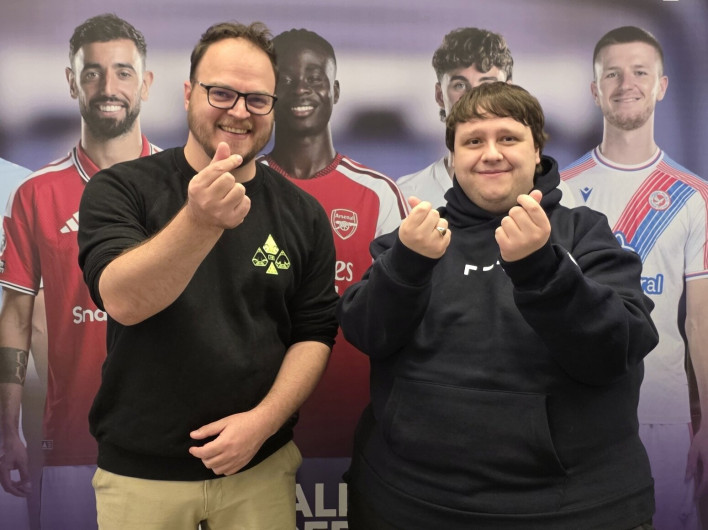
At the Korean fan meetup held on November 1 at GGX in Dongdaemun, Seoul, we met Rémy Boicherot, Associate Game Director at Sports Interactive, and Andrew Sinclair, Senior PR & Product Executive. We spoke with them about the background behind deciding on the UI rollback, the design intent behind the updated tactics and transfer systems, and the behind-the-scenes story of their top-secret visit to Korea last September to observe domestic players in action.
Having played during the free trial period, the UI—which changed drastically in 'FM26'—feels closer to 'FM24'. What were the criteria and background for this UI overhaul?
" Director Boicherot: We had three principles for the UI this year. First was efficiency: looking at how many clicks are required to perform a desired action. Second was familiarity: considering an experience that feels as comfortable as home, not just when playing Football Manager, but when using other software as well. Third was predictability, meaning that when you click something, you should quickly understand what will happen.
We didn't want players to find navigation overly difficult. We tried to find a suitable middle ground between previously existing elements and the new UI.
We understood the UI in 'FM26' as an attempt to reflect the mobile-centric workflow of modern football clubs. What is the reason for opting for a familiar approach instead of further developing that concept?
" Director Boicherot: We took a lot of risks in 'FM26'. There were players for whom the new UI direction worked well, but there were also players for whom it didn't. This year, we wanted to take a slightly more conservative approach to the direction of the UI.
It's a bit of a funny analogy, but you wouldn't want to relearn how to use chopsticks every time you go to a new restaurant. The important thing is the food, and for us, the important thing is the gameplay. Therefore, reducing friction in navigation was the most important goal. While we had our own vision, prioritizing allowing the community to immerse themselves in the game world as efficiently as possible came first.
You conducted a Launch Preview that offered all game modes free for five days. What was the reason for choosing a different method from traditional betas, and what did you want to confirm during this period?
" Manager Sinclair: First, I want to clarify one point. The Launch Preview with paid Early Access still exists, and we placed the free period ahead of it. In 'FM26', we received feedback from global communities, including Korea and China, that the experience wasn't optimized for many players. This year, we wanted to listen to those opinions and show more of the game earlier.
In the feature deep dive videos as well, the people who actually created those features—like Director Boicherot—appeared or narrated to explain their work in their own words. The free play period is an extension of that. It's an invitation to try the entire game for yourself before purchasing.
If you like it, you can buy it and continue your save. If you don't like it, that's fine too. The reasons you didn't enjoy it provide useful feedback, telling the development team what we still need to improve.
Stadium details have become more granular, such as crowds wearing club kits. Were there specific aspects you paid attention to regarding crowd visuals, or elements players should look out for?
" Director Boicherot: Crowd presentation was the biggest priority for the art and animation teams this year. To properly capture the matchday atmosphere, we paid attention not only to the clothes the crowd wears, but also to how they take their seats in the stadium. Thanks to our earlier transition to the Unity engine, we were able to raise our graphical standards, and we plan to push that bar as high as possible every year.
Manager Sinclair: We also focused on the seasons. We wanted to better reflect reality by having crowd attire change according to environmental conditions, such as when it rains or when the weather is hot.

What problems were you trying to solve with the new 'Tactical Effectiveness' and 'Tactical Complexity'? Did you also have in mind how so-called 'meta tactics' found online are applied verbatim to any team?
" Director Boicherot: Tactical Effectiveness is an evolution of the previous 'Tactical Familiarity' system. The old system was limited in expressing the process by which a real manager communicates with the squad and gets players to execute their vision on the pitch.
The Football Manager community expects depth, tactical accuracy, and interesting choices. So we focused on adding new depth to explore. Along with training changes, we ensured that various updated elements in managing the first team, youth teams, and national teams intertw smoothly.
In long-term saves, there is an opinion that top players concentrate in big clubs, solidifying the league landscape. How have the transfer and release decisions of AI clubs changed, and what did you emphasize to keep leagues feeling alive even 10 to 20 seasons in?
" Manager Sinclair: This year, we tried to make decision-making smarter for both club staff and young players. On the staff side, we added new metrics that allow specific clubs or staff members to place higher value on experience. If a team only has young players, they might decide they need veterans to help guide their growth. We saw a similar real-world example at Chelsea this year.
We also added detailed nuances to young players' choices. Some prospects might prioritize actual playing time over the stature of a big club, choosing Bournemouth or Brighton over Arsenal or Liverpool.
Whether you're starting a game or playing 100 years into the future, an immersive football experience is crucial. During development, we run long-term simulations to check how saves progress and identify what patterns or anomalies emerge so we can address them. There may be countries where a specific team continuously wins, like Germany in real life, while in other places, clubs that recruit, manage, and invest well can challenge established powerhouses. We try to reflect those varied realities as much as possible.
In long-term saves, once real players retire and only newgens remain, it can sometimes be hard to stay immersed. Have you ever considered methods to bring back retired players or creating a legends database?
" Manager Sinclair: Many players enjoy the process of discovering and scouting new players after real players disappear. On the other hand, we understand that some players prefer the first five years or so when world-class stars remain.
Bringing back past players or creating a legends database is extremely difficult from a licensing perspective. Our contracts cover specific seasons. If we were to create a K League database from 20 years ago, neither the current K League nor Ulsan HD holds the rights to players from that era, so we would have to contact each player individually. It becomes a very difficult task.
Even if a player who grew with you from lower leagues continues to perform well, it's disappointing when their growth stops due to a fixed potential. Could you consider an option to unlock maximum growth limits?
" Manager Sinclair: What you mentioned is a concept we've been discussing under the name 'Dynamic Potential'. Currently, many young players in the game have potential set within a certain range, and a value is randomly determined within that range when you start a save. That range is in increments of 30 points. For example, if it's -10, potential is decided between 170 and 200.
Dynamic potential is an interesting idea. If a player who played in Thailand transfers to the Premier League and trains with facility standards and teammates of that caliber, the ceiling of their growth could increase as well. It's an area the game doesn't currently reflect sufficiently, and one we'd like to explore in the long term. However, it's not a feature included in 'FM27', and as a long-term design objective, there is no specific schedule.
In each iteration of the series, players feel that the performance of specific player roles or the difficulty of away matches changes. Is this due to actual changes in the match engine, or is it closer to a subjective perception by players?
" Director Boicherot: Usually, both work together. The match engine changes, but football itself changes too, and players with distinct personal styles stand out. Often, both factors have an impact. What we consider important is balance and plausible representation. We track data to ensure we recreate real football as closely as possible.
Starting from the Launch Preview period, users have been using AI and other tools to create mods. How do you view the active creation of mods and skins?
" Manager Sinclair: We know how popular mod and skin creation is in the community. However, due to licensing, it's difficult for the studio to officially support it. That's because intellectual property we don't hold rights to—not just from our official partners—might be used in mods.
While we cannot offer official support, the studio's stance is that we don't want to stand in the way of user activity. We won't deliberately interfere, but that also means it's not something we can officially support.
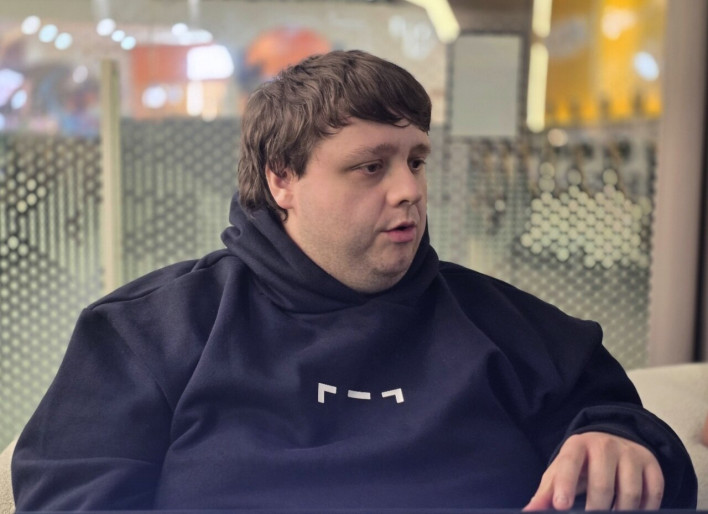
Player weight displays disappeared alongside the introduction of women's football. What was the reason behind this decision, and does internal weight data affect physical duels and aerial battles in-game?
" Manager Sinclair: We didn't remove it because of women's football. It was a matter we had been discussing before then. When our global research team builds the database, they handle subjective evaluation elements like attributes alongside objective personal info. Most clubs disclose height, but they do not disclose weight. For a long time, weight was essentially an estimated value based on physical appearance.
A player's weight changes during the season, and that can be even more so for female players. As we added women's football, we re-examined this information that we couldn't be confident was accurate. We can't carry scales to every club.
Internally, the concept of weight remains to define a player's body type. However, because we don't use a collision physics system, weight values do not directly impact gameplay.
Do you have plans to introduce DLSS as well?
" Director Boicherot: I don't know for sure. There's nothing I can answer right now.
Are there any ideas you thought of to heighten stadium realism but couldn't implement that you can share?
" Director Boicherot: I can't talk about features we haven't implemented. However, a feature the design team is fond of is 'Continue Flow'—that is, the flow of progression when you hit the continue button.
Internally, the development team had a great tool to manage how the game interacts and guides players to various places to show off the world. We felt there was immense value in providing this to the community. There are diverse playstyles in Football Manager, and since we can't predict them all, we decided to let players choose for themselves. We're looking forward to seeing how the community uses it.
You visited Korea in person for the Korean fan meetup. What is the reason for meeting the Korean community, and what are the characteristics of Korean players?
" Director Boicherot: This is my second visit to Korea during this development cycle. The first visit was conducted somewhat privately. Last September, we came to observe firsthand how Korean players played the new version and watched playstyles unique to Korea.
It was quite different from what we usually saw. It was more intense and faster. Korean players have high standards globally when it comes to game performance and gameplay efficiency. Based on the playstyles and feedback observed in that test, we made several technical decisions. As a result, we believe it became a better game for all players. We'd like to thank the Korean community, and we gain a lot of value from events like this as well.
As a fan, I'd like to suggest a 'Referee Cam' to watch matches from the referee's perspective. Is there a possibility of implementing it?
" Director Boicherot: That's an interesting concept. We'll look into it in the future.
In an interview last year, Studio Director Miles Jacobson introduced the codename for 'FM26' as 'Project Burrito'. What is the codename for 'FM27' and the story behind it?
" Manager Sinclair: It's 'Project Taco', from the same family of food. A street food van comes outside our studio, and among them was a Mexican food truck that sells burritos and tacos.
Design Intent Behind UI Rollback, Tactics, and Long-Term Saves
From FM26 Evaluations to K League and Tactical Issues, Fans Asked
A Gathering of Fans Connected by Long Playtime and Quizzes
PC/Mac Launch Preview Schedule and Participating Platforms
Global Release Announcement and Improvements to UI and Matchday Presentation
November Release Announcement and UI Improvement Direction Revealed
Inven Games Pre-orders and Purchase Benefits Guide
PS5 Physical Edition Pre-orders and Console Version Features