As the 22nd National Assembly enters its second half, the landscape of gaming policy is being redrawn. The entities driving the push for regulation have shifted, and the ruling party's Special Committee on Gaming will be shaped by the results of the August national convention. While the major task of a comprehensive overhaul of the Game Industry Promotion Act—the first in 20 years—remains, it is difficult for the National Assembly to turn its immediate attention to gaming.
- The Shift in Regulatory Sentiment

The perspective on gaming in Yeouido has changed. In the past, discussions on gaming regulation were led by parents and religious groups; they were the driving force behind the regulatory legislation of the 2010s, epitomized by the 'shutdown law.' Today, those voices are considered to have lost their significance. Instead, the political sphere is now wary of gamers.
A turning point was the national audit petition against the Game Rating and Administration Committee in October 2022. When controversy erupted over the committee's re-grading process and allegations of corruption in its rating system development project, gamers formed a line over 1km long in front of the National Assembly to sign a petition. The initial goal was 300 signatures, but 5489 people signed in a single day, and a subsequent Board of Audit and Inspection investigation confirmed that many of the allegations were true. It was the moment gamers emerged as a political entity offline, moving beyond mere online discourse.
Since then, the National Assembly has recognized that pushing forward flawed gaming policies can trigger a backlash from gamers, leading some to avoid sensitive gaming issues altogether to prevent such fallout.
The structural nature of gaming policy also encourages this caution. It is rare for the interests of game companies and users to align. Easing regulations on companies often comes at the expense of user rights, while measures to protect users, such as the disclosure of gacha item information, place a burden on companies. The structure is such that siding with one party inevitably invites opposition from the other.
- The National Convention and the Special Committee on Gaming
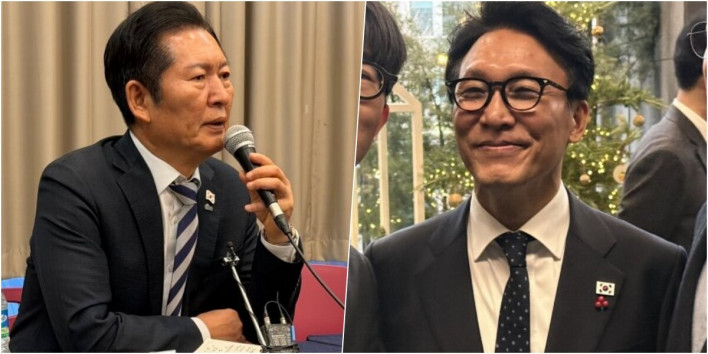
The ruling Democratic Party of Korea will elect a new party leader at its national convention on August 17. The race has narrowed to a two-way contest between former party leader Rep. Jeong Cheong-rae and former Prime Minister Rep. Kim Min-seok.
From the gaming industry's perspective, the key point to watch is the Special Committee on Gaming. This internal body has overseen the Democratic Party's gaming policies, handling major issues such as the deferral of the disease code classification for gaming and the revision of the Game Industry Promotion Act. The problem is that it is a non-permanent body, meaning it must be re-authorized by the party leader. The first committee operated during Lee Jae-myung's tenure as party leader, and the second continued under the leadership of Jeong Cheong-rae. Its existence must be re-confirmed every time the party leadership changes.
However, the prevailing view is that the committee will continue regardless of who wins the party leadership. If Rep. Jeong Cheong-rae is re-elected, the committee will naturally remain. While Rep. Kim Min-seok is a variable, he has shown interest in gaming through various channels, leading to expectations that he would launch a third committee. Notable examples include his visit to G-STAR during his time as Prime Minister and his invitation of 'Faker' Lee Sang-hyeok to the Prime Minister's official residence for a meeting.
Ultimately, discussions on the comprehensive revision of the Game Industry Promotion Act are expected to begin in earnest only after the national convention.
- The Association Turns to the National Assembly, While the Minister Disappoints
Jo Yeong-gi, chairman of the Korea Association of Game Industry, is seen as being more serious than expected about resolving the restrictions on prizes under the Game Industry Promotion Act. Since the 'Sea Story' scandal in 2006, the current act has in principle prohibited the provision of prizes within games to prevent gambling. The industry argues that this clause, which targeted arcade game centers 20 years ago, is now stifling events and marketing for online and mobile games.
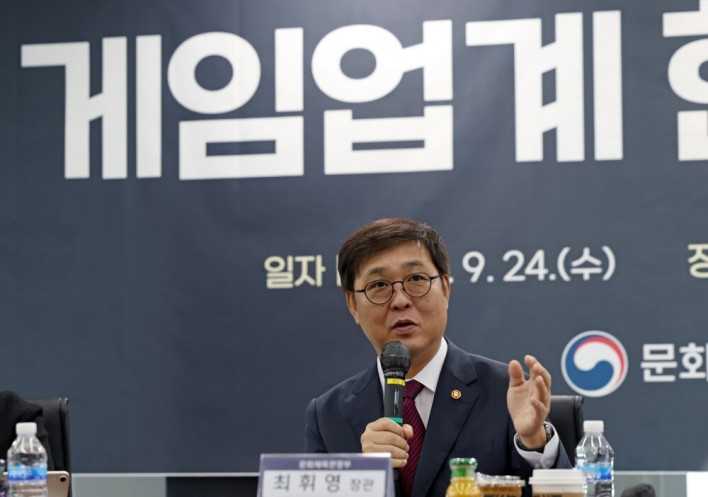
Minister of Culture, Sports and Tourism Choi Hwi-young has also stated that he would actively review the association's requests. The problem is that Minister Choi's intentions have not translated into real power within the ministry. With criticism that he has failed to exert control over the ministry's directors and bureau chiefs, there is a sense of disappointment regarding his weak policy-driving force.
Given these circumstances, the association is expected to either wait for the next Minister of Culture, Sports and Tourism or focus more of its efforts on persuading the National Assembly.
- Ultimately, Gaming is a Matter for the Culture, Sports and Tourism Committee
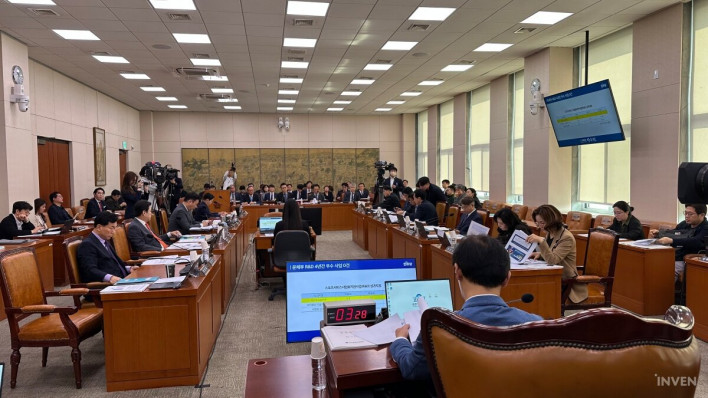
The best condition for gaming-related legislative activity to gain momentum is for a lawmaker interested in gaming to be a member of the Culture, Sports and Tourism Committee, which oversees the Ministry of Culture, Sports and Tourism. When a lawmaker shows interest, their staff naturally follows. Former lawmaker Lee Sang-heon, who led the audit petition against the Game Rating and Administration Committee, is a prime example. If a lawmaker's interest is clear, they do not necessarily need to be on the Culture, Sports and Tourism Committee. Rep. Jo Seung-rae (Strategy and Finance Committee) and Rep. Kim Seong-hoe (National Defense Committee), who co-sponsored the comprehensive revision bill, are notable examples.
Even if a lawmaker's interest is relatively low, meaningful legislative activity is possible if their staff on the Culture, Sports and Tourism Committee are interested in gaming. It is known that the office of Rep. Lee Jae-jung, the current chair of the committee, fits this description.
A figure of high interest in the second half of the National Assembly is Rep. Han Dong-hoon. When he served as Minister of Justice in the previous administration, he pushed for a plan to regulate gacha items under the 'Digital Content Contract Act.' This shows his history of approaching gaming regulation as a consumer contract issue rather than a cultural policy. However, as he is on the Foreign Affairs and Unification Committee, his gaming-related activities are limited, except for issues like the Chinese government's game service licensing (ISBN). Nevertheless, as he has added a staff member from the Korea Creative Content Agency who is well-versed in gaming administration, future developments may emerge.
In the ruling party, the office of Rep. Kim Yun-deok, and in the opposition, the office of Rep. Kim Seung-su, are showing particular interest in gaming policy. However, Rep. Kim Yun-deok is currently serving as Minister of Land, Infrastructure and Transport, so he will have few opportunities to serve as a member of the Culture, Sports and Tourism Committee for the time being. Rep. Kim Seung-su is considered to have both a personal interest in gaming and a staff with the necessary expertise, so he may show keen interest in a ruling party-led comprehensive revision of the Game Industry Promotion Act in the future.
The comprehensive revision of the Game Industry Promotion Act is an effort to overhaul the framework of the 2006 law after 20 years. The bill, proposed by Rep. Jo Seung-rae last September, focuses on shifting the regulatory-centered system that solidified after the 'Sea Story' scandal toward one of promotion. Key provisions include bifurcating regulations by dividing games into digital games and location-based (arcade) games, and abolishing the Game Rating and Administration Committee in favor of a new Game Promotion Agency.
What remains is the National Assembly's time. The bill will be handled by the Culture, Sports and Tourism Committee, and major procedures such as public hearings remain. However, as the committee's current focus is on the national football team, it is expected to take some time before the gaming bill receives concentrated attention.

Sort by:
Comments :0