The best meal I ever ate, I didn't order. I was at a small sushi counter, eight seats and a chef who looks at you a beat too long before deciding what you're getting. There was no menu. You don't get a menu. You get whatever came off the boat that morning and whatever the man behind the counter feels like showing you, in the order he thinks you should meet it. He'd set a piece down, tell you what it was and where it swam, watch your face while you ate it, and pick the next one based on what your face did. By the end I'd eaten things I never would have chosen and would now walk a long way to eat again. I had handed over the entire decision, and it was the most looked-after I have ever felt at a dinner table.
That arrangement has a name, omakase, and a whole philosophy underneath it. The first time I played Dave the Diver I realized the game had quietly built itself on the same idea, just flipped around. In a sushi bar you trust the chef to feed you what the sea gave up that day. In Dave, you are the one who went and got it. You dive, you bring up whatever the Blue Hole was holding, and a few hours later it's the best thing in some pixel salaryman's evening. Catch -> dinner -> happy customer. The loop is so simply and satisfying it feels invented for a game, and it was not. It was borrowed, with real care, from two of the food cultures most fixated on the short, sacred distance between the water and the plate.
Omakase translates, roughly, to "I'll leave it up to you." It comes from a verb that means to entrust, and that's the whole transaction: you hand the chef the decisions. No menu, no ordering. The chef serves what's best that day, usually opening with lighter fare and building toward the richer, oilier stuff, reading your reactions and steering the rest of the meal as he goes. Sushi master chef Jiro Ono has described it as an orchestra, which not only describes the pace and variation in the experience, but the slowed down approach one must take to appreciate it.
It feels ancient, and its bones are. But omakase as the named, slightly intimidating ritual we picture now is younger than you'd guess. Britannica traces the word itself to 1967 and its jump into sushi dining to the 1990s, when Japan's bubble economy packed high-end counters with newly wealthy diners who wanted the good stuff but couldn't tell one fish from another. Handing the whole decision to the chef let them eat brilliantly without ever revealing what they didn't know. A trick for saving face slowly turned into one of the purest expressions of trust in any cuisine. You are betting your entire dinner on someone else's judgment and that morning's catch.
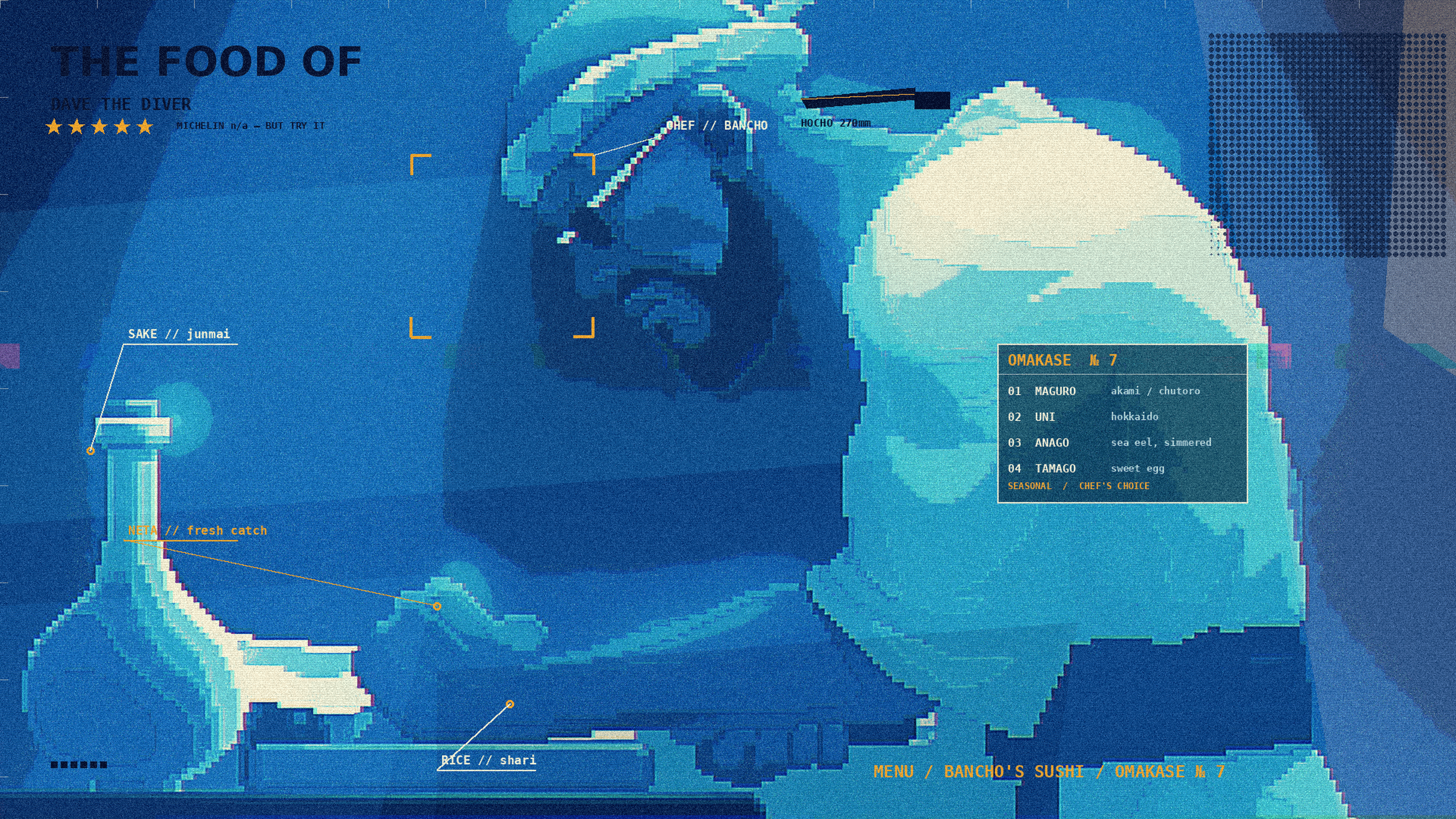
Which is Dave the Diver's kitchen, turned inside out. Bancho doesn't hand you a menu either. The menu is whatever you, the diver, dragged out of the dark that day. When I asked Jaeho Hwang, who directs the game and heads MINTROCKET, how the loop came together, he described landing on "the idea of taking the fish you'd just caught, turning them straight into sushi, and then layering in combined dishes to push revenue higher." That is omakase logic from the supply side. The sea decides, you adapt, the customer trusts. The game just lets you stand on the diver's end of the deal for once.
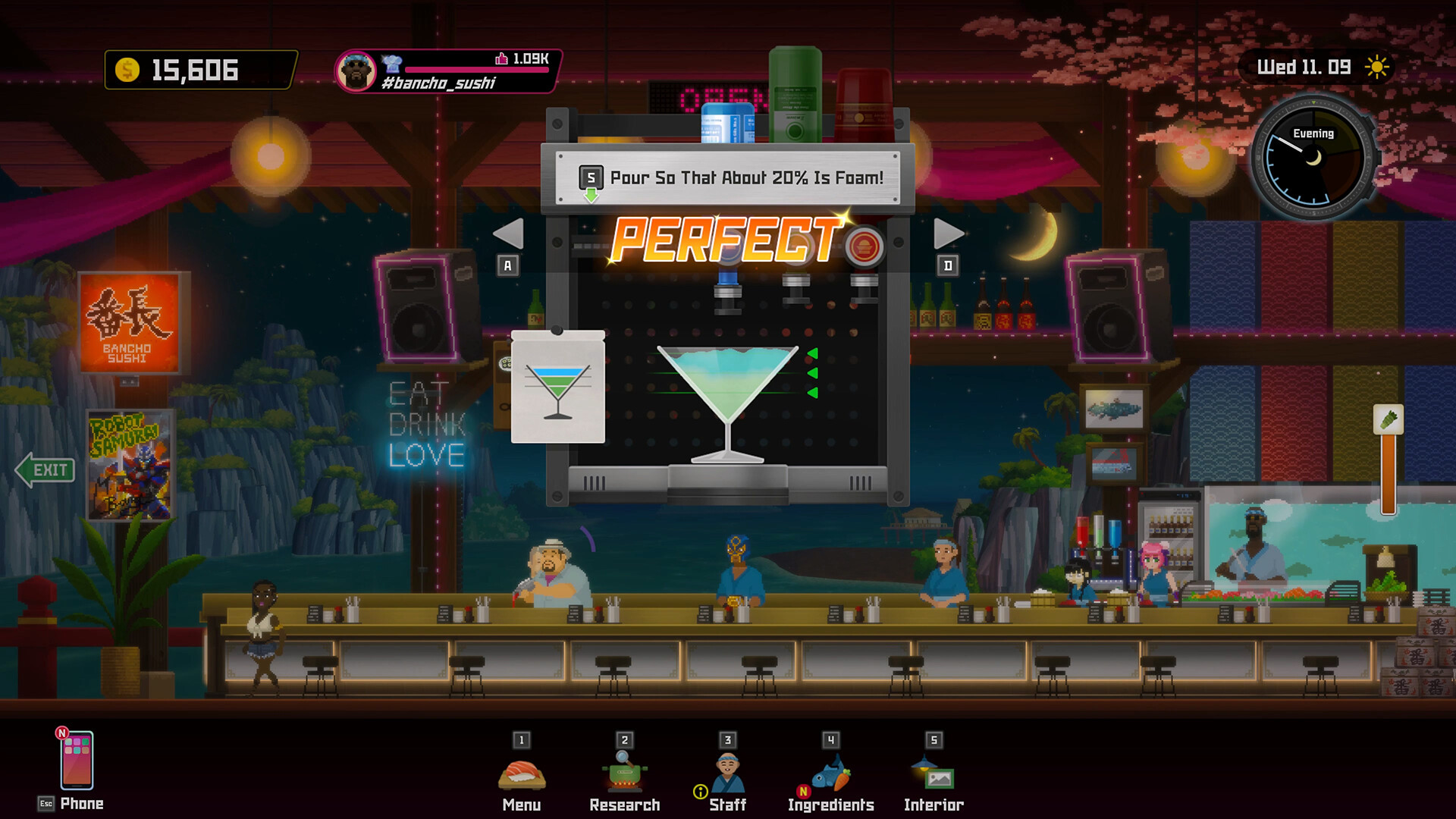
Here's a confession that slightly undercuts everything I just said: until Dave the Diver, I had never once sat for omakase. I'd eaten plenty of sushi. But the full hand-it-to-the-chef ritual always seemed like a thing other people did, people who knew which questions to ask and which fish to get excited about. It took a cartoon about a diver who stabs fish to talk me into it. I came out the far side of the game wanting to taste the real version of the loop I'd just spent forty hours running, and so, for the first time, I went looking for a counter. I found two.
The first was here in San Diego, at a place called Hidden Fish. It was lovely and a little formal. The chef walked us through every piece, where it came from and what he'd done to it, and I kept catching myself recognizing things the game had slipped me without my noticing: that the menu was really just whatever was best that week, that the cured and simmered pieces were quietly carrying more flavor than the plain raw ones. It made me a more grateful eater. Dave had, in its roundabout goofy way, done my homework.
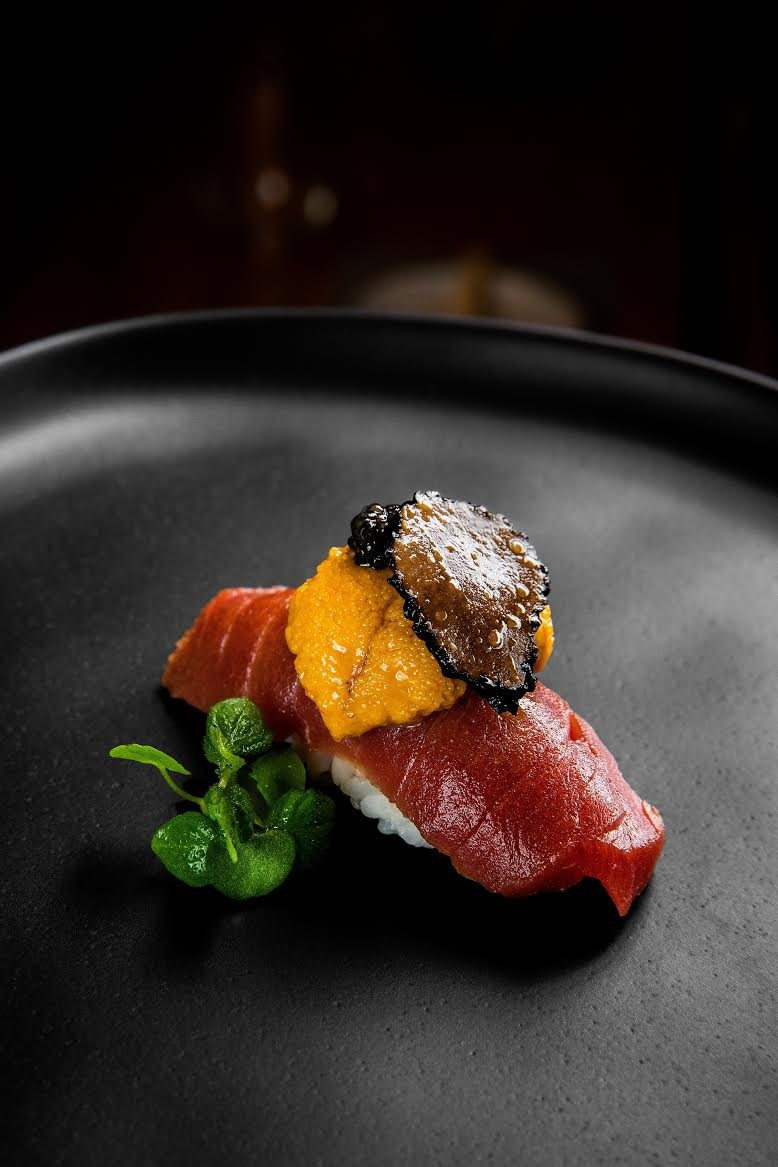
The second one I can't fully hand you, because I have searched and searched and cannot turn up its name. It was in Busan, a tiny casual spot, no white-tablecloth hush to it, more neighborhood than occasion. And I liked it more. I think that's because it was a spot closer to the ocean (it certainly smelled that way), and the whole thing felt closer to what all of this is reaching for in the first place: the fish, the water it came out of, and almost nothing in between. That best meal I opened this piece with, the one I didn't order? That was the Busan place. But again, it's an experience right out of the game - especially getting to see fishermen that capture the fresh ingredients turned into your meal.
There is a real restaurant on Jeju Island that set all of this off. The owner dives in the morning and cooks what they bring up at night, and when Hwang's team came across it, the whole game snapped into focus. They had already wanted to make something set in the ocean. What they needed, Hwang told me, was "something more interesting than just selling whatever you'd gathered from the sea." A cook who was also the diver was the answer: one person closing the entire loop from seabed to plate by hand.
It's worth saying where the kitchen heads next, because as I write this MINTROCKET has released Dave the Diver: In the Jungle, and it hauls the whole operation somewhere the divers never went: a freshwater lake deep in the jungle, where Bancho swaps his sushi counter for a grill.
The change runs deeper than scenery. You can't really make sushi from freshwater fish, as Hwang pointed out to me, so Bancho becomes a grill cook, turning skewers over fire instead of pressing nigiri. The social math shifts too. In an Inven Global interview, Hwang explained that Bancho Grill has "no regular customers. This time, all customers are villagers." You have to earn them. The restaurant grows only as you get close to the people of Utara and learn to cook the food they truly crave, which Hwang called "the biggest differentiator from Bancho Sushi." Win an outsider over and they might even stay on as staff.
To cook from a place none of them knew, the team did the haenyeo thing in their own fashion: they went and got their hands dirty. Kim's interview has Hwang describing flying in recipe books from Indonesia and studying the real methods, "cooking methods using coconut milk, palm sugar, and banana leaves," with the lead designer taking a proper cooking class. It's the same instinct that sent an art director to get scuba certified for the first game, just pointed at a stove instead of a reef. Wherever Dave travels, the rule holds: nobody serves it until someone on the team has gone and learned to make it for real.
That, in the end, is the food of Dave the Diver. Not the recipes, which are mostly an excuse, but the belief sitting under them: that the best thing you can do with a fish is shorten the distance between pulling it from the water and watching someone enjoy it. Omakase trusts the chef to honor that distance. Dave the Diver, goofy harpoon and googly-eyed fish and all, is built on the exact same conviction. The shortest line between the sea and a happy person at a table is the entire point, and it always has been.
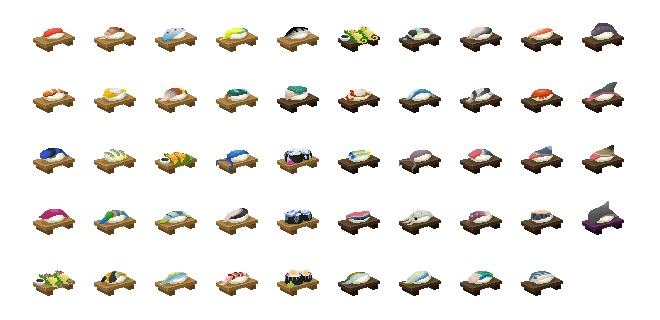
I still think about that meal I didn't order. Dave is the closest a game has come to letting me cook it.