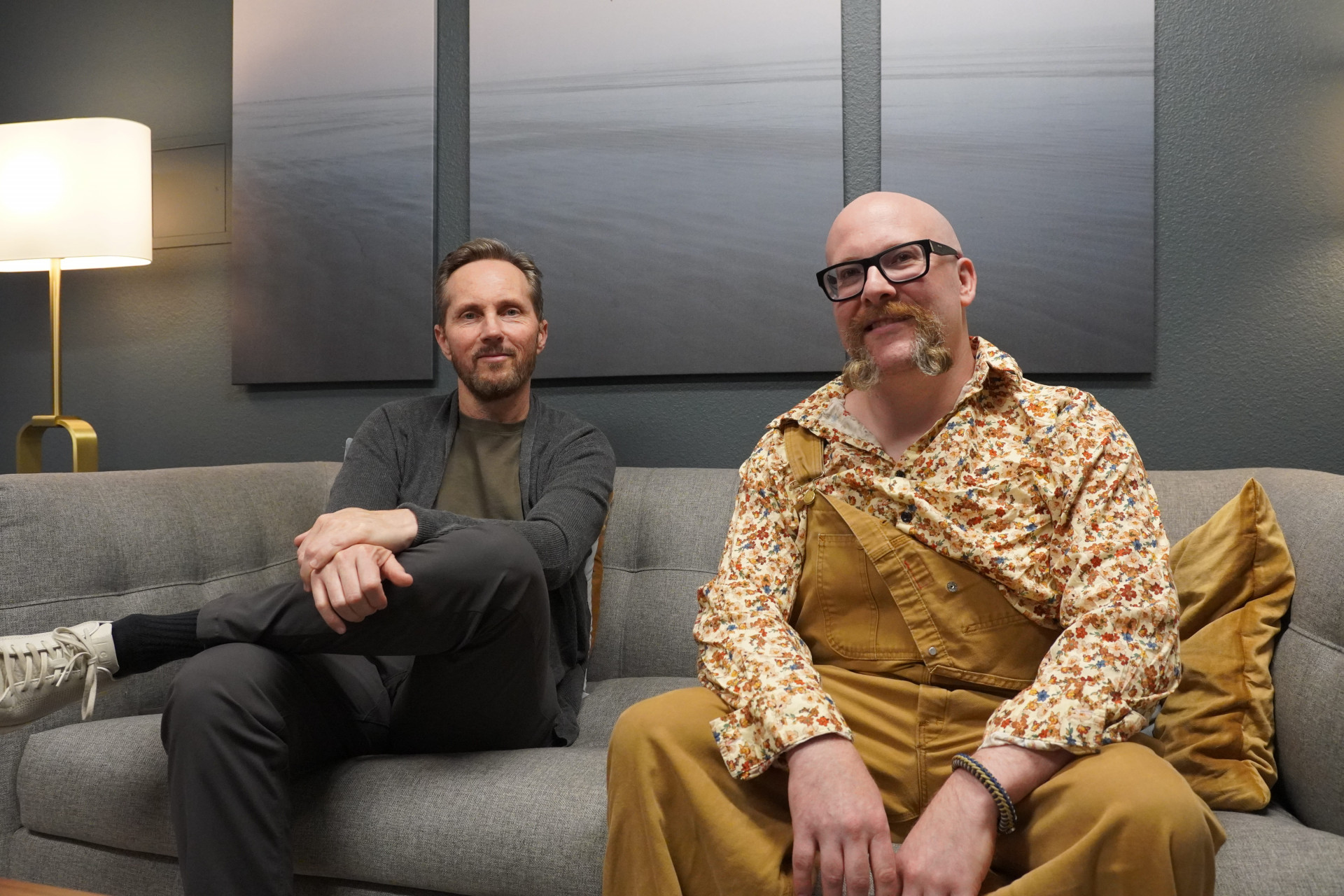
After years of quiet development, That's No Moon has finally pulled back the curtain on its debut project: a single-player, narrative-driven reimagining of Smilegate's billion-player Crossfire franchise. Revealed at Summer Game Fest, the game trades the series' competitive multiplayer roots for a story-first action-adventure built around two reluctant allies from opposing factions, Layla and Delroy.
It's an ambitious swing from a studio with the pedigree to back it up. Co-founder and chief creative officer Taylor Kurosaki and game director Jacob Minkoff spent years at Naughty Dog and Infinity Ward shaping titles like The Last of Us, Uncharted, and Call of Duty: Modern Warfare, and Smilegate's investment has given them the room to chase the kind of grounded, character-driven experience those games are known for.
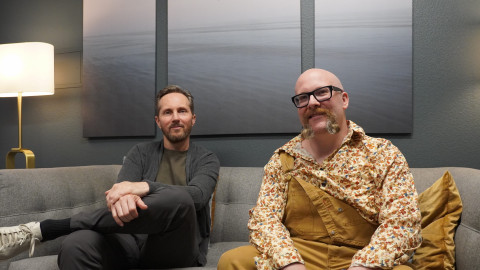
INVEN sat down with Kurosaki and Minkoff to talk about why they took a multiplayer franchise in a single-player direction, how the friction between their two leads shapes the moment-to-moment combat, the studio's new Adaptive Cover system, and the deceptively difficult technology making it all work.
To get things started, one of the big things you announced was the decision to make this single-player only. Tell me a bit about why you decided to go in that direction, especially with Crossfire being originally a multiplayer franchise.
Taylor: Number one, Jake and I are single-player developers, really. If you look at the games we've worked on, that's what we know, and it's what we love. These are the experiences we can't get enough of. There are a lot of great multiplayer games, co-op games, and online games. They're great, but these kinds of single-player experiences are a little rare. We love them. They're our favorite moments we've had in gaming, and we want to make more of that kind of stuff for players.
In terms of Crossfire being a multiplayer IP or not, I've been thinking about that question lately. No one would say, "You're making a Batman TV show, but Batman's really known for comic books, so why would you make a TV show, or a movie?" These are different creative expressions of the same IP. So we don't look at Crossfire, the original game, as "well, it's multiplayer." We look at the narrative and thematic underpinnings of it and ask, "What can we do? How can we play in this particular sandbox?"
We would never work in an IP that we didn't feel was aligned with our way of thinking. Crossfire, at its very core, is about two different groups with different beliefs who are locked in conflict. That controlling idea can be interpreted across a bunch of different media: movies, TV, single-player games. So that's how we looked at it: how can we take this thing that's had a ton of longevity and a ton of success and have something to say within that IP, in that context?
Taylor: I'll just add that we've spoken to the person who originally created Crossfire. We did a deep dive into the lore, and we said, "What we see is two sides who are equally right and equally wrong. Their beliefs, taken to an extreme, are wrong, but fundamentally there are moral and ethical beliefs you can get behind on both sides. Is that what you were going for?" And he said, "Yes, that's been the idea the whole time." He was very excited to have the opportunity to do a AAA, narrative-driven, prestige version of that original narrative.
It gives us the opportunity to tell a story we've wanted to tell for a long time. At other places we've worked, we were often forced into creating villains. People would come to us and say, "Where's your villain? Where's the person I want to hate? I want to shoot somebody in the face at the end." And that just doesn't feel like the real world. The real world feels much more morally gray, with people with flaws and more nuance. We've wanted to tell that story for a long time, and when we dove into Crossfire, we realized it was our opportunity to finally tell it.
One of the really interesting parts was that story of conflicting protagonists. Watching the gameplay, it's very reminiscent of other Naughty Dog titles like the later Uncharted games and The Last of Us. With those conflicting protagonists who aren't completely on the same side, at least at first, how does that translate to the gameplay, in terms of how those two interact? Were there any new developments in how that translates?
Jacob: Yeah, for sure. Taylor and I always say that story and gameplay are inextricably linked; one must support the other. So the way this conflict manifests in gameplay is that there's pressure on these characters that forces them to work together. You, the player, really need to feel like you wouldn't be able to face this threat on your own.
The mechanical relationship between the player and Delroy is that Delroy draws fire for you and distracts the enemy. When you're being fired upon and try to escape, a thing we're doing here that's particularly unique, that isn't done in many games at all, is that enemies have separate knowledge of the player versus Delroy. That means they can be aware of him, but you can reacquire stealth. While he's drawing fire, you can sneak up on someone who's unaware of you and get a stealth kill, flank them, whatever the case is. You end up relying on this: "Okay, he's pulling aggro over there, so I'm going to go over here, and they're not going to see me."
But then, what if later in the story the characters are more out of alignment? What if you're going up against an enemy that Delroy doesn't want to fight, that he's more emotionally attached to, and now he's not helping you? You get to feel that difference in the combat when, for emotional and story reasons, the characters are no longer aligned. And when they become aligned again, it's not a linear relationship. It has its ups and downs, and we reflect that in the gameplay.
There are any number of times you'd really feel the lack of help from your buddy if they're not there. For instance, there's a down-but-not-out mechanic in the enemy AI; sometimes you have to run in and finish them with a melee kill. Let's say you've taken a lot of damage and you're bandaging yourself; Delroy can go in and do that finisher for you. But if you're out of alignment, he's not there to do it. So we really play with that relationship over the course of the game and how it reflects in the combat.
Regarding the gameplay, what really stood out to me was the melee combat. It looked super brutal, which is what I loved about games like The Last of Us. We mostly saw stealth kills in the gameplay demonstration, but can you go a bit more into how you've been using your motion capture studio for aspects like the melee combat?
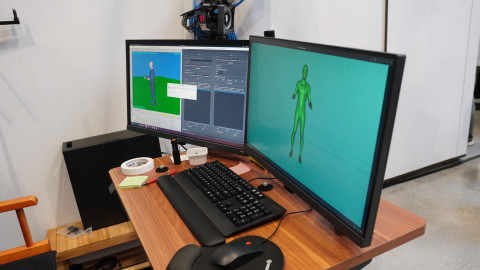
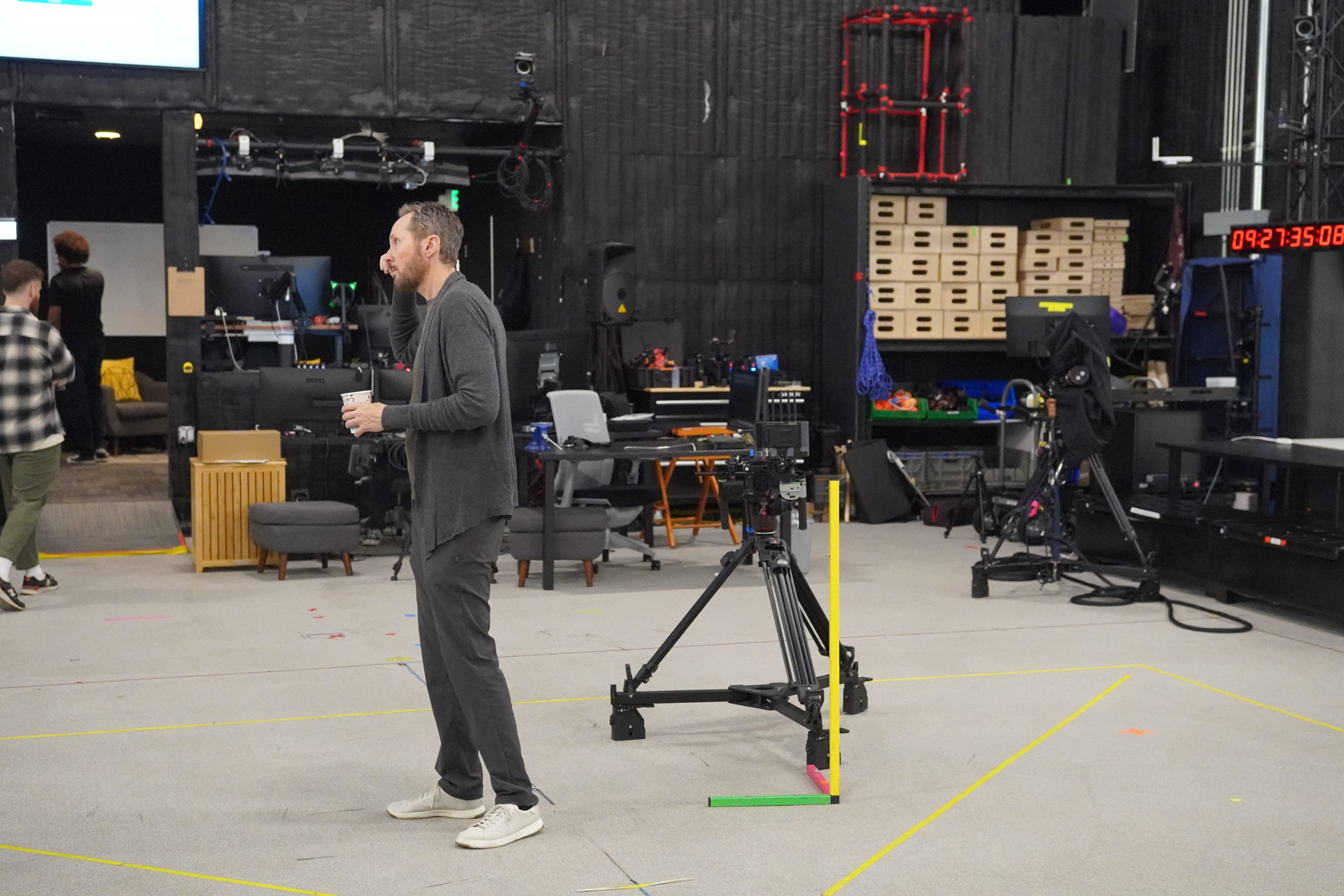
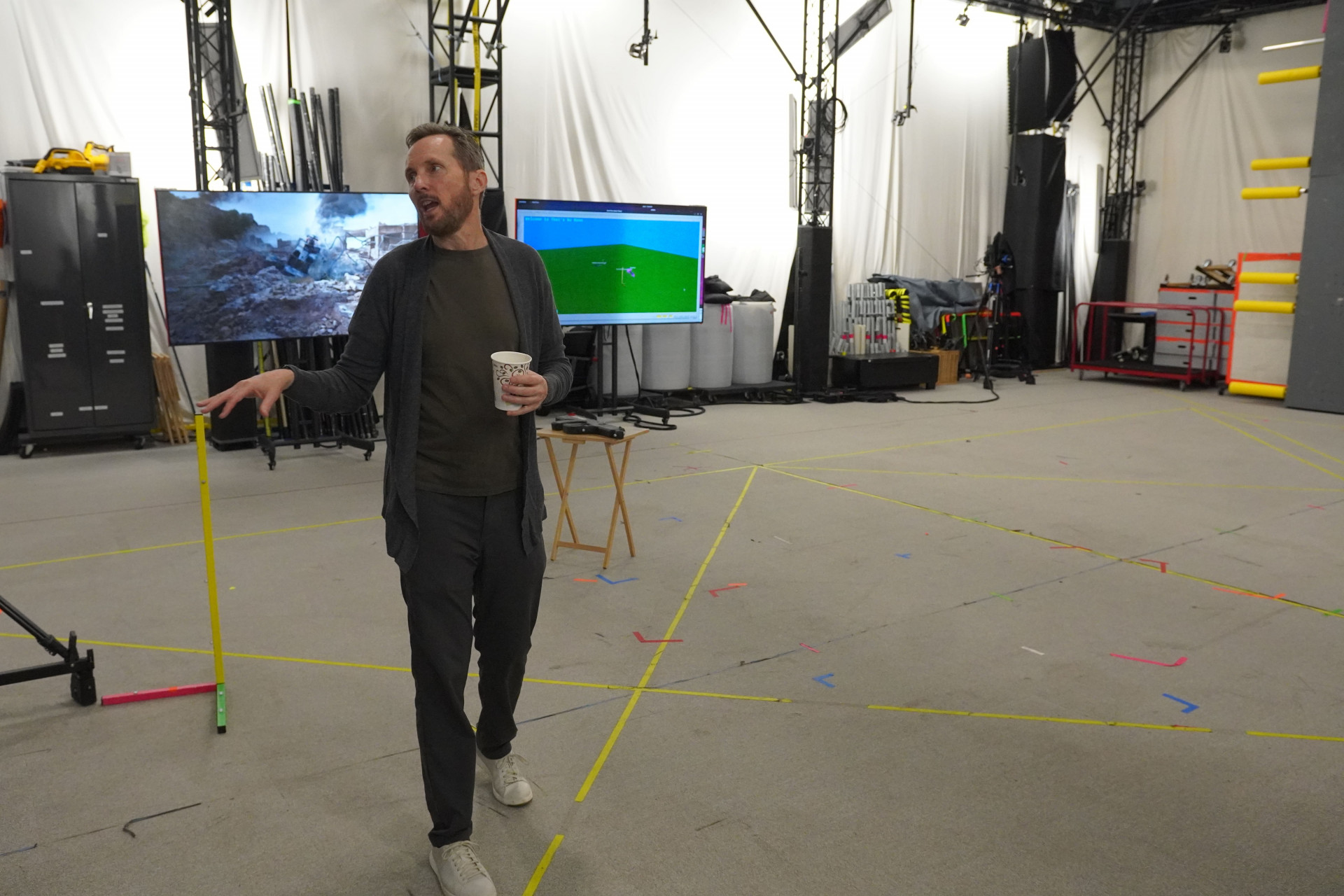
Jacob: Melee combat certainly exists. As I said, there are finishers and stealth kills. You can strike an enemy and knock them back, then open them up for a blast of gunfire. We have an incredibly talented and passionate animation team and animation engineering team, and we have our own state-of-the-art motion capture stage. We've put literally thousands of hours of animation capture into this game.
I strongly believe the contributions of an animation team to this type of AAA narrative-driven experience are really the thing that makes it stand out from other games. All of that highly authored, very personal, grounded human performance is really what makes games like these stand out.
Absolutely. Regarding the story, what did the process of writing that story look like? What were some of the creative inspirations or pieces of media that inspired it?
Taylor: Jake touched on it previously, but the reason you'd write two characters who aren't completely copacetic is because of the drama it affords you. If a relationship is completely solved, there's no drama there. We want to see people overcome adversity, in the gameplay, and also in their interpersonal relationships.
At the heart of it, storytelling is information that we as humans are hungry for. If we see characters, or, in the case of games, play as characters who overcome these obstacles, it gives us information about how we could overcome an obstacle in our own lives. Sure, Layla overcomes an existential threat that's forcing her to work with her mortal enemy in order to survive and succeed. As a player, not only do I empathize with her because she's a sympathetic, relatable character, but what I'm also learning, whether I realize it or not, is: if I had a flat tire on my way to work and lost my wallet and all of these things, how could I overcome those obstacles to arrive at my destination? I'm pattern matching. I'm learning these lessons as a person.
This is why we're drawn to storytelling. We do that pattern matching, and we go, "Well, if Layla can overcome all of this, certainly I can overcome my alarm not going off in the morning." That's what we're after. That's why people have loved storytelling since the beginning of time.
In terms of these characters, what are some of the archetypes we're looking at? Because we are looking at archetypes. We would never say we've invented something out of whole cloth that has no parallels to anything you've ever seen before. That's actually a bad idea. You want the audience to say, "Oh, yes, I love these kinds of stories. And how is this story both playing in that genre and also doing something new?"
Off the top of my head: I remember being a little kid watching a TV show called The Odd Couple. One character was very particular and organized, and the other was much more laissez-faire and disorganized, and you wanted to see how they'd interplay. At the end of the day, they'd disagree, bicker, fight, and see the world in totally different ways. But it was those differences, and their willingness to step out of their own version of how they think things should be in order to be open to a different way of thinking, that's what we got out of that. I'm going to give all these really old examples.
There's a movie called Planes, Trains and Automobiles, with Steve Martin. There's another movie called Midnight Run, where a bounty hunter is bringing in a fugitive. The fugitive doesn't want to be with the bounty hunter, of course, because he wants to be free, and the bounty hunter doesn't want the fugitive to get away; he wants his payday and to move on. But they have a common humanity, and they're going to be forever changed by their time together. It's the same thing for Delroy and Layla in our story.
This is maybe a strange way to put it, but take it in the best way possible: we believe that people want the same but different. Give me a story about two disparate characters who have to figure out how to work together, but do it in a different way. Make me a third-person, cover-based, action-adventure game, but do it differently. And that's where adaptive cover comes into play. It's the same metaphor, but approached in a completely different way, so people can say, "Yeah, I love cover-based shooters, but I've never seen a cover-based shooter like this."
The Crossfire IP has had its own television series and other things. Is there any implementation of that kind of material within this game? And to add to that, I'm curious about how this game works on a global scale, in terms of your collaboration with Smilegate and, as you mentioned, the original creator of Crossfire.
Taylor: Again, we've had many conversations with the creator of Crossfire. We dug deep into their lore and their story bibles, and we went to China and played matches of Crossfire in internet cafes against much better Crossfire players. It's an IP I wasn't familiar with before taking on this project, so I wanted to immerse myself in that game and talk to people: "What's your favorite mode? What does Crossfire do that other multiplayer shooters don't?"
Once we immersed ourselves in that world, we said, "Let's create something that, number one, is innovative, because otherwise, why do it? Number two, it aligns with our sensibilities and the way we see the world, and it appeals to hardcore, long-standing Crossfire fans who know all the lore." We can't make something where we've ignored the IP or gone against what people know of it. But it also requires those fans to say, "This game may not look like that game or sound like that game, so I'm going to go in with an open mind," and to ask, "Does this game play nice within that IP?"
In other words, I can have a different filmmaker make a different Batman movie with a different aesthetic, but is it quintessentially Batman? Imagine a creator making a Batman game where Bruce Wayne was not an orphan. That would fundamentally break your understanding of Batman and what drives him to be who he is. But it can be a different actor playing Batman, and it can be a bright, colorful aesthetic or a dark one. You can have creators with different palettes. They paint a different way, but they capture the overall thematic intention of the source material.
So we want to do that for the longtime fans, while also creating something where I'd be completely fine with there being players who, like me, aren't aware of the Crossfire IP and just think this is a brand-new game with brand-new characters in a brand-new universe. The game and the story function that way as well. It doesn't require you to be a fan. It honors your fandom, but it doesn't require it. We want to appeal to both of those audiences equally.
In terms of the development process, what would you say has been one of the biggest challenges you've encountered so far? And what's been one of the biggest "oh, we have something really special here" moments for you?
Taylor: I'll kick this off. You can talk about the problems, Jake, because I know you can think of one particular part of our innovation that's really difficult. But overall, we're very pleased, very excited, and very grateful that we've had the opportunity to make this game. Hopefully you've gotten from our tour of the place, and from us talking about other games we've made, that we are always striving to push the medium forward. We always want to innovate, because it's a very nascent medium we're working in, and we want to see it evolve and help contribute to its evolution.
Smilegate has given us the opportunity to make the most innovative game of our careers, and for that we're super grateful and super excited for players to see what we've been cooking up and eventually get their hands on it. But that innovation is not always the easiest road to take. And Jake can talk about some of the places where it was even more difficult than we realized it would be.
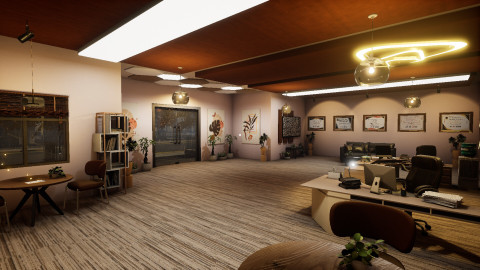
Jacob: Making these environments is very, very difficult. Traditionally, you'd make an environment with simple metrics, what's called block mesh, or white-boxing, with very simple geometric shapes. You can't do that with an environment like this, so we had to teach all of our designers to function more like artists from the start, using real organic shapes to build the environments.
Then, when you're aiming your gun in these environments, the thing about a traditional third-person cover-based shooter is that you know exactly the height of the cover. So you don't have to do any fancy calculations to determine what animation the player has to play to aim over a piece of cover. It's standardized. As long as the cover matches the normal metrics, all you have to do is play the animation, the gun will be clear, and you can fire over it.
Because the player can be any distance from cover in this game, and because the cover can be any height and any shape, every time you pull the trigger to aim down sights, we do an absolutely ridiculous calculation, easily the hardest thing we've been trying to figure out in this game. And because I know we've done it right, it should be completely seamless to the end user; you'll have no idea. But the amount of effort that went into it is crazy.
There's a thing called EQS, or environmental query system, in Unreal, which is usually used on the ground for AI to determine a good spot for them to stand and aim from. We use it in the opposite direction, oriented to the camera. When you pull ADS, we create a grid of environmental queries. We put a whole bunch of traces forward and identify which traces pass versus which ones hit the geometry around you. Then we pull from our motion matching database and say, "All of these over here didn't pass, because they're a bunch of rocks, but these did. From where the player character is standing, what pose do they need to take in order for the muzzle of their gun to clear the geometry around them?"
Then: where are they aiming? Because the player isn't the character; they're the reticle. You're aiming from the reticle. So we need to look at where that hits in the distance, and then rotate the player character and the camera so that, as they take this pose, we remain aiming at the thing in the distance.
That series of calculations was incredibly difficult to figure out, and it made aiming in this game extremely difficult for a very long time. No traditional third-person cover-based shooter has to figure it out. But assuming we've done our job right, players will have no idea. It'll just feel seamless. It'll feel like, "Yeah, of course that's what I wanted to do. I wanted to aim over that object and shoot into the distance."
I think that's the real trick with this whole game. A lot of people will look at it and say, "Weren't games doing this before?" No. Games have had a very simplified metaphor, and we've been developing cutting-edge technologies to allow you to have a much more realistic, grounded experience in these environments than any previous game. It's been a real journey.
-

I write. I rap. I run. That’s pretty much it.

Sort by:
Comments :0