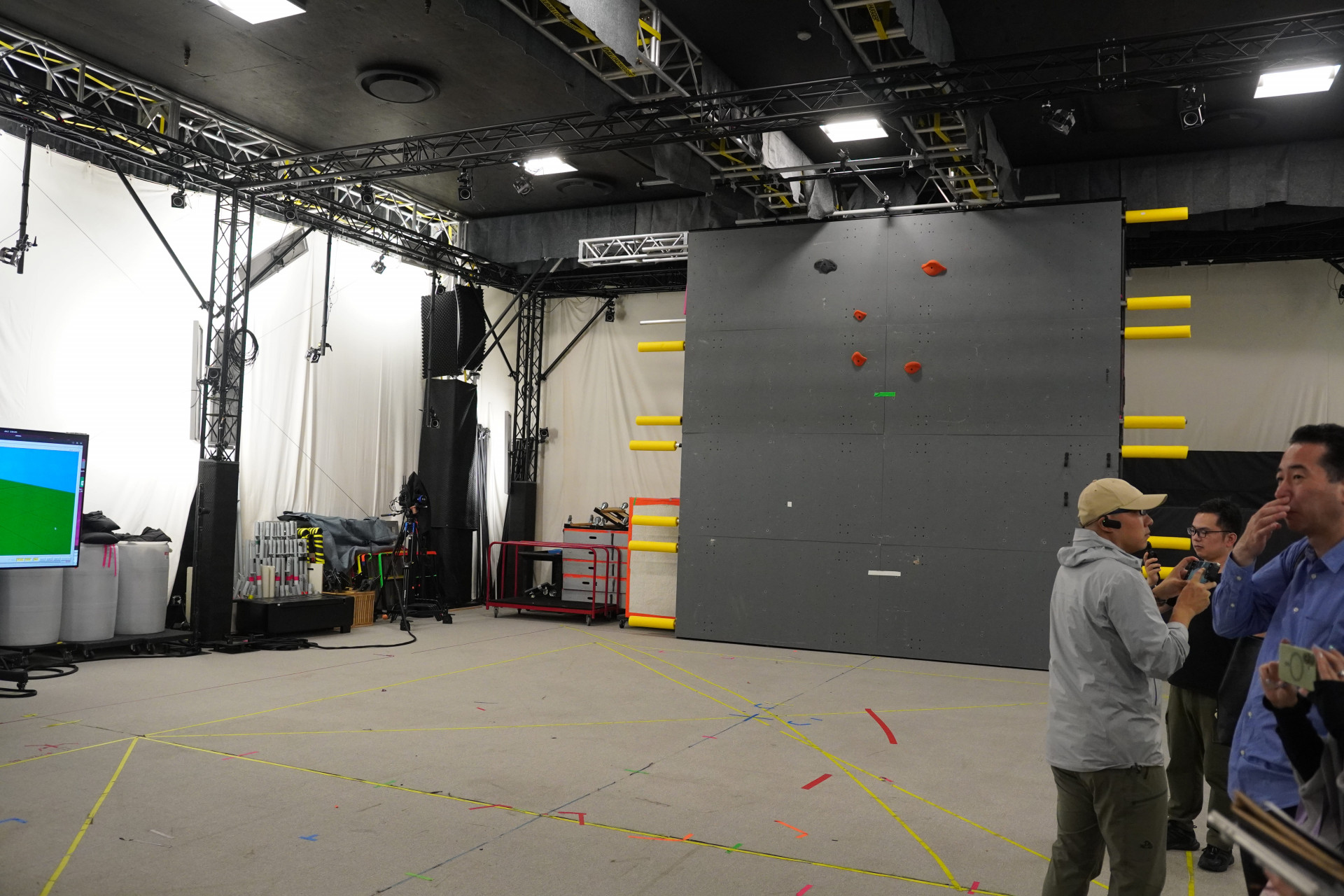
There is a moment, standing in the middle of the soundstage, when Taylor Kurosaki asks me to stop looking at the cameras and the trusses and to look instead at the floor.
Scattered across it are dozens of ramps, platforms, and angled wedges, modular pieces that can be assembled into almost any incline or elevation. To an untrained eye they read as set dressing. To Kurosaki, the Co-Founder Chief Creative Officer of That's No Moon, they are the origin of nearly twenty years of his career, and the reason he is standing here at all.
"On every game we have made," he tells the small group of journalists gathered in Los Angeles, "we want to innovate. We want to push the medium forward." It's a sentence he repeats, in various forms, more times over the next hour than anyone bothers to count, and by the end of the afternoon, it's more of a slogan than the studio's namesake. INVEN had the opportunity to tour That's No Moon, and get a behind-the-scenes look at how they're reinventing CrossFire.
A room with a long memory
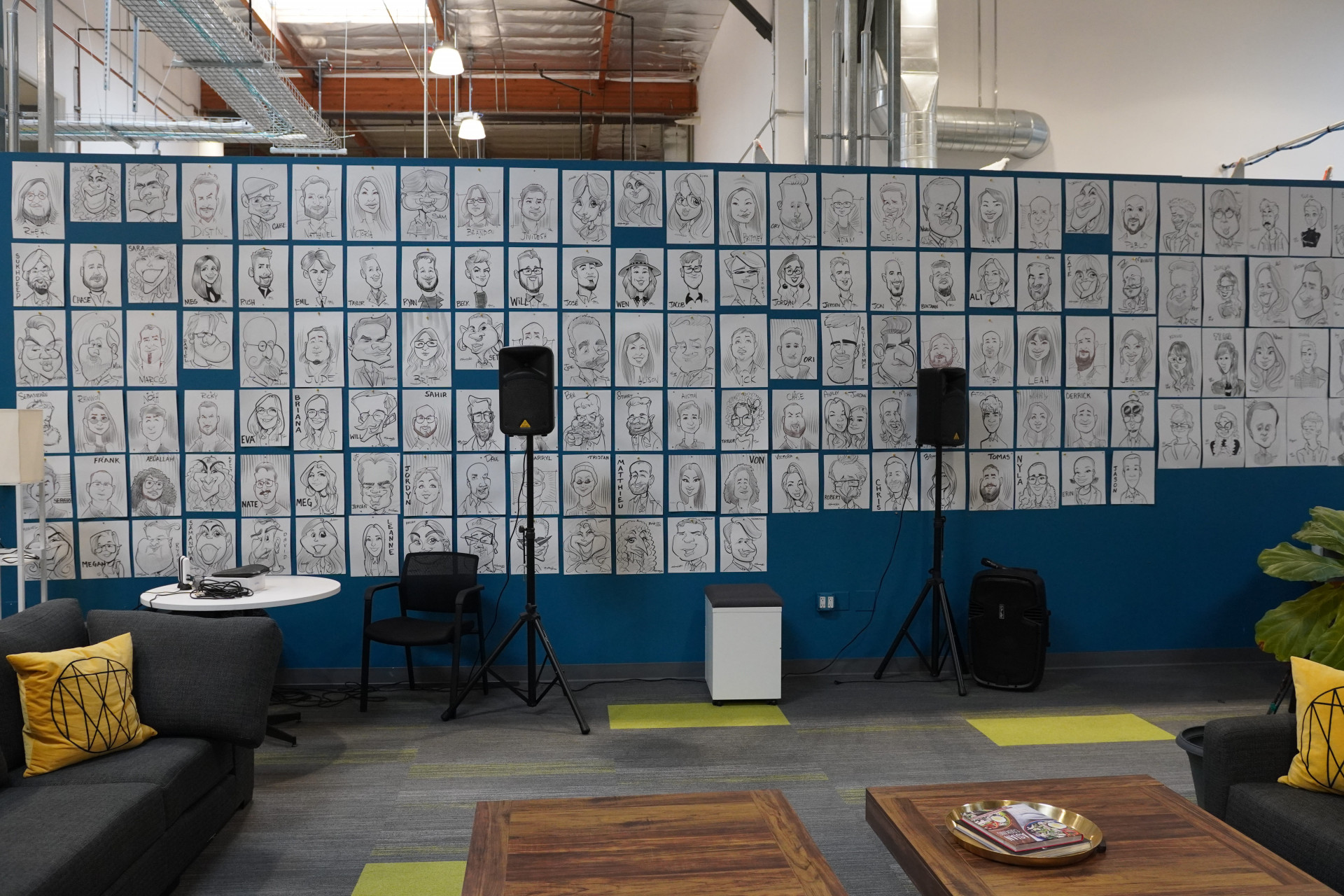
The building has a history in how blockbuster entertainment actually gets made (and also a bunch of very awesome caricatures that I wish I could be part of). Kurosaki first set foot here in 2005, when the facility specialized in motion capture and nothing else, and he was a developer at Naughty Dog working on the first Uncharted. The performance capture for Drake's Fortune was shot in this room. So, by his telling, it has a remarkable share of every major performance-captured game of the 2000s and 2010s: Gears of War, God of War, the kind of catalog where you stop reciting titles because the list is essentially all of them.
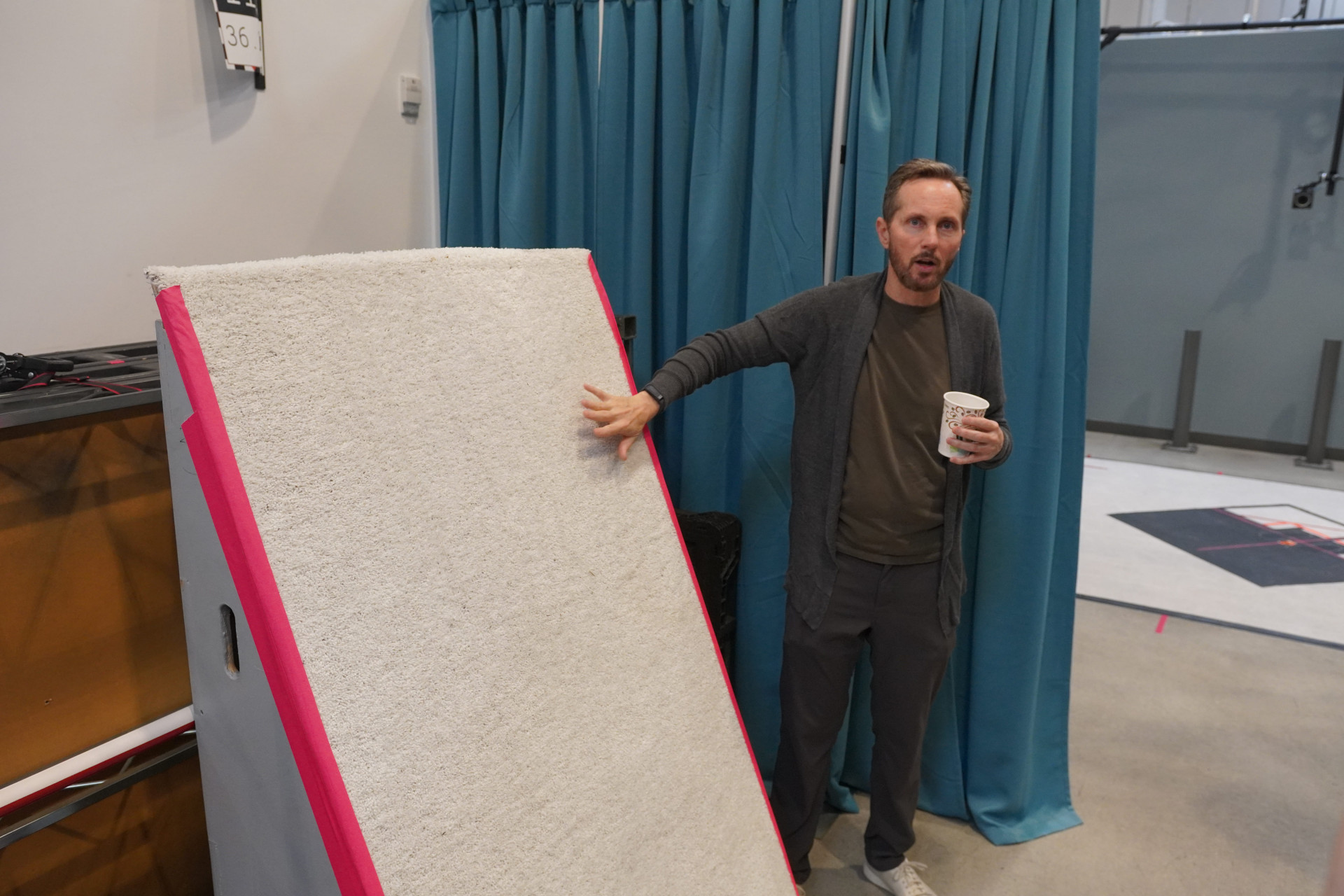
The wedges on the floor tell a story too. After the first Uncharted, Kurosaki and his colleagues told the facility they could not keep shooting the way they had. The acoustics were so poor that all of the dialogue had to be re-recorded afterward, the actors brought back to a booth to redo lines they had already performed. The studio's answer was to rebuild itself: a kit of modular geometry that could reconstruct complex, organic environments in physical space, so performers could climb, scramble, and take cover against terrain that matched the game world. That rebuild was effectively commissioned by the demands of Uncharted 2. The stage I was standing on, in other words, was shaped by the same creative restlessness Kurosaki kept invoking.
Then Disney bought the place. Jon Favreau and Hans Zimmer worked out of these offices on the photoreal remake of The Lion King, and Favreau stayed on to shoot the first season of The Mandalorian here. When Disney moved out, That's No Moon moved in, inheriting a pair of plush screening theaters that the afternoon's presentation would eventually retreat into.
The studio's name is a Star Wars joke, and Kurosaki lets the second half of the line hang in the air: that's no moon, it's a space station. The space station has a secret weapon. So does That's No Moon, and it's the floor under everyone's feet.
Innovation as a working condition
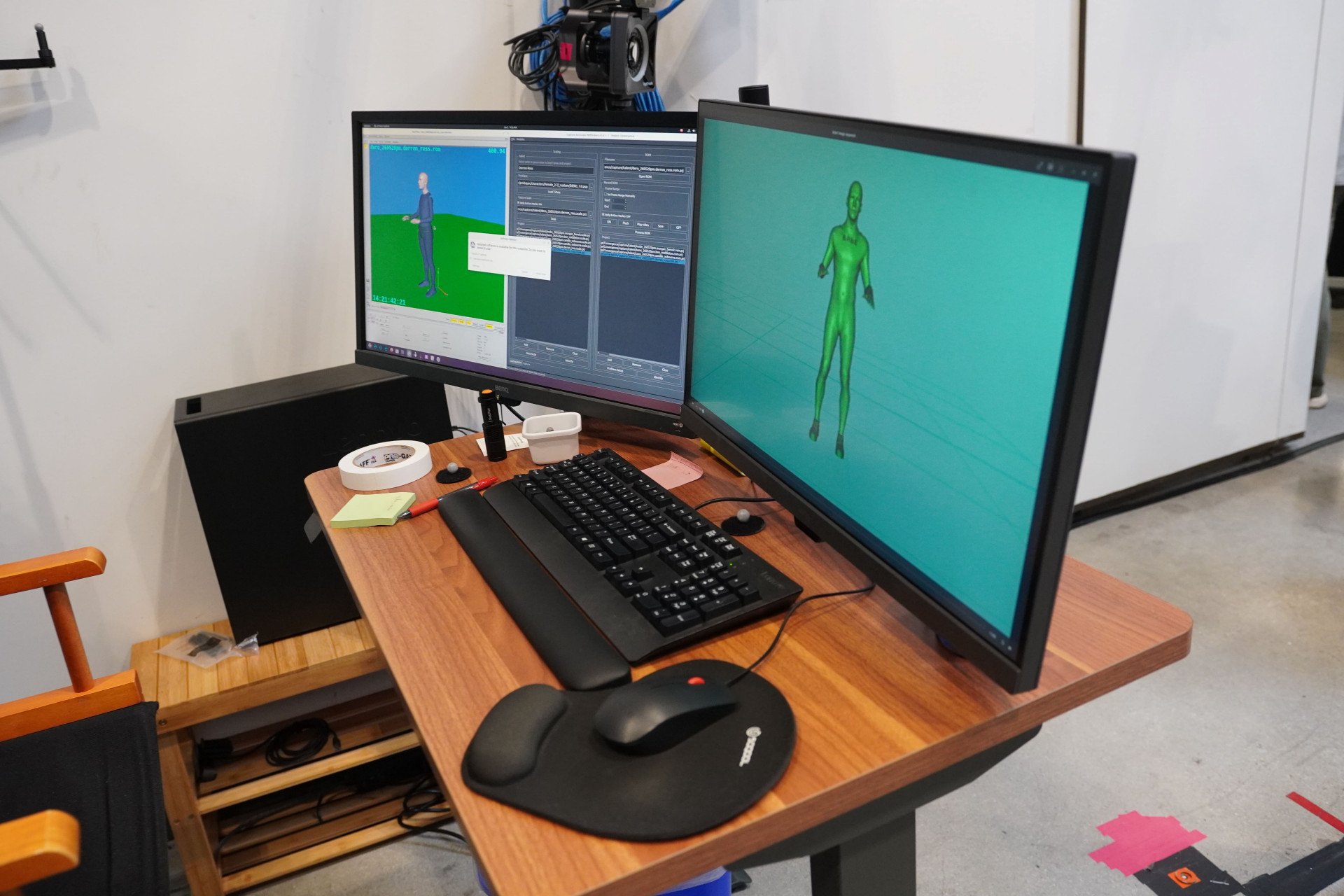
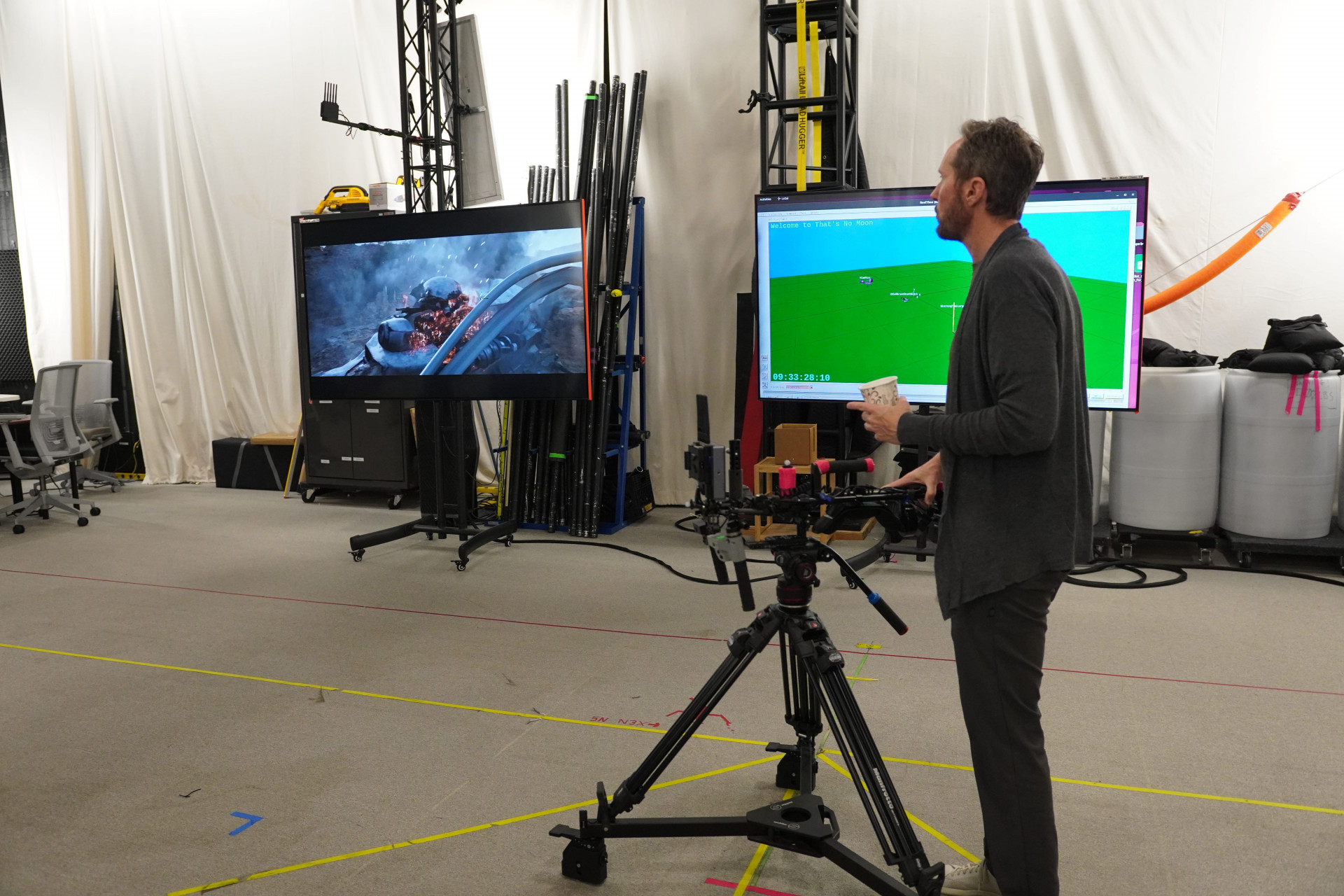
What that weapon enables, technically, is the through-line of the whole event. The crew here, Kurosaki says, work across film, television, and games, using the same capture technology James Cameron's team uses on the Avatar films. The studio's game runs on the state-of-the-art Unreal Engine 5, and the engine runs live on the stage during shoots. Where a director once squinted at gray proxy figures and imagined the rest, the team's director of photography now frames shots against a lit, rendered, in-engine world in real time, holding a virtual camera studded with tracking markers.
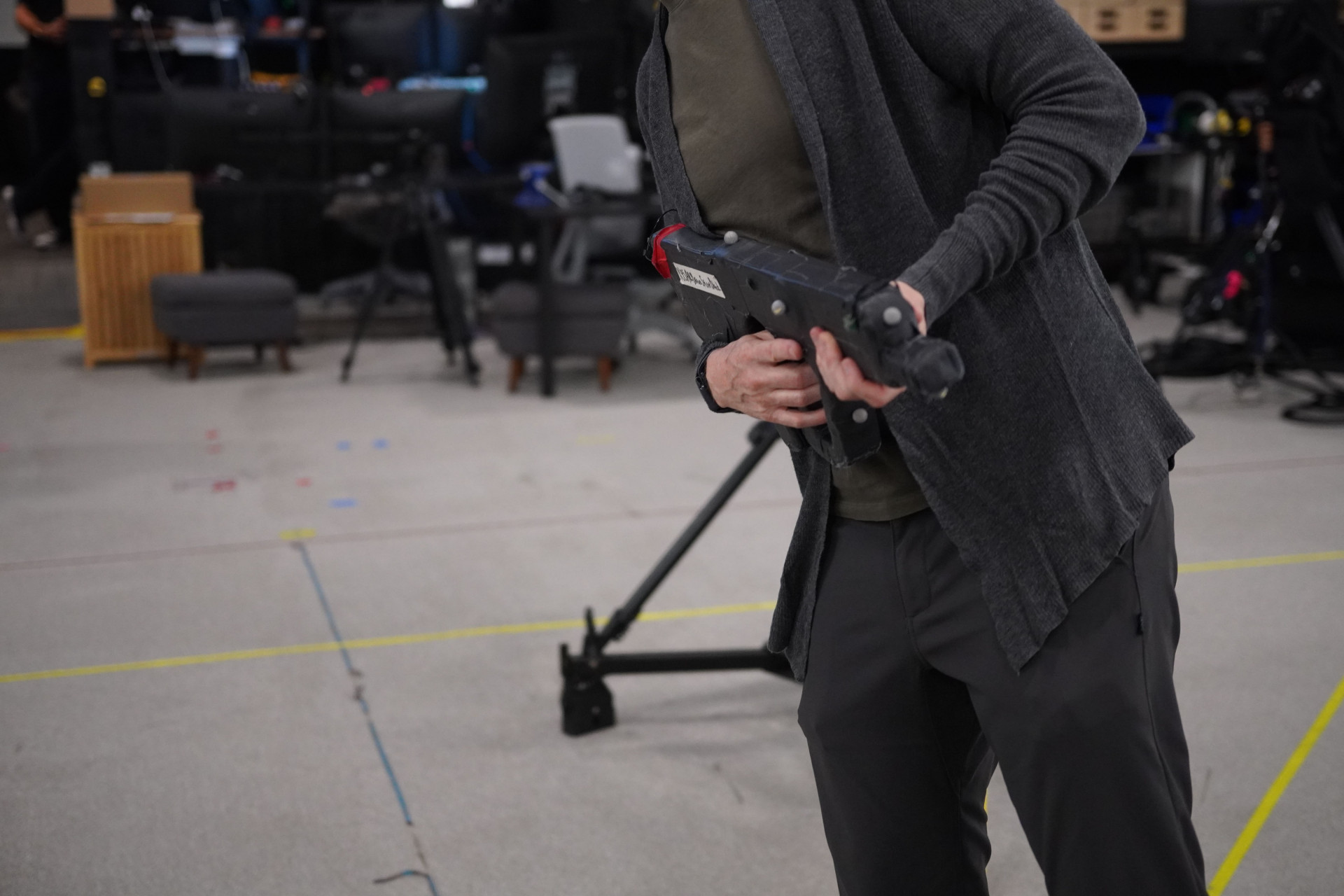
The capture pipeline has been layered up to match. Where the early Uncharted games separated motion from voice, That's No Moon records motion, face, and audio simultaneously, then logs the physical cameras' positional data on top, so that even the handheld imperfections of a real operator survive into the final presentation. A prop weapon gets passed around: it carries capture markers, its touch points are modeled precisely on the in-game firearm, and it is soft enough that a stunt performer can fall on it without injury. Overhead, a silver truss flies performers around the volume on wires.
Kurosaki's justification for all the apparatus is consistent: fidelity is not vanity. The more convincingly a space feels inhabited, the more immersed a player becomes, and the more nuanced a story the team can tell inside it.
A studio built to fit the game
Onto That's No Moon's theater! The introductions get formal: Kurosaki is joined by Game Director Jacob Minkoff. The CEO of Smilegate, the Korean publisher whose CrossFire franchise and backing make the whole enterprise possible, sits in the back of the room.
That's No Moon was founded in 2021, and Kurosaki frames its newness as an advantage. Because nothing existed beforehand, the team could be purpose-built around the game it intended to make: a deliberate blend of veterans from acclaimed studios and fresh talent, assembled as a distributed team rather than one limited to whoever happened to live near Los Angeles. Kurosaki's own résumé runs through Naughty Dog and Infinity Ward; Minkoff's is the same.
At the center sits their partnership, eighteen years deep, built on tentpole single-player, story-driven games. Their stated North Star never changes: a link between narrative and design. Kurosaki is equally careful about what the game is not. Not multiplayer. No live operations. Not a branching narrative, but an authored story with a focus on player agency. Good storytelling, he says, should leave you feeling both surprised by where the story goes and convinced it could never have gone any other way.
Two people who can't stand each other
The heart of it, by the team's own framing, is empathy, specifically empathy for someone unlike you. The player character is Layla, who believes in progress and change. Her companion, the non-player character Delroy, believes in stability and predictability. They are diametrically opposed, and the events of the story force them into an alliance neither wants.
This is where Minkoff's half of the philosophy clicks in. The pair are pushed together by pressure, and the player has to feel that pressure too, or the bond rings false. If the game were simple and easy, he argues, the characters' grudging cooperation would read as a lie. So the game applies real, mechanical pressure: a grounded, lethal enemy, and a toolset to fight back.
That toolset is the studio's headline innovation, and Minkoff builds toward it by first dissecting the genre it belongs to.
Killing the lucky box
For roughly two decades, he says, third-person cover shooters have run on the same trick: simple boxy shapes and a binary, sticky relationship to them. Snap to cover and your stance drops; peel off and it rises. The genre has even trained its designers into a rigid vocabulary of heights, with dead zones in between where nothing gets built. The result is a kind of learned boredom. You enter a room, see the telltale waist-high blocks, and know with zero surprise that you have walked into a shooting gallery. Maybe that was exciting in 2008, but the novelty has worn off.
What changed Minkoff's mind was Unreal Engine 5. As one of the engine's first licensees, That's No Moon got early time with Nanite, the technology that lets developers build dense, organic, effectively unlimited geometry. The team could scan and reproduce a wildly complex real-world environment (Minkoff showed them a still from the film Triple Frontier, soldiers pressed against irregular rubble) and have it run smoothly. What it could not do was let players take cover against that geometry the way the soldiers in the photo were. So the team built the physics, animation, interface, and enemy-navigation systems to make it possible.
The reference-gathering was charmingly low-tech. Minkoff walked through a park near his house working out how a real human would use the terrain, then studied footage of airsoft players in Eastern Europe reading cover and exploiting the land. The output is what the studio calls adaptive cover. Rather than sticking to an object, the player drops into a cover mode and the character automatically assumes the correct posture for the surrounding terrain and the enemies' lines of sight, ducking to break a sightline even at a distance and adjusting as they move. Under the hood, the system projects a volume around the player, intersects it against enemy sightlines to define a safe pocket, then queries a motion-matching database (hundreds of thousands of stitched connections, drawn from thousands of hours of capture shot on that very stage) to fill it convincingly.
The payoff, Minkoff says, is that the safety blanket disappears. You can no longer assume that touching cover means survival. You have to read the distance, the shapes, and the enemy positions, and decide for yourself whether a piece of the world will actually hide you. Combat becomes strategy over strength: a smaller force surviving a better-equipped one through stealth, flanking, and terrain rather than by trading bullets in the open.
The reveal
Then the title card lands, and it is the one open secret of the day: the game is a narrative reimagining of Smilegate's CrossFire, and it's called...CrossFire.
The choice of IP is not opportunism (although taking on IP beloved by hundreds of millions certainly isn't a downer), the directors insist, but alignment. Neither believes in people who are purely good or purely evil; they are interested in the gray between. CrossFire, with its two factions, fits that worldview almost eerily well. Drop into a match and you are not sorted onto the side of light or darkness, but onto one of two equivalent forces separated by ideology. The studio's protagonists carry that genealogy openly; the demo's dialogue places Delroy within Global Risk, one half of the franchise's longstanding rivalry. The ambition is doubled: create a brand-new Western IP under the CrossFire name while honoring a franchise that something on the order of a billion players already know. The model Kurosaki reaches for is Batman, a property durable enough that new caretakers can reinterpret it without betraying it.
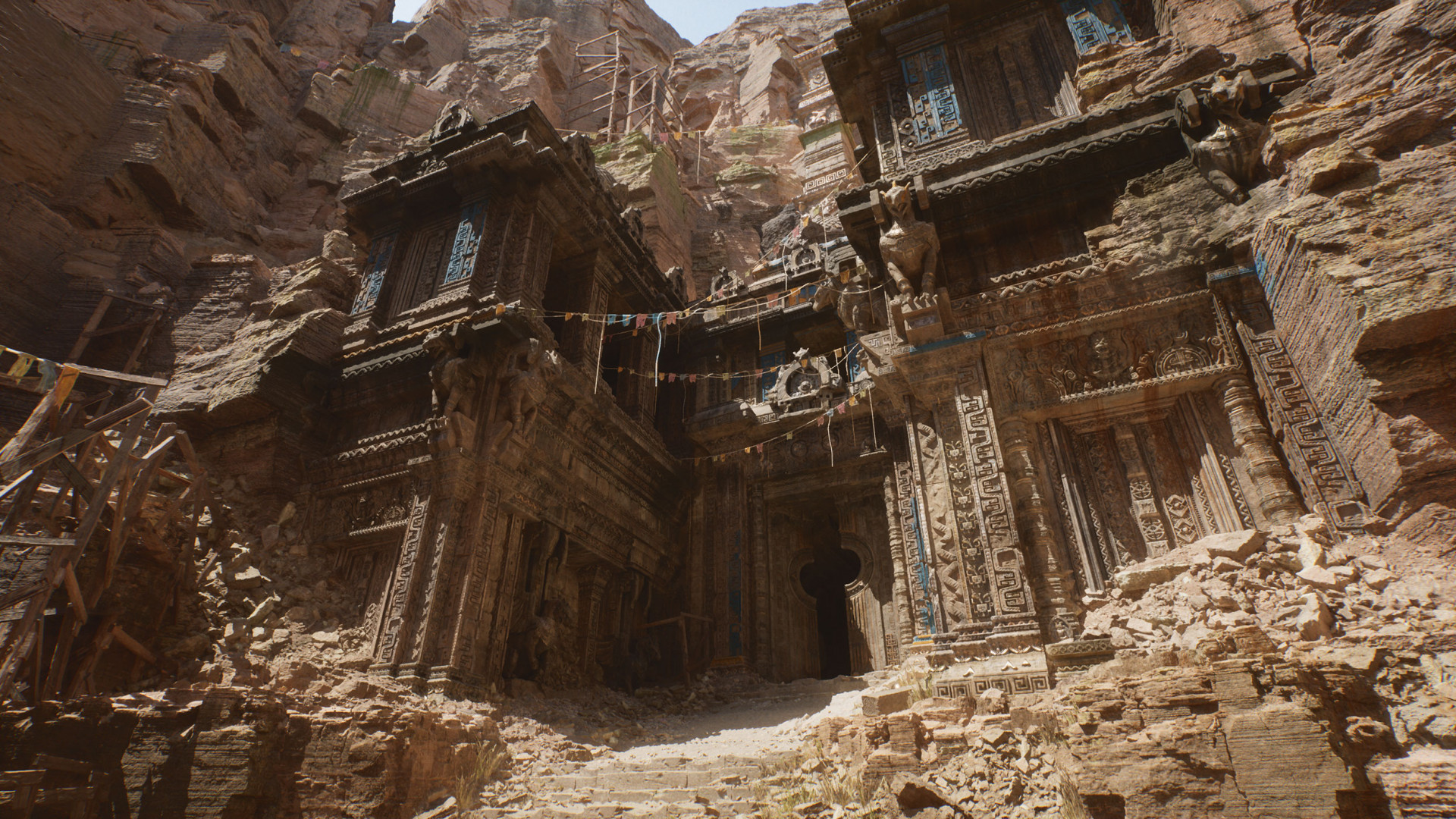
The demo that follows is captured in real time in Unreal Engine, played live on a controller, and it leans hard into the empathy premise. Layla and Delroy snipe at each other's worldviews before the stakes flatten the argument into a single grim bargain: fight together or die alone. The specifics of what they are fighting sit under a science-fiction premise the studio says it will detail in future updates. Minkoff then plays a pre-alpha slice himself, full of honest roughness (and not very impressive personal skill), the heroes picking their way through a group of foes while trading the kind of foxhole banter meant to show two people slowly deciding they can stand each other.
The pitch, in one breath
By the close, That's No Moon compresses the afternoon into a single coherent argument: tactical freedom in grounded combat, because adaptive cover makes everything potential cover; a fragile alliance between two ideologically opposed people; an existential threat supplying the pressure that fuses them; and a cinematic intensity meant to wrap it all in something big, tense, and intelligent.
Whether CrossFire delivers is a question for a finished game, and this genre has humbled confident studios before. But there is something clarifying about a team that built itself to fit its game, moved into a soundstage haunted by the medium's history, and then spent an hour insisting, with near-religious consistency, that the only point of any of it is to make the next thing feel new.