Games that bill themselves as homages or tributes often reveal their limitations by remaining within the shadow of their source material. They can become trapped in the rigid framework of the original, or their attempts at innovation may fail to capture the charm that made the inspiration special. Occasionally, however, a game emerges that breaks through the seemingly clear boundaries of its predecessors. Yacht Club Games' Shovel Knight is widely considered a masterpiece that pondered how to implement the classic feel of 2D platformers for a modern audience—and succeeded brilliantly.
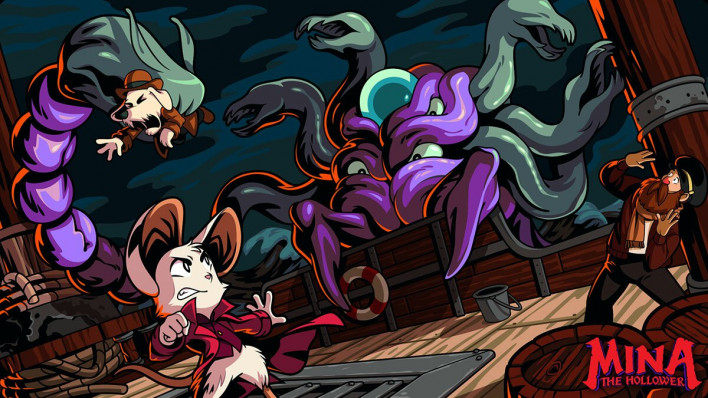
From the moment it was unveiled, 'Mina the Hollower' was one of those games inevitably linked to the classic top-down 'The Legend of Zelda.' Upon release, the game clearly demonstrated its reverence for the classic Zelda titles. It is certain that this game would not exist without Zelda; however, it also manages to carve out its own value within that classic framework, proving itself to be something more than just an homage.
From the Game Boy Color and 8-bit aesthetics to The Legend of Zelda: Link's Awakening, Castlevania, Bloodborne, Dr. Jekyll and Mr. Hyde, Dracula, and Frankenstein—the inspirations cited by the developers are embedded throughout the game. Mina the Hollower does not stop at imitation; it takes these elements, makes them its own, and evolves them.

Because they did it in Shovel Knight
The Art of Making Dated Graphics Charming
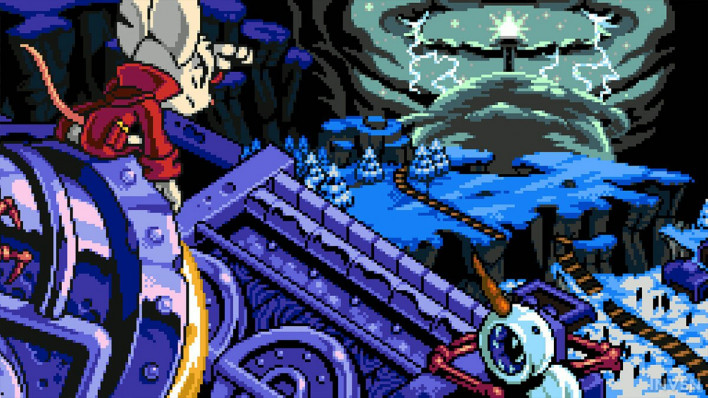
When you start Mina the Hollower, you are greeted by a classic art style that is difficult to describe as 'high quality' by any stretch of the imagination. It is true that the art falls far short of modern AAA standards, or even high-quality indie games. This remains true no matter how long the developers explain their efforts to emulate the Game Boy Color aesthetic.
However, as you play, these 'dated' graphics begin to read differently. It isn't because your eyes have simply adjusted to the cute characters or because something aesthetically flashy has been added. It is because you cannot help but feel, through direct play, just how densely realized this world is and how well its movement conforms to modern standards.
The game world, built with a limited color palette, looks quite simple, but it actually captures a vast array of motions and state changes. The motion of a single weapon and the way Mina moves gracefully in response to the player's inputs create a structure where the player naturally experiences the beauty of the design. You realize that these simple, classic graphics are not just mimicking a bygone art style, which is why you cannot help but praise them.
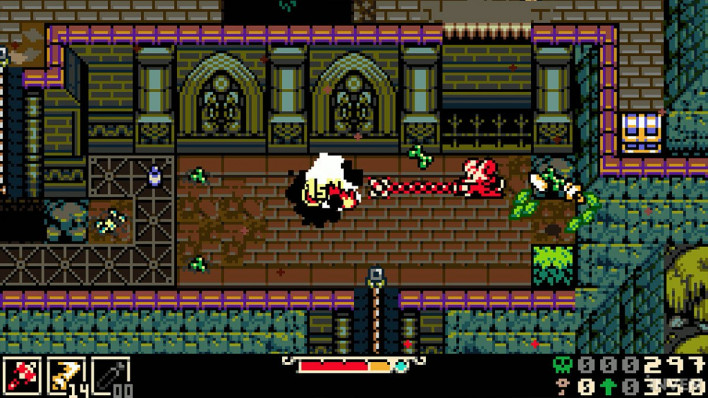
Shovel Knight implemented Famicom-level graphics at the highest possible standard within modern pixel art. Mina the Hollower goes a step further, adopting a Game Boy aesthetic—which is even more restrictive than the Famicom—while packing in immersive animation and personality. In particular, the emotional expression and delivery achieved within these limited constraints feel more sophisticated than in almost any other game. Furthermore, the soundtrack by Jake Kaufman, whose name is synonymous with indie game music, grabs your ears from the moment you turn the game on. The music, a modern reinterpretation of the Game Boy Color era, meshes perfectly with the classic visuals.
While this classic graphic style is clearly an homage inspired by Game Boy games, it is also an undeniable barrier to entry for some generations. However, there is a point after you cross that threshold where the game reveals an unparalleled charm. And it is not just the graphics that transform from a perceived weakness into a strength as you play; this is precisely what gives Mina the Hollower a charm that sets it apart from games that are merely 'good to look at.
How to Build a World, Not Just Stages
Design That Turns the Entire Map into an Exploration
If the art is the first thing that catches your eye, what truly completes Mina the Hollower in actual gameplay is its deep design, which turns the entire map into one massive dungeon. The story follows Mina as she repairs six generators spread out from the central city of Ossix and uncovers a hidden conspiracy. The core of the game is exploring the world that stretches in six directions from this town to repair those generators.
The regions extending from Ossix are not simply drawn as stages. Once you leave town, it is hard to find a safe space; every screen involves encounters with enemies, and the player must constantly figure out how to navigate through. The paths are filled with blocked objects, and at any given moment, you are not even sure if you are on the right track.
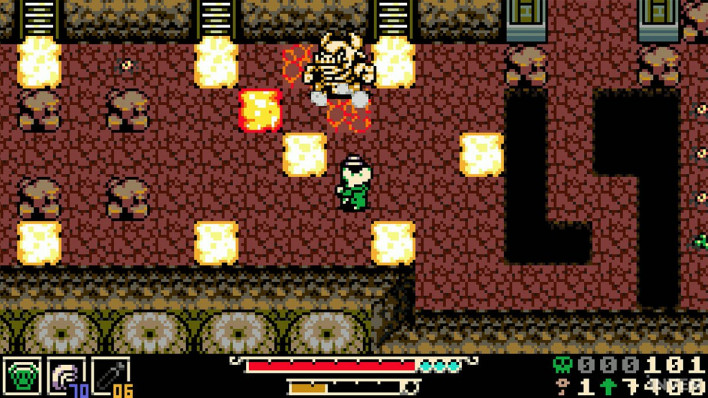
This is because the game provides neither a clear path forward nor a detailed map. The world map only shows the general location of each region, and throughout the game, you have to rely on vague signposts. With no clear direction and a screen-by-screen transition style reminiscent of the old Zelda series, new areas feel even more cryptic and complex. This can be a factor that makes the early game feel overwhelming.
However, as you play and the map layout begins to click, the complexity and confusion transform into the thrill of discovery. This is thanks to a design where the maps are not fragmented, but connected in incredibly diverse ways. Shortcuts are implemented very densely. A shortcut you unlock once serves as a guide to another area of exploration, signaling that there is a path forward here.
Usually, such shortcuts provide clear direction in a positive sense, but they also come with the constraint of linear play. Since the aforementioned path forward is limited, the game could have felt restricted. But Mina the Hollower has constructed these shortcuts in a much more multi-layered way. It has made those paths diverse, ensuring that no matter how you connect them, there is a result.
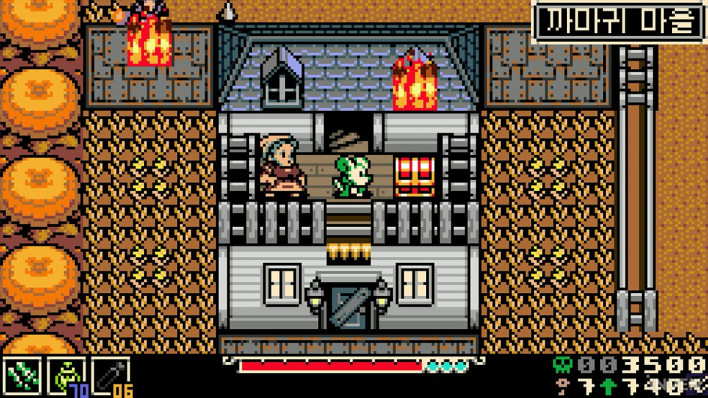
It is a rather provocative map design. This path might be irrelevant to the main story, but since it is accessible, the game challenges you to try it. And usually, even if these sections are unrelated to the story, they provide rewards like decorations or stat boosts. It provides a system of exploration and rewards even when you are unsure if you are on the right path.
And the end of that path connects back to a shortcut that leads you to your original location. Reaching the shortcut and returning to where you started—the game turns this not into the disappointment of taking a wrong turn, but into the sense of accomplishment that comes from successful exploration. This is made possible by the dense shortcuts and the perfection of the map design.
This sense of exploration is emphasized throughout the game. While you can use a secondary weapon to deal extra damage to enemies, there are also secondary weapons that act as movement tools, such as a momentary dash. Using these, you can reach places that would be impossible to access through normal means. Yet, the paths you reach that way lead to areas that feel as if the game anticipated you would go there all along.

What makes this impressive is that Mina the Hollower is not structured around unlocking the map through special abilities. In similar Metroidvania Genre games, the expansion of exploration areas is usually achieved by acquiring new abilities—like learning a double jump or dash to reach a path that was previously inaccessible. Mina the Hollower has no such ability-gating. Instead, various variables—such as player control, combinations of secondary weapons and accessories, and even unintended invincibility frames—open up paths that cannot be reached through normal methods. In a sense, the player is given the freedom of non-linear play, where reaching a specific area in such a way poses no problem to progressing through the game.
The map design, which makes the player feel as though they discovered something on their own even though the developers had already designed it, makes Mina a game you get more drawn into the more you play.
Moving, Dodging, Jumping, Exploring
The Experience Created by Mina the Burrower's Digging
The multi-layered, organically connected map design is made even more special by the burrowing ability of Mina the Burrower, the game's namesake. Aside from using secondary weapons that consume resources, the game lacks a standard dash or evasion function. Instead, there is a 'burrow' ability that allows you to dig into the ground after a jump and move for a short time, which is used in incredibly diverse ways in both combat and exploration.
From moving through low-height tunnels to digging into holes to move to lower areas, countless gimmicks in the map are connected to this burrowing ability. There is a slight jump boost when you emerge from the ground, and you can even survive for a short time in water that would normally cause damage by using the burrow ability to move. If jumping in top-down action games usually serves to create variety in play, in Mina the Hollower, it also makes you check whether you can pass through by digging underground. It gives the player one more direction or thing to think about when clearing an area.

This burrowing ability is used from the start of the game, and you continue to solve the game around this core mechanic until the end without any special additional abilities. Even as new solutions appear in each region, they are ultimately solved by jumping and burrowing. This ties into the diverse map shapes and level design. Players are constantly thinking about how to utilize this ability, which naturally leads them to believe that their own problem-solving methods are valid when it comes to puzzles or gimmicks. After all, they are being guided to use a technique they have been using all along.
That does not mean the game is easy. On the contrary, some sections are brutally difficult. This is true for both combat and general exploration. Even during combat, burrowing functions as the only evasion method to avoid enemy attacks and as a mobility tool to create distance. This means you have to use the same technique you use for exploration with a completely different sensibility in combat. And you have to do it well.
If you fall into a pit, you lose health and return to your previous spot; however, the invincibility frames are short, and there is knock-back, so you end up falling quite often. Furthermore, there are many aerial enemies, and unlike movement, attacks are only possible in four directions (front, back, left, right), making it difficult to clear out annoying enemies before moving on. If you focus your setup on movement-oriented secondary weapons or accessories, it becomes that much harder to deal with powerful enemies.

The health recovery system is also quite unique. Basically, it is a system where you carry a potion to restore health like in a Soulslike game, but it does not immediately restore health lost from taking damage. When you attack flowers or enemies, the lost health is filled by a yellow gauge called 'Plasma,' and drinking a potion fills this Plasma level. It is not easy to recover health lost from falling damage, and long-drawn-out battles where you just run away to drink potions are not easy either.
Usually, this level of combat difficulty is a plus for hardcore gamers, but it is not a pleasant experience for everyone. However, in Mina, this high difficulty is not left solely to player growth. A level of calibration/assistance system that I have never seen before erases those shortcomings.
Mina the Hollower provides basic control and difficulty calibration options in the game settings. It supports over 60 detailed options, not just simple 'weaken/strengthen enemies' settings, but adjustments for jump airtime, potion recharge, invincibility frames, burrowing time, and the acquisition rate of bones (the game's currency). You can sort them by category, and you can even bookmark options you frequently toggle. If you turn on calibration options, you cannot earn Achievements. Instead, you can focus on enjoying the story, or use them to push through frustrating sections by adjusting only a few options when necessary.
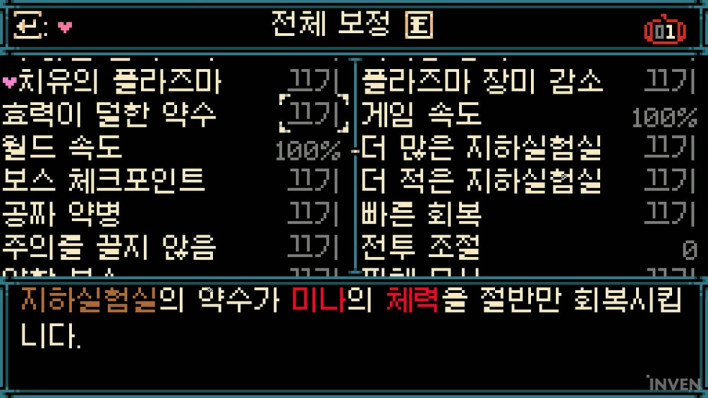
Some of these options can also be implemented through various accessories obtained later in the game. Once you get used to the game, you can create player-driven difficulty configurations by combining these accessories, or challenge yourself to clear the game using only your skill. It opens up the possibility of continuing the game without throwing your controller during those 'difficulty spikes' where the game suddenly becomes hard.
This clever difficulty adjustment option allows the game to maintain its emphasis on non-linear exploration and the sense of adventure for a long time.
Beyond Homage
The Moment You Keep Thinking About a Game That Seemed Unfriendly
The non-linearity of Mina the Hollower can actually be interpreted as quite unfriendly. From the tutorial for the core burrowing technique to the overall progression of the game, it relies on the player inferring things from conversations with townspeople or characters. Although there is a separate help menu, the unfriendliness is even more pronounced when you consider many recent games that guide players through in-game tutorials or natural skill acquisition. In fact, I only met the merchant who sells the world map after clearing five of the six generators. This is proof that the game's non-linearity goes beyond simple exploration methods and affects access to core content.
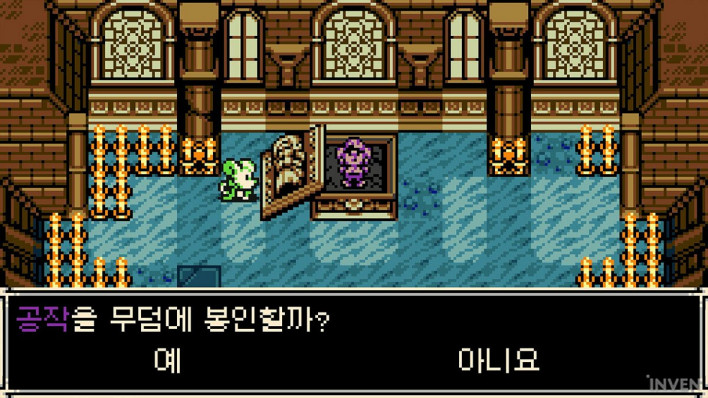
This unfriendliness, combined with the game's graphics, can come across as a classic sensibility or excessive old-fashionedness. And this is just a part of the emotions that change the more you play. The entire game guides you on how to efficiently resolve that unfriendliness and classic sensibility, and how to enjoy it within the game. The various map branches and corresponding events, character direction, simple yet deepening combat and combinations, and the desire to see the end of other secrets and events you haven't found yet.
Aside from the charming sound from the very beginning, Mina the Hollower is a game that reveals its depth the more you play it.
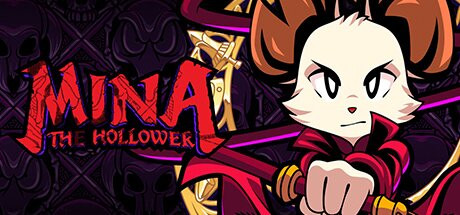
- GBC art that becomes more charming the more you play
- Map design filled with exploration and secrets
- Shortcut design where the entire map is organically connected
- Deep implementation of both combat and exploration through burrowing
- Broad accessibility with 60 difficulty options
- Somewhat old-fashioned graphics act as an early barrier to entry
- Harsh knock-back and interference from aerial enemies
- Difficulty that occasionally spikes and makes play difficult
Review Platform: PC (1.1)

Sort by:
Comments :0