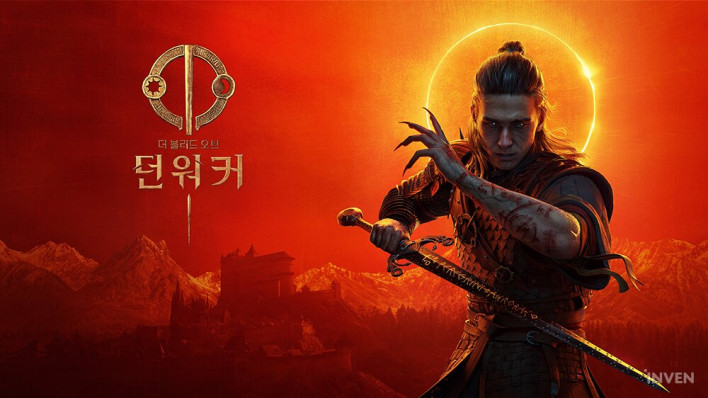
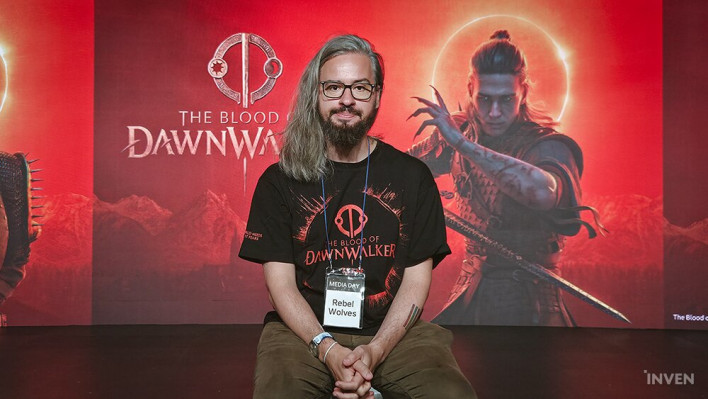
Level Infinite's upcoming open-world action RPG, The Blood of Dawnwalker, recently held a media event in South Korea to showcase a demo and host a developer interview. The session featured Jakub Szamalek, Narrative Director and Lead Writer at Level Infinite, and was attended by various media outlets from Korea and across Asia.
The defining feature of The Blood of Dawnwalker is the use of time as a resource. Combined with its nature as a narrative sandbox, this makes player choices incredibly impactful. Furthermore, the developers designed the game around the protagonist, Koen—a hybrid of vampire and human—to ensure that combat and gameplay styles shift significantly between day and night.
Offering a unique gameplay experience and a rich narrative, The Blood of Dawnwalker is scheduled for release on September 3, 2026, for PC, PS5, and XSX|S.
30 Days of Day and Night: Time as a Resource
The structure seems designed with multiple playthroughs in mind. How many quests can players realistically complete within the limited day and night cycles.
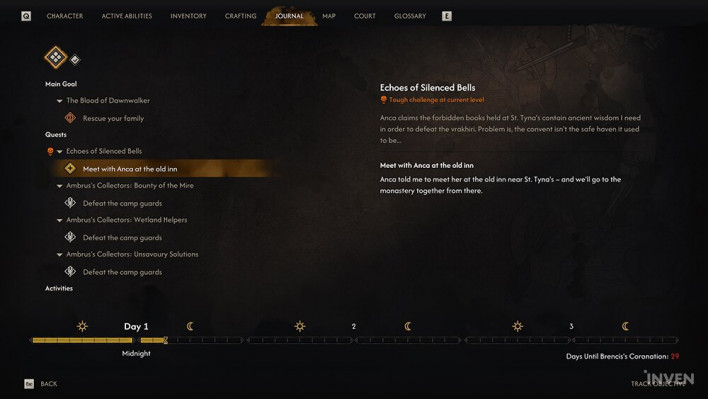
"Once the main part of the game opens, players are given 30 days of day and night to save their family. While you can complete most of the quests you are interested in within that limit, we did not design it so that every single quest can be finished in one go.
We introduced the time limit to create a sense of urgency that is often missing in open-world RPGs. In most games, even when you are tasked with a critical mission, you can wander the world as much as you like. Eventually, you stop believing in the urgency of the quest. We wanted to inject the pressure of time into the game to help players immerse themselves more deeply in the main story.
However, time in this game doesn't just tick away automatically; it acts more like a resource the player spends. Time passes based on your actions, and you have a degree of control over how the clock moves.
Time passes even during quests, not just after completing them. Why did you choose this design.
"We experimented with several approaches. We felt it was unnatural for time to stand still during a long quest, only for a large chunk of time to pass suddenly at the end.
So, we divided quests into multiple segments and placed time-resource costs at points where it felt natural for an action to consume time. For example, if a character asks for help and you decide to assist them, time passes. This signifies that the player is investing their time into that character's situation and story.
Where did you draw inspiration for the time management system.
"We didn't take direct inspiration from one specific game or copy a system wholesale. Instead, we looked at Japanese games with time-management elements and classic Western CRPGs, comparing how they utilize time to find our own path. We didn't want to stress players out with real-time pressure—like a situation where you get a phone call while playing and someone dies in the game while you're away.
Instead, we wanted to give players control over time while still maintaining a sense of urgency in the game world. If a character in a game begs for help and you go off to play a minigame or do something else, it creates a disconnect between the world and the player. In our game, if you make someone wait after they've asked for help, the situation actually changes. In reality, time is a precious resource, and who you talk to and how you spend your time changes your life. We wanted to capture that feeling in the game.
It seems impossible to complete everything in one go due to the 30-day limit.
"Rather than trying to finish everything at once, I encourage players to consider multiple playthroughs. You might need to step outside the familiar open-world playstyle. But I believe new experiences and growth happen when you step out of your comfort zone. We wanted to create a game that is fresh and takes risks, and I believe those risks give this game its unique flavor.
Did the time limit put a strain on the narrative structure.
"In some ways, it actually made it easier. Having situations constrained by time made it natural to construct character motivations and dialogue.
The difficult part was deciding what happens when time runs out and how to reflect that within the quest structure. It was an additional challenge because it added a layer of non-linearity, but I think it was worth the effort.
A Journey Shaped by Choice
Quest progression changes based on choices, but the outcome of the prologue seemed similar. Are there multiple endings.
"Not all villagers die at the end of the prologue. They are captured and taken away, and you later discover they are being held in the dungeon of the capital castle.
The game expands from the prologue area into a large open world. There are many quests within it, and each quest has choices that lead to different outcomes. There is an epilogue sequence where you return to the village, but what happens in that epilogue depends heavily on the player's choices.
Some characters might be alive, while others might be dead. Someone might love Koen, or conversely, hate him. The game can end in a wide variety of ways.
I'm curious how main quests and side quests are distinguished.
"There isn't a strong distinction between main and side quests in the traditional sense. After the prologue, the only objective you must complete to finish the game is to go to the castle and confront Brensis. What you do in the meantime is entirely up to you. Some might head straight for the core objective, while others might wait until the 29th day, building relationships or forming alliances with others. There is even the possibility of betrayal.
What you do during the game has a major impact on the endgame state. The epilogue will reflect the journey you've created.
Can you go back and complete missed quests or content after the ending.
"Once the game is over, you cannot return to quests or areas you didn't explore earlier. Instead, we encourage multiple playthroughs. You cannot see all the content in a single run. Because there is so much content that cannot be seen at once, I think it's best to play twice, or perhaps three times, if you want to see everything.
Of course, I know some players want to roam the world and enjoy it even after the tension of the main quest is gone. But we decided that wouldn't fit our world. Instead, if you want to see how results change by making different choices and exploring different areas, starting over will be a meaningful experience.
Narrative Sandbox and World-Building
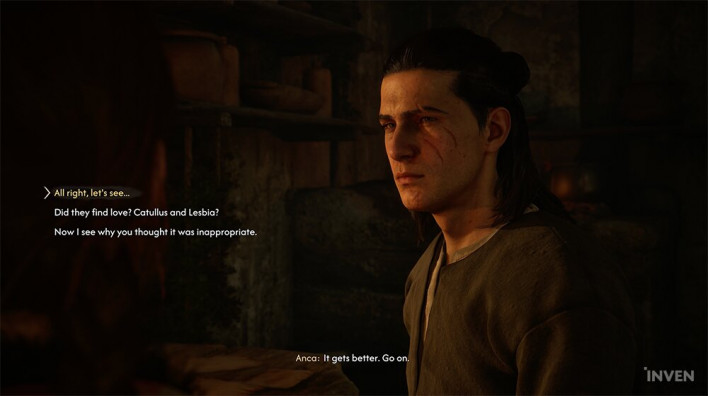
Managing day and night, branching stories, and the results of choices must not have been easy. I'm curious about the development process.
"The key was iteration and trial and error. We have experience making games with non-linear structures and many choices, but we wanted to raise the bar with this project.
In this game, the story can continue even if you kill every NPC. Some quests unfold differently depending on whether you are human or a vampire. We consider these choices as much as possible during the writing phase, but as you implement them and play through the entire game, you constantly discover situations you didn't think of during the design phase. Then, you have to add extra choices or new checks elsewhere.
We received a lot of feedback from the entire studio, including gameplay designers and graphic artists. Sometimes, even after recording was finished, we would find and recycle unused voice-over lines to add new non-linear elements. It was a complex but enjoyable process.
What kind of experience did you want to give players through the narrative sandbox.
"I hope players talk to each other about their own experiences. The results can vary—whether Koen's mother survived, whether Vladimir, the leader of the local rebels, lived, or whether there was a flag at the church or a dead woman.
I think players can find deep satisfaction in becoming co-creators of the story. We provide the tools and blocks through the game, but we also allow players to create a story that feels true to them.
Books have a fixed beginning and end. But games are different. As long as people are playing, they are alive, constantly changing, and offer a unique experience that only games can provide. I think players who love stories and RPGs will find deep satisfaction in this game.
Is it possible to fail to clear the game if you make the wrong choices.
"You can reach an ending one way or another. To put it extremely, it is possible to eat all the cool NPCs. Only a very small number of characters always survive. You can finish the game even if you act like a complete monster. However, that ending might be quite grim.
Do all player choices become canon? Can these choices carry over to a sequel.
"I don't mean that we will carry over every single choice. That would be too ambitious. It's hard for us to say we'll go that far.
However, we do want to record key decisions and carry them into the sequel. Some hidden endings might not be considered canon. But we want to make sure player choices have consequences that transcend a single title. We want to give players the feeling of building their own saga across future games.
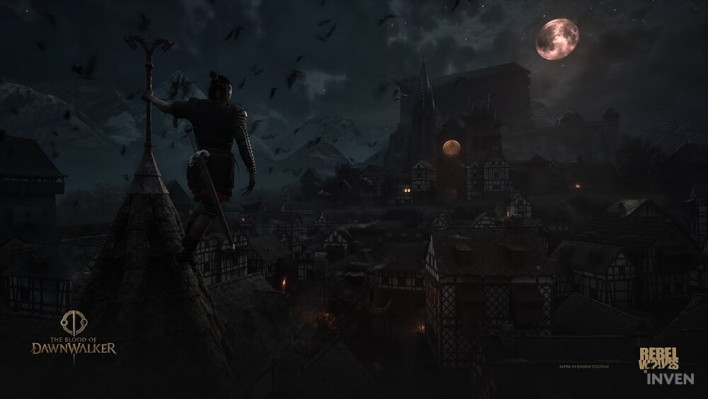
What are the motifs for the world-building and setting? I'd like to hear what kind of story you wanted to tell through a being caught between human and vampire.
"Inspiration came from many places. This game is deeply rooted in European history and culture, and it is heavily influenced by European myths, monsters, and stories about evil.
Koen is a Dawnwalker, a human by day and a vampire by night. As a vampire, he possesses powerful abilities that humans lack. But to grow that power, he must drink blood, and in the process, he loses a part of his humanity. The player chooses how close to the darkness they will get to achieve their goals.
I think the moment a game becomes most interesting is when choices have meaning. Players can balance between good and evil or forge their own path. Some players will fight to protect Koen's humanity, while others might choose to lean deeper into the darkness.
Why did you choose a relatively realistic world based on actual history.
"We wanted the world to be believable and feel real. Of course, there are fantasy elements like magic and monsters. But we felt that by rooting it in actual history, it would be easier for players to feel like this could have actually happened.
Because I majored in archaeology, I love old stories and myths. That background helped in weaving in elements like Roman mythology and legends. Ultimately, you could say it's a method of picking out interesting elements from real history and adding fantasy elements to them.
Where is the game set.
"We wanted to express the diversity and richness of medieval Europe. The game world features characters representing various cultural spheres of medieval Europe, such as Slavic, Germanic, Czech, and Jewish. However, we didn't want to fix it to a specific region. We didn't want to be bound by specific historical or geographical constraints. Rather than choosing one exact point, we wanted to create a world inspired by that era and culture.
Because vampires have lived for hundreds of years, we could also reflect cultures from more distant regions. The appearance of vampires from ancient Rome, the Mongolian steppes, and Egypt was a choice made to provide that diversity.
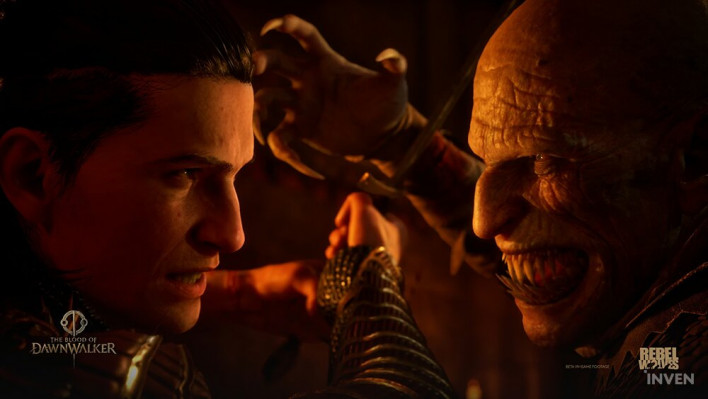
I'm curious why the story begins in a world already dominated by vampires.
"There is a saying in storytelling: "Don't start at the beginning." The beginning can be boring, so it's often better to start in the middle of the action.
The opening shows how vampires took over the world in the game. Players who want to know more can dig deeper through related quests, in-game books, and reading materials. We decided it was better to show the moment the vampires began their rule in the intro and then let the player explore the already-occupied world.
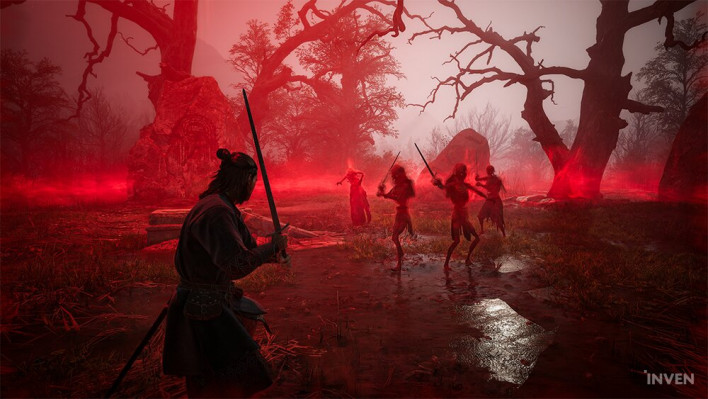
There are parts during the game where the screen turns red, as if showing the next story. What does that mean.
"On the surface, it looks like a game about vampires, but underneath, there is a deeper setting and story. Those scenes are hints at that deeper story.
To truly understand where the monsters came from and what they want, you have to explore the world. You can get clues by carefully examining ancient tombs, ruins, murals, and mysterious books. The full story will be better revealed to players who are patient and dig deep.
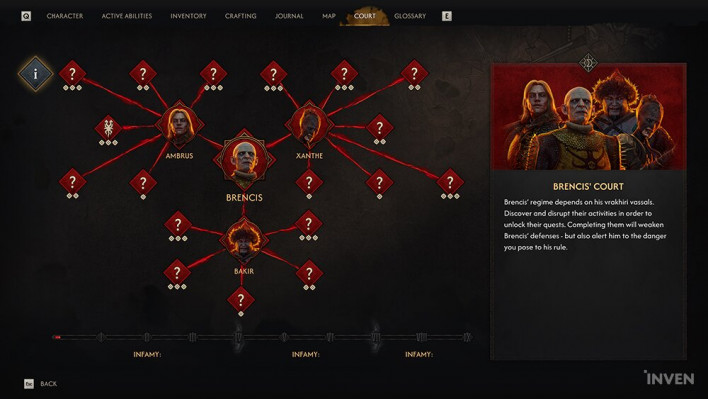
How is the 'Monarchy' or 'Court' system structured.
"It was inspired by medieval Europe and feudalism. It's a pyramid structure with a lord at the top, followed by knights and serfs. Brensis is at the top of the pyramid of evil. He is the master of Vael Sangora, and beneath him are three vampire vassals. As players explore the world, they can intervene in this structure and weaken it to prepare for the final attack.
However, the more aggressively the player intervenes in their operations, the more Brensis realizes the player is a threat. He becomes increasingly angry and begins to issue special decrees to block the player's progress.
Some players might attack Brensis quickly, while others might slowly chip away at his power over 30 days. We wanted to make a game that reacts to the player's playstyle. That's why we call it a narrative sandbox. We allowed players to freely combine various story elements and experience them in different orders and ways.
Human and Vampire, Dawnwalker Koen
What was the most important element in the vampire design? How did you express Koen's changes.
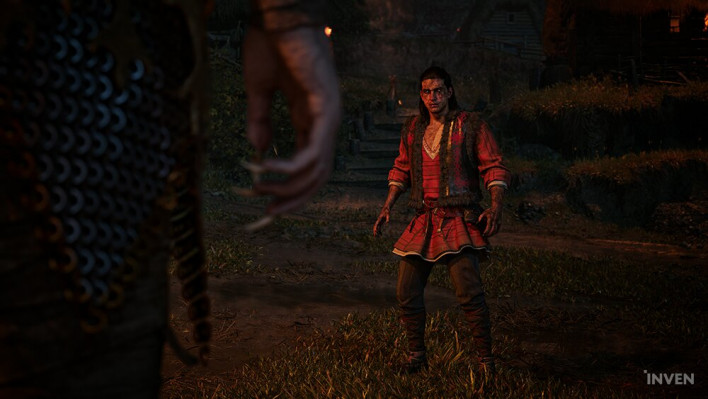
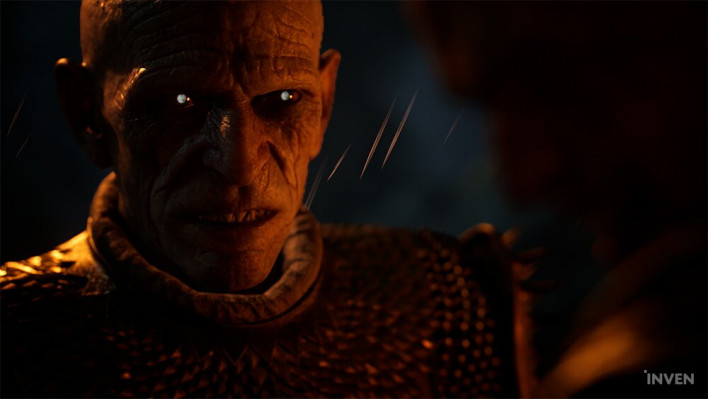
"The element we focused on most in vampire design was the teeth. We thought teeth were a feature that made vampires instantly recognizable. In our world, the older a vampire gets, the more teeth they have. Very old vampires even grow teeth in strange places. They sprout from under the skin.
In Koen's case, the most noticeable change is his eyes. After transforming, Koen's two eyes have different colors. This expresses his duality as a human by day and a vampire by night.
Does the player's choice between day and night, humanity and vampirism, reflect on Koen.
"Yes. The game has elements that record and reflect how the player played. For example, if Koen loses control and drinks someone's blood against his will, he is shocked at first. But as that happens repeatedly, Koen becomes increasingly desensitized. Even when defeating other vampires, that darkness remains within Koen in a sense.
The game's ending also changes depending on whether the player accepted the darkness or tried to keep their distance. I think games are a great medium for testing a player's moral compass. Books and movies follow someone else's story, but games put the steering wheel in the player's hands and ask, "What would I do."
If your health is low at night, you get a disadvantage in conversation due to bloodsucking urges. I'm curious why you included this phenomenon.
"Playing as a vampire is a cool and powerful experience. But we also wanted to show the downsides. That downside is the craving for blood.
If you don't manage this craving properly, there are negative consequences. If you talk to a NPC without feeding Koen, you might lose control, even if that person is a close friend or romantic interest. A situation might occur where Koen sucks their blood. This system was designed to make you feel the burden and danger of living as a vampire.
Do vampires from different cultures have different combat styles and roles.
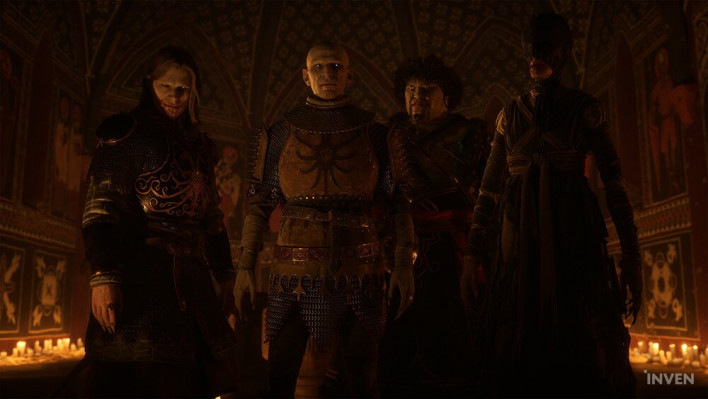
"Yes. The vampires you meet in the game each have their own unique character, combat style, abilities, and role within the world.
Players can disrupt their activities to weaken the vampire regime. For example, the swamp region is ruled by a vampire named Ambrus. He is responsible for collecting, storing, and transporting blood. If the player disrupts his operations, other vampires become weaker, and the chances of achieving the final goal increase.
Why do Brensis' subordinates come from various countries and cultures.
"There wasn't a specific rule or system. We wanted diversity and wanted each character to feel different in appearance, tone, and expression. We were also curious about how people would perceive each character. For example, we were surprised by the positive reaction to Ambrus. There were many questions about whether he could be a romantic interest. Honestly, it was an unexpected reaction.
Could you explain more about the romantic interests.
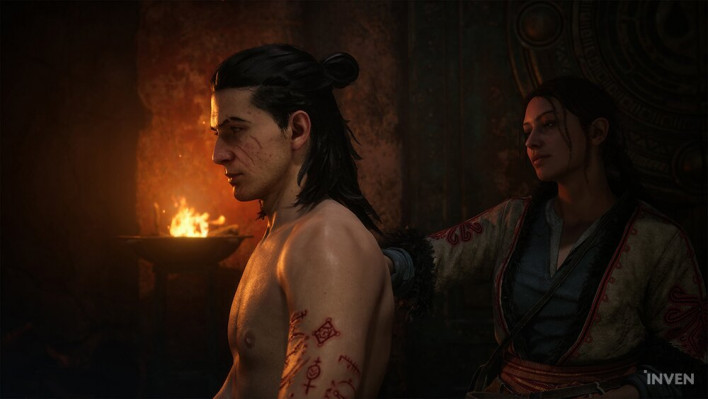
"There are several romantic interests in the game. In some cases, you'll feel a clear spark from the beginning, and in others, you might find out that a character you didn't expect has feelings for Koen. We wanted to create room to get to know each character more deeply, do things together, and develop the relationship to the next level. For players who want to build relationships with NPCs, there will be plenty of opportunities.
Combat and Exploration Design
The directional combat felt difficult. I'm curious why you designed such a combat system.
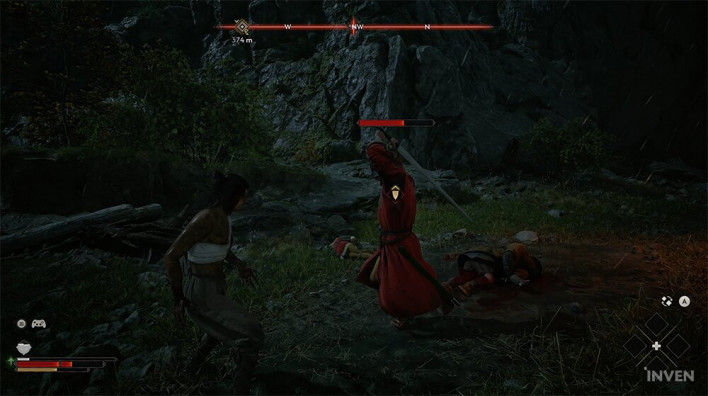
"Through directional combat, we wanted to express the senses of a skilled swordsman. We wanted to give the feeling of a warrior who knows not just how to fight with strength, but where to aim to land a fatal blow.
Directional combat gives players more choices. You can feel more directly in control of the combat situation, and at the same time, you have to watch more carefully what your opponent is doing. However, since there may be players who don't want to actively use this system, we also provide options to adjust the experience to suit individual tastes.
In the early demo, the combat patterns of day and night felt similar. Does it change in the latter half.
"Yes. As the character grows, new skills and abilities open up for both day and night. During the day, you can use magic, and as you find and learn various spells, your combat style shifts toward being more reliant on magic. At night, the more blood you drink as a vampire, the more powerful and dynamic vampire skills you unlock. Also, because you can absorb the abilities of other vampires you defeat, your choices become broader.
What was the most difficult part of balancing day and night combat.
"The biggest challenge was that vampire combat at night felt attractive and powerful. The experience of fighting as a supernatural being leaves a strong impression in itself. So, we had to make the human-state combat during the day just as interesting.
To this end, we provided new combat elements through spells and swordsmanship during the day. We wanted both day and night playstyles to be fun to explore. However, we also thought it was natural for differences to arise, such as solving things more aggressively through combat at night and solving difficult situations through conversation during the day.
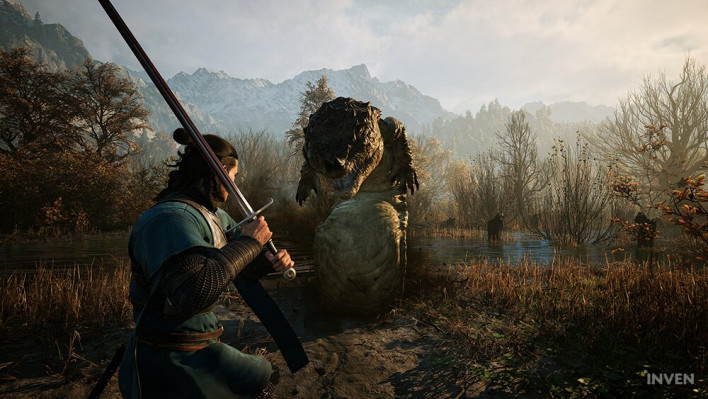
There are a lot of animals and enemies. What was the intention behind this design.
"We wanted the world to feel alive and realistic. So we placed various animals. For players who don't want to drink human blood, animals can be an alternative blood source. During the day, the relationship with animals is different. We are also working on adding a feature to pet animals. We know many players love this feature, so we want to include it in the game if possible.
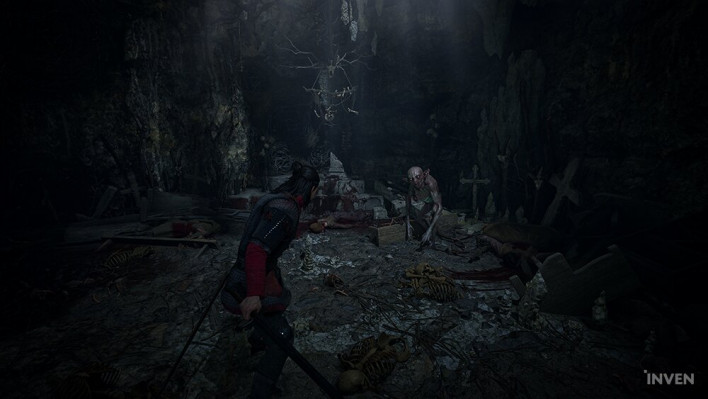
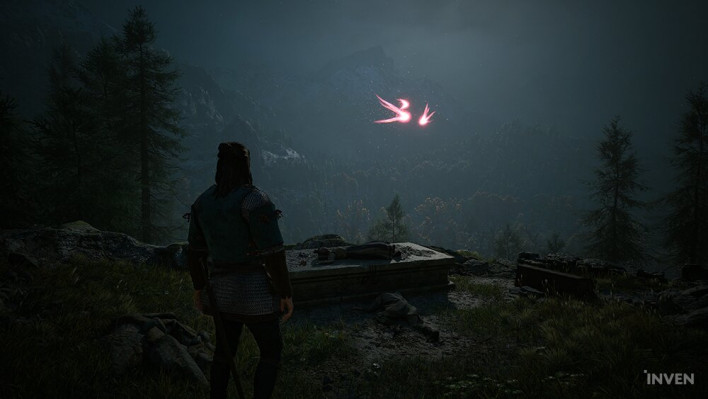
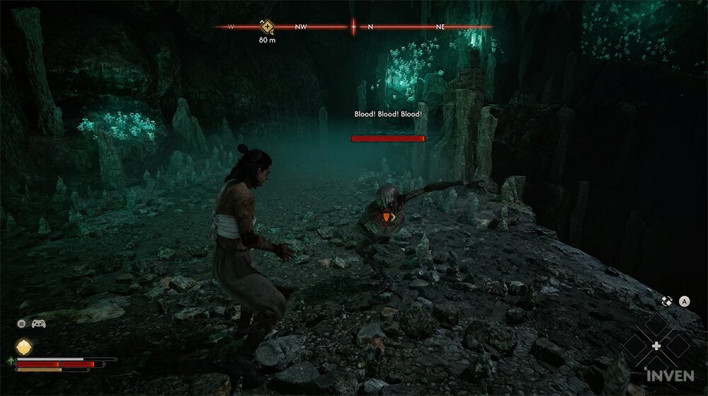
We wanted to make monsters exist in the shadows somewhere in this world rather than being exaggeratedly large and flashy. You won't see many monsters when traveling on main roads or in cities. But if you go into dark places like swamps or forests, there is 'something' there.
We referenced Central and Eastern European myths and folklore and prepared various enemies. By having enemies that attack in groups, enemies that attack from a distance, and large enemies that you have to circle around to attack, we ensured that players who love action can keep feeling the tension.
How much variety is there in enemies and combat tools.
"Since I am not a gameplay designer, it's hard to give an exact answer. However, from what I see, variety is one of our important design principles.
There are many mini-bosses in the game, and in addition to the variety of monster types, there are also custom enemies tailored to specific quests or situations. We also provide players with various tools. Powerful weapons have unique attack abilities, and you can add them to your actions and skill list. For players who enjoy complex combat and want to build their own combat style, there will be many choices.
Is there a reason why many things are not marked on the map like in typical open-world games.
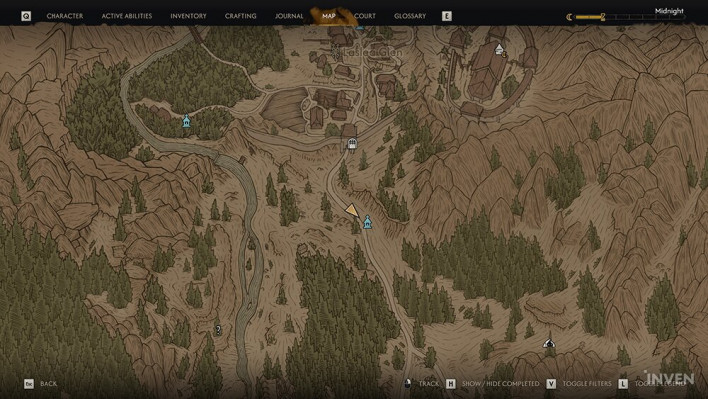
"We didn't want to hide content, but we didn't want to take away the sense of discovery either. Balancing that was important. Some content is highlighted from the start, but some must be discovered through exploration. If you climb to the top of a tower at night, you can open up specific points of interest.
However, there is quite a bit of hidden content that the game doesn't tell you about until the end. This is a structure to reward players who explore thoroughly. We wanted to give players the satisfaction of discovering something that most other players haven't seen.
Dawnwalker Saga and Future Expansion
The SGF video hinted at Koen being alive in the modern era. Do you plan to continue Dawnwalker as a long-term series.
"We don't want to end this story with one game. We want to create one long story, one saga, through several games in the Dawnwalker universe.
Time will pass through each work, and Koen will get closer to the modern era. He is not a character who stays in one place, but one who will travel to various regions of the world. And he will age, gain experience, and grow. Players will see those changes for themselves. We want to create a broad and epic story that continues across multiple works.
What message does the trailer featuring an older Koen contain.
"Through that trailer, we wanted to signal that this is just the beginning. We didn't want to show this game as a standalone work, but as the starting point of a long-term and grand adventure.
In the future, time will pass, and Koen will travel to various places and grow as a character. In many franchises, the protagonist doesn't change much even after saving the world several times. But we want Koen to change. The initial Koen is young, inexperienced, and confused about what happened to him. We hope to show a different side of him in future works.
I'm curious if you are considering expansion into other media.
"We are already talking about comic books. Other forms are also possible. However, we are a small studio. We have 160 people, which is by no means a large scale for making a game of this complexity. So we are trying not to do too many things at once. First, completing the game itself as a great experience is the priority. We'll think about other things after that.
What is the scale of the game? Can you tell us how it compares to larger open-world games.
"In terms of level scale or playtime alone, it might be smaller than some of the large games on the market. But we didn't want to compete over "how many hundreds of hours the game is." Our game is a game with depth. As you play, that depth will be revealed, and you will feel that it offers things you haven't easily seen in other games.
Lastly, please say a word to your Korean fans.
"I want to say thank you once again. I am very happy to be able to share this game with you. The last four years have been a very intense time. We poured a lot of passion and soul into this game. I hope that effort is conveyed to the players as well. I hope you enjoy playing it.

Sort by:
Comments :0