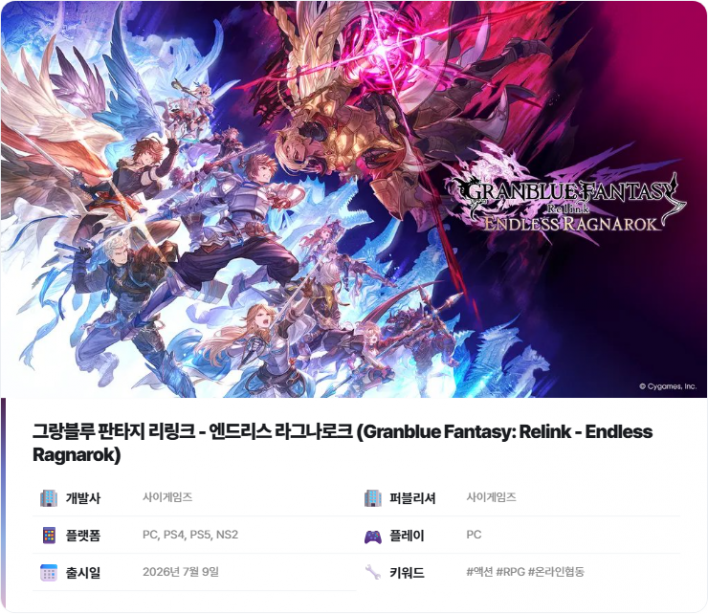
Just when skyfarers thought their adventures in the skies had concluded with the end of post-launch support for the base game, Cygames has returned with a massive expansion titled 'Granblue Fantasy: Relink - Endless Ragnarok.' Released across all platforms with full cross-play support—including Nintendo Switch—this title aims to be more than just DLC; it attempts to overhaul the very foundations of the game. There is clearly a new reason to return to the skies.
This expansion focuses on four major areas: the new CHAOS difficulty level accompanied by new bosses, a new system designed to shake up combat, a revamped farming structure, and the arrival of new characters like Fediel and Fraux, who are sure to delight fans of the original IP. Let’s examine how these changes have impacted the game and where they reveal their limitations.
Frustration builds character
The requirements to open the doors to Endless Ragnarok are simple: you must have effectively finished the endgame farming of the base game. Not only the new bosses but even the quests for the DLC's main story are strictly designed for hardcore players of the base game.
While the 'veteran rabbits' who know every pattern by heart will start pummeling enemies the moment they step in, it’s a different story for players like me—those with terrible reflexes who have only survived thanks to the expert driving skills of seasoned veterans. You might feel like you've hit a wall the moment you enter.


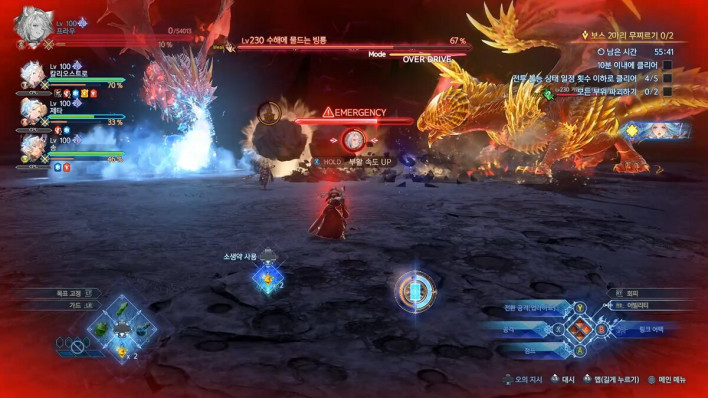
The new CHAOS difficulty is an extension of the base game's highest difficulty, PROUD. My character, decked out in damage cap sigils and attack-related sigils, gets knocked down in a single hit from a boss' basic attack. It’s a moment that brings back the terror of first entering PROUD difficulty. However, the bosses here have returned in even more vicious forms. Players are greeted by 'Ragnarion'—mutated versions of base game bosses—and the new DLC bosses in turn.
Relink is fundamentally a 4-player party game. When new high-difficulty content opens, it’s natural to gather a group to take it on; in multiplayer, you have the advantage of only needing to focus on building your own character properly. While PROUD difficulty is sweat-inducing when you first enter, it was manageable with a full party.
On the other hand, I played through this review solo, and the perceived difficulty was shocking. Bosses have increased HP, and even basic patterns with almost no telegraphing can be fatal if they graze you. The moment you let your guard down, thinking you know the pattern, you’ll find your character on the ground, begging you to press the X key. The bewilderment when a boss you thought you knew attacks with completely different timing, and the thrill of finally reading it and clearing the fight—CHAOS is a difficulty that forces you to repeat that cycle. It certainly lives up to its name.
Extreme Money-Making Office': Changing the game's farming structure itself
In the base game, the method for collecting upgrade materials was simple: find the quest that drops the material you want, set up a specialized build for that quest, and repeat the farming indefinitely. It became a half-official culture to build separate farming-only loadouts for efficiency. If you ask me if it was fun... that’s hard to say.
Endless Ragnarok has boldly changed that farming structure.
To explain the changed farming structure, I first need to introduce the new content: the 'Extreme Money-Making Office.' This is a roguelike-style mode where you clear stages floor by floor, choosing buffs to strengthen your combat capabilities after each stage.
What’s impressive is that the enhancement options are more robust than expected. It’s not just simple attack or defense boosts. You get synergies like adding poison on attack, adding freeze when poison triggers, and even paralysis when poison and freeze are both active. The moment these buffs stack and synergize, the unique thrill of a roguelike kicks in. There are even floors with minigames to break up the combat, so there’s never a dull moment. It all culminates in a fight against the new boss, Beelzebub, faithfully upholding Relink's identity as a game of high-difficulty boss battles.
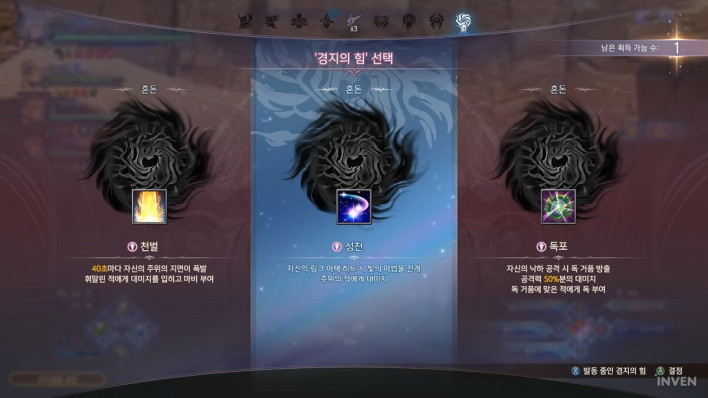


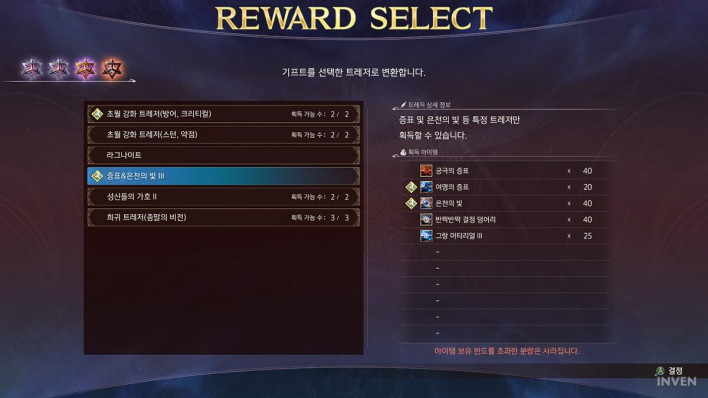
Endless Ragnarok has boldly funneled all farming rewards into this content. Once you clear the Extreme Money-Making Office, a reward selection screen appears, allowing you to pick the materials you need directly. You can choose anything from specific weapon upgrade materials to sigil upgrade materials, or even large quantities of Silver Centrum and tokens.
What’s eye-catching is that the Extreme Money-Making Office opens naturally as you progress through the base game's main story. Unlike most of Endless Ragnarok's content, which only unlocks after finishing the base game's endgame, this mode is accessible from the middle of the story. This means new players can enjoy the benefits of the new farming structure early on.
However, the fatigue of repetitive play hasn't vanished entirely. While it's much better than the mindless repetition of farming the same boss all day, the variety of the 3rd-floor bosses—which provide the most thrilling combat—seemed to be limited to about three types in the review build, and the final boss was always Beelzebub. You will eventually face familiar faces after running the mode dozens of times for farming. It fulfills its role as a farming tool, but a larger boss pool would have further reduced the boredom of repetition.
Expanded growth options, but what about freedom...
In the base game, there was effectively a 'correct' answer for character growth. The game has a damage cap, and filling your sigil slots to push that cap as high as possible was the standard. While there were minor differences between characters, there wasn't much room to ponder the direction of growth in the big picture.
Endless Ragnarok shows an attempt to shake that framework. Growth elements that can raise the damage cap, including new sigils, have been significantly increased, and the addition of conditional sigils has changed the situation. Sigils that trigger when HP is below a certain level force players to design how they fight in specific situations, rather than just boosting stats. A moment has arrived where growth and playstyle finally intersect.
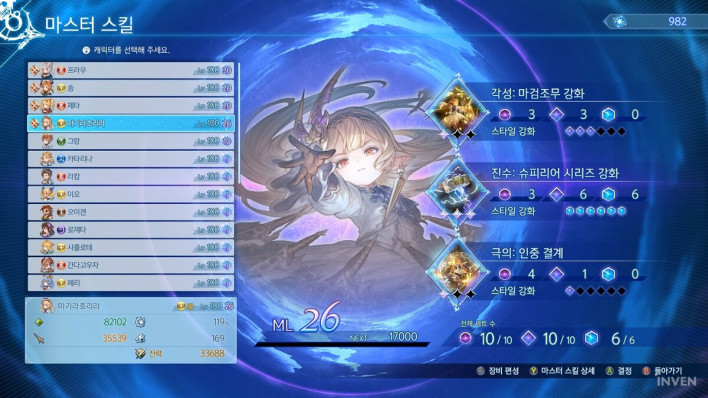
The newly introduced Master Skill system goes a step further. It’s a unique trait tree for each character; depending on how you allocate points, the same character can function in completely different ways. Taking the new character Maglielle as an example, you can go all-in on her Y-button 'Magic Sword' attacks, or build her to strengthen abilities that summon weapons. The mere existence of choices like attack-specialized, support-specialized, or specific pattern-strengthening builds makes for a growth experience that is distinctly different from the base game.
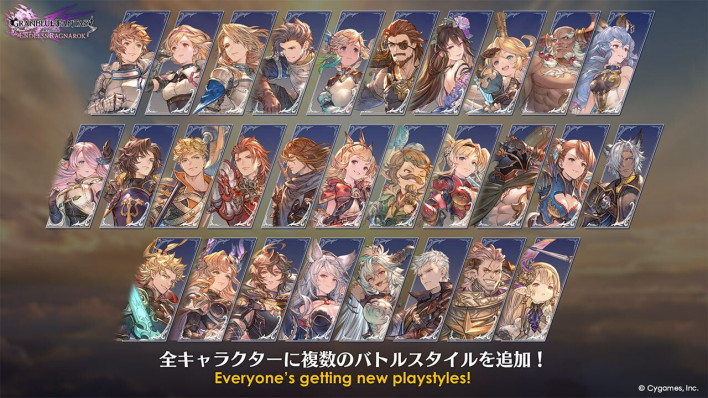
What’s noteworthy here is that Master Skills aren't limited to new characters. They have been added to all existing characters from the base game as well. Just taking out your long-time main character and looking at their new tree creates a fresh sense of fun.
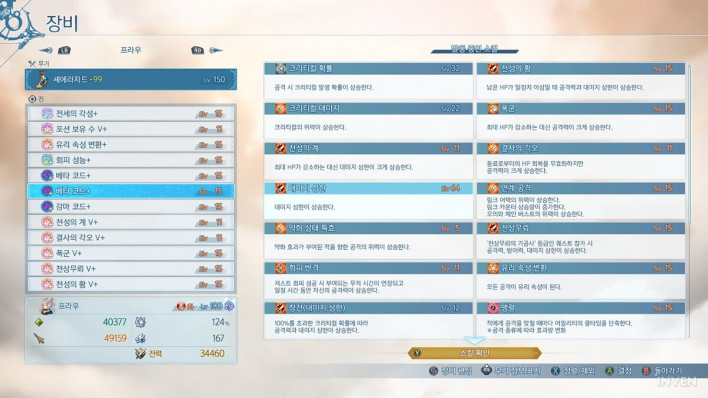
However, this is only true in theory. When you actually try to set it up, the reality is cold. First, your weapon must be fixed to one that raises the damage cap. You need to get your damage cap sigil level to 65, and that’s not the end—you have to scramble to fill your slots with more damage cap-related sigils. Only then does your damage start to approach the cap. Even when you open the Master Skill tree, which looks expansive and promising, the reality awaits: you have to prioritize the damage cap-related nodes first.
After scraping together every bit of damage cap and slotting in semi-mandatory sigils like character-specific ones or elemental conversion, you’re left with only a handful of slots to choose freely. I mentioned there were so many options, but the spots I can actually choose are few and far between. The gap between theory and reality is that large. It’s true that the options have increased, but the ceiling of the damage cap still stands firm—or perhaps even more rigidly than in the base game—and the freedom provided beneath that ceiling remains narrow. The intention to broaden diversity is clear, but it still lacks that final push to translate into a tangible experience.
A move that changes the combat board: the Summon Stone system

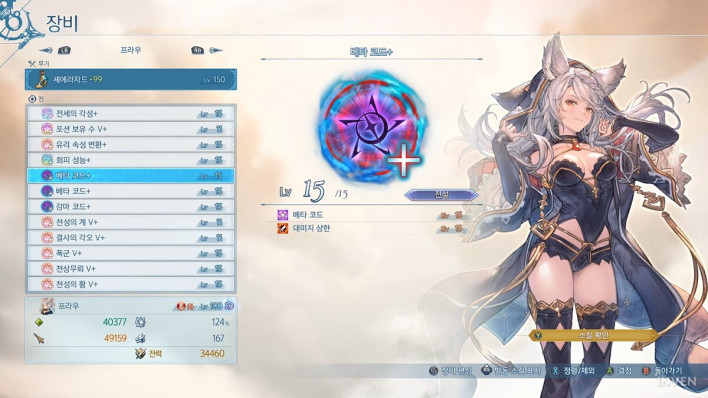

The biggest change Endless Ragnarok has brought to combat is undoubtedly the Summon Stone. These are special moves that can be activated once during battle; you can equip a total of four and use them four times per fight. They work by consuming a gauge that fills up as you fight.
Summon Stones have costs of 1, 2, or 3. Higher costs are more powerful, but the cost decreases by 1 each time you use one, so just picking the strongest ones isn't always the best strategy. If you use a 1-cost stone first, the next 3-cost stone will be activated at a cost of 2. You need to strategically design the order and distribution of your four uses.
The variety of Summon Stones is also not simple. While offensive types that deal damage are the standard, some increase potion usage limits, and others grant buffs to the character. Even within offensive types, there are differences. Some move quickly to track and damage enemies, while others remain fixed in place after summoning, unable to even rotate, but pour out overwhelming firepower. If you use them well in sync with a Link Time when your character's stats are low, you can wipe out nearly half of a boss' HP in one hit. There is fun in choosing what to bring based on the situation and the boss' patterns.

Their utility in combat is beyond imagination. Since characters are invincible while activating a Summon Stone, you can use them to completely ignore dangerous patterns when a boss enters Overdrive, or even force them into a Break state. Deciding whether to use them as a counter to a powerful blow or as a guaranteed damage opportunity determines the flow of battle. The CHAOS difficulty gives the impression that it was designed with the assumption that you would use these stones. It’s also a system that wasn't available in the base game's difficulty levels.
The volume of Summon Stones is also overwhelming. Most monsters in Relink are implemented as Summon Stones, and even some NPCs appear as them. Because there are so many, it takes time to grasp the effects of each one. While activation is simple with a specific key input, some stones that require manual control after summoning feel awkward to handle.
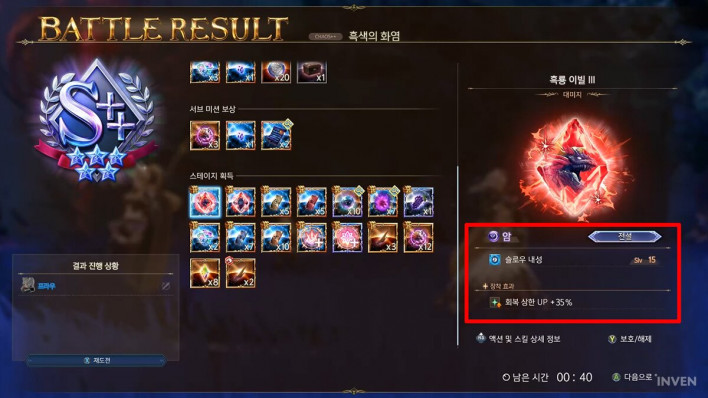
Summon Stones are both a combat system and a farming element. When you acquire a Summon Stone, skills are attached randomly; just like with sigils, the reality awaits that, unless you get something special, you’ll eventually have to find ones with damage cap-related effects. The system itself has enough depth, but the shadow of the damage cap follows you here as well.
In true Relink fashion, in their own way
6 unique new characters
One of the biggest strengths of the base game was character personality. Every character has a different combo system and set of abilities, so even after you're used to the game, picking up a different character feels like playing a completely different game. The 6 new characters added in Endless Ragnarok faithfully carry on that tradition.
Maglielle, who boasted the highest popularity in the base game, has arrived with the level of polish expected. The concept of the leader of the Injudan, who fights by freely summoning magic swords and weapons, is perfectly integrated into her playstyle. It is a flawless experience for those who wanted to control her directly.
Fraux and Fediel, who have crossed over from the main series, hold significance beyond just being new characters. As key figures driving the narrative of this expansion's story, their appearance alone is enough reason for fans of the IP to play the DLC. Since this is a game where character growth takes quite a bit of time, I haven't been able to build all of them yet, but it's certain that all 6 newcomers provide a fresh play experience. The fact that you can have endless fun just playing with the characters is the highest praise for Relink.
The skies are worth returning to

Endless Ragnarok is clearly a well-made expansion. It overhauled the farming structure, added a new layer to combat with Summon Stones, and the 6 new characters are full of the personality that defines Relink. The way it maintains the grammar and identity of the base game while stacking new systems on top is a truly diligent effort.
However, if you are a user who has dug deep into the base game, you will once again face a familiar wall. The systems have expanded, but the ceiling of the growth system—the damage cap—still reigns over all choices, and the boss pool of the Extreme Money-Making Office is somewhat disappointing for enduring hundreds of repetitions.
The same goes for quest bosses. Thanks to the concept of 'mutated entities,' the arrangements feel natural, but in other words, it means most of the bosses you meet in quests are faces you've already seen in the base game. There are only a handful of completely new bosses, and there are no dramatic changes in the patterns of the arranged bosses that would completely alter the combat experience.
Whether it's PROUD or CHAOS difficulty, getting hit once is a death sentence either way. Therefore, for users who have enjoyed the base game through to the endgame, it feels more like repeating familiar fights with more caution rather than a new challenge. The feeling that things have become more diverse, yet you're ultimately making the same choices—that gap can be felt more acutely by veteran players.
Furthermore, the chronic problems pointed out since the base game still remain. Although a feature to turn off allies' effects has been added, the excessive effects that fill the screen still cause situations where boss patterns are obscured and invisible. In a high-difficulty game where one hit kills you, not being able to see the patterns you need to avoid is certainly not a pleasant experience.
On the other hand, for new users just starting Relink, or casual users who only enjoyed the base story and didn't dig into the endgame, the story is different. This title, combining the base game and the expansion, is the most complete form of Relink at this moment. With its personality-filled characters, heart-pounding boss battles, and a much more refined farming structure, the points that veterans find lacking come across as fresh and abundant content to them. Starting now might actually be the best timing.
Relink is Relink. Even after post-launch support ended, there were skyfarers who kept wandering the skies, soloing bosses, refining their settings, and raising other characters. If they stayed in a game without a single update for so long, there is only one reason: because there is a unique fun that only this game can provide. Endless Ragnarok has added another layer on top of that fun. While it's not without its shortcomings, it's enough of a reason to take flight into those skies once again.
- Heart-pounding new boss battles
- Much more comfortable farming material acquisition
- Deeper combat fun with the Summon Stone system
- Unique new characters
- Growth methods still focused on damage cap
- Excessive effects
- Most bosses are arrangements of the base game
Review Platform: PC (Review Build)

Sort by:
Comments :0