
Gaming history is defined by a few pivotal choices: which platform to launch on, which characters to kill off, and how to reimagine a classic. 'Final Fantasy VII' (FF7) is a game where every single decision shifted the industry landscape and moved the hearts of tens of millions. From its inception in 1997 to the current remake trilogy, we look back at the record of those choices.
Cartridge or CD
The Decision to Leave Nintendo
In the mid-1990s, the Japanese gaming market was in the throes of a generational shift. Sony's PlayStation, Sega's Saturn, and the Nintendo 64 were locked in a battle for next-generation dominance. Square (now SQUARE ENIX), which had built the Final Fantasy series on the Family Computer and Super Family Computer, seemed destined to remain in Nintendo's fold.
But that expectation was wrong.
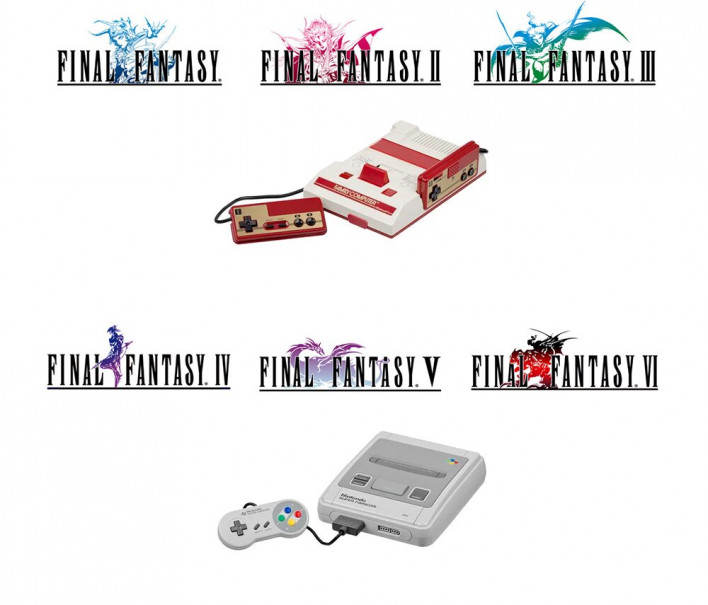
Hironobu Sakaguchi, the producer of Final Fantasy and creator of the series, revealed the story behind that decision in a 2024 J-Wave radio interview. "It wasn't a choice between Nintendo or Sony, but a choice between cartridges or CD-ROMs," Sakaguchi explained. He asserted that if they had used cartridges, the consumer price for FF7 would have easily exceeded ¥10,000, which he deemed an impossible price point. In fact, the previous title, FF6, which was released for the Super Famicom, had a list price of ¥11400 (excluding VAT). Ultimately, Square chose the CD-ROM format, and FF7 was released on the PlayStation across three discs, with a list price of ¥6800 in Japan.
It wasn't about grand ideals or platform loyalty; it was a moment where simple technology and pricing logic changed history. Former PlayStation executive Shawn Layden later recalled that this decision was "probably the biggest tectonic shift" in the history of Sony's gaming division.

An interesting fact is that Sony Music played a significant role in Square's decision to partner with PlayStation. The early business structure of PlayStation was a joint venture between Sony Electronics and Sony Music, and the personnel handling sales, marketing, and publisher relations were all from Sony Music. Layden explained that they maintained close ties with Square officials and actively persuaded them to adopt the PlayStation platform. In a sense, the Sony Music-centric business culture of the time helped steer the course of gaming history.
As a result, the 1997 release of FF7 provided powerful momentum for the PlayStation and played a decisive role in Sony securing dominance in the console market amid the competition for CD-ROM-based strategies and third-party support.
"There is no drama in death" — The Exit of #1
⚠ Contains major spoilers for FF7
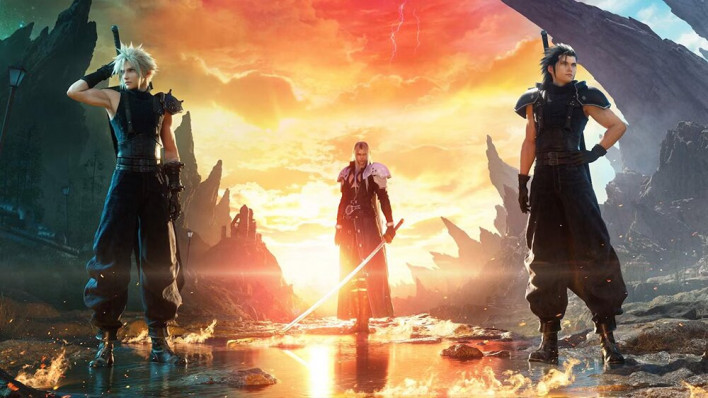
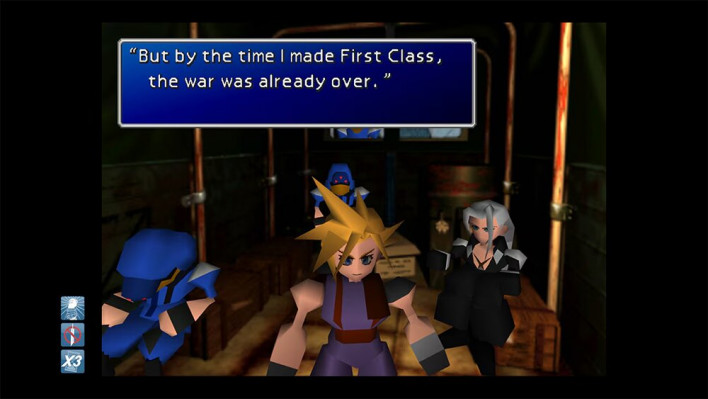
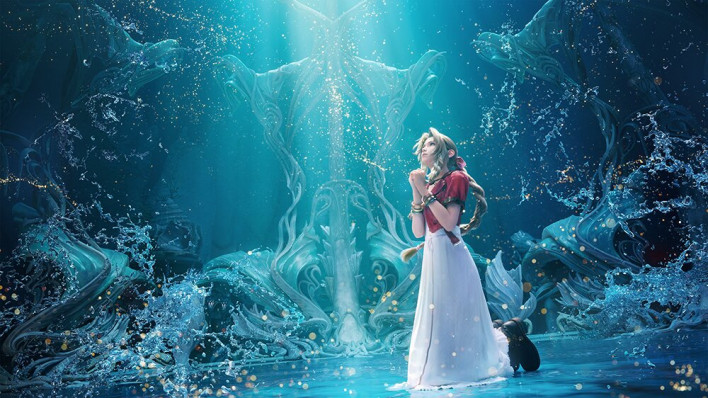
FF7 features one of the most shocking moments in gaming history. Midway through the game, Aerith Gainsborough, the protagonist Cloud's ally and the series' iconic female character, is suddenly killed by the villain Sephiroth. There was no warning, no emotional preparation, and not even a final word. She was simply gone.
Understanding the situation the developers faced at the time explains why such a shocking scene was included.
During development, series creator and FF7 producer Hironobu Sakaguchi lost his mother. Dealing with that grief, the themes of 'life' and 'loss' became central to the game, influencing key settings and direction, such as the 'Lifestream' and Aerith's death. The development team structured the story to make the player feel the sense of loss firsthand.
The intentions become even clearer when looking at an interview with director Yoshinori Kitase.
Death in reality is different.
People die from illness and accidents.
Death comes suddenly, and there is no distinction between good and evil.
It doesn't leave behind dramatic emotions, but a massive void.
When we lose someone precious, we feel that empty space and think, 'If I had known, I would have acted differently.' I wanted to make the player feel that emotion through Aerith's death.
Not a Hollywood style, but a sense of reality.
(Yoshinori Kitase, from an interview with Edge, May 2003)
Tetsuya Nomura, the character designer who also participated in writing the story, also harbored a deep aversion to the cliché of "a heroic death where the protagonist sacrifices themselves to protect a loved one." Aerith's death was a deliberate rejection of that trope.
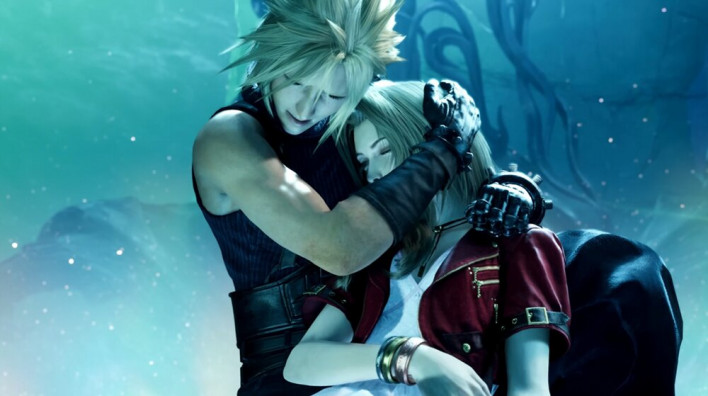
In the early planning stages, when the playable character roster was much simpler than it is now, the developers considered including the death of one of the main characters. They even considered killing off Barret, but decided it would be a relatively predictable development, ultimately choosing Aerith.
Aerith's death scene left a strong impression not only through its unconventional direction but also through the theme music that plays immediately after. In the boss battle that begins right after Aerith falls, instead of tense combat music, the mournful melody composed by Nobuo Uematsu continues to play uninterrupted. The 'Aerith's Theme' is remembered by many fans as the first piece of music that comes to mind when they think of FF7.
A 23-Year Wait
A New Story, Not Just a Simple Recreation
For decades after the release of FF7, one wish was repeated among fans: "If only there were an FF7 remake." As technology advanced, the imagination grew, and as the wait lengthened, the resignation deepened.
When a tech demo recreating the opening scene of FF7 with modern technology was unveiled at the 2005 PS3 announcement event, it triggered an explosive reaction among the fandom. However, the disappointment grew when it was revealed to be a demo purely to showcase hardware performance, not an official remake announcement.
The wait ended at E3 2015. When SQUARE ENIX officially announced the development of 'Final Fantasy VII Remake,' a massive roar erupted in the venue. It was a symbolic moment for fans who had waited so long for a remake.
Released in 2020, FF7 Remake defied many fans' expectations. It wasn't just an 'upgraded version' with improved graphics and modernized combat systems. New entities and narrative devices appeared, and the flow of some events and the fates of characters changed, leaving a strong impression even on fans who knew the original.
This choice was intentional. It was structured to provide fans who knew the original ending with the tension of racing toward a different conclusion, while offering a narrative that is difficult to predict for a new generation of players experiencing the game for the first time.
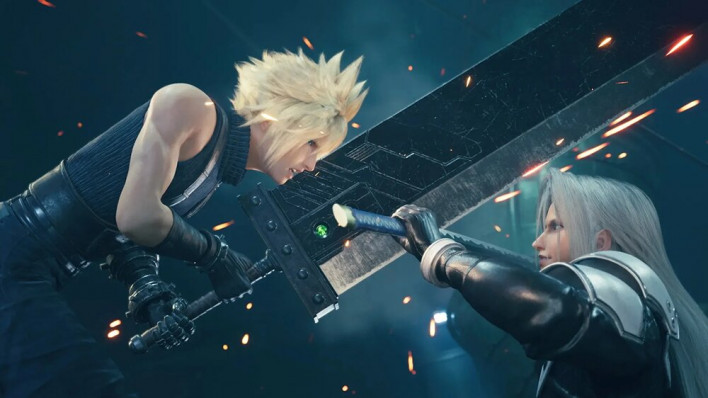
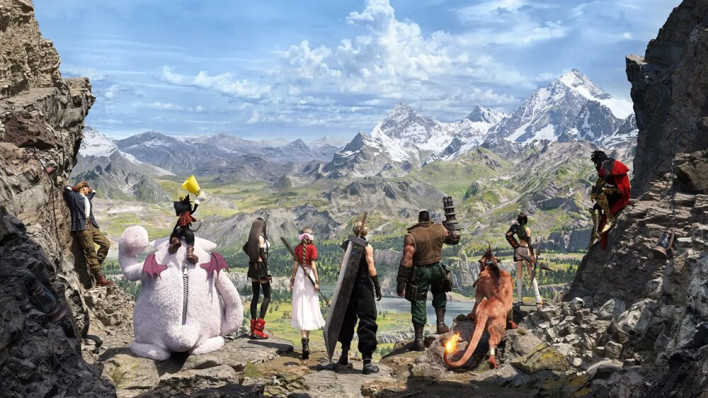
Four years later, in 2024, the second part of the trilogy, Final Fantasy VII Rebirth, was released. If the Remake covered the first disc of the original—the point where they escape Midgar—Rebirth covers the story from there up to the City of the Ancients. In terms of the original, this corresponds to the latter half of the first disc. Players familiar with the original already know what scene awaits at this point. Rebirth is a game racing toward that very scene. Like the Remake, the sequence of events and the way they unfold are not identical to the original.
A Story Still in Progress
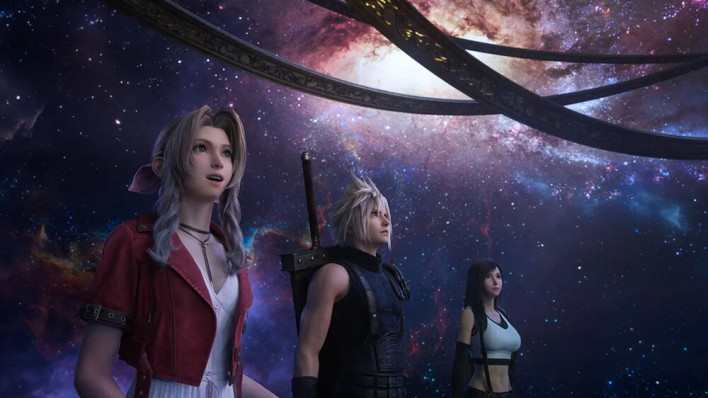
'Final Fantasy VII' is not just an old classic RPG. Even 29 years later, a new generation of gamers is meeting Cloud and Aerith for the first time, and fans around the world are waiting for the conclusion of the remake trilogy. A developer's decision, born from a cartridge pricing issue, changed the course of the console wars, and a developer's personal grief became an emotion shared by tens of millions.
When the final installment of the remake trilogy is released, the story surrounding Aerith will likely reach a conclusion. Or perhaps it will continue in another way. Either way, this story will continue to be discussed. That is why FF7 has endured until now.
Now, all eyes are on the final third part, Revelation. As Rebirth concluded at the end of the original's first disc, Revelation is expected to cover the content corresponding to discs two and three. How will the original ending be reinterpreted? Where will Aerith's story flow? The new conclusion to the story that began 29 years ago is finally approaching.

Sort by:
Comments :0