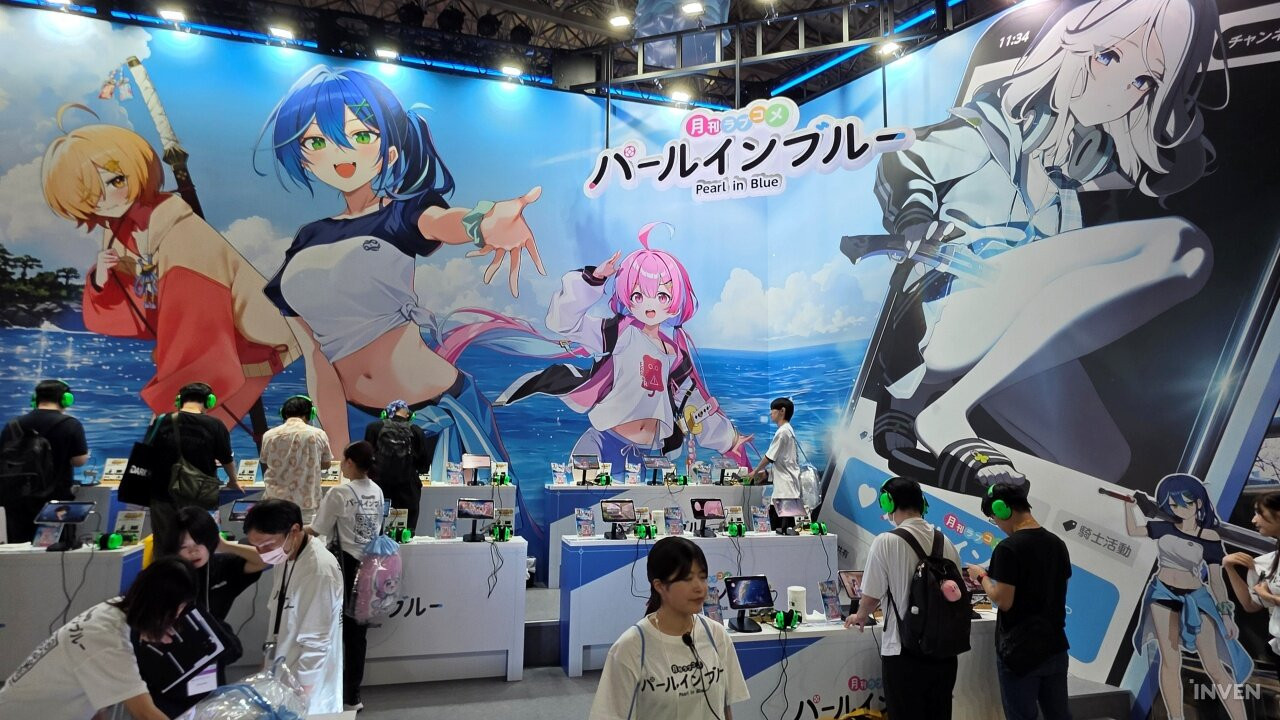
Netmarble's surprise new title, 'Pearl in Blue,' was revealed for the first time at TGS 2026, held at Makuhari Messe from September 17 to 21.
Developed by Netmarble N2, 'Pearl in Blue' is an anime-style collectible RPG themed around "Monthly Romantic Comedy." While the developer had already proven its character modeling and direction capabilities with 'Tower of God: New World,' expectations and concerns coexisted as this is an original title without pre-existing source material. In particular, given that Netmarble's performance with original IPs has been somewhat lacking compared to its achievements with established IP-based games, the process of embedding its characters and narrative from scratch—beyond just graphics—was bound to be crucial.
With those questions in mind, the approximately 20-minute demo was not structured to give an overview of 'Pearl in Blue's' overall systems. Instead, it followed the prologue directly—from how the protagonist, abandoned at birth and unable to awaken his Pearl, sought to become a blacksmith and forge swords, to his encounter with Nika and the four-member Knight squad. However, the way this story unfolded was slightly different from typical mobile collectible RPGs.


When thinking of a prologue or tutorial in mobile collectible RPGs, one usually expects a cutscene or dialogue explaining the situation, followed by moving into a combat stage to learn basic controls one by one. By contrast, 'Pearl in Blue' kept the narrative flowing through in-game cutscenes, inserting QTEs during fights to let players intervene. It felt closer to an interactive animation where players lend a hand along the way, rather than a tutorial where you test out character skills step-by-step.
Of course, not every development early on was easy to take in naturally. The situation felt a bit abrupt right from the start, as an ordinary protagonist arrives at the mega-city of Geomando and suddenly becomes a blacksmith forging swords. On top of that, monstrous entities called Baroque appear and rush to devour the protagonist, giving the impression of events rushing past before one can even grasp what this world is about.
The narrative flow began to settle into place when 'Nika,' the girl who ordered the sword, made her entrance. It was a familiar boy-meets-girl setup where a girl appears before the protagonist in peril, sparking a new story from their encounter. However, the unique twist was that while such scenes usually feature the girl resolving the crisis with overwhelming power and guiding the protagonist into a new world, Nika does not. Although she belongs to the Knights, she has yet to awaken her inner power, the 'Pearl.' That was also why she had commissioned a sword from the protagonist separately. From there, QTEs were incorporated as Nika engaged in a struggle beyond her capacity, driving the story forward by making the player overcome the crisis alongside her.
Pushed to the brink, the protagonist is on the verge of falling off a cliff, and although Nika catches him, both end up at risk of dying. At that moment, as the protagonist attempts to sacrifice himself, a scene follows where Nika's Pearl awakens. Triggered by a desire to save someone, her dormant power awakens—a classic, royal-road narrative progression.
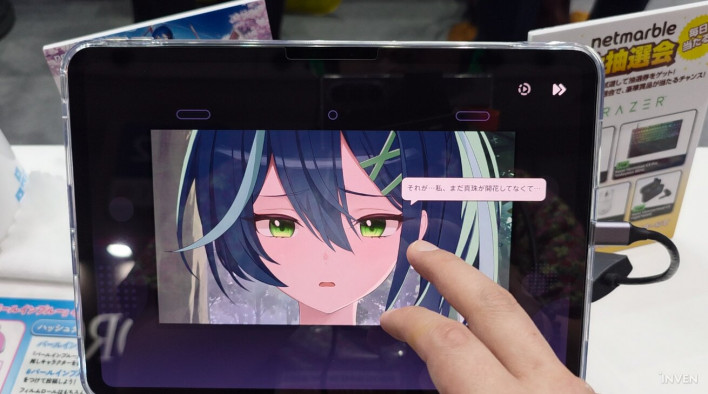
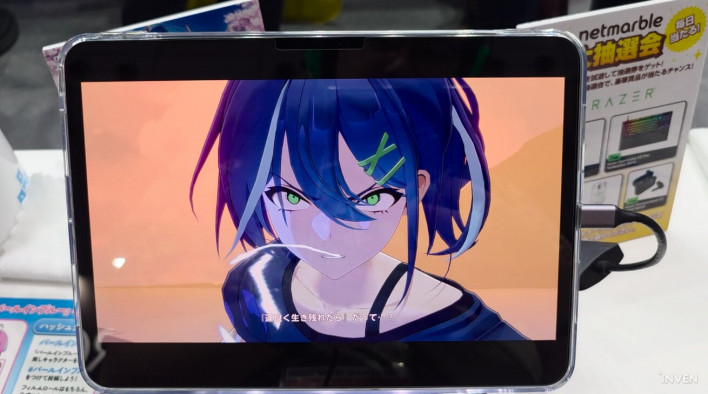


At this juncture, the demo transitioned from QTE-centric play to actual combat. Characters exchanged basic attacks automatically, and when skill icons became active, skills could be triggered, while pressing defense in time with large enemy attacks allowed players to parry. While it was difficult to judge strategic depth based on party compositions or character progression from this single battle, the structure successfully aligned the moment a character gains power with the moment the player directly utilizes that power. Instead of revealing the combat system from the start and adding an awakening cutscene, it portrayed a grueling struggle up to that point before altering the control format itself.
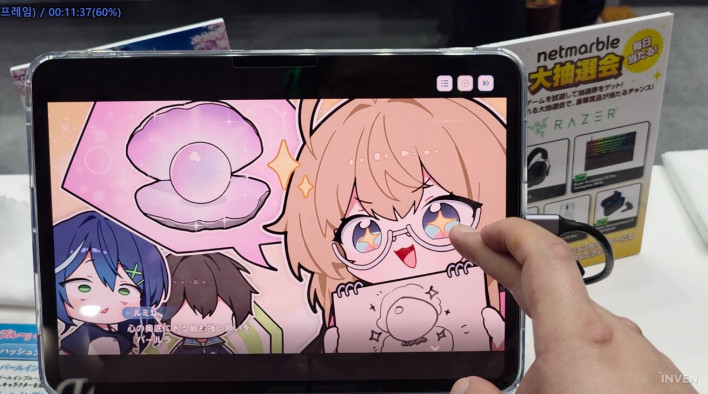
After combat ended, the Commander briefly explained what kind of power 'Pearl' is. Drawing a parallel to how oysters wrap around foreign matter to form pearls, it was described as a power gained through pain, hardship, and external catalysts. Suggesting that the protagonist might have been that catalyst for Nika, the Commander instructed them to return to the dormitory together, transitioning the story into another familiar genre: the rom-com dormitory narrative. Hints of this shift appeared on the way back. They were attacked by Baroque once again, but this time, the newly empowered Nika fought with gusto—accidentally wrecking the car lent by the Commander in the process. The tone shifted seamlessly from risking their lives to save each other moments ago to panicking over the mess they just made.
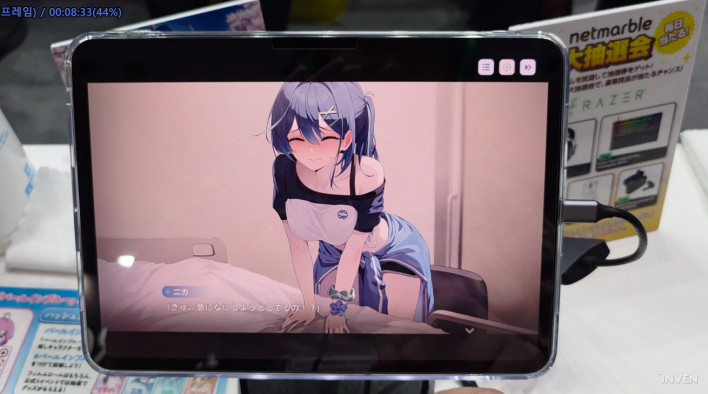
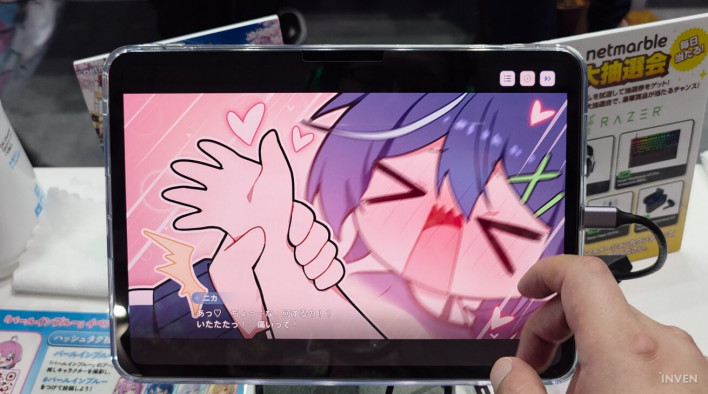

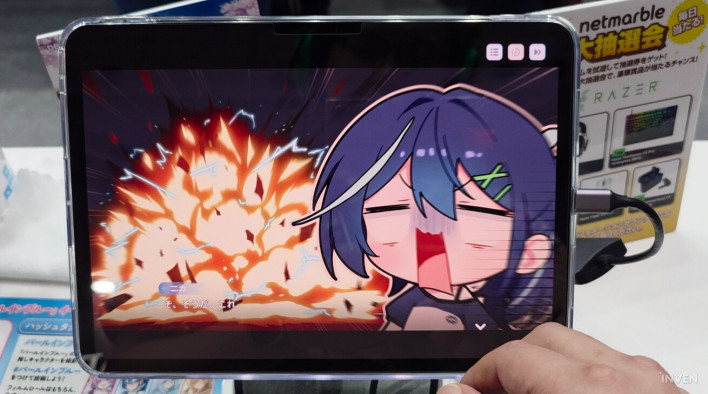

Nika's rich emotional expressions played a major role in making this shift convincing. The game captured a broad spectrum of emotions—joy, anger, sorrow, delight, embarrassment, shyness, and tsundere antics—with anime-style exaggeration while sensitively depicting drastic mood swings, adding to the immersion. In doing so, it vividly conveyed the charm of a romantic comedy heroine reacting to various chaotic situations.
Upon arriving at the Knights' dormitory, that direction became even clearer. The protagonist is cautious since it is an all-female dormitory, but heads to the bathroom after being told to take a bath first. However, because no sign was put up, the timid Yotsubi walks in and encounters the protagonist, hesitating nervously before other members join in, causing a commotion.
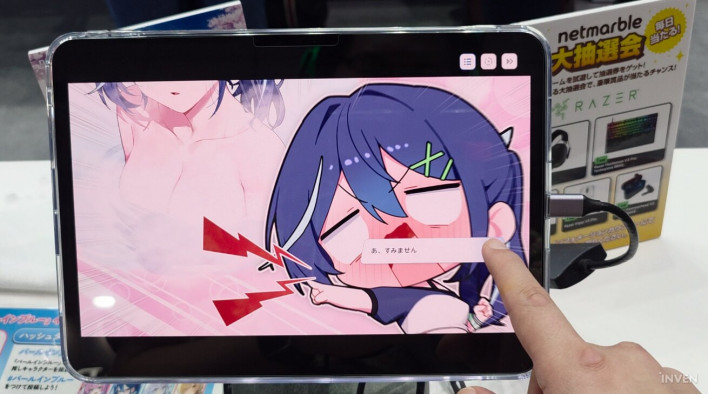
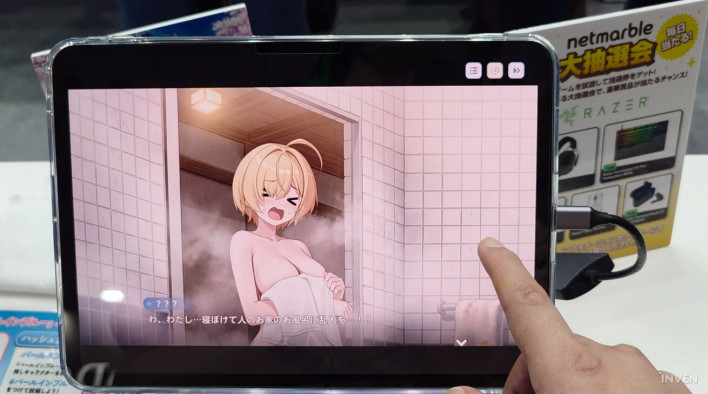

By this point, one can easily picture how the scenario plays out. It follows a setup where the protagonist enters an unfamiliar environment to begin communal living, learning about each character's personality and relationships through living-space mishaps. Rather than avoiding that familiar formula, 'Pearl in Blue' chose to execute it faithfully through character reactions and in-game direction. While early events rushed in somewhat abruptly, the progression—from meeting Nika and overcoming crisis together to the dormitory commotion—clearly established the kind of entertainment the game aims to deliver.
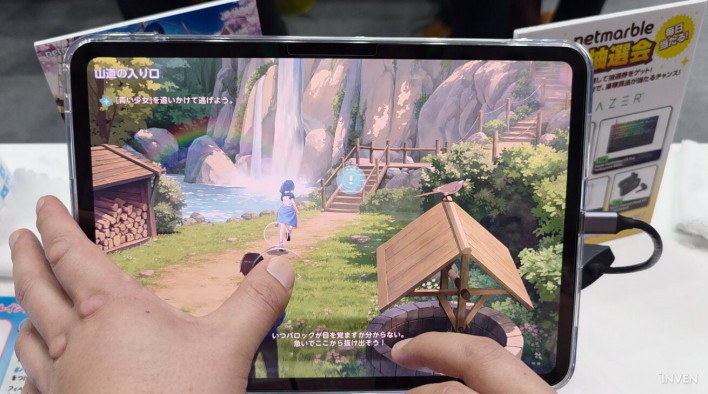
That is not to say the demo consisted solely of watching cutscenes and pressing QTEs. In a segment fleeing from Baroque, there were scenes where players navigated the map from camera angles reminiscent of classic adventure games. As this was observed only in a brief escape segment, it remains uncertain whether this will also be utilized in slice-of-life portions. However, combined with its rom-com dormitory direction, it inspires interesting possibilities. If encountering characters or getting caught up in dorm mishaps were handled through this adventure-style structure alongside dialogue boxes and cutscenes, it could further enhance the feeling of living together.
Of course, much remains to be confirmed regarding what kind of game 'Pearl in Blue' will be as a collectible RPG. The demo offered only a single combat experience, without revealing what content players will engage in after collecting and raising characters. It is also difficult to judge from the prologue alone how the "Monthly Romantic Comedy" theme will be sustained structurally moving forward.
Nevertheless, this 20-minute demo clearly conveyed what kind of characters and atmosphere 'Pearl in Blue' aims to deliver. It connected a boy-meets-girl encounter forged in crisis to power awakenings and combat, followed by lively commotions in a shared living space. While not a novel tale, the intent to bring familiar romantic comedy tropes vividly to life was palpable. It will be exciting to see how 'Pearl in Blue' builds upon this initial encounter with daily life and adventure when it is fully introduced to players following its TGS 2026 showcase.