Valve is finally launching its VR headset 'Steam Frame,' after remaining silent for nearly a year. Following the 'Steam Machine,' this completes the final puzzle of the three-hardware lineup slated for release this summer. The 256GB model is priced at $1,059 (approx. 1.43 million won) and comes with Half-Life: Alyx for free.
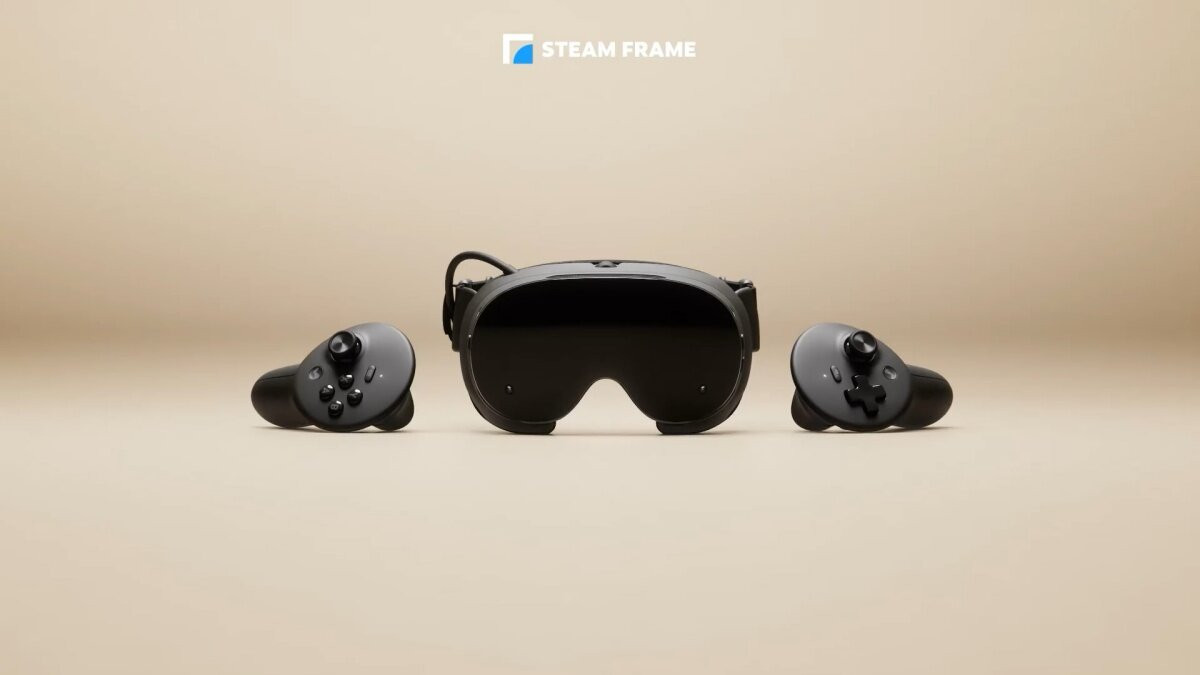
Valve announced the official release of the Steam Frame through an official announcement at 2 AM on the 15th. It will be released in two models with different storage capacities—256GB and 1TB—priced at $1,059 and $1,299 (approx. 1.75 million won), respectively. This is lower than the industry estimate of up to $1,500, but higher than Valve's previous VR headset, the Valve Index ($999). Although Valve failed to meet its goal of "pricing it cheaper than the Valve Index," which it stated in an interview with Road to VR last April, many evaluate that it performed reasonably well considering the recent rise in memory prices.
The Steam Frame features a 4nm Qualcomm Snapdragon 8 Gen 3 processor paired with 16GB of LPDDR5X RAM. This spec is higher than that of Meta's standalone headsets in the Quest series: the Meta Quest 3 (8GB) and the high-end Meta Quest Pro (12GB).
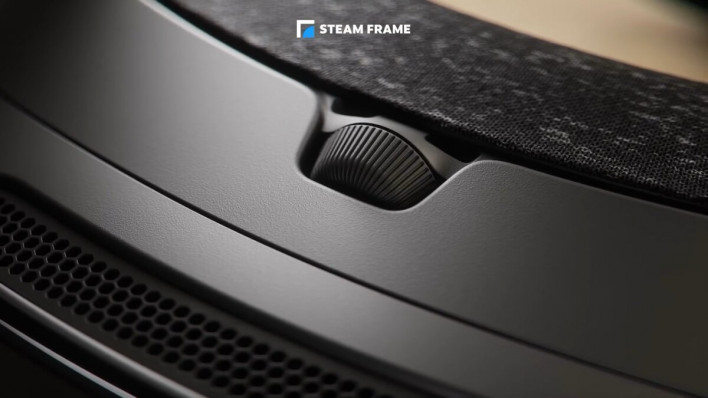
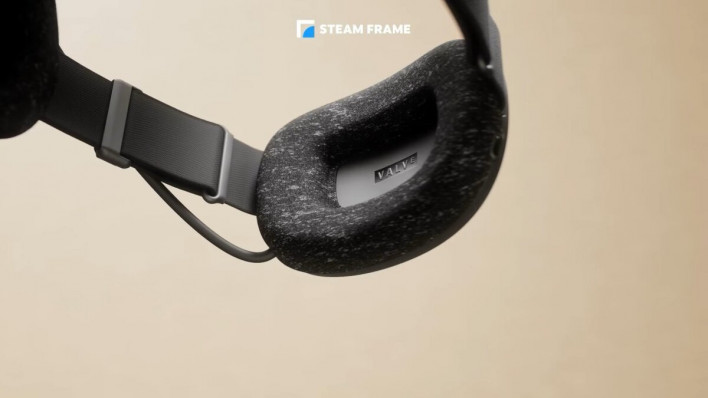
The display uses dual 2160×2160 LCD panels, supporting refresh rates from 72Hz to 120Hz, with experimental support for 144Hz. Thanks to custom pancake lenses, the weight has also been significantly reduced. With the head strap attached, it weighs 440g—roughly half the weight of the Valve Index, which exceeds 800g, and lighter than the Meta Quest 3's 515g. The 245g head strap can be replaced with other head straps, and the standalone body module weighs just 185g.

Its design direction also clearly positions it as a streaming-first device. Instead of wired connectivity, Valve emphasized various streaming capabilities. It utilizes a 6GHz wireless adapter and a dual-band radio that separates the dedicated audio/video streaming wireless connection from the Wi-Fi connection, ensuring a high-quality streaming experience without bandwidth interference. Streaming optimization was also enhanced through 'foveated streaming' technology, which boosts bandwidth by up to 10x for only the area the player is currently looking at.
Unlike the Valve Index, which supported external full tracking via base stations, the Steam Frame provides tracking through four cameras mounted on the headset. Since these four cameras are monochrome, the device focuses on faithful VR gaming rather than full mixed reality. Valve has also consistently emphasized games that can be enjoyed immediately after putting on the headset without complex streaming setups. Notably, users can play all games in their library via streaming, in addition to VR titles.
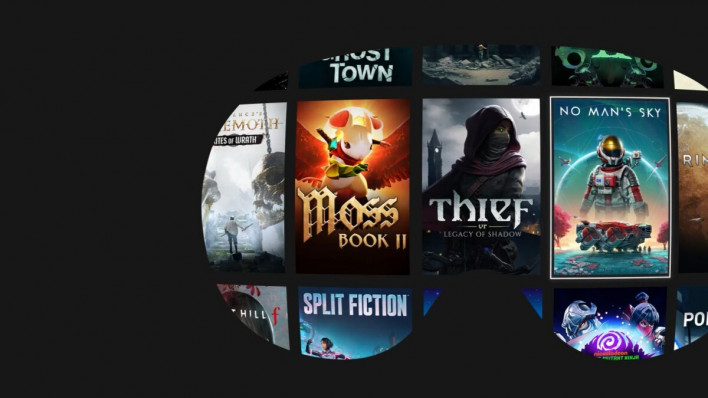
On-device playback has also received a major focus. To run Linux-based SteamOS on ARM Snapdragon, Valve utilized emulation layers alongside Proton compatibility. It also added support for running Android APKs. The plan is to enable x86-based games to run natively on the Steam headset itself. This represents an ambitious step forward, expanding on the Proton layer approach Valve proven with the Steam Deck. Running Windows games on Linux was previously done within the same x86 architecture. The Steam Frame takes this a step further by adding emulation that translates x86 entirely to ARM64 via FEX x86 emulation, effectively breaking down the barrier of running x86 games on ARM.
Just as it did with the Steam Deck, Valve has begun providing a Steam Frame Verified compatibility list. In addition to VR games like 'Escape Simulator' and 'Moss: Book II VR', it also includes games such as 'Dave the Diver', 'Hades II', and 'Cuphead'.
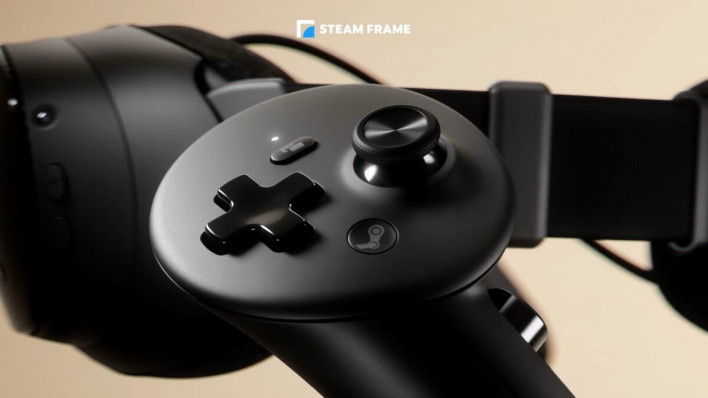
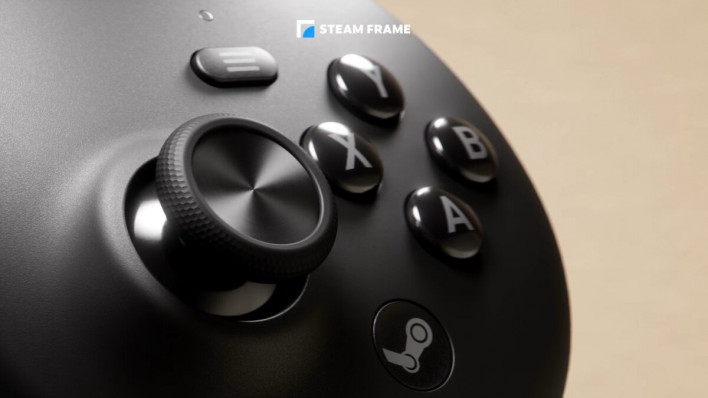
Meanwhile, the lighter controllers retain all button configurations of traditional controllers for standard gameplay while supporting VR controls, finger tracking, and more.
The purchasing method follows the same randomized reservation lottery system as the Steam Machine. Users can select and reserve one desired model through the Steam Store until September 17 at 10 AM PT. Those who apply after the deadline will be placed at the back of the waitlist. However, South Korea was excluded from the initial sales schedule, similar to the Steam Machine. The Korean release schedule is expected to be announced later through Komodo, which handles distribution in the Asian region.
With this announcement, the blueprint of Valve's hardware ecosystem is essentially complete: handheld handled by the Steam Deck, the living room by the Steam Machine, and VR by the Steam Frame. Valve's overarching vision is to tie all three devices together under a single operating system, SteamOS. However, the Steam Machine previously failed to create a major splash despite initial interest due to unavoidable higher pricing than originally targeted and hardware performance falling short of expectations. All eyes are now on whether the Steam Frame, which aims for an "expanded gaming experience on a new dimension," can deliver a different outcome.