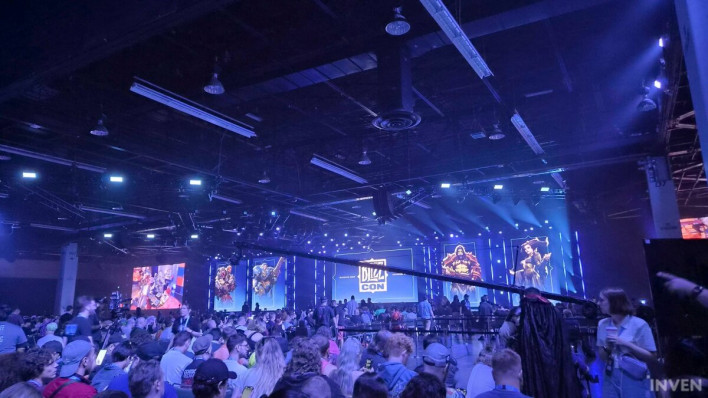
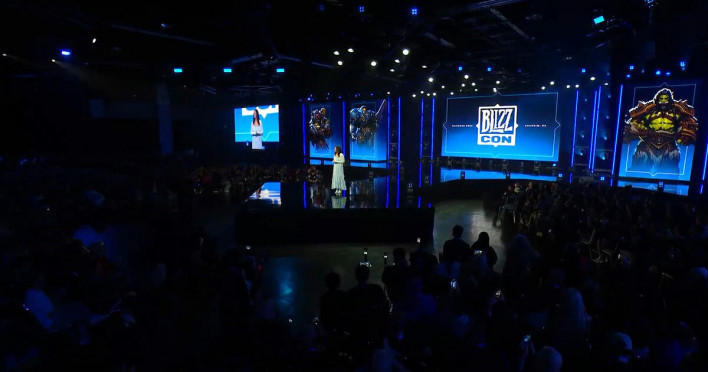
It was a remarkable event.
If asked what was most surprising, there are many answers. Diablo 5, StarCraft, and World of Warcraft: Forever were all astonishing. One could have guessed, but was never certain; one could have speculated, but was never precise.
At past BlizzCons, new titles were unveiled as well. Producers and directors of each title took the stage in turn to showcase projects, gauging the reaction of fans in attendance. Yet while the Blizzard of old would reveal new projects, it rarely went so far as to state when they would actually launch. "When It's Ready" was Blizzard's long-standing policy, which in a way served as a catchphrase guaranteeing high quality.
However, at this BlizzCon, two of the most anticipated titles—'Diablo 5' and 'StarCraft'—revealed their launch years. Rather than the fact that those years were 2029 and 2030, the fact that Blizzard spoke those numbers aloud was what proved so surprising.
Following the announcement, countless gamers focused on the numbers revealed alongside them: '2029' and '2030.' In the gaming industry, it is far from uncommon to see developers fail to meet even self-imposed schedules and delay launches. It is hardly surprising that concerns followed the declaration of release windows for games that are still three or four years away.
Reflecting on the past, a span of three to four years is not absurd in itself.
Diablo 4, revealed in 2019, did not disclose a release date at the time and launched about four years later in 2023. Diablo 3, first unveiled in 2008, similarly made its debut about four years later in 2012. Taking several years from reveal to release was true in the past as well. The only difference is that back then, no launch year was promised—whereas this time, one was.
Thinking over this difference, the outline of Blizzard being drawn by President Johanna Faries begins to come into view.
BlizzCon in the 2010s, often remembered as a golden era, was a celebration held atop the monumental tower Blizzard had built over the years. Blizzard accumulated the love of countless gamers to construct a soaring stage and invited fans onto it. The Blizzard of that era was unequivocally a 'special' game studio, possessing something that set it apart from others.
Today's Blizzard, however, does not possess the same solid present that once supported past BlizzCons. Following Mike Morhaime's departure and years of turbulence, where Blizzard was heading became increasingly unclear. Leadership changed multiple times, projects faltered, and even the company's ownership structure was transformed. While many gamers still love Blizzard, the Blizzard of today is plainly different from what it was ten years ago.
President Johanna Faries shifted the frame away from that lacking present toward the future. In an interview with Bloomberg ahead of BlizzCon, she stated:
“We’re a Blizzard that’s going to ship, and ship big, and ship on time, and all hands on deck to set those projects up for success.”
“We want to show confidence in the biggest bets we are putting forward. Today's Blizzard is a Blizzard that will ship games, ship big, and ship on time, with everyone rallying together to make those projects a success.”
Perhaps this is the true essence of BlizzCon 2026.
If past BlizzCons were venues to share and celebrate the accomplishments Blizzard had achieved, this year's BlizzCon is closer to a massive futures trade, where Blizzard—having navigated a difficult period—bet a significant portion of its remaining trust on the future. The company placed dates rather than price tags on a future years away and asked fans to believe in that promise.
And like any futures trade, while success offers immense rewards, the risks are equally great. If the games are not delivered at the promised time, or if they fall short of expectations despite being released on schedule, the trust Blizzard has staked will be depleted once more. Ultimately, this is why so many gamers expressed anxiety alongside anticipation while watching the promises of the opening ceremony.
In the past, the mere phrase "because it's Blizzard" was enough to buy a degree of patience. That is no longer true today. Over the past few years, Blizzard has already drawn down a considerable amount of trust, and fans have experienced disappointment on multiple occasions. Because of this, the promise put forward this time is far from lightweight.
BlizzCon 2026 is President Johanna Faries' grand manifesto.
She declared release windows for games despite countless variables and inherent uncertainty, placing her confidence behind those numbers. Where the origin of that confidence lies is not yet clear. However, having publicly declared that Blizzard will "ship, ship big, and ship on time," Blizzard must now back up those words with results.
In that sense, the "future" spoken of by President Johanna Faries does not seem to mean merely a list of games coming out several years down the line.
At this BlizzCon, StarCraft broke out of its familiar RTS mold, while World of Warcraft introduced a fresh direction with 'Forever.' On top of that came transmedia efforts to expand IPs beyond gaming. Though varied in format, all of these read as attempts to widen the reach of the Blizzard brand rather than catering exclusively to existing fans.
Ultimately, the future Blizzard has promised is not simply the release of a few games. Launching the promised games at the promised time and building a broader fan base than before through those games are inextricably tied together.
So much is on the line: fan expectations, President Johanna Faries' leadership, and the future of Blizzard itself.