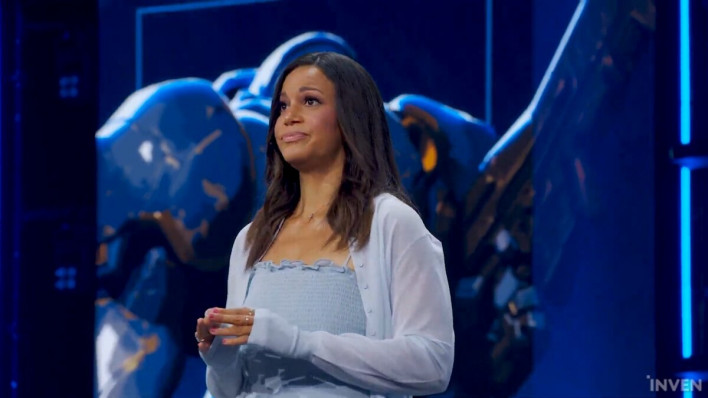
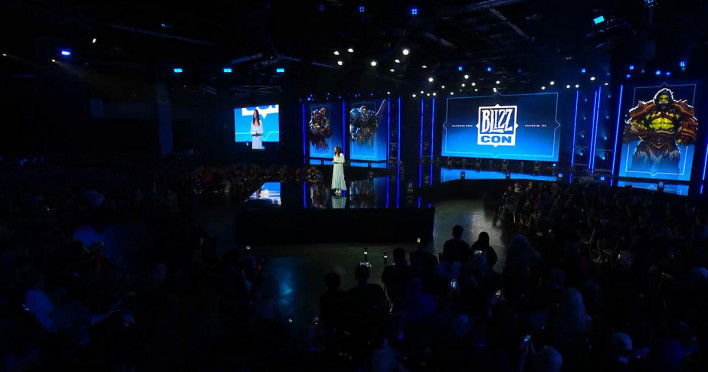
For President Johanna Faries, who took the helm of Blizzard Entertainment in February 2024, BlizzCon 2026 is a special occasion in many ways. It marks her first BlizzCon since taking office. The event itself has returned after a three-year hiatus, coinciding with major milestone anniversaries including Blizzard's 35th, Diablo's 30th, and Overwatch's 10th.
Above all, Blizzard used this event to focus on the future rather than the past. StarCraft, which had gone without news of a new entry for a long time, returned as an open-world shooter, and Diablo 5 was revealed for the first time. Notably, Blizzard announced targeted release years early on for major projects that still have a long way to go before launch. Considering how Blizzard historically adhered to its principle of "When it's ready" and rarely committed to specific timelines, this represents a remarkably unusual shift.
Speaking with Korean media at BlizzCon 2026, President Faries explained that this was an intentional change. Over the two and a half years since taking office, she focused on transforming Blizzard into an organization capable of building and executing long-term plans, wanting to show confidence that the company can now attach dates to major targets and deliver on those promises. What kind of Blizzard did Faries want to present at her first BlizzCon as president? From her assessment of the event to a new development strategy, the future of Blizzard IPs, and the direction of BlizzCon, we sat down to hear her thoughts.
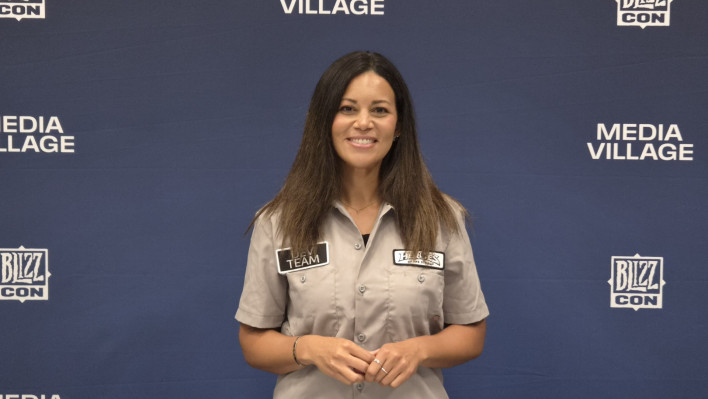
The BlizzCon 2026 Opening Ceremony was broadcast live globally, including in Korea, drawing a wide range of reactions to the announcements. Do you feel you received the response you were hoping for? What was it like seeing the reactions firsthand?
Johanna Faries: We are truly thrilled by the response coming from around the world. The development teams did an incredible job, and above all, I believe they presented with genuine passion. Our goal was to create joy and deliver that to people.
Every team across Blizzard takes genuine pride in the projects revealed this time. Taking in the energy on site throughout the weekend and meeting directly with the community to share each other's passion was a huge joy for us in itself.
It is also wonderful to see so many people around the world watching the stream and talking about the announcements, because new feedback is created through that process. We love hearing people say they enjoyed what we revealed, and we also welcome their honest feelings in return. Those conversations and feedback make us a better and stronger organization.
BlizzCon is a truly precious event for Blizzard. While connecting directly with the community in real life is essential, it is also a place where we can spark a broader dialogue around our numerous games and projects. If people are interested and want to know more, we must actively participate in that conversation as well. Based on the insights gained from those discussions, we want to deliver even better and bolder results when we actually launch our games.
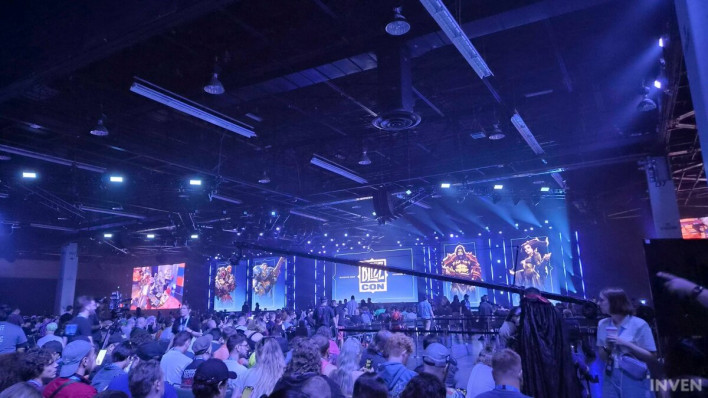
BlizzCon returned after a three-year break, coinciding with major milestone anniversaries like Blizzard's 35th, Diablo's 30th, and Overwatch's 10th. You must have wanted to deliver a grand show to match. What was the image of Blizzard you wanted to showcase most through this BlizzCon?
Johanna Faries: What we wanted to show was confidence and inspiration. We knew there was immense anticipation and demand from people who had been waiting for BlizzCon to return. Because it took so long, we felt that when everyone gathered again, we needed to show something impactful to the community, and I believe each of our teams truly delivered.
At the same time, we wanted to show our future in many aspects through this BlizzCon. It was also a place to begin demonstrating the overall ambition that Blizzard as an organization holds for the future.
I am also glad that we were able to share news across almost all of our core franchises, IPs, and universes. There were massive announcements and relatively smaller ones, but that doesn't matter. We were able to showcase a broad range of content and news, and above all, we hoped that each player community would leave BlizzCon feeling, "They are listening to us," and "They know what matters to us," taking away something to look forward to.
In that sense, I believe this event was a success. I am immensely proud of the teams and the hard work they put into this event. This experience will also serve as an important reference point as we consider how to shape future BlizzCons.
One of the most surprising announcements was the new StarCraft title and Diablo 5. Even though both games still have considerable time before launch, Blizzard disclosed their target release years in advance. Historically, under the principle of "When it's ready," Blizzard rarely revealed specific release timelines at the point of announcement. Does this change reflect a resolve to keep public commitments, or has the actual approach to development and planning changed?
Johanna Faries: I think it's both. When I took on this role about two and a half years ago, one of the key directions I emphasized from the start was "planning." We have to create high-quality products, and we must attract and nurture top talent who can build the best games. The third crucial pillar was for the entire organization to plan together very strategically.
As that approach took root, I believe we gained a high level of confidence in announcing release windows. When we say a certain game will come out in a specific year, we say it with the confidence that we can actually launch it that year. I also want to embrace the ambition of having confidence in those dates and executing them at a world-class level.
At the same time, we also wanted to change how we reveal major projects. Previous generations of Blizzard leaned more toward the "When it's ready" mindset. From a player's perspective, they might see something incredibly exciting and visually stunning, yet have no idea when they would actually get to play it.
This time, we wanted to attach dates to our grand ambitions and major projects. We want to be a Blizzard that players can trust and look forward to with confidence. Of course, that brings a deep sense of responsibility for me as well. I must provide sufficient time and space for the development teams to produce their best work, and developers need to feel confident about the target timelines.
Ultimately, this decision was intentional. At the same time, it shows that Blizzard as an organization is planning in a slightly different way than in the past.
Since taking office, you have highlighted maximizing the potential of existing franchises and building long-term development capabilities as key priorities. This time, results worked on over time—such as StarCraft's genre shift and Diablo 5—have begun to take center stage. Looking back now, do you feel these organizational shifts and IP growth strategies are heading in the intended direction?
Johanna Faries: Yes. I take tremendous pride in how multiple teams worked together to confidently present high-quality games and major announcements.
Of course, this has been a journey over the past two and a half years. We engaged in deep conversations and worked closely together to ensure we were fully prepared. It was essential to empower the development teams to pursue bold creative ambitions while taking a strategic approach to how those projects are delivered to the world.
Now that we have built a baseline capacity to view Blizzard from a long-term perspective, we must also think about how what we are doing today connects to what players will want to see from Blizzard five years from now. And what things look like five years down the line could be very different from today.
So we have to manage multiple things at once. We must continue supporting our active live-service games to meet player expectations, prepare games launching from a few days out to the next few years to offer great experiences, and at the same time look further into the future.
In particular, we shouldn't simply rely on the IPs we already know. We need to think about where else Blizzard can go and how far we can expand our reach from an entertainment standpoint. Some of yesterday's announcements reflected that direction.
I believe these discussions are taking place effectively within the organization. When teams, plans, and resources are aligned toward the same direction well in advance, everyone can move forward with a shared understanding when the time for execution arrives.
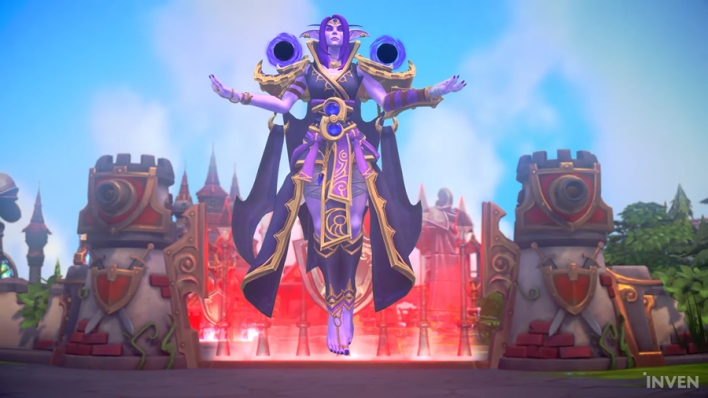
Heroes of the Storm also made a return at this BlizzCon. Beyond the reveal of Xal'atath, do you plan to continue supporting and developing Heroes of the Storm moving forward?
Johanna Faries: Beyond revealing Xal'atath, we are continuing to discuss and share ideas across the organization about what the future of Heroes of the Storm could look like. However, I also want to give the development team enough space to freely explore possibilities and enjoy the creative process.
At the same time, I want the community that has supported this game to know that we will continue to support Heroes of the Storm going forward. We are thrilled to feature Heroes of the Storm again, and we are equally delighted by the positive response. Beyond Xal'atath, we look forward to players experiencing the game in various ways and sharing their feedback.
Initiatives to expand gaming IPs into other media, such as animation and video, are taking shape—including the recent collaboration between Overwatch and Netflix. With many gaming companies entering transmedia projects, what are your short- and long-term plans to expand the value of Blizzard IPs in the global media market?
Johanna Faries: We have plans. It's something I wanted to signal a bit during yesterday's opening ceremony, and there will be more to come in this space. We are currently actively discussing what new media partnerships could look like.
What matters most is ultimately the creation and storytelling. Both the internal Blizzard teams and our partners in entertainment and media need to thoroughly understand the IP and tell the best possible story. We must feel that our IPs are in the right hands, and the work must resonate with existing fans and players. If that also brings in new players and fans, Blizzard's footprint in culture and entertainment can grow even wider.
You can expect more in this area moving forward. However, actual announcements require a tremendous amount of preparation. We shouldn't announce too early, nor too late. It is critical to find the right moment to share news responsibly.
Personally, facilitating these projects is a top priority for me. I believe Blizzard holds some of the finest IPs in the world. We are more than deserving and capable of venturing into these new spaces to build a broader fandom.
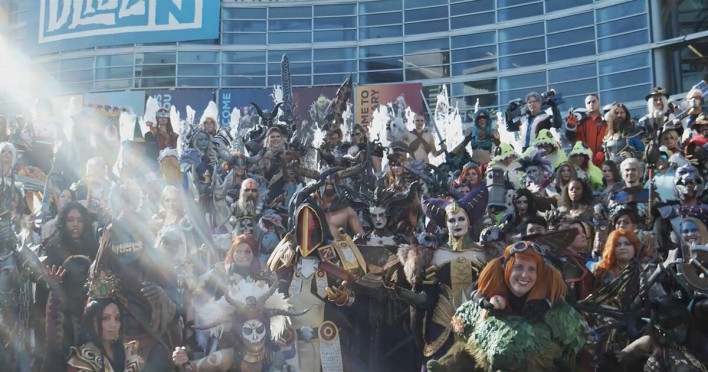
You emphasized quality and community during the opening ceremony, and you met with fans in person this time. What do you consider to be the essence of BlizzCon? How does BlizzCon hold unique meaning compared to other gaming events?
Johanna Faries: To me, the essence of BlizzCon is connection with the community. I wanted that to shine through naturally across all events, from the opening ceremony throughout the weekend.
I view BlizzCon as a truly unique event. Not only is it deeply rooted in Blizzard's culture, but it is also a distinctive form of community gathering across the entire gaming and entertainment industry. Some people met at past BlizzCons and built lifelong relationships, while others met for the first time here and will forge lifelong friendships and memories.
Above all, everything starts with the player community. The fact that players can share experiences directly in the same space as the developers of the games they play is an extraordinarily special element of BlizzCon. No matter how we shape BlizzCon in the future, I believe this aspect will never change.
To differentiate ourselves from standard conventions or game reveal events, we must always put players and the community first. If we do that, BlizzCon will continue to succeed.
Another crucial element is authenticity. Online channels alone cannot fully recreate the emotions and connections that form when people meet face to face. Gathering in the same physical space generates a new energy and creates memories that last a lifetime. I consider it incredibly important that Blizzard can create such a space, and we will continue fulfilling that role moving forward.
With so much information revealed this time, some are already asking, "Will there be anything left to show next year?" Will BlizzCon return to an annual cadence moving forward, or will it follow a specific schedule?
Johanna Faries: Right now, there is no fixed cadence set for future BlizzCons. However, we are actively discussing how to make every BlizzCon an exceptional event whenever we host one. We will continue to invest in the future of BlizzCon.
We learned a lot while preparing for this event. It's true that a three-year gap felt quite long in many respects. However, when I first took on the role of president, I had extensive conversations with the staff who put BlizzCon together, and one piece of feedback I heard over several months was that preparing for the event every single year can exhaust the team. That's because as soon as one BlizzCon ends, planning for the next one begins immediately.
In some years, we might pack a tremendous number of major announcements into a single event, but if we host it on an annual schedule, there could be years where we cannot do that. So the key standard for us going forward is that whenever we decide to hold BlizzCon, it needs to be an event packed with content.
We want to fill it with major reveals, new information, playable games, and things the community looks forward to. We know fans invest their precious time and resources to travel here. In turn, we must not only meet those expectations but exceed them.
We will share more about the event cadence at the appropriate time. However, whether the games and content we have to reveal are compelling enough will be a major factor in deciding when to hold BlizzCon. The development teams should also be able to look forward to and enjoy preparing for the event. When we show up at BlizzCon, it needs to be an event everyone can embrace with enthusiasm.
It has been about two and a half years since you took office as president. From a media perspective, opportunities to visit Blizzard headquarters or meet developers directly have increased significantly, and we can feel a tangible shift toward receiving far more information. What did you want to change most when you first took office, and looking back now, what do you think is the biggest way Blizzard has evolved?
Johanna Faries: First, speaking from a media standpoint, one of the key things I prioritized was a "global perspective." I believed it was important not only how we launch games, but also how those games are discussed and covered worldwide.
Just because many of our developers are based on the West Coast of the US doesn't mean we should focus solely on North America or the West Coast. Blizzard has offices around the world and players globally. Each region also has fantastic media partners with whom we should build relationships in a more strategic and structured way.
The Media Village at this year's BlizzCon is an example born from that approach. I drew some inspiration from my past experience working at the NFL, particularly the Super Bowl. The Super Bowl sets up dedicated media hubs so journalists from around the world can cover the major event in depth. I wanted global media partners at BlizzCon to have proper working spaces and opportunities to meet with developers. Arranging visits to Blizzard headquarters prior to the event shared that same rationale.
As for how the organization as a whole has changed, it might sound a bit unusual, but I would actually prefer to ask our employees. Of course, as a leader, I have my own thoughts on what I sought to change. However, how our teams actually experience those changes matters much more.
I constantly check in to see whether employees feel positive changes have occurred and whether they believe Blizzard is moving in the right direction. I try to create spaces for open dialogue with employees across various regions, asking questions like, "Are we doing well?", "How are you doing?", "What are we missing?", and "What can we do better?"
Every organization naturally goes through good moments and challenging times. That is why it is vital to keep listening to our colleagues. I hope that a culture where people talk openly, teams feel empowered, and cross-departmental collaboration drives toward big goals feels distinct and refreshed compared to before.
However, I believe the most accurate answer regarding real change ultimately lies within the teams themselves. That is why I will continue to stay close and listen to the voices on the ground.