To mark Diablo's 30th anniversary, Diablo IV is receiving a major update spanning both its past and future. During the "Diablo IV: What's Next" panel at BlizzCon 2026, Blizzard revealed key content for the "Legacy of Hell" season—launching September 16 at 1:30 AM KST—along with the direction for future seasons and early development details for the new Amazon class joining in the first half of 2027.
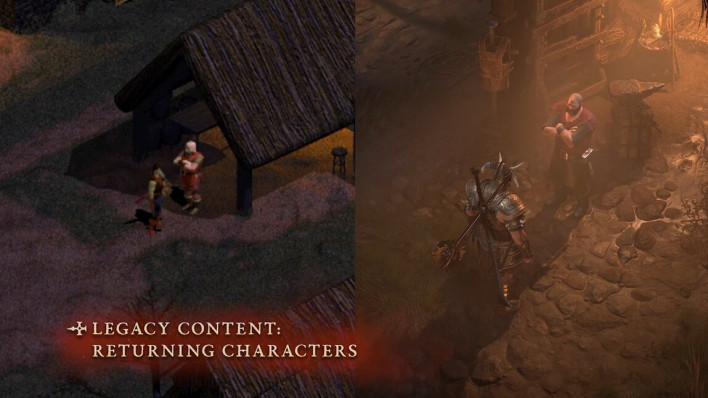
The Legacy of Hell season focuses on reliving the 30-year history of the Diablo franchise within the game. Players will once again confront Prime Evils like Diablo, Mephisto, and Baal, while figures from the past, including Deckard Cain, make their appearance in Sanctuary. In addition, players can experience "Waking Nightmares"—which reconstructs iconic locations and battles from previous entries in Diablo IV's style—alongside nostalgia-inducing Unique items.
Nightmares from 30 Years Ago Return to Sanctuary
Confronting the Prime Evils: Diablo, Baal, and Mephisto
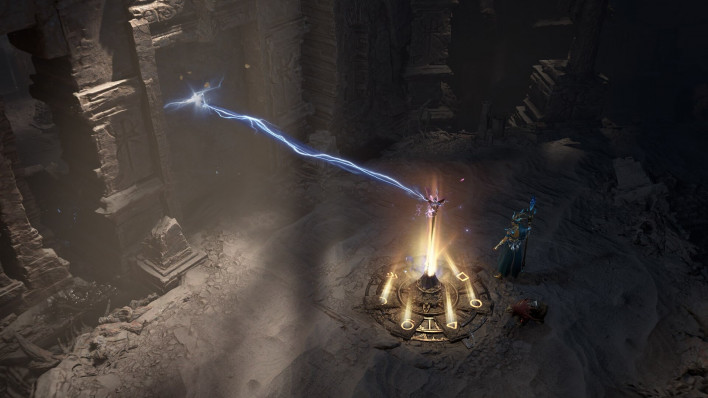
Legacy of Hell is a season commemorating the 30th anniversary of the Diablo series by looking back on memories from previous games. The rift in the Realm of Chaos opened during the "Death's Awakening" season was only the beginning. As dark rituals and the Cult of Death gradually gained power, souls fallen in Sanctuary's past began awakening once more, including Deckard Cain, one of the Diablo franchise's most iconic figures.
Returning as a soul lost in time, Deckard Cain does not fully understand his own situation. However, he warns that the Dark Wanderers have returned and asks the player to save their lost souls. To do so, players must once again face the three Prime Evils: Mephisto, Baal, and Diablo.
The three Prime Evils await players in iconic locations from past entries in the series. Baal appears in the Worldstone Chamber, Mephisto in the Durance of Hate, and Diablo deep within the Tristram Cathedral from the original Diablo. The Prime Evils and locations that have defined the series for the past 30 years are making their return.
After confronting the three Prime Evils, players can harbor one of their "Spires of Evil" to become a Dark Wanderer themselves. By advancing reputation tied to the chosen Spire of Evil, players gain additional abilities harnessing that Prime Evil's power, altering seasonal gameplay according to their choice. However, utilizing the Prime Evils' power comes at a cost. The more players draw upon the power within the Spire of Evil, the more that demon's attention turns toward them, granting formidable power while forcing them to endure new threats.

Recreating Diablo I Dungeons in Diablo IV
'Waking Nightmares' Recreate Iconic Series Moments
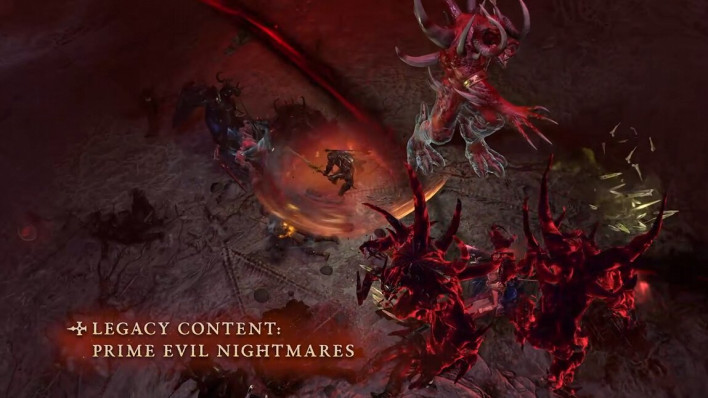
"Waking Nightmares," the core content of the season, recreates key moments from past Diablo games using Diablo IV's graphics and combat mechanics. It is woven into the narrative by having players enter the nightmares of the resurrected to experience past memories.
The flagship content consists of nightmares tied to the three Prime Evils. In the nightmare associated with Baal, based on Act V of Diablo II, players start at Ancient's Way, fight the Ancients atop the Arreat Summit, head toward the Worldstone Keep, and face Baal after a series of familiar encounters. Mephisto's nightmare recreates the final segment of Diablo II's Act III, beginning at Travincal, assembling the Relics of Khalim, descending into the Durance of Hate, and ultimately battling Mephisto.
The largest nightmare centers on Diablo. Redesigning a substantial portion of the original Diablo, players start at Tristram Cathedral, pass through the Catacombs and Caves down into Hell, and finally confront the Lord of Terror, Diablo himself. The developers explained that rather than simply reusing old maps, every area was remade ground-up with Diablo IV's visuals and combat system.
These large-scale nightmares are not one-and-done content experienced only during the seasonal story. Players can also challenge them in harder Pinnacle Dungeon forms, with even grander Pinnacle Capstone Dungeons being introduced. The dev team described these as the largest and most challenging dungeons created for Diablo IV to date.
Additionally, familiar bosses and monsters will make their return. Waking Nightmares exist in various forms beyond the Prime Evils, drawing material from across the franchise to bring back 20 bosses and up to 25 monster types. Blood Raven, The Summoner, and Nihlathak return modeled in Diablo IV's engine, with iconic characters from across the series also appearing as NPCs.
The Return of Nostalgic Items Like Stone of Jordan
Persisting Permanently Even After the Season Ends
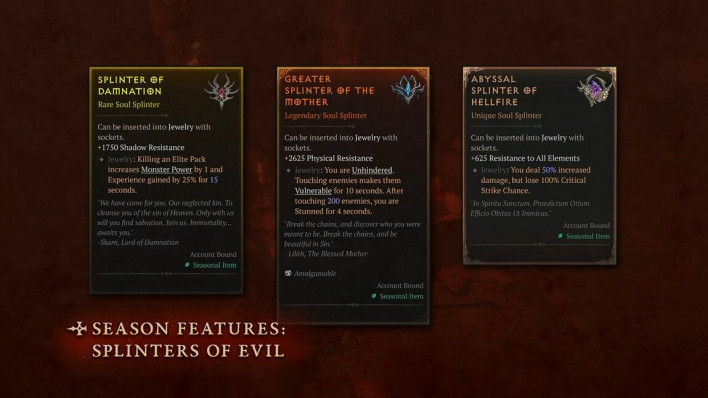
Iconic Unique items that defined past Diablo games are returning as well. Familiar equipment such as Leoric's Crown, Messerschmidt's Reaver, and Stone of Jordan will be recreated for Diablo IV. The attributes and characteristics of the original items will be preserved as much as possible, with adjustments made to the new system only for stats that cannot be directly implemented in the current game.
These Unique items will not disappear after the Legacy of Hell season ends. They will be added to both Seasonal and Eternal Realms and will remain obtainable in future seasons. For weapons a class cannot directly equip, a system will allow players to utilize their Unique powers through Class Relics.
The long-requested character "Rebirth" feature will also be added this season. Instead of deleting existing characters to free up character slots whenever a new season begins, players can convert long-played characters into Seasonal characters once again.
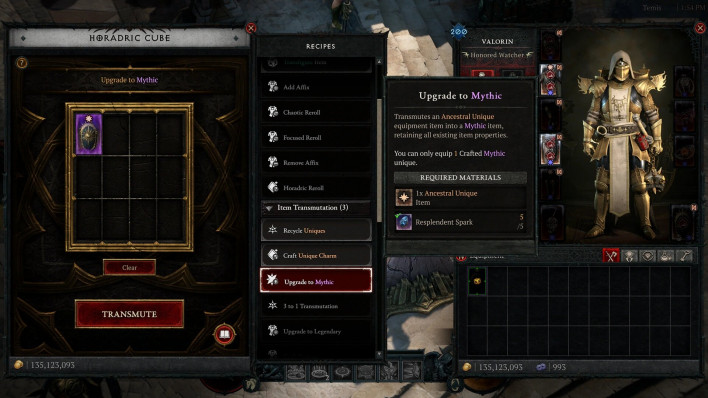
Changes are also being applied to Mythic item crafting. Rather than rerolling items into Mythics as before, players can complete their desired Unique item first and then directly apply Mythic powers in the final step. The addition of standard Unique variants of core Mythic items showcased during public testing was withdrawn based on player feedback, preserving the prestige of existing Mythic items.

War Plans Shared Across Alt Characters
Aiming to Expand End Game and Fresh Builds Every Season
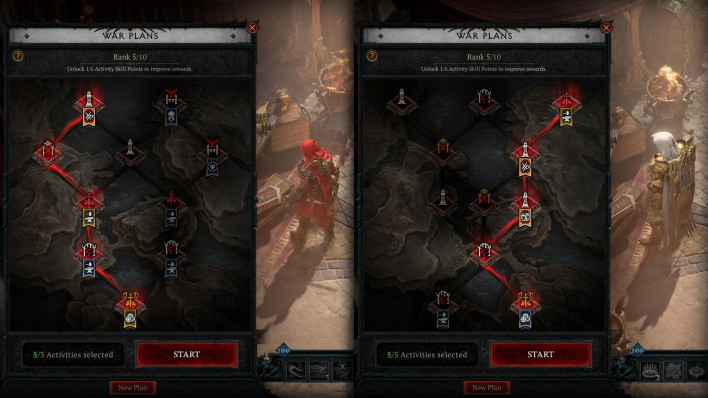
War Plans will also change based on player feedback. Improvements originally scheduled for the following season have been brought forward, sharing progression realm-wide rather than per character starting with Legacy of Hell. Players will no longer need to restart War Plans from scratch when leveling a new character, reducing the burden of playing alts.
New Horadric Cube recipes are also being added to allow more granular gear crafting. Certain items like Totems can have their base attributes reset while keeping other modifiers intact, while standard gear will allow players to re-adjust base stat values while preserving already finalized elements such as Greater Affixes, Enchantments, and Tempering.
Future seasons will focus more heavily on build diversity and enhancing endgame content. By utilizing new equipment types, stats, and Horadric Cube recipes, the developers aim to give players reasons to try new builds each season, while War Plans will expand into a system allowing players to directly customize activity lists or incorporate broader seasonal mechanics.
Seasonal narratives will also interconnect. Starting with the recently introduced Cult of Death and the rift leading to the Realm of Chaos, Legacy of Hell gradually reveals the truth behind events as the dead awaken. The team plans to build a long-term seasonal arc through ongoing conflict with this faction across multiple upcoming seasons.
The Amazon Joins Diablo IV
Four Combat Styles: Bows, Javelins, and Valkyries
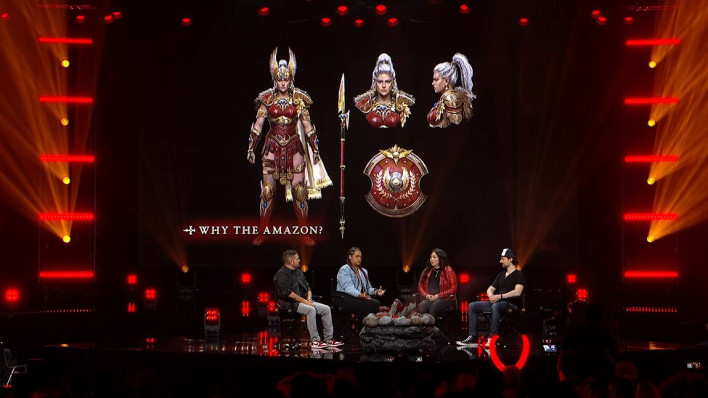
In the second half of the panel, the Amazon—a new class joining Diablo IV in 2027—was introduced. Following the inclusion of the Amazon's homeland, Skovos, in Lord of Hatred, player requests to play as the Amazon mounted, and developers explained that this community response heavily influenced their choice to introduce the class.
The Amazon will remain a female-only class, just as in Diablo II. The development team is modernizing the class to fit naturally alongside Diablo IV's roster while honoring 25 years of Amazon lore and identity. Rather than a heavy warrior like the Paladin, the focus is on a skilled soldier equipped with high physical prowess and agility.
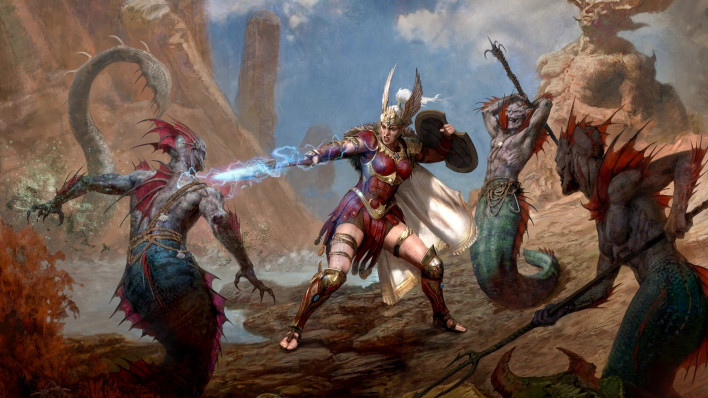
These traits shine through in combat. The Amazon can operate across melee, mid-range, and long-range combat, using physical attacks alongside poison, cold, fire, and lightning powers. Javelins also return as the Amazon's signature weapon. Four combat styles were revealed. "Champion (tentative)" is a warrior-style playstyle that engages enemies head-on at the front lines while supporting oneself and allies. Utilizing cold and wind powers, this role spearheads charges into battle, leading the charge for allies to follow.
"Skirmisher (tentative)" is a reinterpretation of the Javelin Amazon. Leveraging mobility to exploit enemy openings, it uses javelins combined with poison and lightning powers. Reading the battlefield and adapting dynamically is key. "Ranger (tentative)" specializes in long-range combat. While the bow-wielding Rogue showcases stealth and gritty combat, the Amazon plays more like a pure archer. Utilizing penetrating arrows, magic-empowered shots, and siege weaponry, this style keeps enemies at bay.
Lastly, "Commander (tentative)" draws upon Amazon culture. It summons Valkyries to fight alongside the Amazon, focusing on cooperative battle with allies. As the Amazon is still in early development, the team plans to continuously refine gameplay based on future player feedback.