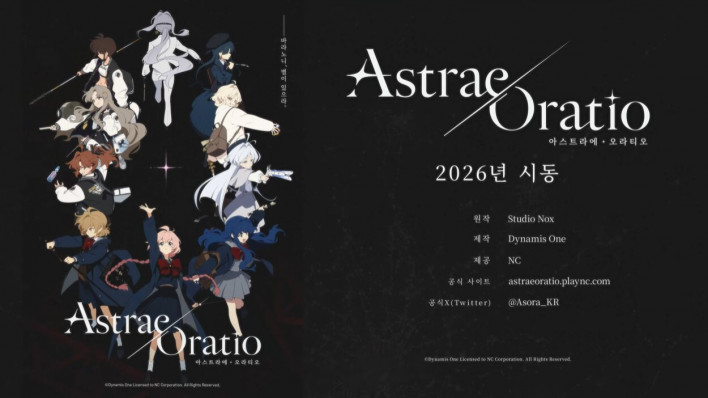
The promotional video (PV) for 'Astrae Oratio', a new subculture title developed by Dynamis One and published by NC, was released on the 23rd. Following the title reveal through a trademark filing in April and the teaser release in May, the launch of the PV marks the true beginning of its rollout.
While 'Astrae Oratio' had previously focused on explaining key terms of its world building, this newly released PV—running just over two minutes—offers a glimpse of actual in-game gameplay and character modeling. Moving beyond the rough sketch phase and onto adding color, let's take a look at what themes and gameplay experiences 'Astrae Oratio' will offer, based on the videos and materials revealed so far.
A Flavor of the 90s to Early 2000s Reflected Right in the Genre
Though introduced earlier as a new subculture game, the genre officially promoted by 'Astrae Oratio' is a 'Shin-denki' RPG. While it certainly falls under the broader subculture umbrella centered around anime girls, the term 'Shin-denki' itself serves as the best hint regarding the game's overall direction, making it an unmissable point.
Shin-denki refers to a genre that spread through Japanese light novels in the early 1990s. It mainly deals with stories where supernatural, extraordinary elements intrude upon the daily lives of modern society. Though details vary by work, these supernatural elements are usually kept secret from the general public. As a result, the protagonist leads an ordinary life oblivious to them until being suddenly dragged in, gradually digging into the core of incidents intertwined with supernatural phenomena.
The term is somewhat unfamiliar in Korea, and even in Japan, its origin, it is rarely used nowadays, making it almost alien unless one has been an otaku for a long time or studied classic works. Since that era, genre fiction and fantasy works set in modern society have evolved into more diverse forms, leading to the wider use of 'urban fantasy' as an umbrella term.
Despite this context, there are two main reasons behind obstinately pushing the label 'Shin-denki'. One is the desire to capture the sensibility of the early 90s to early 2000s when the term was actively used, and the second is to emphasize that supernatural elements remain segregated from ordinary society and strictly kept secret.
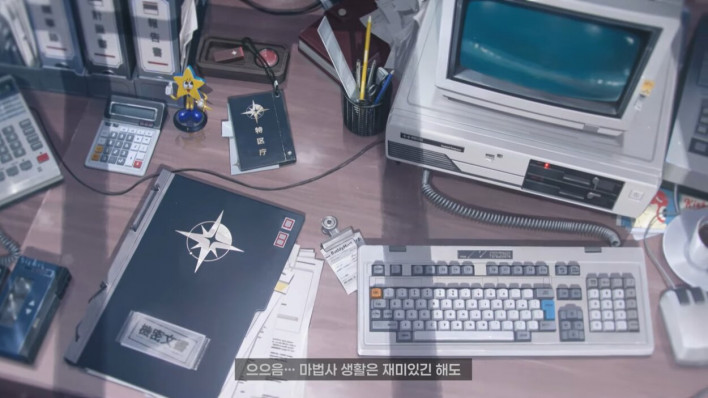
Indeed, the first point is obvious right from the opening of the PV, which shows a computer, a Walkman, and a telephone. The PC tower reminiscent of the old floppy-disk Pentium era, the blocky ball mouse, and the clunky keyboard connected with a coiled phone-line cable vividly recall old newspaper advertisements. Walkmans—now hard to find alongside nearly extinct cassette tapes—and telephones that faithfully embody the design of old extension phones used in public offices or hotels also support this creative direction. Needless to say, feature phones used by characters throughout the trailer and the UI designed after them further drive this point home.
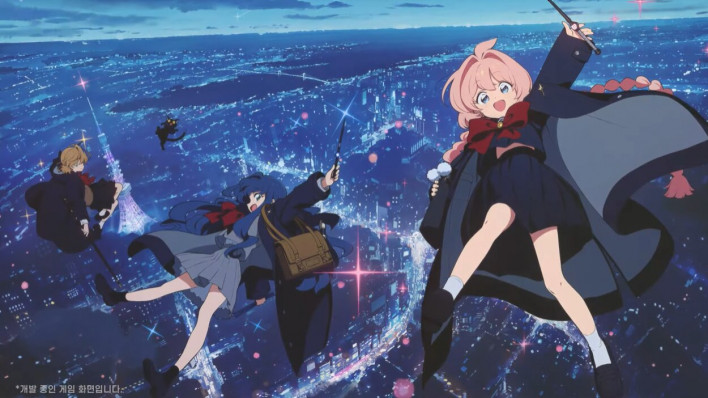
Furthermore, the design and modeling of certain characters strongly reflect styles seen in 90s anime. A representative example is Erin Tanaka and the other mages belonging to 'Minato Ward Girls' Magical Activities'. Their vibrant, massive eyes, along with cleanly rendered eyelashes and simple highlights, were hallmarks frequently adopted in Japanese animation throughout the 90s. While still in development and pending further polish, the extremely simplistic highlights and shadows recall traces of Japanese anime from that era, when studios wrestled with reducing costs post-bubble economy while striving to deliver the best possible visual output.

As for the second point, the fact that magic is kept secret from ordinary people in 'Astrae Oratio' had been mentioned consistently in previous teasers. This was made explicit in the latest PV. Erin Tanaka explicitly states that she recently became a mage and lacks common knowledge of the mage world, or complains about how annoying it is to hide her identity as a mage from those around her. Additionally, structures reminiscent of TYPE-MOON's 'Clock Tower'—a iconic setting where the existence of mages is top secret to ordinary humans—reinforce this premise. Granted, they are called magi in TYPE-MOON while referred to as mages here, but we'll leave it at that.

Looking at hero-collector RPGs over time, settings that emphasize this dual-reality structure are fairly rare. In post-apocalyptic settings where the world is on the brink of ruin, supernatural powers are already common knowledge to all. Outside of that, developers usually avoid structures requiring extensive lore explanations in order to focus on seamlessly immersing players into the world. However, once a tight world building is established and draws players in, it has the advantage of building a highly loyal fan base. It will be worth keeping an eye on their next steps to see how they leverage this strength.
Retro Design Meets Modern Trends: A Two-Track Approach to Gameplay
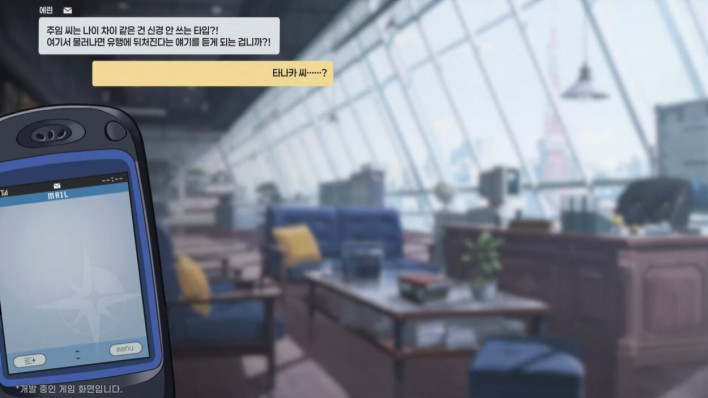
With its strong emphasis on the style of the early 90s to early 2000s, 'Astrae Oratio' focuses heavily on capturing this atmosphere within the in-game experience. This is clearly reflected right from the messenger screen, an indispensable staple of modern subculture games. Beyond feature phones, the label reading 'Mail' serves as a key touch point.
Those familiar with Japanese works prior to 2011 will likely understand the context. Before LINE became ubiquitous in Japan following the 2011 Great East Japan Earthquake, carrier email was the primary form of messaging. Because SMS could not be exchanged across different mobile carriers in Japan, text messages were sent via carrier-specific email addresses. This is precisely why the line "Give me your email address" appeared so frequently in pre-2011 Japanese media.
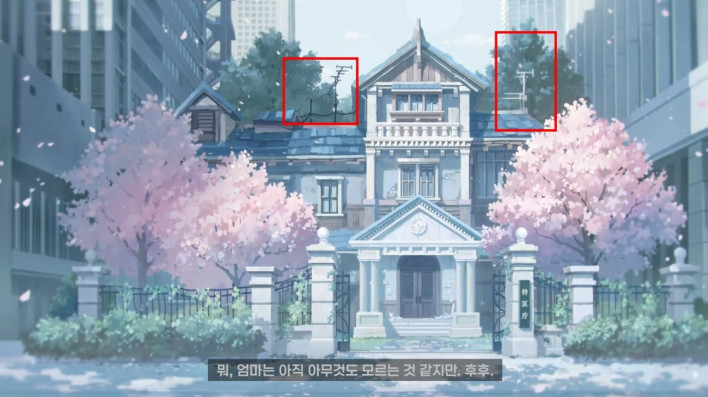
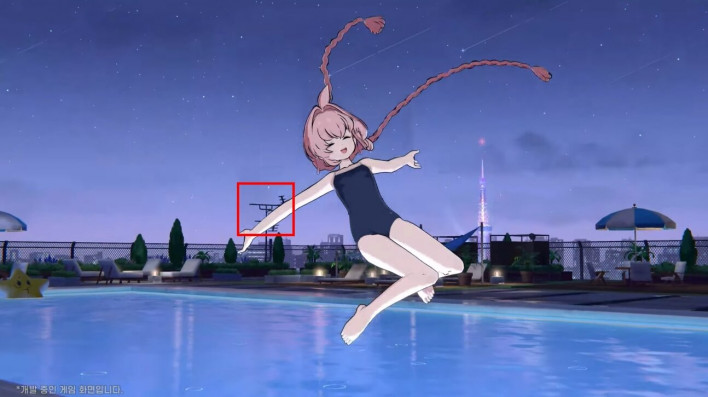
Hidden details evoking the 90s and 2000s are also scattered across unmentioned props and backgrounds. Examples include old-style antennas mounted on rooftop buildings around the pool, or the one-piece school swimsuits that are no longer used by most schools today. Furthermore, the contrast with Anna M. Battenberg's vintage competitive swimsuit, which hints at the design origins of those school swimsuits, serves as quite an interesting detail.

Another reason to pay attention to that scene is that it offers a preview of character interactions and costume systems—essential elements in subculture games. First, during Erin's swimsuit scene, her outfit-changing motion in front of a mirror in a closeted room is rendered in meticulous detail. While school life tropes have shifted somewhat today, uniforms and swimsuits remain iconic staples of slice-of-life academy settings, making them natural choices to showcase the costume system first. Seeing dedicated animations crafted not only for her school uniform but also after changing into a swimsuit suggests other costumes will be handled similarly to highlight character personality and individuality.
The next highlight in the pool scene is that multiple characters appear simultaneously—even if restricted to members of the same group—and showcase natural playfulness in the pool rather than simple touch responses. In lobby-based games that lack open-world fields, setups typically focus on 1-on-1 interactions with a single character. This is a core strategy aimed at deepening emotional bonds with favorite characters to build player retention.
In contrast, while Erin remains central in 'Astrae Oratio', Liria and Anna both carry meaningful presence, with Erin naturally glancing toward the player while playing alongside them. This design aligns with recent trends in 3D subculture games, which aim to convey a sense of sharing everyday moments with characters in natural group settings rather than relying solely on 1-on-1 bonding. Naturally, such games complement group dynamics with individual 1-on-1 interaction points, and 'Astrae Oratio' will likely unveil these features soon.
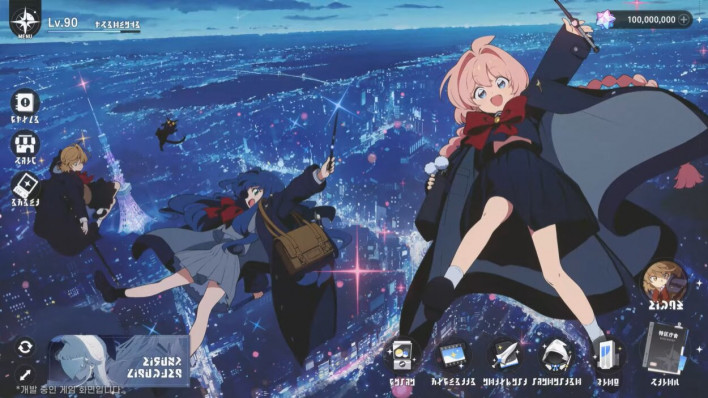
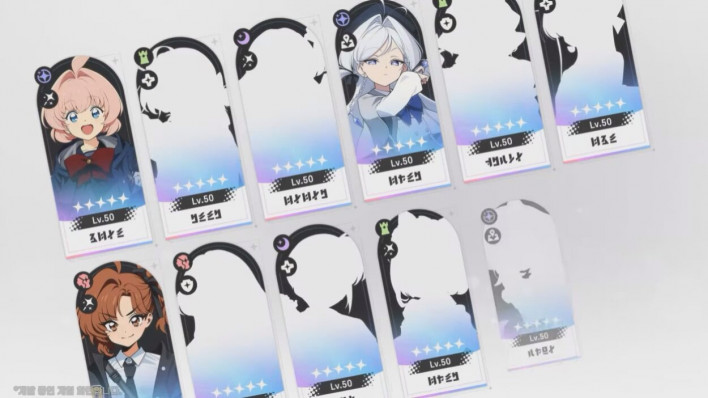
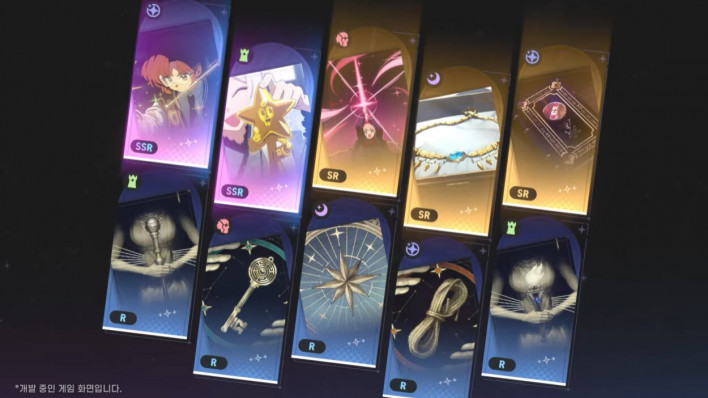
Having verified how trend-conscious character features are integrated into this subculture game, combat and gameplay are likely up next. Though the lobby screen hasn't been fully revealed, familiar elements were visible, including icons presumably dedicated to gacha banners, event banners, and character progression. While the gacha showcase passed quickly, two distinct banner types were identifiable: character gacha and artifact gacha. Though nothing is final in development, current footage suggests the two pools are split separately.

Combat scenes highlighted repeatedly reveal an interface similar to standard turn-based RPGs, complete with skill icons, basic attacks, and what appears to be ultimate abilities. However, rather than trading skills once per turn unless granted additional effects, gameplay differs by allowing players to perform multiple attacks in a single turn by spending AP displayed at the bottom.
Granted, ultimate abilities require a full gauge and special skills have cooldowns, preventing continuous combo attacks every turn. Still, players can time burst damage windows to unleash combo chains. Additionally, footage showed specific attacks significantly reducing Break gauges to easily trigger Break status, hinting at tactical play where players inflict Break during turns of characters capable of targeting enemy weaknesses.

Another impressive feature is a defense icon absent in typical turn-based hero-collector RPGs. Briefly shown in the previous teaser PV, 'Astrae Oratio' allows players to parry enemy attacks by pressing a button with precise timing. This was demonstrated again when Erin parried an incoming enemy attack during the opponent's turn right after her own attack. However, comparing the tutorial-like setup from the prior teaser with this PV, standard combat appears to rely on reading enemy animation cues to react, without relying on a dedicated timing gauge.
'Astrae Oratio' Has a Clear Identity, but Needs a Knockout Punch to Captivate the Audience
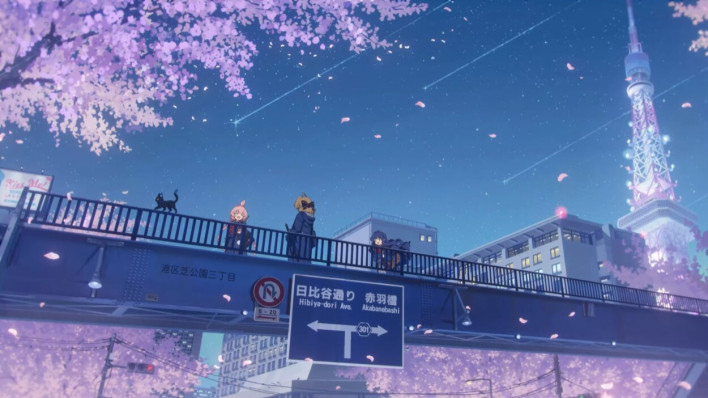
As such, details on 'Astrae Oratio' remain sparse. Even so, this limited information clearly communicates a distinct direction: blending themes and aesthetics once foundational to subculture game creators—yet seldom used today—with modern gameplay to boost accessibility.
However, 'Astrae Oratio' still faces significant uncertainties that must be resolved. In particular, the setting of '1889 Tokyo, Japan' is bound to linger as a sticking point unless clearly addressed. Although magic accelerated technological progress by over 100 years to recreate an 1980s to early 2000s aesthetic, the period itself remains historically sensitive and difficult to navigate.
In this PV, the narrative hints at context by mentioning that despite rapid advancements, conflict could plunge the world into chaos reminiscent of the Sengoku period. Historical factional and regional conflicts within Japan did not simply end with the Meiji Restoration or the promulgation of the constitution, but persisted across various domains. For instance, during World War II, friction between the Army (rooted in Choshu Domain, now Yamaguchi Prefecture) and the Navy (rooted in Satsuma Domain, now Kagoshima Prefecture) ran so deep that they refused to share intelligence, allegedly resorting to planting spies inside each other's ranks to track movements. Meanwhile, rivalries such as Kansai versus Kanto continue to be depicted regularly across popular media.
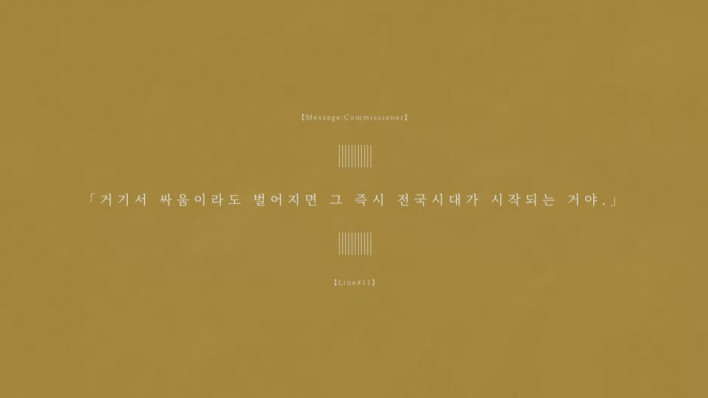
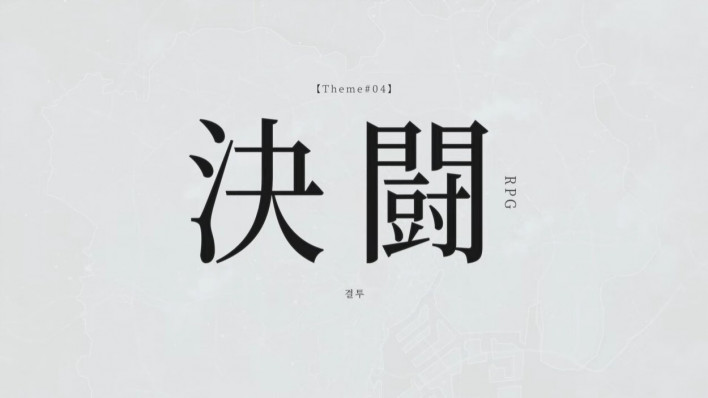
In particular, the rivalry between Kyoto—Japan's central hub since the Heian-kyo era—and Tokyo, which developed into a capital center much later under the Edo Shogunate, manifests not only in fiction but also through real-world anecdotes like recent high school baseball Koshien rivalries. Mindful of this dynamic, details revealed since the initial announcement showed Tokyo winning the World Expo host bid over Kyoto, alongside the striking debut of a character presumably from Kyoto.
There are several other factors as well, but these risk becoming barriers when enjoying the game. Players who simply want to explore the world alongside anime heroines and experience the story will inevitably ask: "Do I really need to dig into all this historical context?" While some players relish dissecting hidden lore elements, others prefer simply taking their first steps beside their favorite characters and enjoying the narrative. Moreover, if any lore details raise concerns, stepping in becomes all the more difficult. Furthermore, as 'Astrae Oratio' champions genres and styles representative of the 90s and 2000s, it risks feeling unfamiliar to audiences who did not live through that era or consume its media.
While 'Astrae Oratio' continues to draw chatter due to various issues, in a sense, it has secured an opportunity. In an industry where countless titles fade into obscurity unnoticed, garnering eyes and attention is half the battle. To convert that attention into positive enthusiasm, however, it needs a clear, captivating standout hook. Until now, 'Astrae Oratio' felt as though its impact was diluted while trying to lay preliminary groundwork for its world building.
Of course, in today's oversaturated subculture gaming landscape, attempting to establish a distinct identity through differentiated themes is an unavoidable phase. Nevertheless, all these endeavors are ultimately means to forge an emotional connection that immerses players, making it far better to directly present that dream through something clear and intuitive. With a clear direction established, attention is focused on how 'Astrae Oratio' will complete and present its dream despite the ups and downs along the way.