
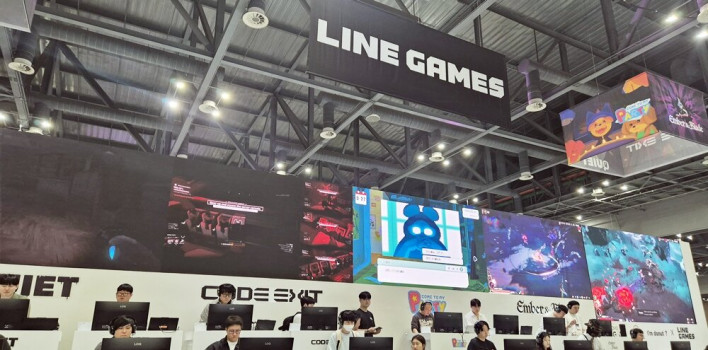
At the PlayX4 event held at KINTEX, the Line Games booth wasn't exactly massive, but it was well-organized and packed with everything it needed. Between the simple photo zone and the demo stations, one of the four titles on display caught my eye: 'Ember & Blade.' And there’s a reason for that.
I am a huge fan of this genre.
The 'Vampire Survivors-like' genre—now burdened with the odd label of 'bullet heaven'—is one I love so much that I’ve tried just about every notable title in it, a fact I’ve testified to in previous articles more than once.
I started playing the game quite naturally. I had originally intended to just give it a quick spin and write a brief first-impression piece, but I changed my mind. I only played for a short while on the show floor, but even that brief experience was enough to tell me this game was better than expected.
After returning from the event, I immediately downloaded the demo version available on Steam. It felt like a waste to just play it casually; I wanted to give it a proper run and share my thoughts.
A Foundation of Vampire Survivors, a Dash of Hades, and a Spoonful of Souls
Let’s get this straight: 'Ember & Blade' is by no means a uniquely unprecedented game in terms of design. Its core elements are all fragments we’ve seen in previous great works—pieces that any hardcore gamer would recognize.
However, how you assemble those pieces is a testament to the developers' skill. Why does the concept of a 'cliché' exist? Because masterpieces always resonate. In an industry flooded with poorly executed copies, borrowing elements from other works and using them well is not a foul—it’s a virtue. Provided, of course, that you make it fun.
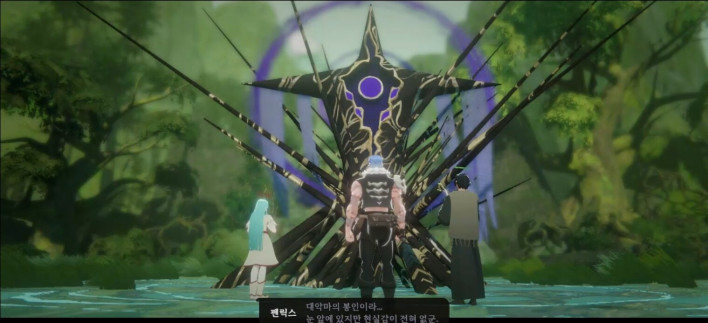
To that end, 'Ember & Blade' seamlessly blends the genre characteristics of several games at once.
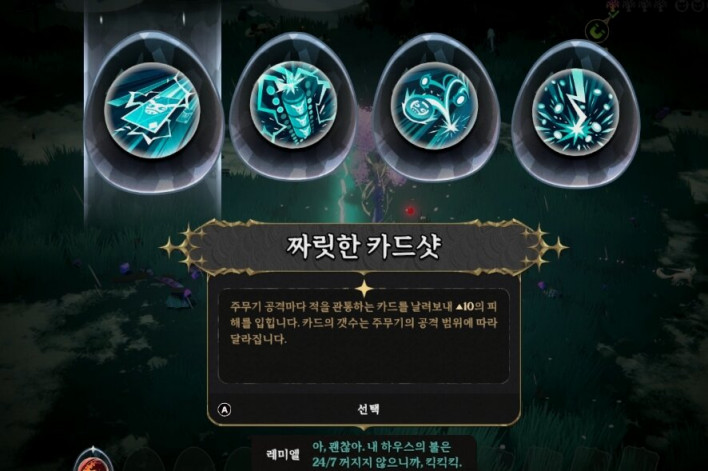
The protagonist, 'Fenris,' is a demon hunter who, through a contract with an angel, has become an immortal (in the roguelike sense) who constantly resurrects. He fights endless waves of demons, grows stronger, and acquires new weapons. Along the way, he receives blessings (skills) from various 'angels' to make his combat even more spectacular.
The progression follows the familiar Vampire Survivors-like format, but with a twist. While many games in this genre have introduced a 'basic attack' alongside skills, this game splits its basic attack into two tracks: ranged and melee. Pressing the attack button triggers a relatively powerful, area-of-effect melee strike, while not pressing it triggers a weaker, automatic ranged attack.

On top of this, there is a tiny, one-spoonful dash of 'Souls-like' sensibility. If you perfectly time your 'dodge'—a mechanic common in other games—you trigger a 'just dodge' that allows for a powerful counterattack, chipping away at the posture of bosses or elite enemies. Once you succeed enough times to deplete their posture, the enemy enters a groggy state, leaving them defenseless for a period.
The 'angels' who grant blessings (skills) feel reminiscent of 'Hades.' This style of presentation is also used in 'Death Must Die,' another game in the same genre, which is also quite good. It’s a proven formula.

Ember & Blade has managed to assemble these collected pieces even better than expected. No single system feels so bloated that it overshadows the others; every element remains highly relevant and functional throughout the entire gameplay experience.
In other words? It’s incredibly fun.
What Matters: 'Impact' and 'Difficulty'
As someone who loves this genre so much that I’ve even used AI to try building one myself, I would say there are two essential pillars that form the foundation of a 'Vampire Survivors-like' game.
The first is 'impact.' You absolutely need hordes of mobs and flashy skill effects that make them feel like mere experience fodder. Games with too few enemies or monotonous skills can never be fun. At its core, the genre relies on the thrill of sweeping through enemies and the sheer volume of foes that push you to your limits.

The second crucial factor is the pacing of the 'difficulty.' It shouldn't be so easy that it’s sleep-inducing, nor so hard that you’re constantly running away. The goal is to find that delicate line where clearing a stage isn't easy, but becomes possible once you get a bit stronger and try again. In reality, setting this 'sweet spot' for difficulty is the hardest part of making a game in this genre.
Most games struggle with this and fail. Sometimes the enemies are too weak, sometimes they’re too hard, and in an attempt to fix it, developers often add absurd enemy patterns that only serve to exhaust the player.
This is where 'Ember & Blade' differentiates itself from the rest.
The enemies in this game aren't just entities that deal damage on contact. Even the basic mobs show visual cues before they attack, and the attacks of elites and bosses are quite telegraphed. While you can dodge most of them, in sections where enemies swarm, you have to actively dodge and counterattack to survive.
In most other games of this genre, simply touching an enemy results in damage, so the ideal strategy is to maximize 'DPS.' The standard way to play is to expand your skill damage and range to the point where enemies can't even get on screen.
However, in 'Ember & Blade,' even if your attack power isn't sufficient, you can turn the tide of battle through proper dodging and counterattacking—it rewards 'skill.' If you take a bad build and hit a rough patch, you can stall for time by dodging, and you can even clear boss fights without taking a single hit. Conversely, this means that no matter how strong you are, one wrong move against an elite or boss can cost you the game.

You almost never get a game-over from basic mobs. Is it because there are few of them? Not at all. 'Ember & Blade' has plenty of impact. But can you clear the game just by sweeping through mobs? No. You need to put in the effort. While many standard Vampire Survivors-likes become sluggish once you pass a certain point of power, this game avoids that trap.
The Demo Gets a 'Pass'—What About the Full Build?
With about two months left until release, 'Ember & Blade' holds a 'Very Positive' rating on Steam. Looking at the last 30 days, it’s even sitting at an 'Overwhelmingly Positive' rating with 95% approval. While we’ll have to wait for the full version to be sure, the foundation shown in the demo is already quite impressive.
Of course, it’s not without its flaws. As the protagonist's skills get flashier, the enemy attack ranges can become obscured, leading to visibility issues. There are also minor problems where the attack indicators don't perfectly align with the actual hitboxes.

However, looking at the core framework, 'Ember & Blade' is a very solid game with plenty of room to improve. There are always variables, and the future is uncertain, so we’ll have to wait and see how it turns out.
In summary, based on what we’ve seen so far, it has all the qualifications to become the next meta-defining title in the Vampire Survivors-like market. Unless the developers suddenly make a catastrophic mistake, this is a game you can look forward to without fear of disappointment.
Graphics? They’re decent enough. Narrative? I’m not sure, maybe because I only played the demo. But it’s fun. It captures the essence of the genre—a pure focus on core game design. Honestly, isn't that enough?