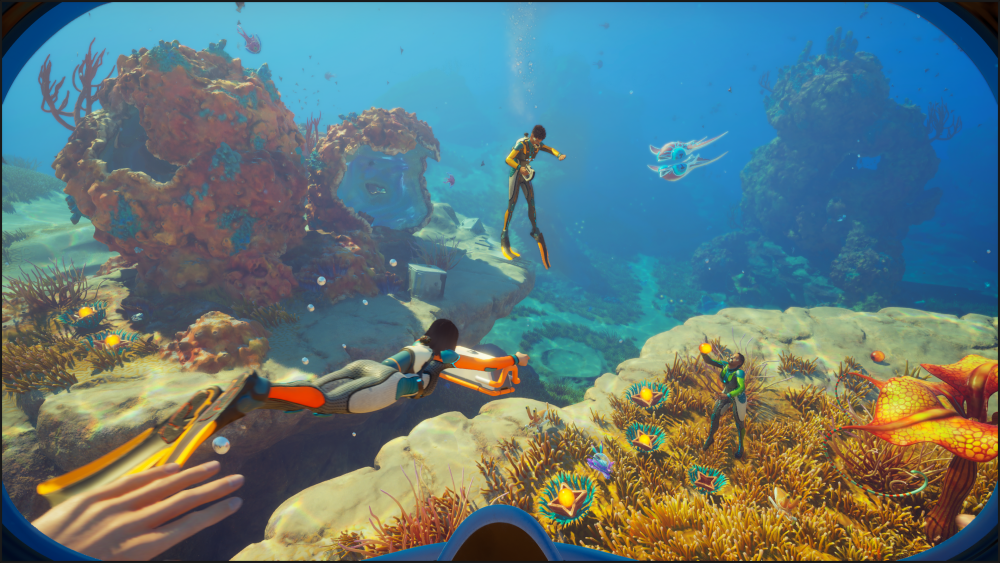
The Subnautica series has always been a solitary experience. Its identity was defined by that profound sense of isolation—being dropped alone into deep darkness, trembling in the vast, desolate ocean while constantly checking your oxygen gauge. Now, for the first time, the series is inviting friends along. A co-op mode for up to four players is a first for the franchise.
Interestingly, this co-op mode doesn't necessarily diminish the 'terror of drifting alone'; rather, it forces you to face that terror together. Having a companion doesn't make the ocean safe, but it does provide the courage to venture deeper in the face of the fear that you might lose everything. Ahead of the May 15 Early Access launch, I went hands-on with the multiplayer in Subnautica 2.
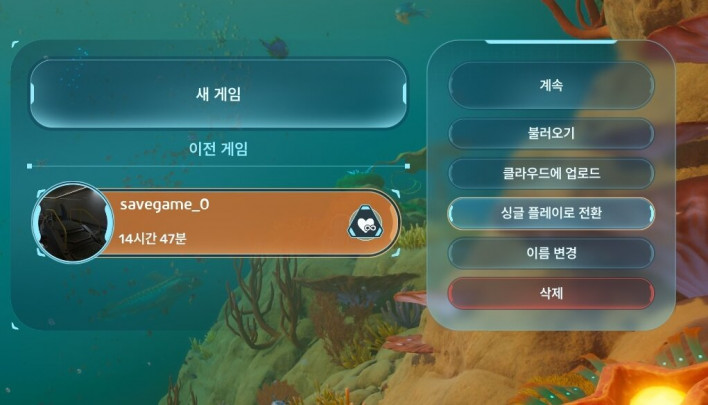
Regarding the multiplayer in Subnautica 2, the first thing that stands out is its accessibility. The main menu is divided into Single Player, Multiplayer, and Play with Friends, allowing players to jump into the game based on their preferred experience.
What impressed me most was how surprisingly easy it is to convert a single-player save file into a multiplayer session. You simply click on the save file and hit the switch button, and you're ready to invite friends into the world you were playing in. Of course, returning to your own solitary world is just as easy—you just switch the save file back to single-player mode.
The 'Play with Friends' menu allows you to see friends on your platform, create your own invite code, or enter a friend's code. Whether you're receiving an invite, sending one, or using a code, the game clearly prioritizes convenience for setting up multiplayer sessions.
There is a reason why the entry process has been so carefully refined. Co-op is the feature the series' fandom has requested the longest and most strongly. Considering that the modder community even developed and distributed unofficial co-op mods back in the original game, this sequel officially supports a remarkably smooth connection between single and multiplayer modes.

Of course, the biggest hurdle for any hobby is 'finding friends to join you.' To test the multiplayer, I invited a fellow reporter to the base I had been exploring. Converting my single-player save to multiplayer and inviting them via the friends list made starting co-op play a breeze.

However, for the person joining the multiplayer session—in this case, my colleague—the experience begins by creating an entirely new character. The setting seems to be that of a newly reprinted colonist cast into the vast ocean from an escape pod after the prologue. Naturally, their digestive system isn't yet adapted to the planet, so they have to go through the process of finding local Rain Jellyfish to acquire biological traits. Expecting them to join me immediately at my deep-sea base, I had no choice but to rush over in my Tadpole to pick them up.

Still, it is easier for a new arrival to adapt than it is when exploring the deep sea alone. I already had a grasp of where local resources were, and there were at least some basic supplies left in the base. Furthermore, the existing player can craft and hand over essential tools like scanners and thrusters to the newcomer.
While having another mouth to feed means you need to gather more food, the sense of security a companion provides in the dangerous deep sea is worth far more than a few bottles of water. You gain extra hands for gathering and more inventory space, and your partner can handle scanning or even act as a sacrificial lamb in an emergency (?).


What’s interesting is what happens when two people who have learned the game in different ways meet. There is no map in Subnautica 2, so you have to memorize your surroundings in your own way. This is why beacons, which can be easily crafted with just titanium and copper, are so important. For instance, you can place a beacon in an area rich in silver, label it 'Silver Mine,' and easily find your way back to it later.
My colleague, however, was more 'old-school.' They didn't use beacons (or perhaps didn't know they existed) and preferred to remember locations by 'roughly how many meters in which direction.' As we exchanged stories like, 'There's something south of the escape pod,' we stumbled upon a giant clam I had missed while playing alone. How did I miss such a large clam on my own? Even those who have played different single-player sessions can discover new things through co-op.


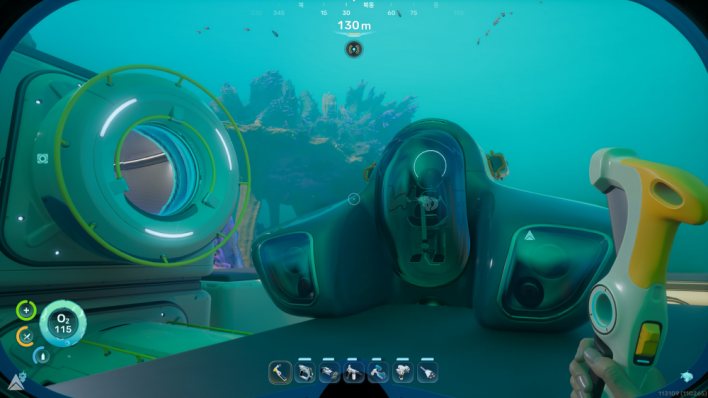
The 'Tadpole,' an essential vehicle for deep-sea exploration, is also very useful in co-op. While the cockpit is technically a single-seater, fellow players can hang onto the handles on either side of the Tadpole to travel together. I'm not sure what the mechanism is, but they receive oxygen even while hanging outside the craft, so deep-sea exploration wasn't a problem.
If you equip the Tadpole with a cargo chassis instead of the fast ray chassis, companions can sit in auxiliary seats and enjoy a comfortable ride instead of hanging on. While the cargo chassis is quite slow and not ideal for exploration, it’s perfect for gathering large quantities of resources at once.
Beyond that, many of the craftable items in Subnautica 2, such as the submarine elevator that allows for rapid descent into the deep sea, are designed with cooperative play in mind. The elevator features hardpoints where portable storage containers can be attached, enabling a division of labor: one player can gather deep-sea resources and load them onto the elevator, while another receives them at the top to store them in a Tadpole.
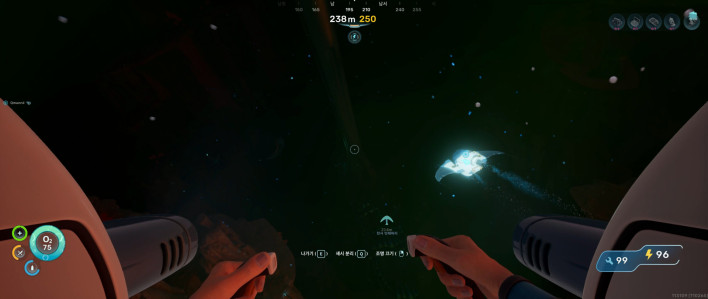

Once we reached the deep sea, I immediately helped my colleague acquire traits. Following my lead—as I had already purified all the Rain Jellyfish I found—they gained the ability to translate the language of an ancient alien civilization. This meant we could uncover the secrets of the ancients twice as fast.
However, my fellow reporter was more obsessed with scanning fish to collect 'Bio-Mods' than uncovering the secrets of ancient civilizations. By using a bio-scanner—an item obtained in the mid-to-late game—to scan certain lifeforms, players can unlock active and passive skills. This is the 'Bio-Mod' feature in Subnautica 2, which allows you to equip the abilities you need at any given moment to aid in your survival.
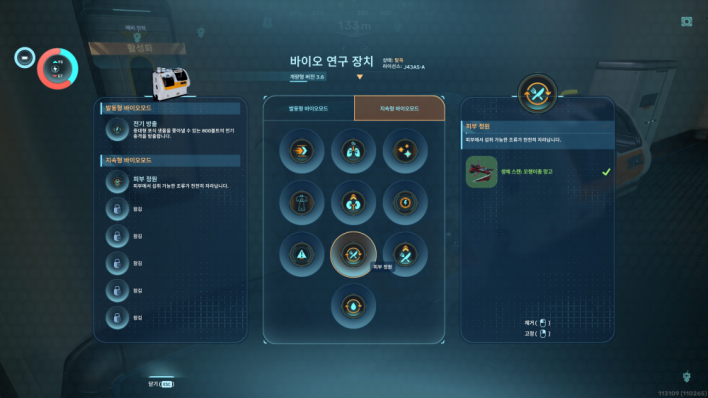
Some abilities are gained by scanning small, cute creatures, while others come from scanning Leviathans. Courage often comes when you're with a friend, so we immediately began preparing to scan a Leviathan. The method is simpler than you'd think: just get close and hold up the scanner. But trying to do that alone could lead to the horrific result of being swallowed by a Leviathan or losing your hard-earned Tadpole. In co-op, you can play strategically—one person draws the Leviathan's attention while the other scans—and since scanning information is shared among all players in the world, it's quite convenient.
To scan the Collector Leviathan, which looks like a giant squid, my colleague bravely volunteered to be the bait, equipped with an electric discharge Bio-Mod. I quickly moved in and succeeded in the scan, but my colleague, acting as bait, couldn't escape becoming squid food. Still, the scan was a success, and we both gained an active Bio-Mod that allows us to search for nearby resources.


There is a technical background to why co-op play against Leviathans works this way. Creative Media Producer Scott MacDonald recalled in an interview that in the previous game, creatures and Leviathans could only consider one action at a time, and their reactive elements were limited. He added that in the new game, thanks to Unreal Engine 5's Behavior Tree, creatures can now judge and act on their own based on the environment, players, and nearby creatures or objects. The division of labor—one person acting as bait while the other scans—works because the Leviathan decides in real-time which of the two to react to.
That was probably when we started getting overconfident. Finally, we prepared to scan another Leviathan swimming outside the Early Access area. Having already scanned the Collector, we felt there was nothing left in this deep sea that could strike fear into us.
But there was a reason the Shiver Leviathans swimming in this outer region traveled in packs. Before we could even catch one's eye or find the time to pull out our scanners, we both became Shiver food. There is only death outside the Early Access zone, so please enjoy your exploration within its boundaries.


Lead Designer Anthony Gallegos stated clearly in a global interview ahead of the Early Access launch that the team's main goal at this stage is to balance the game based on the single-player experience. He noted that they expect most players to experience the game solo, and that while multiplayer is excellent, it remains strictly an option.
In practice, while resource gathering is faster when playing with friends, there is a natural adjustment where you must craft equipment for multiple people, and larger bases require more resources. This was true during my experience as well. After my co-op session with my colleague, the faster resource accumulation meant we needed more storage, and we had to install additional crafting stations to work together. The process of exploring nearby resources continued until we had all the wearable items (oxygen tanks, fins, etc.) that couldn't simply be handed over. It was a balance of its own: the faster you go, the more you have to manage.

One more thing: Subnautica 2 supports cloud saving. You can upload your save file to the cloud and share it with friends via a code. This allows you to pass on a world containing the base you built and the vehicles you crafted together. The friend who receives the code can continue the game in the same character state they had in multiplayer, without losing anything they built.
As the developers mentioned, multiplayer in Subnautica 2 is an entirely optional feature, but it feels like the underlying systems were carefully prepared to support it. By utilizing the save files that can be switched at any time and the cloud storage that can be shared with friends, no one needs to feel a sense of loss after a multiplayer session. And whenever you feel like adventuring together again, you can simply switch the save file and enjoy it together.
Of course, as it is still in Early Access, there is little content that 'stands out only in a multiplayer environment' beyond building bases together, collecting Bio-Mods with the Bio-Scanner, or taking on challenges like scanning Leviathans. Nevertheless, it felt completely different from the life of drifting alone, and I gained the courage to step into the deeper sea in the face of the fear of losing everything.
If you have a friend you'd like to explore the deep sea with, why not shyly send them Subnautica 2 as a Steam gift.