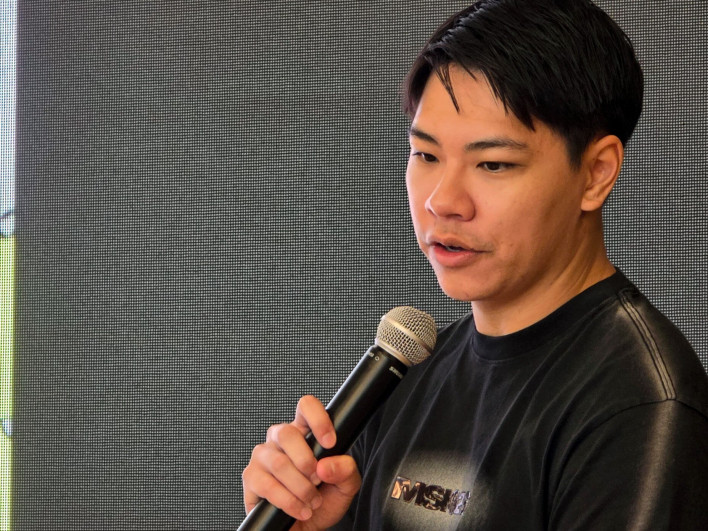
Riot Games held a developer briefing in Seoul this July to unveil the changes applied to 'League of Legends' in the first half of 2026 and their results. The event was attended by Paul Bellezza, Executive Producer of League of Legends, and Matthew Leung-Harrison, Lead Gameplay Designer. For a game celebrating its 17th anniversary, the direction chosen this year was not expansion, but a return to roots.
2026 Key Theme: Returning to the Core
The first thing Riot addressed were the elements it had introduced in 2025. Designer Matthew Leung-Harrison defined the 2026 development philosophy as a 'return to the core essence.' His definition of that essence is clear: 'League of Legends' is both an action game and a strategy game. Riot’s diagnosis was that in 2025, this strategic depth had actually been lost.
The cause was an excess of elements. Leung-Harrison explained that with too many objectives, the game had reached a point where it was essentially dictating every move to the player. There was less room for players to decide for themselves how to manage side lanes, when to initiate a teamfight, or where to engage in skirmishes. He described this as "putting players on a set track."
The blurring of position identity was also identified as a problem. Leung-Harrison pointed out that last year, there was little difference in the gameplay experience whether one played Vayne in the top lane or the bottom lane. This is precisely why Riot introduced Position Quests.
Position Quests are designed to provide different rewards based on the role of each lane. For example, mid laners who roam frequently receive boot upgrades, top laners who focus on split-pushing get better access to Teleport, and ranged damage dealers who are highly item-dependent receive bonus gold. However, Leung-Harrison added that the principle is to strengthen the identity of each position without overly restricting the plays possible in those lanes.
Following this logic, Atakhan was removed in 2026, queue times were reduced, and minion spawn times were moved up. In their place, new elements were added to the Rift to broaden strategic options.
Background on Atakhan's Removal
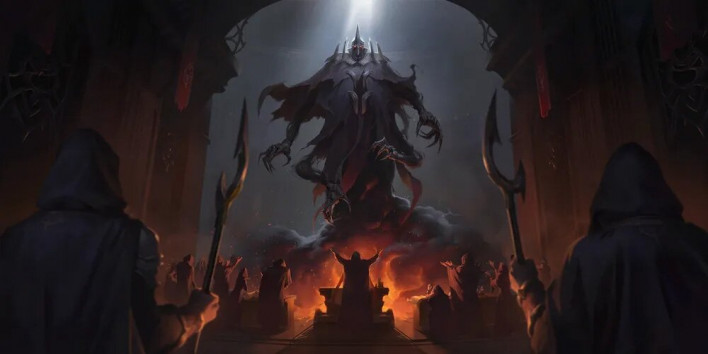
The most symbolic removal was Atakhan. Leung-Harrison recalled that the early version of Atakhan had two modes. The resurrection mode was removed early on due to poor player reception. Riot's original intention was to create action in games that were becoming too passive; the calculation was that if players resurrected after death, teammates would be more willing to engage in fights.
However, the result differed from the intent. Leung-Harrison admitted that while the design made sense in theory, players did not like the idea once it was actually applied to the game.
The decisive evidence was the identical feedback received across all regions. Leung-Harrison revealed that even without communicating with each other, players in Korea, English-speaking regions, and even professional players all repeatedly pointed out that there were too many objectives and the game had become too complex. Since the 2025 season was already underway, it was difficult to remove, so Riot decided to scrap Atakhan entering 2026.
This does not mean the attempt itself was a failure. Leung-Harrison noted that you cannot learn anything without trying, and that through Atakhan, the team learned a great deal about development cycles and what players do and do not like.
Improvements in Matchmaking and Queue Times
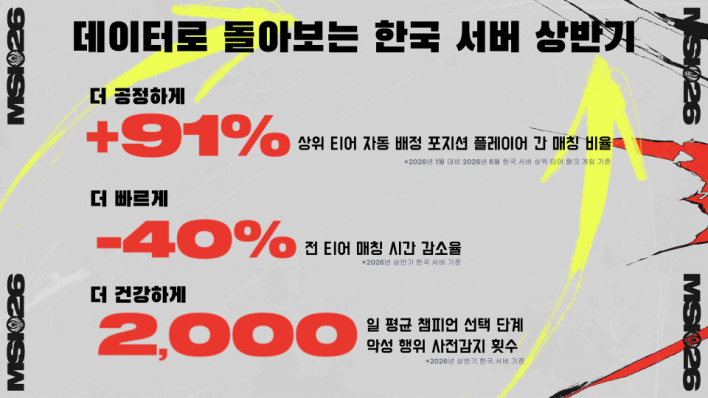
The results of these reversals are reflected in the metrics. Riot effectively rewrote the matchmaking algorithm from scratch in 2026. The biggest achievement is in autofill matchmaking. The rate at which an autofilled player faces an opponent who is also autofilled in the same lane has increased from 35% to 91%. This means if you are autofilled into the top lane, there is a 91% chance your opponent is also autofilled. This has significantly reduced situations where an autofilled player is unilaterally dominated by someone playing their main position.
Queue times have also shortened. The average matchmaking wait time across all tiers has been reduced by about 40%, and in ranked games, over 90% of players are matched within one minute. Leung-Harrison stated that Riot is well aware that queue time is a critical factor for players.
In the Master tier and above, the dodge rate has fallen from 18% to 3%. The situation where lobbies were disbanded once every five games has been greatly improved. Riot achieved this by implementing a system where dodging results in an autofill in the next game and by strengthening dodge penalties.
Detection of malicious behavior has also been strengthened. Through a newly introduced lobby detection system, Riot is terminating 2000 lobbies per day. Sanctions target obvious game-sabotaging picks, refusal to play the assigned position, and forcing others to play specific champions or positions. Leung-Harrison emphasized that further refining this system requires player reports and cooperation.
Simultaneous Sanctions for Accounts Under the Same Name
Riot recently introduced a system for simultaneous sanctions across accounts under the same name. If one account is sanctioned for chat violations, leaving, or other malicious behavior, the same sanction is applied to other accounts created under the same identity. According to Riot, an average of 1.3 additional accounts are suspended per sanction.
The reason this system is particularly effective in Korea lies in the regulatory environment. Riot explained that because domestic laws require real-name authentication to create an account, it is relatively easy to identify secondary accounts belonging to the same person. Leung-Harrison added that Riot is aware that malicious behavior detection is a matter of high interest on the KR server.
Clarification on LP and Rank Reset Issues
Of course, the first half of the year was not entirely smooth. Early in the year, concerns were raised in Korea regarding abnormal LP gains, with players pointing out that LP gained from a win was less than LP lost from a defeat. Speculation spread that the newly introduced Shield of Valor was the cause.
Riot's investigation found the cause elsewhere. Bugs were discovered in the seeding process for placement games and in the LP processing logic, both of which were immediately fixed. Leung-Harrison stated that the issue was unrelated to the Shield of Valor and confirmed that the item has been functioning normally since the fix.
At the start of the season, there was also an issue where ranks appeared as if they had been reset. This issue occurred only on the KR and JP servers, which receive patches first, and affected some players, including professional players. Riot resolved the issue before it could spread to other regions.
Riot ultimately decided to perform a hard reset on the ranks of the affected players. Riot explained that this was not an easy decision, as some players had already climbed to a certain rank.
Season 2: Intentional Minor Changes
The limited scope of changes in the 2026 Season 2 was an intentional choice. Leung-Harrison revealed that applying relatively few changes in Season 2 was a planned decision, as players had pointed out in 2025 that the pace of change was too fast. He analyzed this as a result of both failing to accurately target the direction of change and the sheer scale of the modifications.
Therefore, Riot opted for a conservative approach in 2026. They decided to apply only changes deemed clearly beneficial and to avoid experimental attempts that could negatively impact the game.
The changes actually applied in Season 2 are not significant. New starting items were added, some beloved legacy runes returned, and Position Quests were slightly adjusted. Top lane was refined to allow choices in both split-pushing and teamfighting, while mid lane was adjusted to secure growth paths through additional stats.
While acknowledging that there is still much work to be done, Leung-Harrison emphasized that the changes and direction of 2026 ultimately stemmed from the concerns raised by players in 2025. The policy remains to continue listening to player feedback when applying future changes.


Sort by:
Comments :0