A year ago, the developer leading the changes to Howling Abyss was the definition of cautious. This was the sentiment of Eduardo Cortejoso, Riot Games' Mode Product Lead, during an interview held shortly after the 'Bridge of Progress' update last June. At the time, he confided, "ARAM players don't really like change," adding, "Howling Abyss is the players' 'home' and 'hometown.' If you touch the gameplay, the backlash is, 'This is no longer ARAM.'" This was right after an ambitious update had been met with harsh criticism. I remember getting the feeling that the goal for Howling Abyss would be to maintain the status quo.
A year later, Howling Abyss has become a game that has undergone a literal 'cataclysm,' incomparable to what it was before. This change came with the introduction of the Augment system. It is now a chaotic, dopamine-fueled festival where all sorts of hybrids run wild: Chogath larger than the Nexus, Fizz smaller than a Teemo dart, Senna hitting from off-screen, and Urgot doing a crab dance while holding a tap-dancer.
While it sounds like a terrible game based on that description alone, its fun and addictive nature have summoned back LoL gamers who had left the Summoner's Rift. The limited-time 'Arena' mode quickly became the new face of ARAM, even drawing in users exhausted by Summoner's Rift. Riot extended the service beyond the scheduled end date and is continuing to grow the mode, adding massive overhauls that replace the trait system with Skill and Quest Augments.
The players who said, "We don't want too much change" a year ago are now enthusiastic about the biggest changes yet. What was different? On the 10th, INVEN met with Eduardo again at the Riot Games Korea office in Parnas Tower, Seoul, one year later. We asked him directly about everything ARAM players would be curious about—from the decisive difference that made Arena a success to his philosophy on Augment design and balancing, as well as ranked play and achievement elements.

Q. It has been a year since our 'Bridge of Progress' interview last June. What do you think the Eduardo of a year ago would have said if he saw the Howling Abyss of today?
" He would have been truly happy. Seeing the feedback and results we've received so far, I think he would have been incredibly thrilled. The community's reaction was especially positive. As a developer, it's rewarding when something goes well, and I'm so happy that it turned out this well—it's almost unbelievable. The path to get here involved lessons learned from the Bridge of Progress and various other modes. Because of those lessons, the current 'Arena' was possible.
Q. In that interview, you said, "Players don't really like change." But the scale of change in Arena is incomparably larger than it was then. What brought about this change?
" The biggest difference is that we kept the existing ARAM mode. The Bridge of Progress was a structure we created and forced upon players. Players had to accept the change without any options. On the other hand, when we released 'Butcher's Bridge' and 'Bilgewater's Bridge' in Season 2 last year, we chose an intermediate step: map rotation. We helped players adapt by allowing them to encounter new things in a limited way while maintaining a familiar experience.
I always worried that keeping the existing mode would spread the player base too thin. However, we were confident that Arena was a sufficiently powerful experience based on internal metrics, so we let players choose to enter it themselves. Thanks to this, players could accept even major changes in their own way and at their own pace. If they didn't like it, they could return to the original ARAM at any time. So, even players who didn't like Arena accepted the fact that they had a choice positively. This is the biggest lesson we learned: we shouldn't force what we create, but rather let players encounter the experience they want in the way they want.
The scale of the change is the same. Past map updates weren't new enough to justify the changes players had to endure. With just slight graphic changes or vision rule adjustments, there wasn't enough impact to make people ask, "Is this a necessary change?" This time, we kept the spirit of ARAM—randomness and spontaneity—and layered a completely different experience, Augments, on top of it. To the players, it probably didn't look like 'change for the sake of change,' but 'real change.'

Q. The Augment system is the core of the change. You have already added and removed various Augments through several large and small patches. Have you established criteria for a 'well-made Augment' or a 'good Augment' yet?
" The criteria for a 'good Augment' in our view is, 'Does it complete the fantasy of each champion?' Players have an ideal playstyle they dream of when playing each champion. A Dr. Mundo player wants to become infinitely huge with 'Tank Engine.' A Brand player wants to burn the entire opposing team with 'Hell's Conductor.' I believe a good Augment is one that can push the champion's original fantasy to the limit and provide fun through that.
However, if every Augment plays the same role, the game becomes monotonous. That's why we give each Augment a different purpose. Low-tier Augments, like Silver, act as supplements to support a desired build, and we also need one-off fun, like the 'Poro Launcher,' that makes a game enjoyable regardless of fantasy. There are also Augments that unlock new champion fantasies that could never have been implemented without them.
The newly introduced Skill Augments are an extension of this philosophy. We explicitly enhance skills the champion already has, but in a way that feels unique. 'Multishot' is a good example. What is the most 'Lux-like' thing? Wouldn't it be more 'Lux-like' if she fired multiple Qs?
Conversely, Augments that only provided functionality without fantasy received negative feedback. Reactions like, "Why give extra healing to Master Yi's Meditate?" That's why it's important to clearly distinguish the roles of Augments.
Q. When playing 'Augment ARAM,' there are games where you lose in a fun way, and games where you lose in an incredibly unpleasant way. That's why the balance of Augments feels even more important. However, since this is decided by a fine line, it seems very difficult to find that subtle sweet spot. How do you think about and adjust the balance?
" That's a good question. We recognized this from the early stages of development and approached it differently than before. Summoner's Rift is centered on competition, so fairness must be strictly maintained across all skill levels. On the other hand, what we watch in Arena is the 'feel.' Whether it's an actual balance issue or not, the unpleasantness and perceived balance felt by the player are important.
There is an interesting metric. We see Augments with very high win rates but low pick rates on certain champions. This means players aren't just chasing strong Augments. Instead, they choose based on, "What is the fantasy I'm trying to achieve?" That fantasy might be strong or weak, but in the end, the fantasy is what matters.
So, we maintain a baseline balance. We don't leave outliers that are excessively strong or have skyrocketing pick rates. Based on that, we paint a big picture of the live experience by combining pick rates, win rates, and even loss rates when facing them. We are also constantly tracking where players feel unpleasantness through various channels, including social media, and checking if there are any prominent trends.

Q. There must be Augments that have great synergy with only specific champions, causing win rates to soar. In such cases, do you adjust the appearance probability of that Augment separately?
" That depends on the situation. The Brand Augment I mentioned earlier is a good example; this Augment was generally healthy, but the win rate spiked significantly on only one champion. In such cases, we check that Augment or champion one by one.
The principle is this: we avoid touching the champion itself and solve it through the Augment. We also avoid tweaking Augment appearance probabilities. Adjusting appearance rates is essentially an indirect nerf to the champion. Instead, we look at the Augment as a whole to adjust the upper limit and look for abuse cases we didn't anticipate during the initial design. Of course, that's not always possible, so there are cases where we do tweak appearance rates, but even then, the goal is more to reduce unpleasantness than to balance. Although the two are often intertwined.
There is one more reason why I don't like touching appearance rates. People use that Augment because of the satisfaction it gives that champion. We approach it by lifting the others up rather than pulling a specific champion or combination down. Because that combination is the purpose of the play. If the players were enthusiastic, we succeeded. If it was a bit too much, we can just correct it.
Q. Augments that created synergy in sets, like the Snowball Augment, have disappeared. I remember you explained the background of the deletion through an update. Even so, there are users who miss the dopamine of completing 3-set or 4-set bonuses.
" First, set Augments were designed as a temporary system from the start. We wanted to set a precedent that Arena is a mode that keeps changing unpredictably. Regardless of performance, replacement was a scheduled step.
Second, in Arena, there are up to 4 Augment selections per game, and some games end after only 3. Each of those few selections must be meaningful. If we concentrate power on set bonuses, a player who gets only the first set and doesn't receive the next set as an option feels a sense of deprivation, as if they never even had a chance. If we adjust the probability so that sets appear reliably, it becomes too strong and obvious, and the taste of 'chasing the big hit' disappears. It might work for an Arena where Augments accumulate over rounds, but there were parts that didn't fit with the closed rules of Arena.
Still, it was a system we released because we judged it would be fun. We don't rule out the possibility of it returning in a different form in the future.
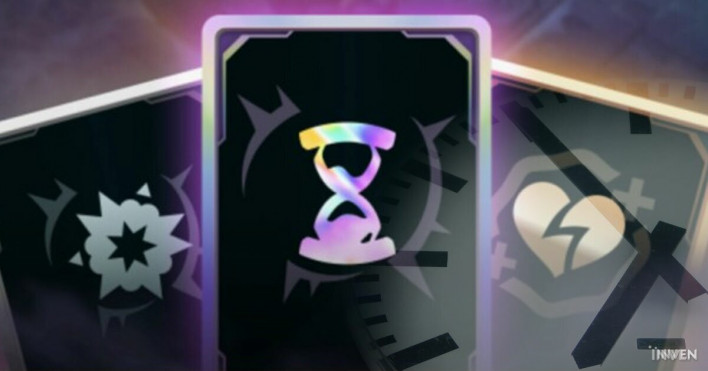
Q. You can select up to four Augments in one game. I assume you experimented with various numbers during the development process—from selecting at least one to as many as 18. What was the process of reaching the conclusion of 'four Augments'?
" We started with 3. But with 3, we felt there wasn't enough change provided by the Augments, so there was no noticeable difference from regular ARAM. So we conducted tests while increasing the number.
While increasing it, there was one thing we were cautious about from the start: Arena is 5v5. In Arena mode, Augments work well because it's a 2v2 fight, so you only need to figure out the Augments of two people on your team and two on the opposing team. But in Howling Abyss, you have to figure out 20 Augments—four for each of the five people on the opposing team. The more Augments there are, the more the game becomes a chaotic mess. 'Four Augments' was the upper limit that gave players the context to understand the situation in front of them without overloading them.
Actually, at launch, we were quite conservative because of that worry. But players are giving us feedback that "it's okay to do more." I don't think we've found the optimal point for the number of Augments or the speed of their appearance yet. Nothing is set in stone, and you will see us continue to experiment with this point in the future.
For one thing, in tests, whenever Augments exceeded four or were given all at once early on, the reaction was, "This isn't ARAM, it's just 'Chaos of Chaos'"
Q. I get the impression that the length of the game is tied to the tower health. No matter how advantageous you are, the towers at each location hold out until a certain time, so there's no progress, and even if you're at a disadvantage, you go to the late game thanks to the towers. Is this an intentional design?
" The role of structures and the speed of the game were intentionally brought over from ARAM. But we discovered an interesting fact. Arena players don't judge the end of the game only by towers. They consider the game over only after seeing the 4th Augment. Looking at actual metrics, the game end time is converging around the point where the 4th Augment is picked.
This became a problem for us. There are games that were originally intended to end before the 4th Augment was fully unlocked, but even in situations where all towers are pushed, the winning team holds onto the game, saying, "We haven't picked the 4th Augment yet, so we can't end it." In terms of chasing a fantasy rather than a victory, it touches on what we aimed for, so in some ways, it's a healthy sign. But for the other side, it becomes a painful experience of "please just end it."
So, we are regularly discussing within the team what role structures like towers and the Nexus should play in the game state. We are looking for ways to induce the game to end when it should, and we are even adjusting things behind the scenes, such as increasing or decreasing the power of minions or towers over time. We haven't found the perfect answer yet.
Q. Looking at recent game trends, many games have introduced Augment-style systems, centered on the Roguelike genre. Do you get inspiration from other games? Have you ever found an 'Augment' you wanted to bring from another game?
" The whole team, including me, always plays various games and keeps a close eye on what's happening in the industry. However, there isn't anything we've earmarked, saying, "We must bring that mechanic from that game." That's because there's no guarantee that an approach that worked elsewhere will work the same way in League of Legends. For example, we were inspired by "Wild Rift" for Arena. But even though it was a MOBA and we could refer to it, it required countless modifications and a different approach to fit PC users.
Instead, we use the successes and failures of other games as learning opportunities. Others' attempts are good references for strategic decisions, such as how to handle update speed or how much to let Augments change a champion's identity.
Q. When playing 'Howling Abyss,' I want to buy something for this mode. But there are no exclusive products for Howling Abyss. Whether it's a season pass or fun Augments that don't affect balance, there are many users who would want to pay if it's worth contributing to. Are there any plans to release products for 'Howling Abyss'?
" A cautious approach is needed regarding purchases. We conceived Arena as one of the core experiences of League of Legends. If we split purchases by saying, buy this in this mode and that in that mode, the player base is divided, and the value of each purchase is diluted.
However, I agree. There is more we can do. The fact that feedback like "I want to spend money here" comes out is, in itself, a healthy metric and a healthy relationship. If there is such a desire, we should naturally respond to it. The premise is clear. Purchase elements must be something where players can show off their fandom. It should be a means to express affection for the subject they like and spend time on.
There are many things on the roadmap, but the priority is to properly complete the gameplay. We are still finding our way. Based on that premise, we are looking into options that allow Arena players to customize their own experience to their taste. However, there is nothing concrete I can share at this point.
Q. Whenever an interview about Howling Abyss is scheduled, my acquaintances always ask me to ask this: "Why don't you make a rank for ARAM?" The essence is this: they want to show off how well they play and how much they like ARAM, but unlike Solo Rank, there is no means to show it in ARAM.
" First of all, I am against introducing ranks in either Arena or basic ARAM. I don't want to introduce the element of competition into ARAM. The moment a rank is attached, the stakes of winning or losing an individual game become much greater, and other players are evaluated by their skill. That goes against the spirit of ARAM. Many players left Summoner's Rift and came to ARAM precisely because that motivation for competition disappeared.
However, my acquaintances are right. There must be a means to show off the time and skill I've poured in, and something to set goals and move forward. That's what ranks are good at. You can give yourself milestones and narratives like, "I'll hit Diamond by the end of the season." There is no answer to that in Arena yet, and I think we need to find that answer.
There can be an answer even if it's not in the form of a rank. This is one of the areas we are putting the most effort into behind the scenes. Although it's before we've presented it to players, you can look forward to an update where you can set your own goals for Arena and accumulate progress. It will be a method that suits this mode, where the player who played the 'most Arena-like' game is rewarded.
Q. The last question is in that same vein. If not a rank, how about an achievement system? If records like 'One who grew larger than the Nexus,' 'One who became smaller than Teemo,' or 'One who hit from the farthest' remain, users will have something to show off. It's also a method that many games on Steam already operate. Do you have any thoughts on introducing such a method?
" I like that idea. However, from here on, we get into the specific details of unreleased content, so I can't say much. I'll just say this: the intent of your question aligns with the direction we are heading. Experiences like 'How big can you get with Mundo?' becoming new challenges on a season or release basis. When I said we would reward the 'most Arena-like' play, that is the spirit of the picture I am drawing.
Q. There are many users in Korea who love Howling Abyss and play it every day. Is there anything you would like to say to them through this interview?
" I would like to thank the Korean community and fans. The most insightful questions and comments come from Korea. Every time I have a chance to communicate, I learn so much from the Korean community, and I hope this relationship continues. I hope you continue to support League of Legends' mode content, including Arena. I look forward to the changes and content we are currently preparing being well-received by the players. I ask for your continued interest.