When we buy an indie game we've been eyeing on Steam or purchase a limited-edition character skin in our favorite mobile game, we hit the 'complete payment' button without a second thought. In those few seconds—entering credit card numbers, watching screens transition through services like Toss, KakaoPay, or Naver Pay—gamers rarely stop to consider the payment process itself. Yet, behind this seamless transition lies massive technical infrastructure that safely and securely connects complex global financial networks, regulations, and local payment methods in real time.
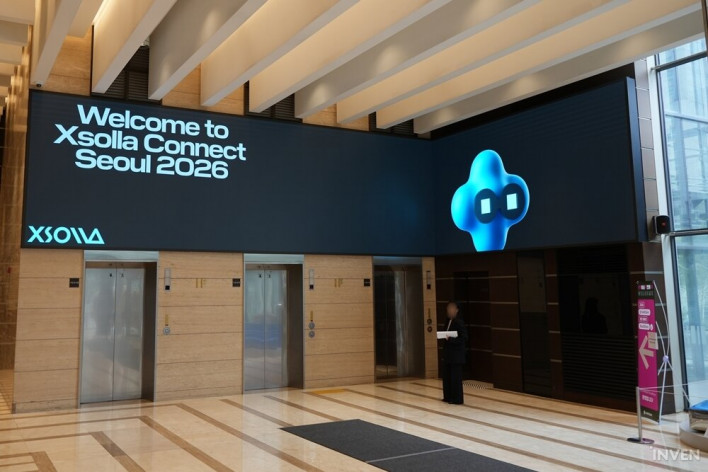
While the company name may be unfamiliar to some gamers, 'Xsolla' is a vital gateway and trusted partner for game developers worldwide looking to expand into global markets. To put it simply, it is like a massive, global-scale version of the point-of-sale (POS) and payment infrastructure that powers our local convenience stores, but built for the internet. Xsolla is more than just a simple payment gateway; it is a global game business engine that provides comprehensive support for every business aspect a game company faces beyond content development.
Our ability to conveniently purchase overseas indie games with domestic credit cards or gift certificates, and conversely, the ability for domestic startups to reach users in North America, South America, and Europe and generate revenue in local currencies, is all thanks to Xsolla's invisible global financial network. Without such solutions, small and medium-sized developers might have been forced to abandon global expansion while struggling to navigate the disparate tax laws of each country. In this sense, Xsolla has been a silent partner, breaking down borders in the global game market and connecting users with developers.
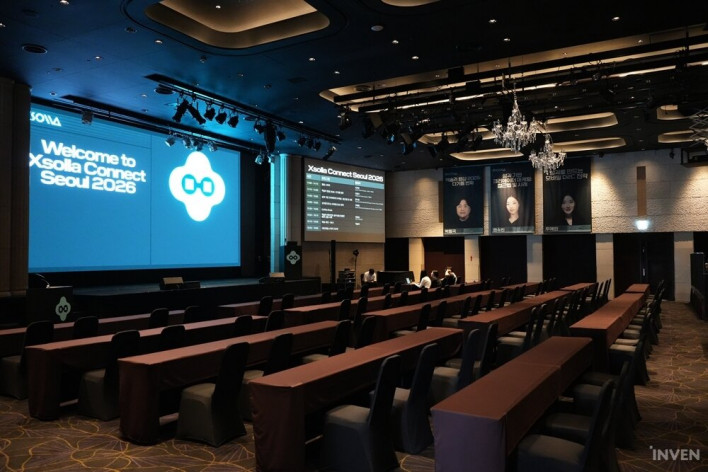
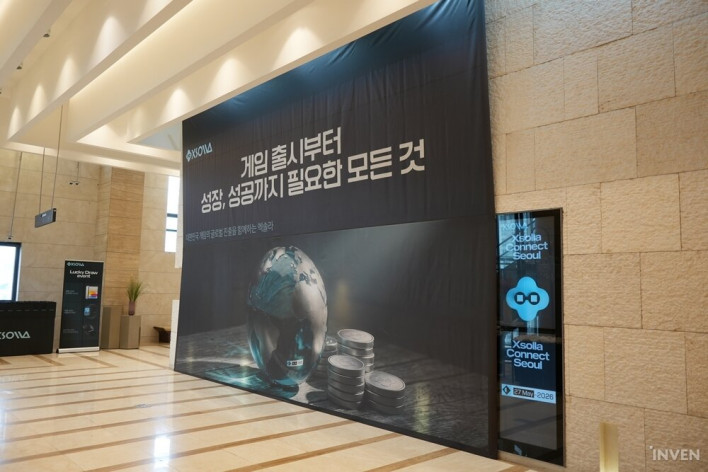
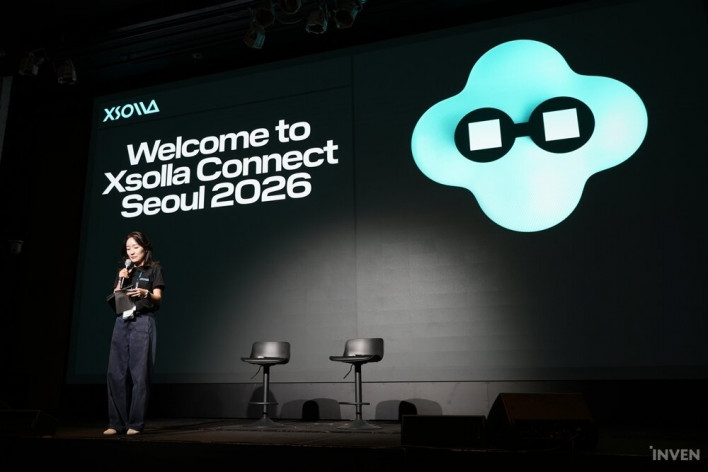
On May 27, 'Xsolla Connect Seoul 2026' was successfully held at L Tower in Seocho-gu, Seoul, presenting a new paradigm for global game business and offering clear solutions to industry challenges. The event was designed to share diversified payment strategies and real-world success stories, helping game companies achieve sustainable growth beyond mere survival in the rapidly changing global mobile and PC game market.
The conference specifically addressed the hottest topics in the global industry: mobile D2C (Direct-to-Consumer) strategies and the adoption of 'Webshops' to reduce in-app payment commissions charged by Google and Apple. As legal battles worldwide begin to crack the once-solid 30% commission wall, this event served as a clear guide on how game companies can prepare to build self-sufficiency.
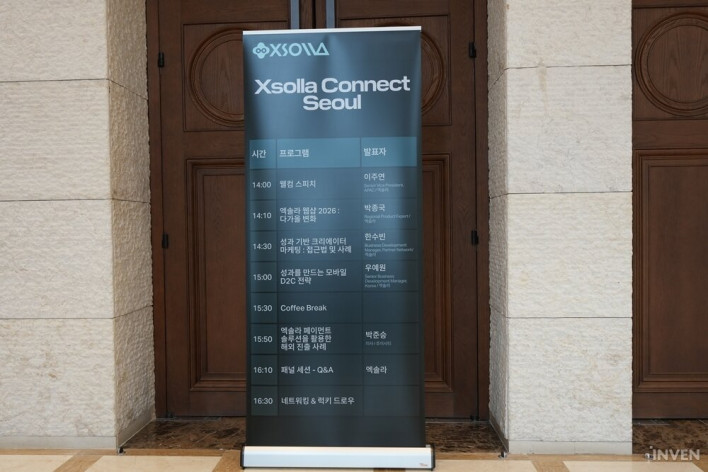
The event began with a welcome address from Xsolla Korea, followed by sessions on the future roadmap for next-generation webshops, practical paradigms for creator marketing, specific methodologies for mobile D2C success, and a Q&A session featuring a global success story from JOYCITY.
Global Trend Shifts and Market Hybrid Strategies
■ Session 1 - Welcome Speech) 📣Lee Joo-yeon, APAC General Manager
The event kicked off with a welcome speech by Lee Joo-yeon, APAC General Manager at Xsolla. Lee began by sharing a video on Xsolla's recent global brand rebranding and expressed deep gratitude to the many domestic and international partners who have walked alongside Xsolla for years. Marking the 12th anniversary of the Korean branch, she emphasized that Xsolla's growth has always been intertwined with the history of the Korean game industry.
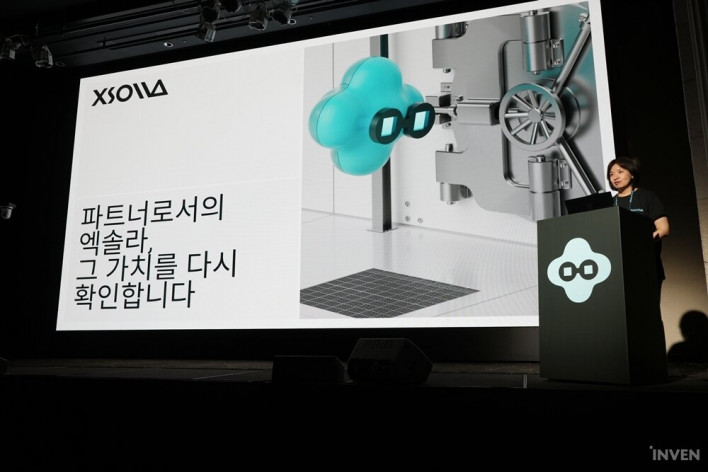
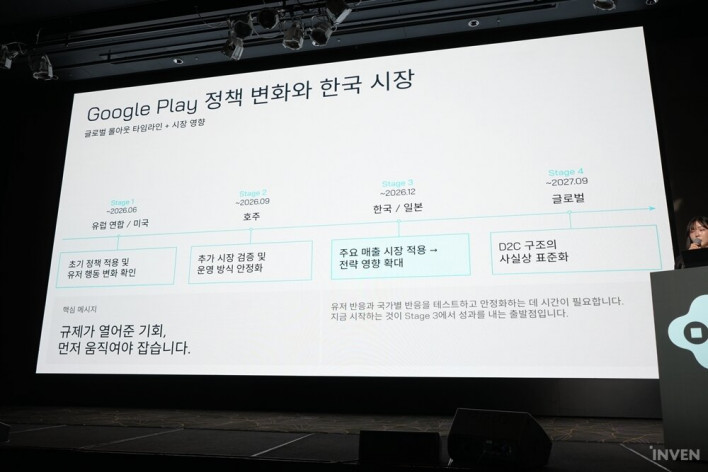
The core theme of the welcome speech was the fundamental shift in the paradigm of platform commissions and the undeniable necessity of mobile D2C. Just a few years ago, building a webshop or encouraging external payments was often seen as a mere workaround or secondary measure to save on the 30% commission paid to Google and Apple. However, Lee noted that with ongoing global legal battles and antitrust regulatory easing (such as allowing external links within apps), the market's leverage is rapidly shifting from platforms to game companies.
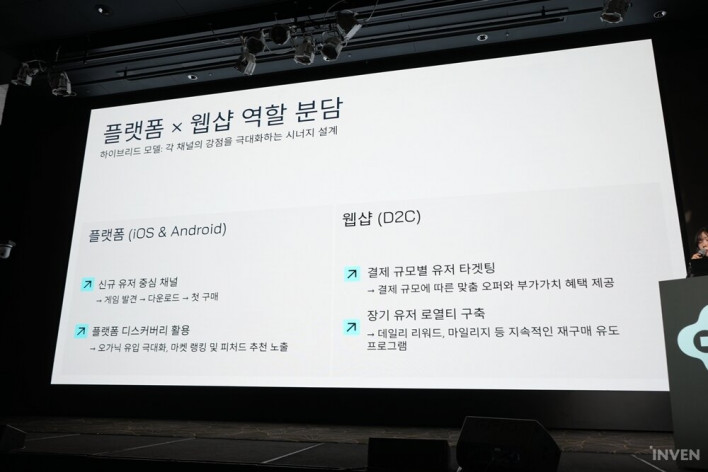
Lee advised that webshops should evolve into a 'hybrid operating structure' that maximizes the strengths of both the webshop and the platform store, rather than viewing them as hostile entities. For gamers, this means the Google Play Store or Apple App Store acts as a 'department store' for discovering and downloading new games, while the webshop serves as a 'VIP-only brand shop' where loyal, long-term users receive direct, tailored benefits.
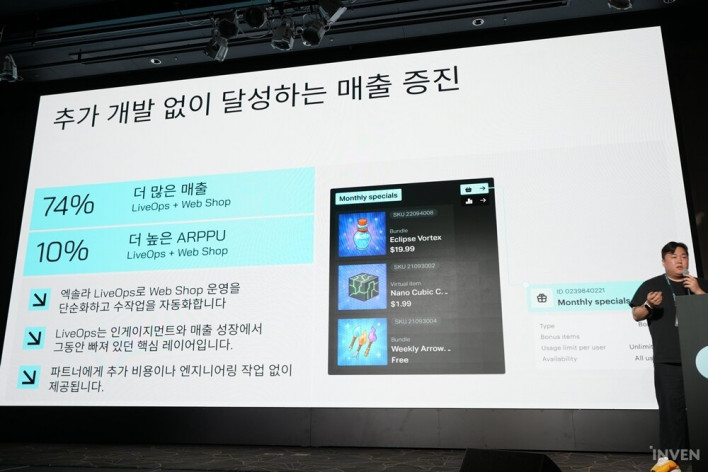
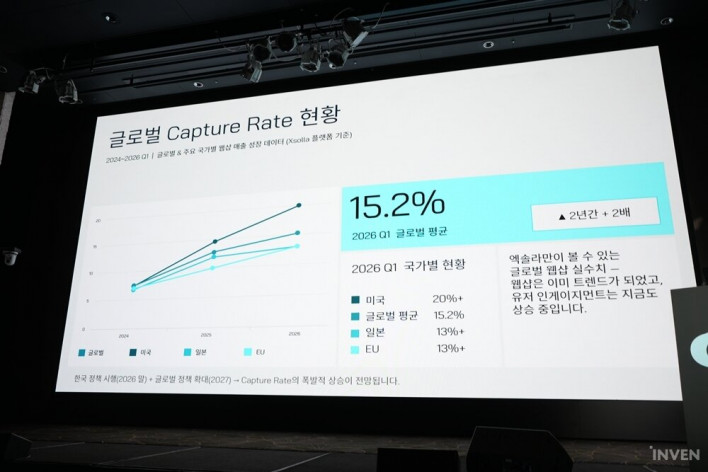
Furthermore, unlike the rigid payment environments of platform stores, webshops offer a completely independent space where game companies can execute marketing campaigns without restrictions. Companies can customize reward systems, such as mileage points, and design targeted packages based on user spending or play styles. Lee concluded her speech by presenting anonymized data showing that major global game companies that quickly adopted this hybrid strategy have seen the proportion of total revenue coming from webshops trend upward month after month.

No Developer Needed: 'LiveOps Canvas' and Xsolla's Next-Gen Tech Roadmap
■ Session 2 - Xsolla Webshop 2026: Upcoming Changes) 📣Park Jong-guk, APAC Product Manager
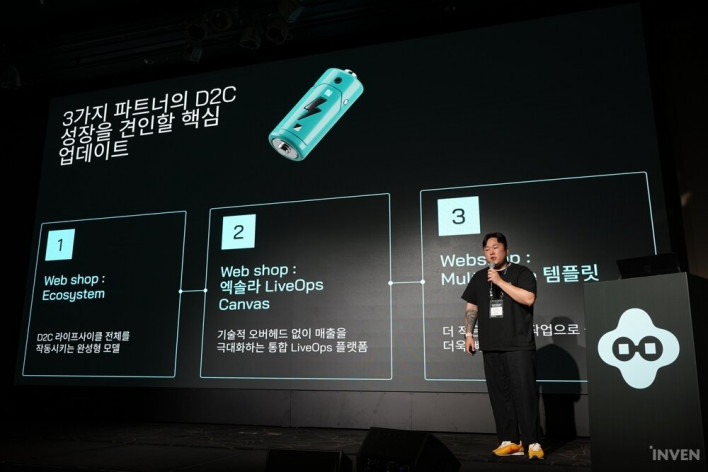
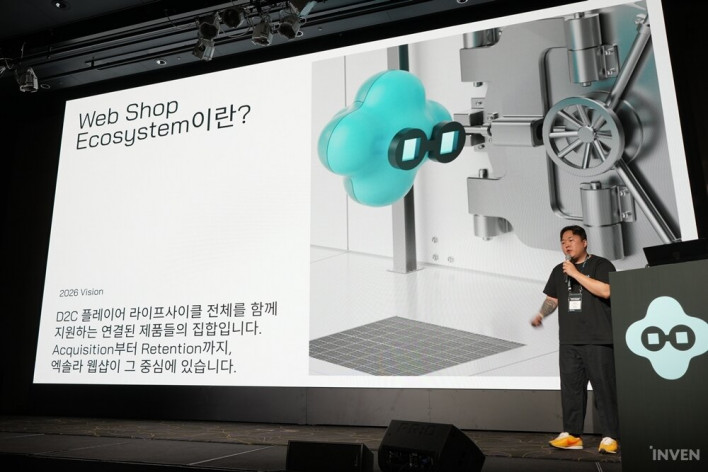
Park Jong-guk, APAC Product Manager at Xsolla, unveiled the technical blueprint and roadmap for Xsolla's next-generation webshop solution for late 2026. "With global regulations on digital stores loosening, third-party payments and D2C are no longer distant future concepts, but standard technologies that game companies must adopt immediately to survive and maximize revenue," Park stated.

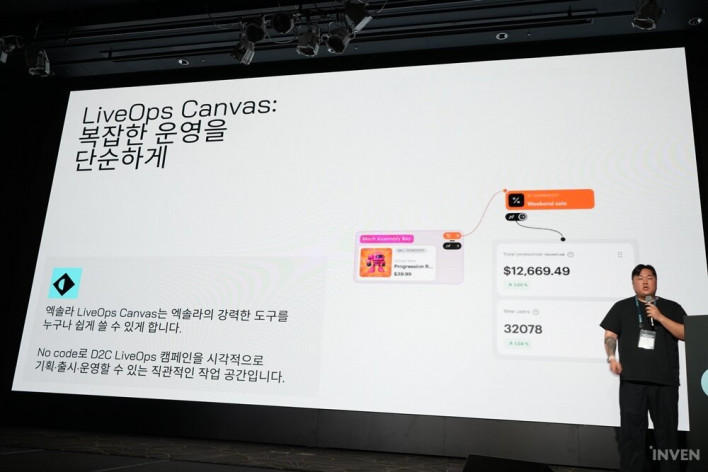
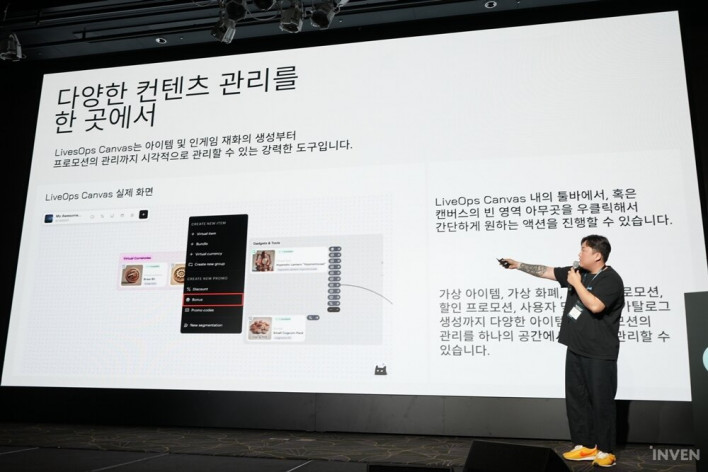
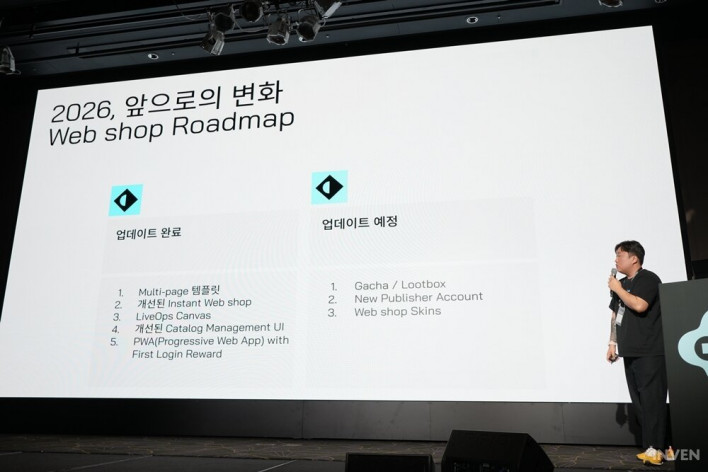
The presentation highlighted the 'Xsolla LiveOps Canvas' tool, set for release in the second half of this year. Park explained that while existing systems allowed companies to manage item catalogs and promotions, the features were scattered across menus and relied on text-heavy UI/UX, creating a high barrier for planners and marketers to design and execute events in real time without developer assistance.
The newly unveiled LiveOps Canvas solves these issues. Similar to visual tools like Figma or Miro, it allows users to manage item creation, promotion scheduling, and user targeting on a digital canvas using simple drag-and-drop and click actions. For example, complex rules like "display a 20% discount banner to users in Country A who are level 30 or higher" can now be mapped out as a visual flowchart without writing a single line of code.
Additionally, Park announced major quality improvements to 'Instant Webshop,' a feature designed for indie developers with limited resources. By simply entering a store link or basic information about a live mobile game, AI and Xsolla's template engine can generate a high-quality webshop prototype in minutes. For small developers, this is an oasis that drastically saves time and costs.
Finally, Park emphasized the integration of 'PWA (Progressive Web App)' technology, which transcends the limitations of standard web browsers. When a user accesses a webshop via a smartphone browser, they can add it to their home screen, creating an icon that functions like a native app. This allows for direct push notifications and attendance rewards, building a 'lock-in' environment as effective as an in-app experience.

Beyond the Illusion of Views: Data-Driven 'Actual Sales'
■ Session 3 - Performance - Based Creator Marketing: Approaches and Cases) 📣Han Su-bin, Partner Network Manager
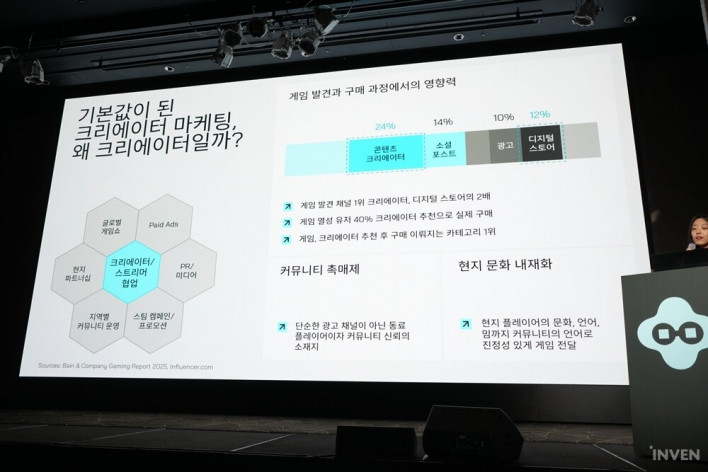
In the third session, Han Su-bin, Partner Network Manager at Xsolla, discussed the paradigm shift in 'influencer and creator marketing.' Han began by citing statistics showing that content creator videos on YouTube, Twitch, and Chzzk are now the primary way gamers discover and decide to download new games—an influence twice as high as featured placements on Google or Apple stores.
However, Han pointed out a chronic industry problem: many companies pay large sums to top creators without seeing verifiable sales. While past marketing relied on surface-level metrics (Upper Funnel) like views or likes, the current market demands performance-based (Bottom Funnel) KPIs that track exactly how much in-game item revenue was generated from a creator's video.
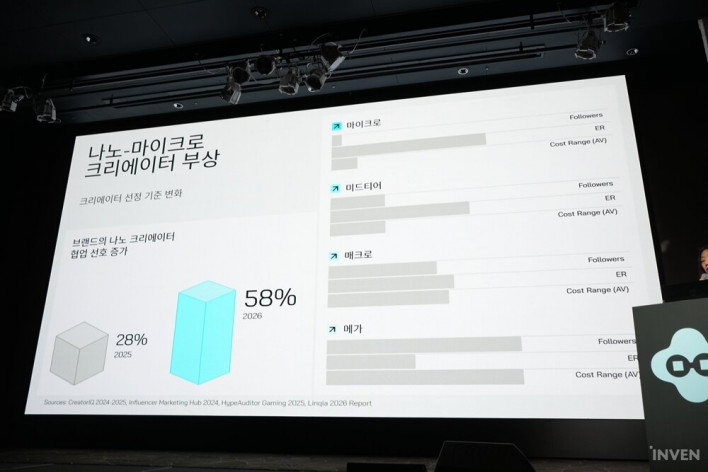
In this shifting landscape, Han highlighted the potential of nano and micro-creators with under 5k subscribers. While they may have less mass appeal than mega-influencers, they possess deep expertise and passion for specific genres or games. Their audiences are 100% genuine gamers, leading to significantly higher conversion and purchase rates.
Marketing statistics show that global brands are increasingly prioritizing authentic collaborations with these nano-creators, who offer the best engagement rates and cost-efficiency. It is now a smarter strategy to partner with dozens of niche nano-creators rather than pouring the entire budget into one mega-influencer.
Han did not deny the influence of mega-influencers but emphasized that marketers must choose the right strategy based on their specific goals, budget, and efficiency needs.
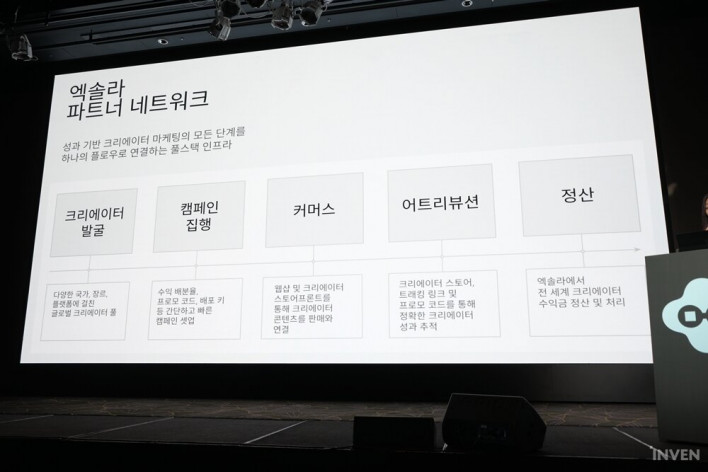
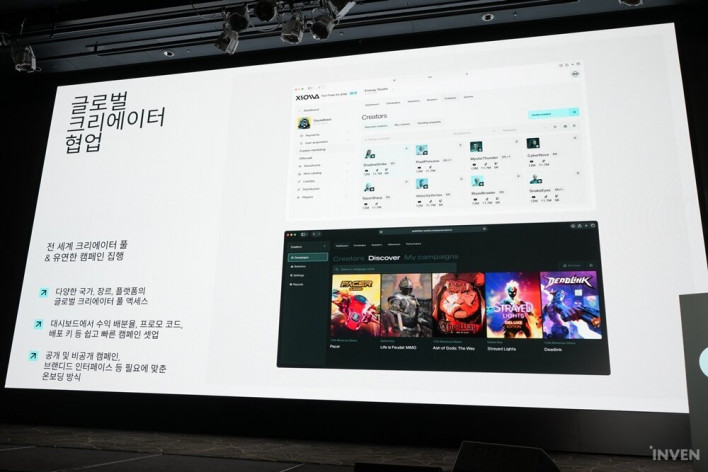
Xsolla's 'Partner Network' solution automates the complex process of finding and contracting these creators. When a company registers a campaign, creators can participate freely, and the system automatically issues unique promo codes and tracking links. It tracks performance per transaction and even handles the most difficult task: tax settlement and remittances for thousands of creators worldwide, reducing the operational burden to near zero.

A 3-Step Practical Guide to Influencing User Psychology
■ Session 4 - Mobile D2C Strategies for Performance) 📣Woo Ye-won, Senior Business Development Manager
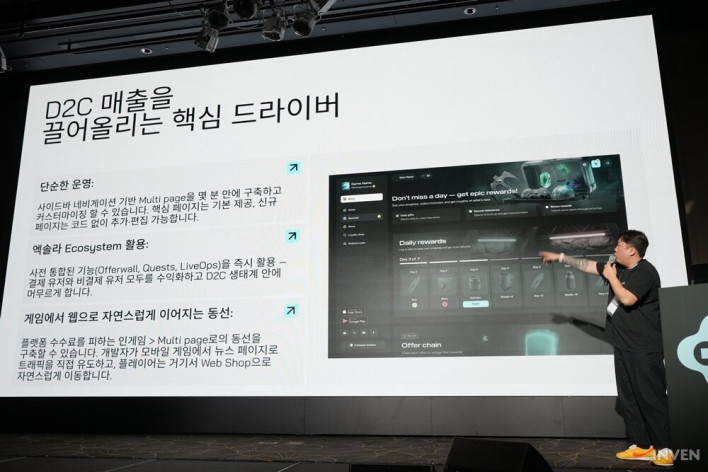
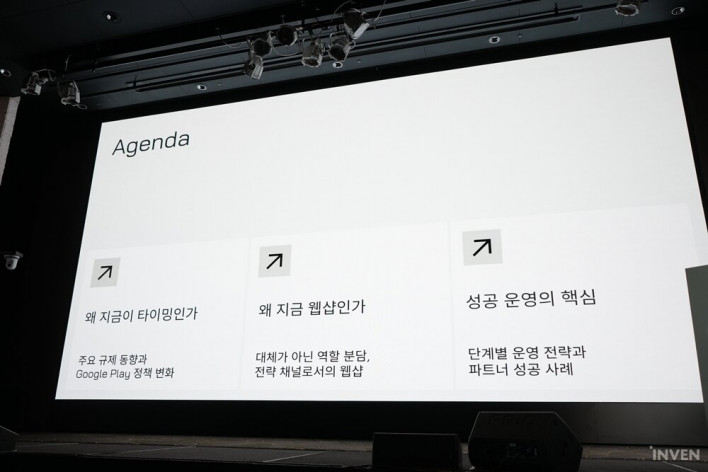
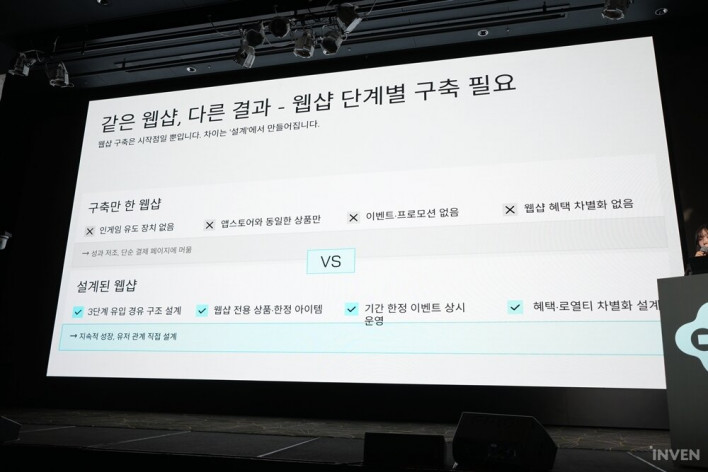
In the fourth session, Woo Ye-won, Senior Business Development Manager at Xsolla, presented a 3-step methodology for driving voluntary webshop visits and explosive revenue growth. Woo emphasized that a webshop is useless if users don't know it exists or have no reason to visit, stating that success depends on a scenario designed around the user journey: 'Discovery - Conversion - Retention'.

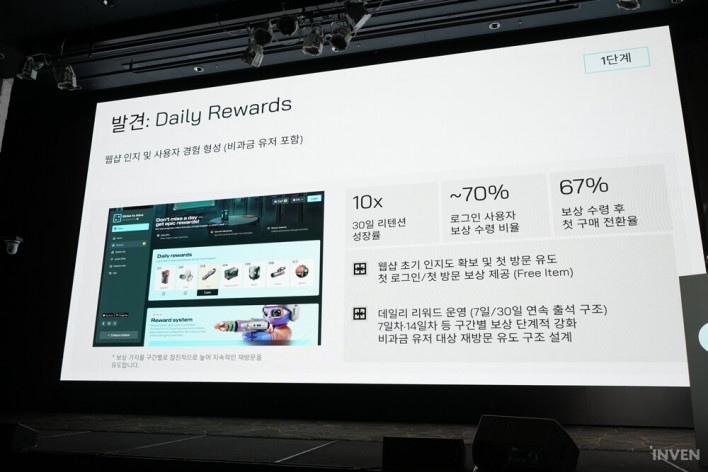
In the 'Discovery' phase, the key is to naturally make users aware of the webshop as an alternative to in-app payments. Simply placing a link in a corner is ineffective; companies should actively use pop-ups in-game and official communities (Discord, lounges, etc.).
Woo advised designing a 'Daily Reward' system where users receive in-game resources or buffs for logging into the webshop, with rewards increasing for consecutive visits. Global partners using this structure have proven that 67% of users who visit for daily rewards go on to make their first purchase.
The 'Conversion' phase aims to make users intuitively feel that "purchasing here is definitely more beneficial than in-game." Since over 90% of users access webshops via mobile browsers, companies should display bold, visual benefit messages—like '20% bonus diamonds on webshop purchases'—at the top of the main screen.
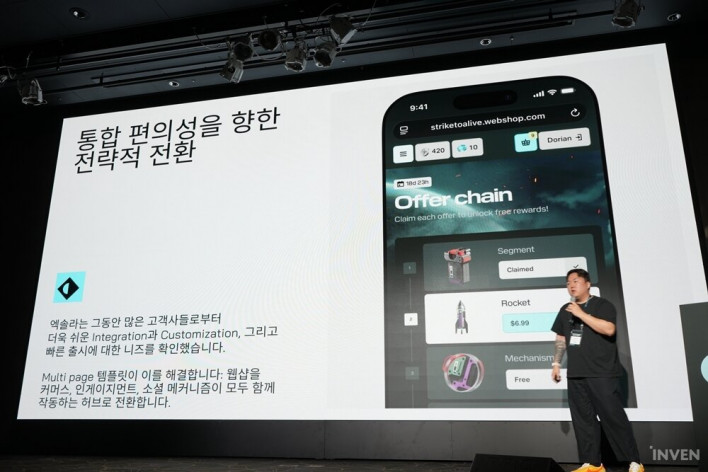
Woo also recommended the 'Offer Chain' technique to lower purchase barriers. Instead of pushing expensive packages, offer a low-cost 'Welcome Package' or free sample to encourage users to register their payment information and break the psychological barrier of the first webshop purchase. This strategy has led to an average cumulative increase of over 40% in new webshop buyers.
The final 'Retention' phase involves locking in users who have already made a purchase. The 'Loyalty Store' is a key tool here, using a point system where users earn points for every purchase. These points can be exchanged for exclusive items like limited-edition profile borders, rare costumes, or raffle tickets for special merchandise—items that cannot be obtained in-game.
Woo concluded by stating, "When the three wheels of rewards for discovery, offers for conversion, and loyalty systems for retention turn organically within Xsolla's one-stop infrastructure, the webshop becomes a powerful cash cow for the game company."

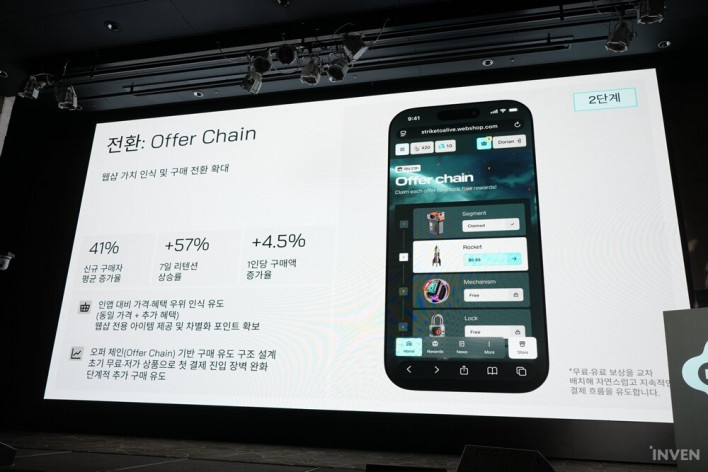
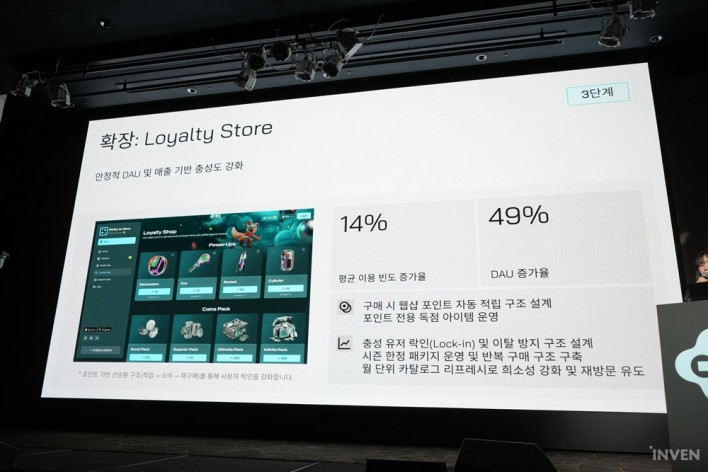
A 3-Step Practical Guide to Influencing User Psychology
■ Session 5 - Overseas Expansion Cases Using Xsolla Payment Solutions) 📣Director Park Jun-seung, JOYCITY
After a short break, Park Jun-seung, Director at JOYCITY, a leading Korean game company, shared the behind-the-scenes story of adopting Xsolla's payment solutions. JOYCITY, which operates global live services, sought to prevent payment churn and maximize convenience, leading them to adopt Xsolla's solutions.

Park cited Xsolla's 'all-in-one integration of Alternative Payment Methods (APM)' across 130+ countries as the decisive factor. While Korean users are accustomed to credit cards or Naver Pay, users in emerging markets like South America or Southeast Asia often lack bank accounts or credit cards, relying instead on prepaid cards or local mobile payment apps. Xsolla allowed JOYCITY to capture this demand with a single API integration.
Within just five months of integrating Xsolla's localized payment solutions for the 'Resident Evil: Survival Unit' title launched in November 2025, revenue generated through Xsolla's infrastructure grew by approximately 400%. Additionally, the contribution of Xsolla's platform to total global revenue increased more than threefold, significantly improving the company's profit margins.
Park also praised the close collaboration of Xsolla's global Customer Success Management (CSM) team. Given the time zone differences in global live services, Xsolla's 24-hour standby support line, centered around the Korean branch, provided immediate feedback and solutions for technical issues, even in the middle of the night.
Finally, Park emphasized, "The most resource-intensive and daunting aspects of overseas expansion are complex tax reporting and currency compliance. Xsolla acts as the merchant of record, handling all administrative and legal risks with a single report. This allowed JOYCITY's talented developers and planners to focus entirely on improving content quality and user satisfaction, which was the hidden driver of our quantum jump."
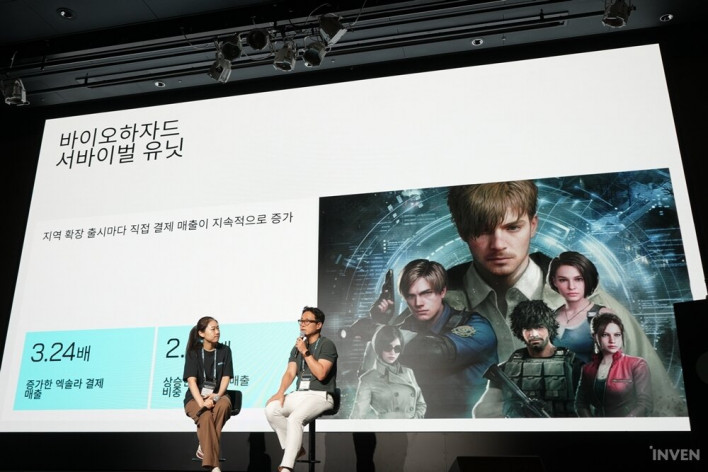
Surprise Quiz, Q&A, Networking, and Lucky Draw!
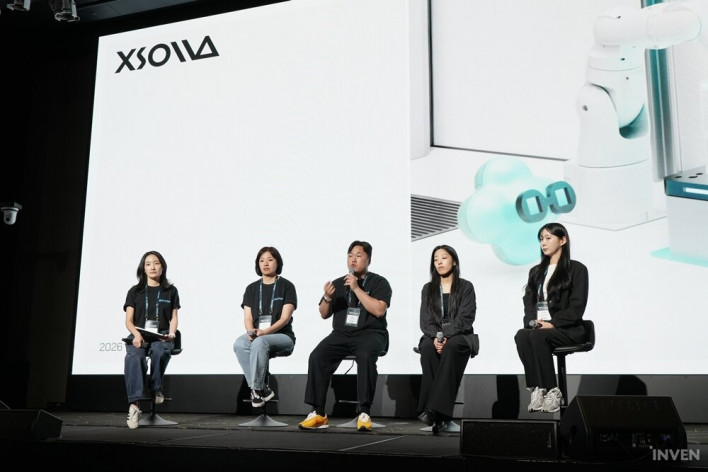
■ Panel Discussion and Q&A
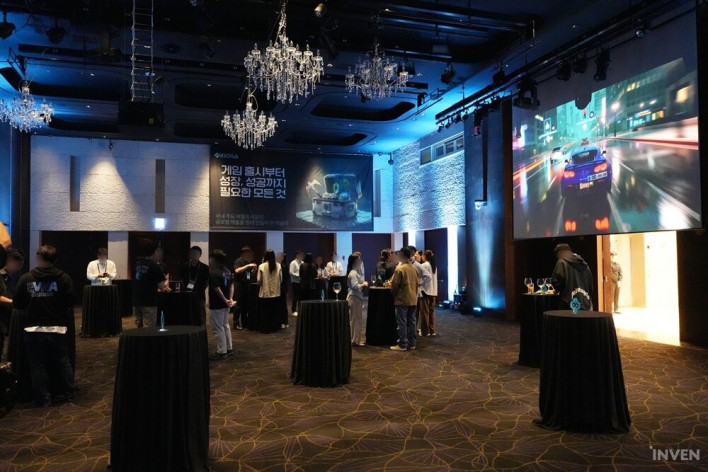
After the presentations, there was a surprise quiz event with gift certificates, followed by a Q&A session, networking, and a lucky draw featuring iPads, Apple Watches, and Logitech gaming mice. Below is a summary of the Q&A.
Q. What features should we start with when first introducing a webshop?
"It is difficult to manage many features at once. Start with the foundation. I recommend the 'Daily Reward' (attendance reward) feature, as it allows users to intuitively feel the difference between the in-game store and the webshop.
Q. What should be considered first when designing a webshop from a user's perspective?
"You must design the flow from the beginning: 'How will the user enter, what experience will they have, and how will they return?' Marketing is only effective when the context and value for the user to visit the webshop are clear.
Q. Are there common mistakes game companies make after building a webshop?
"Leaving it neglected. If you don't suggest a path from the game to the webstore or actively promote webshop-exclusive offers, users won't visit because the products are identical to those in-game.
Q. When is the ideal time to launch a webshop?
"In the past, companies waited 6 months to a year due to conservative platform policies, but this is inefficient for brand awareness. Now that platform policies are more flexible, it is best to launch the webshop simultaneously with the game to run promotions and events from day one.
Q. What should be noted when operating payment methods and webshops for the Chinese market?
"China requires a license (ISBN) for direct operations. Without one, direct service is difficult, so you must approach it indirectly by integrating global payment methods that Chinese users can access or by customizing other legal alternatives.
Q. Global platform (Google/Apple) commission policies keep changing; how can we reduce risk?
"The key is that the market is moving toward allowing external payments and link-outs regardless of platform policy changes. To reduce risk, control the webshop link within the app via a server so you can adjust payment paths or link visibility without app updates. Also, diversifying risk by focusing on platforms with relatively clearer policies (e.g., iOS) is an option.
Q. Will we face disadvantages (sanctions) from platforms if we operate webshops and in-app purchases simultaneously?
"Xsolla has been operating D2C solutions stably for over 20 years, and there have been no cases of clients facing sanctions. However, as policies change, it is best to communicate closely with Xsolla to receive guidance on safe operating limits.
Q. Besides saving on commissions, how can we increase the ARPPU of webshop users?
"Create mechanisms for users to stay active in the webshop. Organically designing 'Daily Rewards,' 'Offer Chains' that lead to purchases, and 'Loyalty Stores' for exchanging points for limited rewards will increase both engagement and revenue.
Q. Does Xsolla handle UA (User Acquisition) marketing or bring users to the game for the developer?
"As a B2B infrastructure company, Xsolla does not engage in direct B2C marketing to gamers. Instead, we lead cross-marketing initiatives through top-tier partnerships with major local payment providers and telecommunications companies. We provide indirect support by exposing partner games through push notifications or banners within these local payment providers' super-apps, and by linking cashback events to drive large-scale traffic to game developers' web shops. Furthermore, in the second half of the year, we plan to offer influencer campaigns and offerwall features as a package to help alleviate the burden of initial marketing.
"Game companies should focus only on fun; leave the headache of business to Xsolla"
■ Special Session: Meeting Lee Joo-yeon, APAC General Manager
Before the event, we spoke with Lee Joo-yeon, who oversees Xsolla's APAC business. A veteran with 18 years in the industry, Lee joined Xsolla in 2016 and has been leading the APAC region for six years, building trust with numerous partners.
According to Lee, Xsolla Korea is a core forward base with the longest history among Xsolla's global branches, reflecting the high value the headquarters places on the Korean market's global influence and technical maturity. Lee deeply understands the pain points and regulatory barriers Korean game companies face when entering the global stage.
Lee noted that while Korean mobile game companies are highly interested in webshops and D2C, they remain cautious due to their relationships with Google and Apple. "Many companies are calculating the risks, wondering if users will actually endure the inconvenience of using a webshop and how safely they can operate within the platform's strict compliance regulations," she said.
Nevertheless, Lee emphasized that D2C is now an indispensable choice for long-term survival, not just cost-cutting. The mobile game market has shifted from chasing short-term hits to stable, long-term live services. In a climate where UA costs are skyrocketing, retaining loyal users and providing them with tailored value is a core concern for game companies.

For Korean companies eyeing emerging markets like South America, Southeast Asia, and Eastern Europe, Xsolla provides unique solutions for integrating local APMs and navigating national tax laws, which would otherwise be too time-consuming and costly for small and medium-sized enterprises.
"Our goal is clear," Lee stated. "We want to create an environment where game companies can leave the headaches of global taxes, currency settlement, and fraud prevention to Xsolla, and focus all their resources on developing 'fun game content' that users will love." Using Xsolla effectively provides the infrastructure of a global business and finance department.
Finally, Lee identified 'close, human-centric support from local Korean staff' as Xsolla's strongest weapon. "For companies running 24/7 live services, even a 10-minute payment system failure is fatal," she said, noting that Xsolla Korea operates the largest technical support and Customer Success (CS) team among foreign solution providers in Korea.
Xsolla: A Compass for Global Game Survival That Satisfies Both Developers and Users
'Xsolla Connect Seoul 2026' went beyond promoting technology to present a clear survival strategy for Korean mobile and PC game companies at a historical turning point of changing global financial regulations and the easing of platform monopolies.
The monopoly of in-app payments, held by Google and Apple for over a decade, is crumbling like dominoes due to government legislation and global lawsuits. Top-tier global game companies have already finished building their own payment infrastructure to maximize profitability.
The insights and data from this conference can be summarized in three key points, which are particularly relevant from a gamer's perspective.
First, the importance of timing. The door to the global D2C market is wide open, and the shift toward open payment environments is faster than expected. Companies that build their own webshops now and internalize user payment data will be the ones to reap the rewards of the future game market.
Second, webshops are a business necessity, not just a commission-saving tool. A webshop should be defined as a 'central command for long-term revenue boosting' where companies directly face loyal users and build deep relationships, rather than just a channel for avoiding 30% commissions.
Third, sophisticated operation design based on user psychology. Even the best technology fails if it ignores user behavior. A refined LiveOps strategy—giving users a reason to visit daily, breaking the barrier of the first purchase, and providing value to turn them into regulars—is essential.
The era of relying solely on good gameplay to survive on the global stage is over. D2C strategies, where game companies define their own relationships with users and maximize revenue without being subordinate to platform commission power, are the most powerful business weapons for survival.
We sincerely hope that the integrated global financial infrastructure and performance-based LiveOps guidelines presented by Xsolla will serve as a clear and reliable compass for the many Korean game companies dreaming of leaping from the domestic market to the vast global stage.


Sort by:
Comments :0