'The same taste you've always had.' At first glance, this expression sounds like a compliment. It refers to a familiar flavor, unchanging quality, and proven fun. The same applies to games. If it means maintaining the essence of the series, it is certainly a positive evaluation. However, it is also used in the opposite sense. It means that it is not significantly different from the previous work, and ultimately, it failed to show anything beyond the familiar.
Supermassive's horror interactive movies are exactly like that. Starting with Until Dawn in 2015, and continuing through The Dark Pictures Anthology, The Quarry, and The Casting of Frank Stone. Supermassive has established itself as a leading developer of the genre by consistently releasing interactive horror movies over the past 11 years. However, there has always been a recurring criticism: that their work is always similar. This is why there was particularly high anticipation for 'Directiv 8020,' which was released on May 12. As the title that kicks off Season 2 of 'The Dark Pictures Anthology,' attention was focused on whether it could break the formula repeated over the past 11 years and demonstrate a step forward in its evolution. However, the result fell short of expectations. To put it nicely, it's a familiar taste; to put it negatively, it's ultimately just the same taste we've always had. A variation called 'manipulation' added to the recipe of choices and QTEs The basic structure of the game is generally similar to previous titles. Although I described it as a familiar taste at the beginning, that doesn't mean nothing has actually changed. Befitting a title that signals the start of Season 2 of The Dark Pictures Anthology, 'Directiv 8020' features aspects that differ from previous Supermassive games. Specifically, the scope of player intervention has been slightly expanded compared to previous titles. That is the nature of the interactive movie genre. The proportion of parts directly controlled by the player is not large. This has been the case for the works Supermassive has presented from Until Dawn to the present. To put it positively, they remain faithful to the identity of the interactive movie genre; to put it negatively, one could say they have not deviated significantly from the grammar established by the genre. However, with the release of 'Directiv 8020,' Supermassive has attempted a slight change to this existing grammar. By increasing the emphasis on stealth and exploration, the balance, which was closer to a movie, has been shifted slightly more towards a game than before. If there is a difference, it is that the proportion of direct character control has increased. Of course, that does not mean the player can do dramatically more. If it were, it would have been closer to an action-adventure game rather than an interactive movie. Ultimately, these changes are more akin to slightly expanding the scope of player intervention within the limits allowed by the genre, in order to resolve the inherent drawback of interactive movies, where choosing options is all there is to it. There aren't that many changes, either. This is because most interactive movies adopt a structure centered on choices and QTEs, with a few added control elements, and 'Directive 8020' is no different. It is merely a change where, in sections where you investigate the surroundings, you deviate from the main path to take side paths to gather clues and information and uncover hidden secrets, or in chase situations, instead of simply selecting options or inputting QTEs, you are made to actively hide and move while avoiding the enemy's gaze. You can also find hidden information while wandering around the surroundings ©INVEN These changes appear to be an attempt to compensate for the limitations of interactive movies, specifically the drawback that players are limited to merely watching as if watching a film. The attempt itself is not bad. However, the problem is that the results are not as satisfying as expected. Ultimately, the core of 'Directive 8020' still depends on the choices you make. This is because finding clues and uncovering secrets yourself during gameplay rarely leads to significant branching or meaningful changes to the choices themselves. The key factors determining the game's most important branches and endings are also largely skewed toward choices and the success of QTEs. Ultimately, the core lies in what choices were made and whether the QTEs were successful. As a result, control elements such as exploration, stealth, and infiltration, which were touted as differentiators from the previous title, feel like secondary elements that do not actually exert significant influence on the plot. While it is true that changes were attempted, the depth perceived by the player is more limited than expected. This is not the only regrettable aspect. If the new attempt to increase the weight of player control was not particularly noticeable, the fact that the almost identical structure repeats regardless of which character is played goes beyond mere disappointment and feels like a fatal flaw. 'Directive 8020' features a diverse cast of characters including captains, pilots, engineers, doctors, and scientists, and the playable character changes with each chapter, allowing players to experience the events from different perspectives. Facing a single event from different angles and uncovering hidden secrets—this is the core fun that Supermassive has consistently pursued from Until Dawn to The Dark Pictures Anthology. The problem, however, is that the gameplay structure itself lacks differentiation. Of course, given the nature of the interactive movie genre, it is difficult to expect completely different play styles for each character. After all, it is a genre closer to a movie with choices than a game where you directly control the character. Nevertheless, the fact that the flow of dodging enemies and solving puzzles repeats exactly the same way every time, with only the characters' shells changing, leaves something to be desired if simply dismissed as a characteristic of the genre. The charm of the unique characters feels as though it is overshadowed by the repetitive gameplay structure. Since it is not an action game, direct combat against monsters may be difficult to stage, but that does not mean there were no ways to attempt differentiation. For example, there was ample room to highlight each character's unique traits, such as an engineer utilizing surrounding facilities or a doctor overcoming challenges using medical knowledge. If that had been the case, not only would the characters' personalities have come to life much more impressively than they do now, but the aforementioned limited control elements would have also been brought to life much more vividly. However, regardless of which character you control, the actual in-game characters repeat the same routine of crouching to avoid monsters, passing through maintenance corridors, opening doors, and handling terminals. Although the character changes every time, the player's experience is akin to copy-pasting, which ultimately leads to boredom. As a result, even the few changes attempted systematically have effectively faded away within this meaningless repetitive structure. It makes you wonder if they could have just left out the manipulation elements if they were going to keep making you crouch like this. A decent story like a 'movie,' a disappointing twist. In the interactive movie genre, which claims to be the same type of game, direction and story can be considered the core and entirety of the game. In that sense, the direction and story of 'Directive 8020' can be said to be worth the money as a horror game. However, it is not perfect. While it may be a matter of personal taste, upon reflection, there are some aspects that leave something to be desired. First of all, the structure of the early chapters is like that. The story of 'Directive 8020' follows the standard trope of a monster mimicking a human, made famous by movies like The Thing. It delivers psychological horror that keeps you on edge for even a moment, as you suspect one another in a closed space—a spaceship acting as a counterpart to an Antarctic base—a monster that perfectly replicates even human memories and behaviors, and a situation where you cannot tell who is a comrade and who is an enemy. The early chapters follow the standard Body Snatcher formula that there is a monster within us, but... its true identity is quickly revealed, and the Body Snatcher premise loses its power. The problem is that the pressure characteristic of psychological thrillers is not really felt much in the actual gameplay. Since this is a story-driven genre, the detailed backstory cannot be fully revealed, but there are aspects where clues about someone being a monster are given somewhat blatantly. Because of this, the intriguing premise that a monster is hiding among the companions loses its power right from the start. Ultimately, instead of a psychological battle that binds each other, most of the gameplay consists of sections that startle the user with simplistic elements like jump scares. Players who expected heavy psychological tension are bound to feel disappointed. This is because, although I expected a high-quality horror thriller, upon actually watching it, it felt like a predictable B-grade horror movie that relies excessively on jump scares. All that remains in the place where the premise of Body Snatcher has lost its power is ultimately just jump scares. However, please do not misunderstand and think that the story or direction is poor. The only disappointment stems from the fact that it didn't deliver the suspenseful horror thriller one had hoped for, given the uncertainty of who the monster was; however, the story and direction of 'Directive 8020' itself meet the basic standards for the horror genre. The way the core plot twist is handled is also disappointing. The Dark Pictures Anthology series has always featured a hidden truth behind the surface story, but in this work, that key twist is revealed too quickly. A major twist that should have exploded at the very end with the thought, "Wow, so this is what it was all about?" is revealed in the middle of the film. This narrative style is likely to be divisive and acts as a factor that diminishes the driving force of the struggle for survival in the latter half. The system for reversing choices is also a regrettable aspect. As I have repeatedly mentioned, in the interactive movie genre, the user's choices are the most powerful weapon. This is because even the frustration that arises when a specific character dies or the story heads toward a bad ending due to a wrong choice acts as the driving force that makes players replay the game. Overcoming the disappointment of that failure to make the right choices in the next playthrough and finally finding a good ending or a true ending—that can be said to be the core fun that interactive movies pursue. While it is certainly a convenient feature, it leaves something to be desired in that it dilutes the importance of choices, which is the core of interactive movies. However, the branching rewind feature introduced in this work undermines this driving force of the genre. This is because, much like the so-called "save-load trick," it has become possible to time-loop directly back to the previous branching point even if the character dies by mistake. While the fact that there is no longer a need to repeat the game from the beginning may be an advantage in terms of convenience, the intense tension unique to the genre, where one had to carefully choose options at every moment, is inevitably diluted.
It has returned with that unchanging flavor
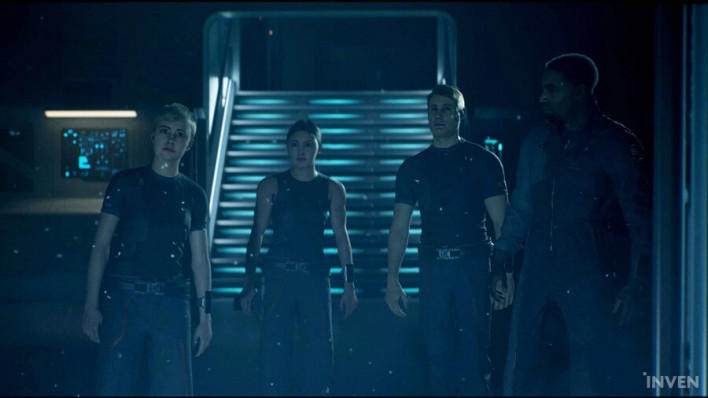
Clearly, 'Directive 8020' is a game that has been put a lot of effort into, befitting a work that opens Season 2 of The Dark Pictures Anthology. Developed with Unreal Engine 5, the graphics and visuals have noticeably improved, and character modeling and facial expressions have also been significantly enhanced. While it is regrettable that the plot twist is revealed somewhat early, the game sufficiently demonstrates its fundamentals as a horror title. The real problem is that all of this ultimately fails to escape the realm of "familiar flavor." Although the scope for player intervention has been expanded, the most critical branching ultimately relies on choices and QTEs, just like before. The story and direction are decent, but they remain at the level of being merely interesting, failing to deliver a fresh shock that exceeds expectations. In addition, the full price point, relative to the short playtime inherent to the genre, is inevitably a burden in many ways. To summarize, 'Directive 8020' attempted to break away from established formulas, but ultimately, it can be described as a game that failed to bring about changes significant enough to shatter the genre's mold. Nevertheless, Supermassive's accumulated know-how as an interactive horror movie and its fundamental capabilities remain intact. Fans who have enjoyed the developer's previous works will likely be able to fully immerse themselves in this title as well. Even if it is 'that familiar taste' that we know all too well.
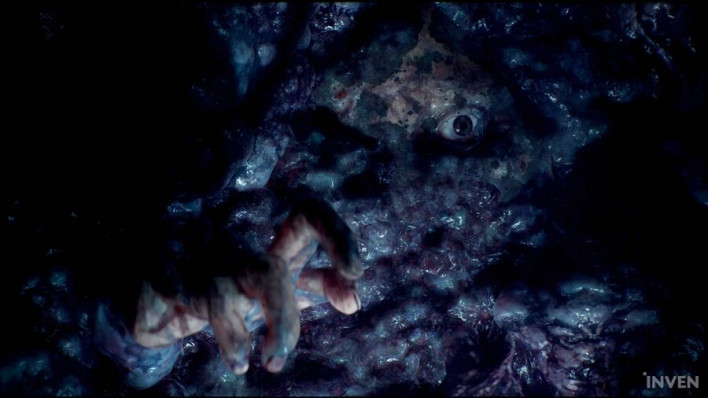
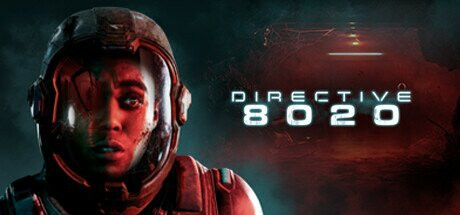
- High-level jump scares
- Visuals and direction improved thanks to UE5
- Somewhat ambiguous optimization
- Expensive price range for a 'movie'
- Stealth sequences that feel boring
Review Platform: PC (Release Version)

Sort by:
Comments :0