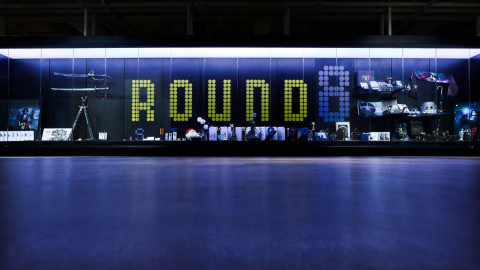
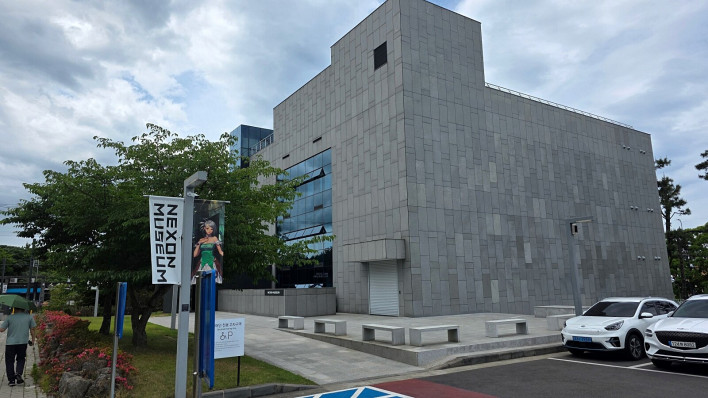
The Nexon Computer Museum, which started as Asia's first computer museum and has been a landmark in Jeju, has undergone a massive transformation. After a four-month full-scale renovation, it reopened on May 12 under the new name 'Nexon Museum,' declaring itself a hub for gaming culture.
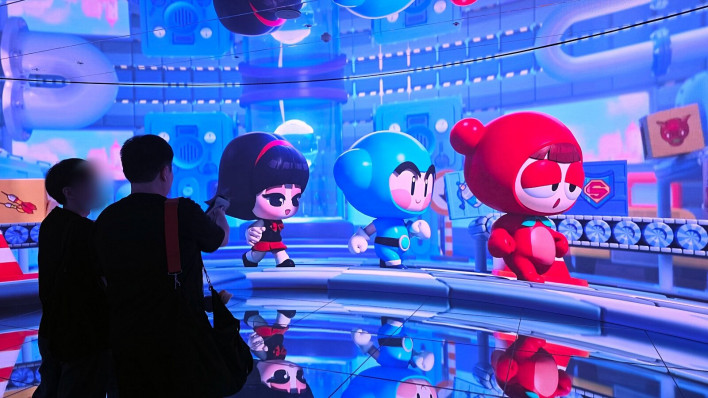
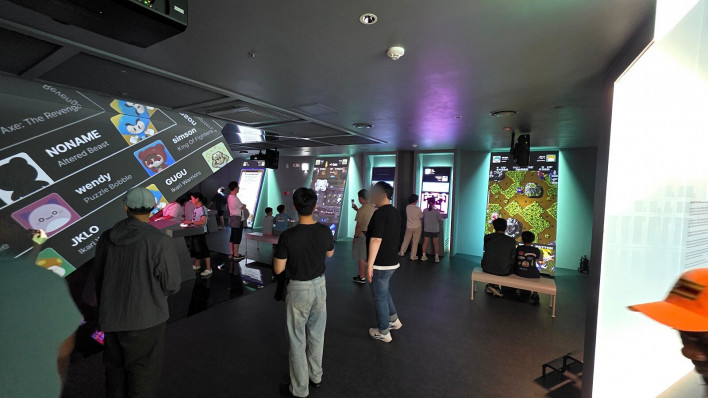
The core paradigm of this renewal is clear: moving away from unilateral, technology-focused exhibitions toward an 'experiential space centered on user experience' that brings the online play records of gamers into the offline world. When visitors link their Nexon accounts, their personal history accumulated in virtual worlds is brought to life through media art. Nexon's long-running IPs, which span generations, have been gathered in one place to create a space of hospitality exclusively for gamers.
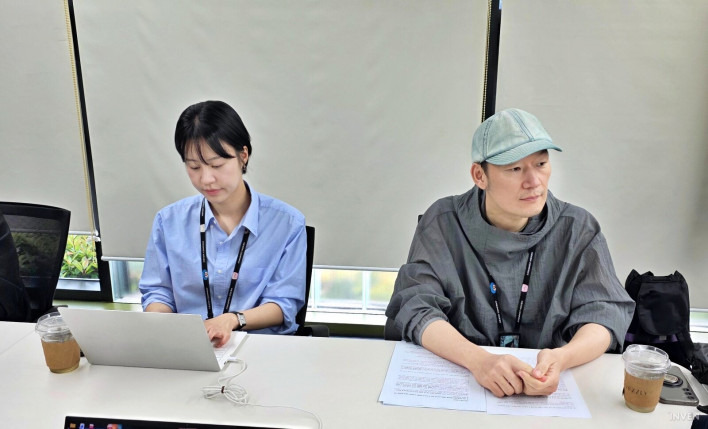
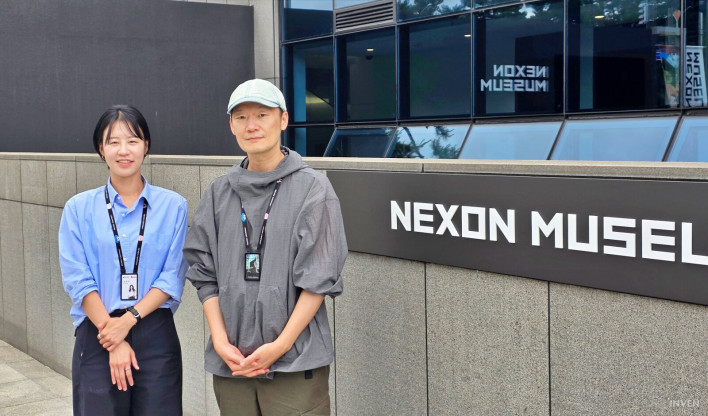
Beyond its legitimacy as the nation's first specialized museum, the Nexon Museum has transformed into a cultural hub that archives the heritage of the Korean gaming industry. INVEN met with Director Park Doo-san and Team Leader Kim Jung-ah to discuss the sincere behind-the-scenes stories of this renewal and future plans for the museum's new journey.
From 'Computer Museum' to 'Museum': Archiving Players' Memories
The biggest change in this renewal of the Nexon Museum (formerly Nexon Computer Museum) seems to be its transformation into an 'experiential space.' What was the specific process behind deciding on and developing these changes?
Director Park Doo-san : The previous exhibitions were primarily focused on the technological history of computers and games. The background for that approach was the highly negative perception of the gaming industry at the time, which necessitated a shift in public awareness. We needed to show the role and functional contributions of games in the growth of the computer and gaming industry, which was gaining prominence. We curated exhibitions from a technological history perspective, but I believe we have reached a stage where many people understand those aspects without us needing to explain them anymore. The perception of the industry has also improved significantly.
So, we thought it was time to take the next step. We believe games should now be treated not as byproducts of technology, but as contemporary culture itself. We identified 'fun' as the most significant characteristic of games as contemporary culture, and we planned this exhibition to showcase the relationships and aspects of enjoyment that this fun creates.
Team Leader Kim Jung-ah : To add to that, discourse, exhibitions, and cultural content dealing with games are already emerging and being showcased in the cultural and arts sectors. Institutions like the National Museum of Modern and Contemporary Art have also held exhibitions featuring games.
However, we didn't just want to view game exhibitions as art; we pondered how those who know games best could present them. That process led us to focus on relationships, enjoyment, and the cultural attributes of games. Furthermore, we changed the name to 'Museum' to move away from the traditional notions of a 'Computer Museum'—which focused on preservation and research—and instead provide a sense of vitality as a living, ongoing culture.
With the renovation, the museum's function has completely shifted to an experiential one. How do you view the changes in visitor behavior or expectations?
Director Park Doo-san : Since changing perceptions was a major goal, we previously hoped that teachers or parents would visit and realize that games have such enjoyment, functions, and roles. We even targeted family visitors in our marketing.
In contrast, the current exhibition is designed for those who love games, especially those who have cherished Nexon games, so they can feel that 'the records I made in the past are not meaningless, but still welcome me.' Our target audience has also become younger, shifting toward those in their 20s and 30s.
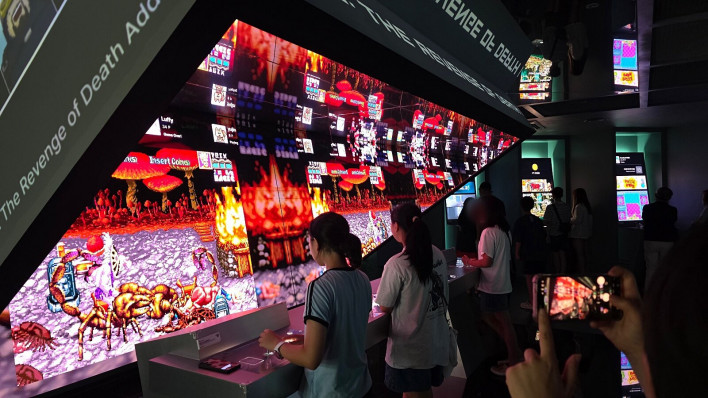
The personalized viewing experience, such as providing personalized records, is notable. I am curious about where this idea originated.
Director Park Doo-san : First, there was a strong need to create an exhibition that only Nexon could do as a game museum. Many public and contemporary institutions hold game exhibitions, but I often felt they were based on a superficial understanding of games. From my perspective, there were many game exhibitions that were difficult for actual gamers to relate to. We decided to create an exhibition where gamers could feel the enjoyment firsthand.
The first attempt at this was the 'Play the Game /invite you_' exhibition. We created an exhibition where accounts were linked for the first time, and the response was so positive that we thought about refining it further.
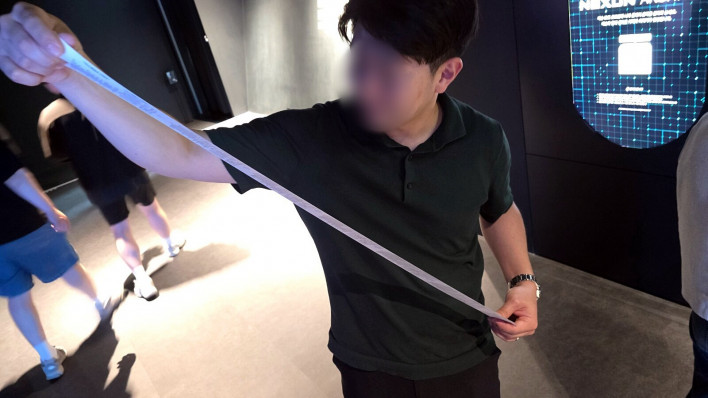
Team Leader Kim Jung-ah : To elaborate, we actually exhibited some of our 2019 exhibition content in the third-floor hallway of the Nexon Computer Museum back in 2020. The 'Nexon Receipt' printing feature went viral there. The response was so positive that, later on, we even had visitors coming to the museum just to print these receipts. Seeing firsthand how much visitors enjoyed looking back at their own history and gaming records, we realized that if we developed these elements into a more comprehensive, full-scale exhibition, it could make for an even more engaging experience.
Director Park Doo-san : The games I played as a child were all Japanese games—Nintendo or Sega—so the previous exhibition suited me well. However, after operating for over 10 years, I noticed that visitors these days were looking for Nexon games. I often received questions about why there were no Nexon games in the 'Nexon Computer Museum.' Their childhoods had already been shaped by Nexon games. We created this exhibition structure to meet those needs.
Visitors of various ages visit, but games with high age ratings are also included. How is this being managed?
Director Park Doo-san : In the case of 'Khazan,' there are scenes with blood, so we display warning signs in the area after the exhibition. The same applies at the entrance. We thought a lot about age restrictions, but since it is a museum, we believed visitors would understand. Especially since visitors who need protection usually come with guardians, we have entrusted that role to them.
As many games like 'Nexus: The Kingdom of the Winds' are long-running IPs, you seem to be trying to show both past memories and the present. Are there any criteria you considered important in exhibition planning or operation?
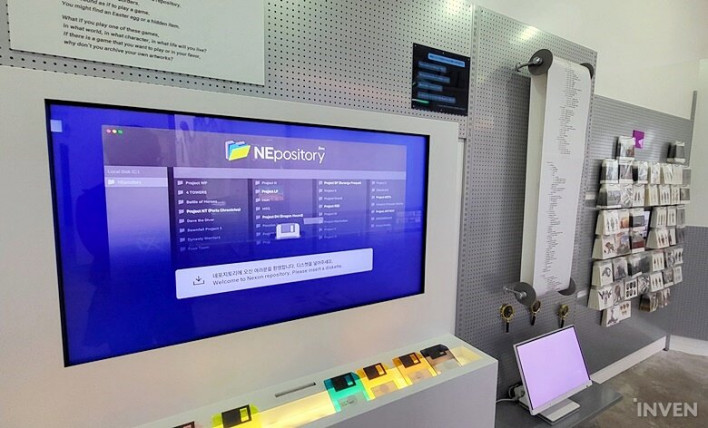
Team Leader Kim Jung-ah : In the past, there was an exhibition called 'Nepository.' It was an exhibition that archived games that were never released or had their services terminated. It was the museum's wish and perspective to archive and show games that people remember or want to see, whether they were attempted developments or discontinued services, rather than just dealing with the value of games that were released.
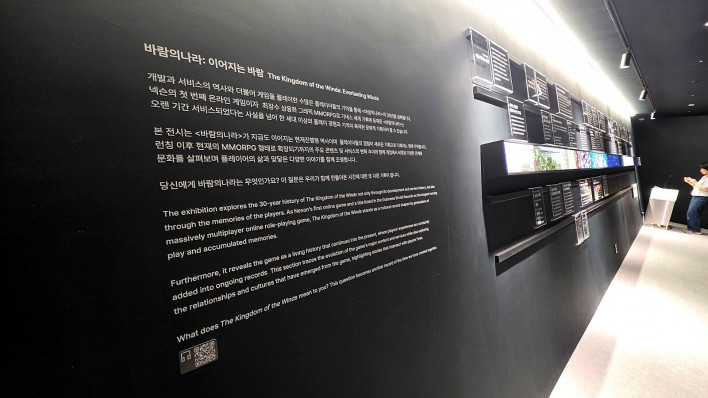
In that sense, although 'Nexus: The Kingdom of the Winds' and 'MapleStory' are long-running IPs nearing 30 years, we wanted to show through the exhibition that these are not finished histories, but ongoing ones. We wanted to convey that chronicles and MapleStory content can be experienced in new ways through media and modern mediums.
From a planning perspective—and this is my personal opinion—all exhibitions are often interpreted through the planner's perspective. I think many game exhibitions fail to resonate with visitors because they are interpreted through the planner's eyes and feelings. So, the part we paid the most attention to while renewing this exhibition was, 'What will people like, what will they feel, and will they understand this?' We constantly thought and asked questions, and while we need to re-examine whether that was 100% implemented, we put a lot of thought and care into those aspects.
Jeju as a Hub, Offline Spots, and Expansion Plans for the Space
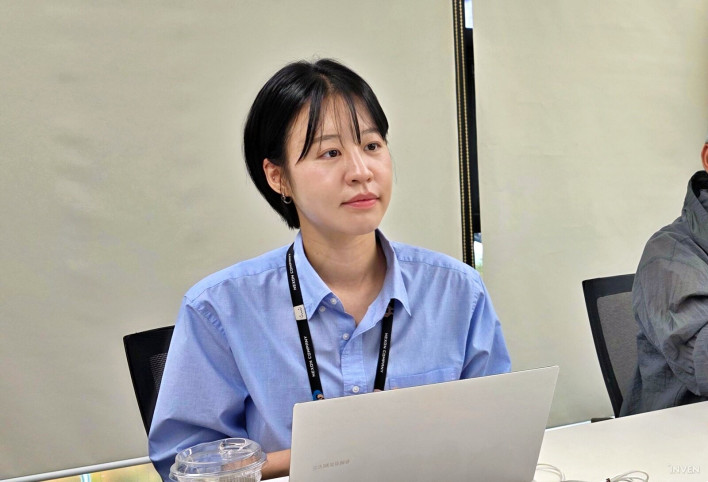
These long-running IPs will continue to accumulate. I am curious about how you plan the tempo of renewals and the selection of IPs.
Director Park Doo-san : This was the first time we actively utilized IPs to create an exhibition. Currently, our museum exhibition team is leading the process, but once it settles as a platform to some extent, I think the game business team will make suggestions or requests in reverse. I believe that would create a more positive synergy.
One of the things we designed while creating this exhibition was a structure that allows content to be changed and replaced so it can function as a platform. We are dealing with various IPs, but if the opportunity arises, we could consider special exhibitions for specific IPs. This exhibition was changed for the first time in 13 years, but I want to have a faster renewal tempo in the future. We plan to continue even if it's not a full-scale overhaul, by adding content, and I am currently inviting and persuading the game business team members one by one.
With the renovation, I am curious about what changes have been made to existing programs such as the docent program.
Director Park Doo-san : It's a concern that hasn't been fully resolved yet, but unlike previous exhibitions, this one is closer to the planning intention of feeling it with your body. We wanted you to feel the aspects and stages of enjoyment created while playing games. So, I thought the impression of being welcomed by a character you liked was greater than explaining things in detail, which is why this exhibition is experience-oriented. I don't think a docent is the perfect tool for this exhibition, so I am trying to replace it if possible, but for those who really want it, we will likely conduct docent tours mainly on the 2nd floor.
Since it is experience-oriented, it seems difficult to rotate permanent exhibitions. How do you plan to change the Nexon Museum space in the future?
Director Park Doo-san : I think changing the permanent programs on the 1st and 2nd floors can sufficiently give the feeling of a new exhibition, but I don't think the current 3rd floor will feel different just because one or two IPs are added.
One of the things we discussed internally was, 'Even if only one person comes, I hope that one person feels moved.' The direction was not for an unspecified number of people to feel it shallowly, but for a specific game user to come and feel it strongly. Perhaps if people who don't play games come, they will say 'it's similar,' but I believe actual users will feel a different kind of emotion from the changes.
For example, we intend to provide new momentum for 3rd-floor content through devices that can elicit specific moments of a game, like a 'Blue Archive' special exhibition. Of course, there are no concrete plans yet; it's just at the thinking stage.
There are many offline contents that Nexon is spreading across the country, such as MapleStory. Are there any plans to link them with the museum? And are there any plans for the old devices moved to the storage?
Director Park Doo-san : There is a significant amount of hardware content in the storage right now. It includes computers, monitors, boards, and consoles, and personally, I really want to show these. However, the exhibition space is currently narrow, so I hope to create opportunities to show them in places like Seoul through pop-up exhibitions or other occasions.
Linking Nexon's offline spots would be good, but there are no concrete ideas yet. We are currently in the early stages where each branch is promoting its own specialized content and concept. The 'Clan Hall' is PC-bang style, and the museum focuses on cute monsters or content playing in the Jeju landscape, so we are currently focusing on bringing out their individuality.
Some time has passed since it opened. I am curious about the reason for choosing 'Jeju Island' as the location and the impact it has.
Director Park Doo-san : You can see it as the strong will of the late Chairman Kim Jung-ju. He was inspired when he first encountered computers through books at Kyobo Book Centre during his school days, so he wanted to create a place that would give such inspiration to students today. The reason for Jeju was that at the time, almost all schools in the country came to Jeju for school trips, so we judged that it had high neutral accessibility even in regions outside the metropolitan area.
Team Leader Kim Jung-ah : To add, the primary goal was to serve as a holy site for many Nexon game users, and if that settles well, I think the next steps will take shape.
How do you view the cultural role or position of the Nexon Museum?
Director Park Doo-san : The reaction I want to get through this exhibition is a shift in perception: 'I can see the history of games this way too.' There are still many views that see it only as a type of entertainment. It was very shocking when I was asked to name my three favorite games in an entertainment interview in 2019, and they mentioned Galaga, Dig Dug, and Olympic, which are games from 40 years ago. Now, games are not entertainment or relics of the past, but content and culture intertwined with technology, design, music, and storytelling. I hope you feel that it is a culture to be enjoyed together, not alone.
Team Leader Kim Jung-ah : In addition, the sections where visitors reacted best varied from person to person. Those who have played Nexon games for a long time felt a lot at the receipt corner, and they chose the 4-player arcade experience or the PC package games we brought out this time as their favorite points depending on their generation.
User Logs Becoming History, Leading Game Culture Through Coexistence and Preservation
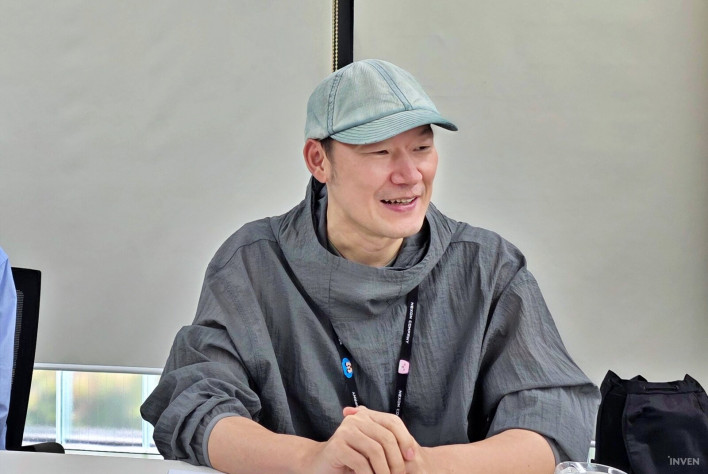
I am curious if there are any noticeable changes in visitor numbers or stay duration after the exhibition change.
Director Park Doo-san : It is currently a season where many Nexon fans visit, and there are definitely many customers in their 30s. I consider this successful because many people do the login process at the entrance even though it is cumbersome, but I think it is too early to talk about numbers. First of all, we have opened the system so that you can freely re-enter up to 10 times on the day, so you can immerse yourself all day long.
Team Leader Kim Jung-ah : I definitely feel that the stay duration has increased after the renewal. In the past, it was around 1 hour on average, but now people come planning for 2-3 hours. A notable feature is that, unlike before, groups of 4-5 men in their 20s come, print receipts, and enjoy themselves sincerely. We also plan to give the fun of collecting by having different designs for each IP for the admission tickets later. The proportion of foreign visitors has also grown from 1% in the past to about 4% now. They are visiting from all over Asia to enjoy the Nexon game IP itself.
There are also voices of regret that the proportion of classic hardware artifacts has decreased because the exhibition space was reduced during this renewal process.
Director Park Doo-san : The exhibition planning team's intention was not to eliminate the value of hardware assets, but to change the method of explanation. In the past, the museum unilaterally injected the specs of artifacts, but now we aim for a space where parents become the speakers and naturally become docents to their children, saying, "Dad played games on a computer like this when I was young." Although the explanation has decreased, I believe the value of intergenerational communication has become much richer as the speaker has changed.
I thought the 'Nepository' space was very meaningful to gamers in that they could see unreleased and discontinued games again, but it's a pity that it disappeared in this exhibition. Are there any additional renovations or plans in the future?
Director Park Doo-san : There are no concrete permanent plans yet, but it was a project I personally loved very much. It was such a small space that I couldn't show even half of what I wanted to do, so it is one of the tasks I want to do again first. At first, it started with unreleased games, and later it expanded to an archive of dropped games, including games whose services were terminated.
Because it has the meaning of respecting records, I have the 'heart' to develop it in the future. However, since the authority does not lie with us, it is an area that is only possible with the cooperation and approval of the headquarters' business division, so please understand that it is difficult to explain future plans in detail.
Quite a few classic package titles were exhibited this time. What was the most difficult signature artifact to obtain in the process of collecting them?
Director Park Doo-san : The hardware area is highly competitive thanks to the museum's infrastructure, but the expertise of private collectors in classic software packages is beyond imagination. There are many people who perfectly preserve first editions that even the museum couldn't find, so the process of seeking cooperation for donations or loans is always cautious.
The strategy we put forward in this renewal was not to boast about the rarity of artifacts, but to show the rich context of enjoyment inside the artifacts, such as manual books, setting materials, and full maps that were packed inside the boxes. I think the signature can be seen as the restoration of ultra-rare packages like the nation's first commercial RPG 'Legend of the Divine Sword' or 'Mangukjeon-gi,' which were collected through the help and tips of many people, exactly as users remember them.
I am curious if there are any additional offline spots or IP expansion plans besides the Cafe MapleStory in Jamsil.
Director Park Doo-san : Ultimately, I want to deal with all of Nexon's IPs within this museum space. I think it would be good to deal with more diverse game IPs here in the future.
Team Leader Kim Jung-ah : The reason we introduced gacha machines in the 3rd-floor exhibition hall and placed goods like desk pads this time is in the same vein. We introduced badges because we thought there would definitely be a need for visitors to leave something as a souvenir for the overwhelming emotions they feel when they finish viewing the exhibition and return. We also have a firm direction and will to expand this more diversely later.
Director Park Doo-san : Actually, at first, I wanted to plan and put all 40 types of Nexon games into gacha. But in the internal meeting, the voices of criticism that "the probabilistic burden on users is too great" and "let's realistically reduce it" were loud, so it was reduced a lot. Still, I thought it would be fun enough if users participated on-site.
If I have a personal wish, I would like to make goods for the classic masterpiece 'Tactical Commanders' someday. If things go well and there are enough souvenirs, I think a fun picture of users exchanging goods and talking to each other inside the museum will emerge.
How do you view the achievements the Nexon Museum has made in the domestic game industry or popular culture since its opening in 2013?
Director Park Doo-san : I think we have contributed to changing the social perspective and view of games in Korea a lot. I think the attempts we made were a very challenging journey in their own way.
Like these challenges, the biggest change in perspective we have brought about is that we have expanded the perspective of looking at the domestic game industry, which was previously viewed only from a fragmentary point of view, such as technology or hardware-centered, or the history of personal PC distribution. Such three-dimensional production and context preservation can only be done by a domestic game museum. I think there was not a single physical space that showed domestic game history or culture as comprehensively and deeply as this until before the renewal. This point of shifting the social view of games itself and showing their value comprehensively is also the achievement of renewal and operation that we want to emphasize and are proud of most.
I am curious if there are any plans for educational programs for teenagers at the museum.
Director Park Doo-san : We are completely redeveloping the career experience program 'Dream is IT,' which was our representative signature in the past, with the goal of restarting it in the second half of the year. It is also a program that was selected as a career experience institution certified by the Ministry of Education in the past. We are refining a sincere educational platform that helps future teenagers understand the mechanism of the game industry and look at games from the 'perspective of an active developer' rather than injecting coding technology, and we are looking at targets from 3rd grade of elementary school to middle and high school students.
In the process of updating or upgrading exhibition content, how specifically is collaboration and inspection carried out with the headquarters' individual game development studios or business divisions?
Team Leader Kim Jung-ah : Basically, all game character illustrations, logos, and resource data exposed in the museum go through strict guidelines and prior approval procedures of the headquarters' business division that develops and services the game. It is a method where the museum exhibition planning team performs secondary production according to the space within the resource guide permitted by the headquarters and receives inspection. Before the renewal, it was not easy to persuade the headquarters' development teams because we had to seek cooperation only with documents without any visual results, but the headquarters' developers who saw the completed experiential offline space with their own eyes are now supporting data much more actively and passionately.
Director Park Doo-san : There are no additional restoration plans for other games yet. Actually, the restoration or archiving of early versions was a really difficult project even at the headquarters level. Representatively, it cost a huge amount of money and time when restoring the early version of 'Nexus: The Kingdom of the Winds.'
The people who participated directly in this project in 2014 were the late Chairman Kim Jung-ju and CEO Song Jae-kyung. That is why the company-wide full-scale push and drive were possible. They said there was an internal shock while proceeding with this project. They said everyone was shocked to learn that Nexon is the company that made 'Nexus: The Kingdom of the Winds,' but there was no client data of the early version of Nexus: The Kingdom of the Winds inside the company at all.
With this incident as an opportunity, many development teams inside the headquarters also became alert, and now they are managing by building a system in-house that regularly preserves early builds or client versions by version without loss. We plan to consistently support such data preservation and archive work if the opportunity arises in the future.
You raised the admission fee for the first time in 13 years this time. I am curious if there were any internal concerns about the admission fee increase or the actual reaction on the site.
Director Park Doo-san : Actually, there was some burden before opening. Since we were raising the admission fee, worries came first. But after finishing the renewal and opening, I saw a review that used the expression 'super cost-effectiveness' among the Naver reviews on the first day. Since then, my worried heart has been relieved a lot. I am glad that it is at least not insufficient content that does not fit the admission fee we set.
The 2nd-floor exhibition hall shows a basis for collaboration with other companies such as Sonnori, but the 3rd floor is centered on Nexon IP. I am curious if there are any plans to attempt an expansion that encompasses other companies' games or data.
Director Park Doo-san : I think the package exhibition on the 2nd floor has already built a good basis for collaboration with other companies including Sonnori as you said. On the other hand, in the case of the 3rd-floor exhibition hall, there are realistic constraints because it can be technically implemented only when other companies open the log data accumulated in those users' accounts to us.
So I think it is important to focus on the content we can do right now. Because I think properly unfolding the vast data and IP we have is the most powerful weapon at this stage. That said, it was never made to simply promote the company Nexon or remain a museum only for Nexon.
Usually, other museums hold rental exhibitions through collaboration or hold collaborative special exhibitions with external institutions. Are there any such plans you are preparing for the future?
Director Park Doo-san : Actually, rental exhibitions were planned a few times in the past, but they didn't happen at the last minute. It's a pity that we couldn't proceed finally because the museum that agreed to rent it closed down.
As of now, there are no concrete plans for rental exhibitions. If we do it in the future, I think we will do it in a space where the public's accessibility is a little higher. There are spaces or opportunities we are keeping an eye on internally, but there are no concrete plans decided yet.
The Nexon Museum is receiving great attention from the industry for its IP-centered preemptive renewal. It seems that similar attempts will continue at the government level or by other game companies in the future. As a position that has led the market, how do you view this part?
Director Park Doo-san : I think I am always completely open about this part. In fact, whenever the government or public institutions plan IT-related exhibitions or electronic spaces, they ask our museum for a lot of advice and inquiries. Other institution heads also come to Jeju in person and see the site.
Whenever that happens, we are revealing all the visitor propensity data, operation information, and know-how we have accumulated so far without hiding anything. I don't think it's a place to build a fence and monopolize information just because we walked this path first. There is only a sense of responsibility and priority as a position that started first, and if there are people who need our help in creating a game culture space in the future, I intend to help them anytime and as much as possible.
What are the future plans for the technology archive or oral archive project that were originally in progress?
Director Park Doo-san : In terms of technology archives, we are still consistently supporting archives for the history of computer development in Korea. In particular, the history of the Korean Internet will soon be 50 years, called 'KR50.' So we are currently discussing closely with the Korea Information Science Society about how to follow the history of Internet development in Korea and domestic and international development history and how to organize it in the future.
There was a project to specifically reconstruct a certain period of computer history through the IT industry oral archive conducted in the past. We are preparing to do this again if the opportunity arises. Currently, it is a stage where researchers are taking the lead and doing research and national projects together, so if there is any part where our museum can cooperate, we intend to cooperate actively.
Lastly, please feel free to give a message to the visitors who will visit the Nexon Museum.
Director Park Doo-san : Ah, can I do it freely...? I will give a very realistic request. Before coming to the museum, it would be good to install the latest version of the 'Nexon Play' app on your smartphone and remember your Nexon account ID and password accurately. Even now, the registration process at the entrance kiosk is quite delayed, so if you prepare that part well, you can enjoy a pleasant and dense exhibition without congestion.
Team Leader Kim Jung-ah : There is definitely a 'physical emotion of the offline site' that can never be felt in the virtual space on the screen. I sincerely recommend that you experience that special emotion and sense of hospitality that can only be felt on-site with your whole body. I think everyone's data or logs will eventually become history in the future.

Sort by:
Comments :0