Everyone has a desire to become stronger within a game. However, the answer to the question of 'how strong can I get?' has always been held exclusively by the developers. Gamers have simply moved within the framework and constraints set by those developers.
Now, a developer has appeared that promises to grant gamers 'divine power.' Alt9 has put forward the radical idea that players can become 'as powerful as a game operator.' They are asking users: 'Would you like to become a god.'
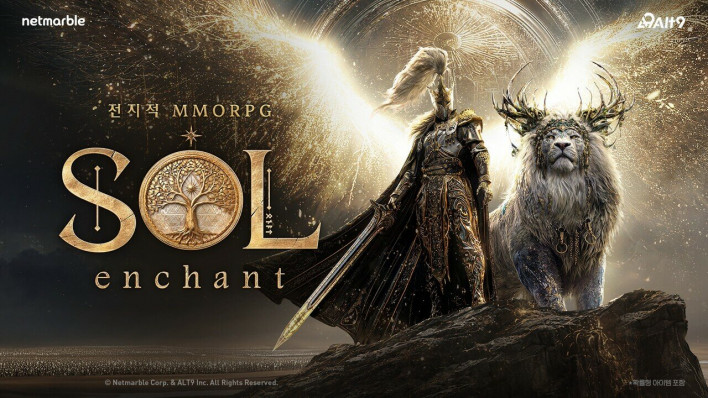
The new MMORPG 'SOL: enchant,' published by Netmarble and developed by Alt9—a startup founded by key developers from the 'Lineage M' team—has finally been unveiled. The game, which has drawn intense industry attention since its announcement, is targeting the first half of 2026 with its unique 'god' concept at the forefront.
The reason they built the world around the concept of 'gods' is clear: to provide a narrative justification for the radical 'Divine Power System,' which allows users to wield administrative authority. The game is set in the world of Caltheon, a hero who refused to be a vessel for the gods and instead usurped their power to save humanity. The 'War of Succession' left in his wake is the battlefield where users fight to claim that divine power.
Users are not mere players; they are true 'successors' who manifest divine power and redefine the laws of the battlefield. The world-building itself serves as a grand blueprint designed to elevate the user to the status of an absolute god.
'SOL: enchant': A World Encountered via Unreal Engine 5
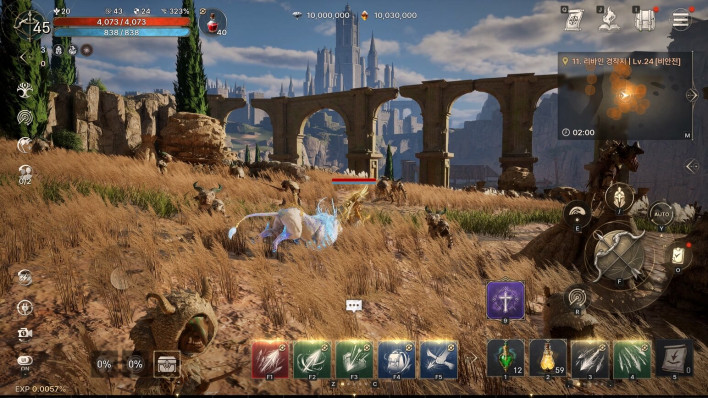
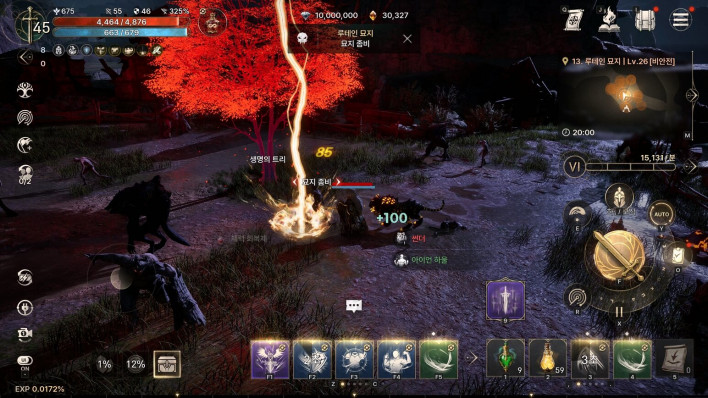
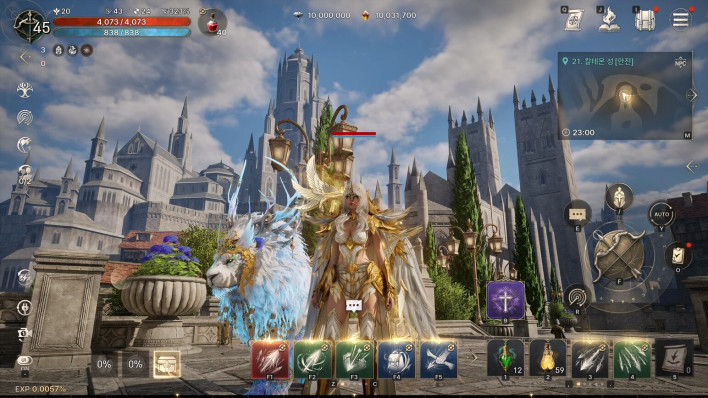
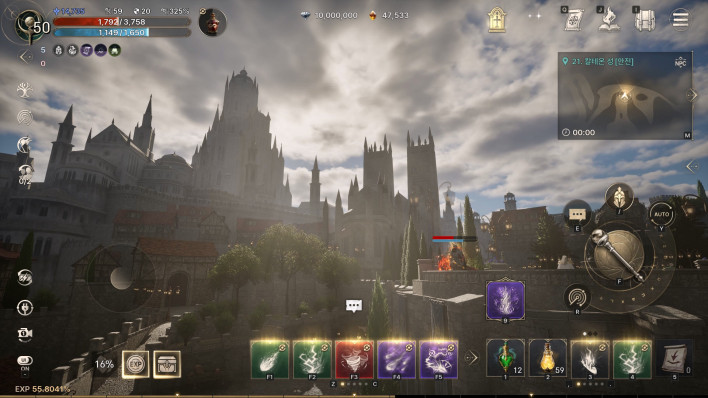
The moment I faced the screen, my first thought was that it looked fantastic. 'SOL: enchant' is built on Unreal Engine 5. Netmarble stated, "We have constructed a 'seamless world' that allows for uninterrupted exploration of a vast landscape. In particular, we provide a free-view camera to enhance visual presentation, helping users experience a level of immersion that cannot be felt from a fixed perspective."
There were three classes available in this demo build. The 'Knight,' an iron-clad guardian wielding a one-handed sword and shield, is a traditional tanker who protects allies with superior survivability and suppression skills. The 'Ranger,' a ranged warrior using a bow, disrupts enemies with agile movements while delivering consistent long-range firepower. The 'Mage,' who manipulates various elements, dominates the battlefield in an instant with situational elemental attacks and explosive area-of-effect damage.
During the demo, I tested the auto-hunting efficiency of all three classes. Interestingly, the melee 'Knight' appeared to have the fastest early-game progression. The reason lies in how the core currency, 'Nine,' is looted. In this game, players must physically move their characters to pick up 'Nine' dropped by defeated monsters.
I felt that efficiency varied by class here. The 'Knight,' which fights in close quarters with monsters, acquires loot immediately after a kill without needing to move. In contrast, the 'Ranger' and 'Mage,' which defeat enemies from a distance, must move to pick up loot and then return to their attack positions, creating a repetitive movement cycle. Of course, this dynamic could change if collection elements like 'Spirit Forms' or 'pets' are introduced to handle auto-looting. However, based on pure, unassisted combat without pets, it was clear that melee classes have a distinct advantage by avoiding wasted movement.
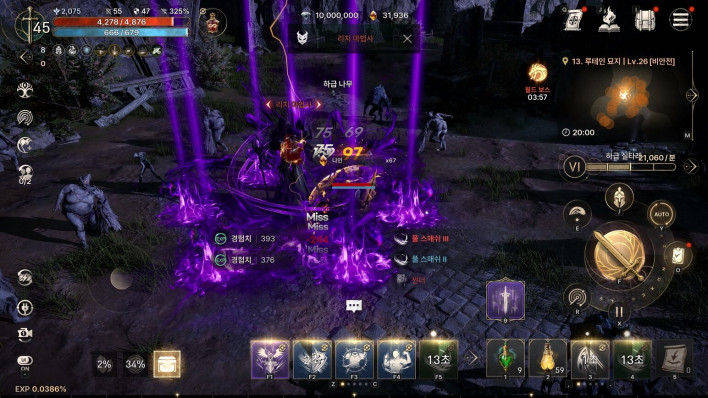
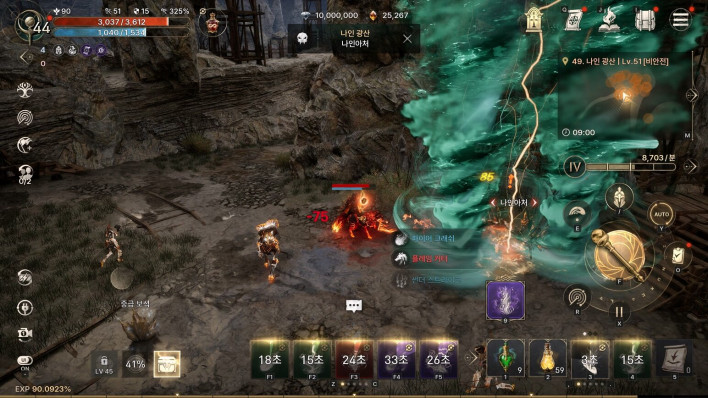
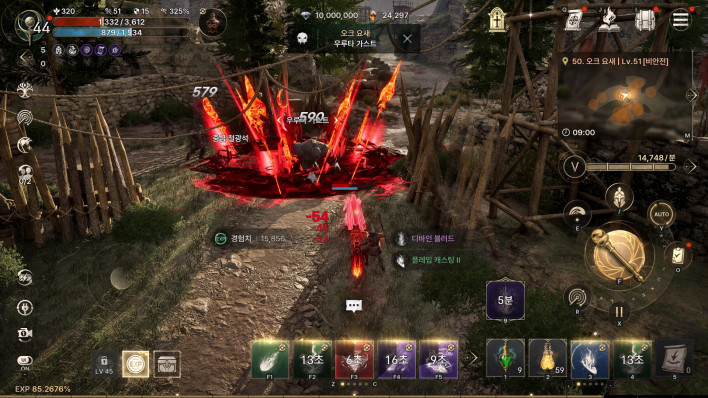
Inheriting Developer Authority: The Core 'Divine Power System'
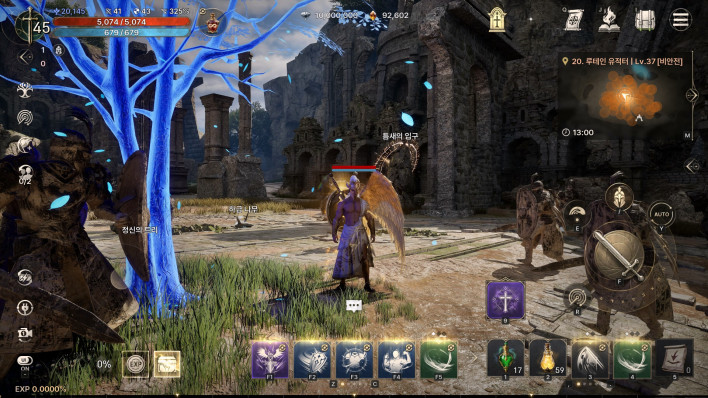
The most unique differentiator of 'SOL: enchant' is undoubtedly the 'Divine Power System.' It is a radical system that grants users the exclusive authority previously held only by game companies or developers. The scope of management and the depth of power are granted based on the 'divine rank' the user has achieved. The ranks are divided into three tiers: 'God,' 'High God,' and 'Absolute God.'
The most basic level, 'God,' allows users to exercise authority over an entire server. This includes powerful actions like dropping meteors or muting chat, as well as changing specific areas into safe zones or granting experience-boost buffs to characters. It even includes the power to create items or summon monsters directly. The higher 'Main God' level governs the entire world and holds the authority to set rules in the realm of 'balance design,' such as unlocking restricted content or adjusting reward values.
Finally, the 'Absolute God'—the highest rank, with only one per server—rules over all worlds. They hold decision-making power equivalent to a game director, ranging from choosing updates and business models to merging servers and resetting settings. It is a structure where the Absolute God holds such absolute control that if they reject an update, the game company cannot proceed with it.
I had the opportunity to use the Divine Power system during the demo. Looking at the various abilities listed, the one I coveted most was 'Item Creation.' Just imagine how good 'gear created with an operator's power' would be. Other abilities that caught my eye included summoning boss monsters to specific locations and casting server-wide buffs.
Using these divine powers requires 'Nine,' the in-game currency. The amount of 'Nine' required depends on the specific power being used. Buff/debuff abilities didn't cost much 'Nine,' while 'Item Creation' or 'Boss Monster Summoning' were more expensive. The use of these powers was accompanied by significant visual effects, which provided a strange sense of satisfaction.
Time Constraints Addressed via Offline Play and Squad Mode
Netmarble emphasized that "'Offline Play' and 'squad mode,' which are convenience systems designed with the lifestyles of busy modern people in mind, are core identities that are changing the growth paradigm of MMORPGs."
The 'Offline Play mode' is different from the simple idle offline modes seen in existing games. It is a hybrid system combined with a 'scheduling system' that automatically finds the most efficient path for the character to hunt and grow even while the game is turned off. Notably, this system is said to be available to everyone for 'free,' 24 hours a day, without interruption.
The simultaneously introduced 'squad mode' is a complex progression system that allows users to raise three characters at once on a single screen, without the need to waste PC resources by running multiple clients. It drastically reduces the fatigue of repetitive multi-character leveling, often called 'alt-farming.' Users can efficiently build their own team squads without system waste and enjoy the full benefits of multi-character progression.
While 'Offline Play' is a familiar concept, 'Squad Mode' felt very fresh. While hunting in the field, I pressed a button, and the other sub-characters in my account were instantly summoned to that spot to start hunting. Another impressive feature was that with a single touch of a button on the screen, the view and control authority switched instantly to the summoned character, allowing for seamless gameplay.
The biggest appeal of this system is the ability to raise multiple characters simultaneously on a single screen without the complex process of running multiple clients. In existing 'Lineage-like' genres, there is a constraint where leveling an alt character is completely halted while focusing on the main character, unless one runs multiple accounts. 'SOL: enchant' solves this problem through squad mode, opening the path to alt-leveling even for those who only manage one account.
Even Free-to-Play Users Can Get Core Items: The 'Nine Economic System'
The core paid items that can be purchased with diamonds in the game are three types: 'God Armor' worn by characters, 'Spirit Forms' that assist in combat, and 'Accessories' that boost stats. All these paid items are said to be 'tradable' between users. Items acquired by users through gacha or content can be converted into summon tickets through an 'extraction' process, which can then be registered on the exchange to be bought and sold freely.
The foundation supporting this economic freedom is the core in-game currency, 'Nine.' 'Nine' can be naturally acquired through all gameplay processes, such as hunting monsters, completing quests, and enhancing equipment. 'SOL: enchant' is designed so that players can purchase paid items like 'God Armor,' 'Spirit Pets,' and 'Accessories' directly with 'Nine' earned in-game. It is a structure where even free-to-play users can obtain core items if they play diligently.
Furthermore, through a 'Research' system using 'Nine,' anyone can acquire top-tier equipment, and to ensure liquidity, the currency itself can be exchanged for cash-like assets on the exchange via 'Nine Cores.'
An Omniscient MMORPG: Can It Be a New Milestone?
'SOL: enchant' does not stop at being a new MMORPG that provides mere visual satisfaction. It shows signs of having contemplated the limitations of the existing mobile MMORPG market and striving to create its own unique features, such as the 'Divine Power System' that transfers control of the server and world to the user, 'Offline Play' and 'Squad Mode' that reduce the fatigue of multi-clienting, and the 'Nine Economic System' that incorporates paid products into the in-game currency ecosystem.
The core value this game presents is clear: it does not trap users within power graphs and constraints unilaterally built by the developer. Instead, it elevates the user to an omniscient subject, expanding their choices in gameplay.
Of course, whether the radical attempt to let users control business models and updates can operate stably in a live service environment—without side effects like server-wide balance collapse or the monopoly of power by specific factions—remains to be verified. However, if the design experiments confirmed in this demo are refined through careful operation by the official launch, there is a possibility that it could set a new systemic milestone in the domestic MMORPG market.


Sort by:
Comments :0