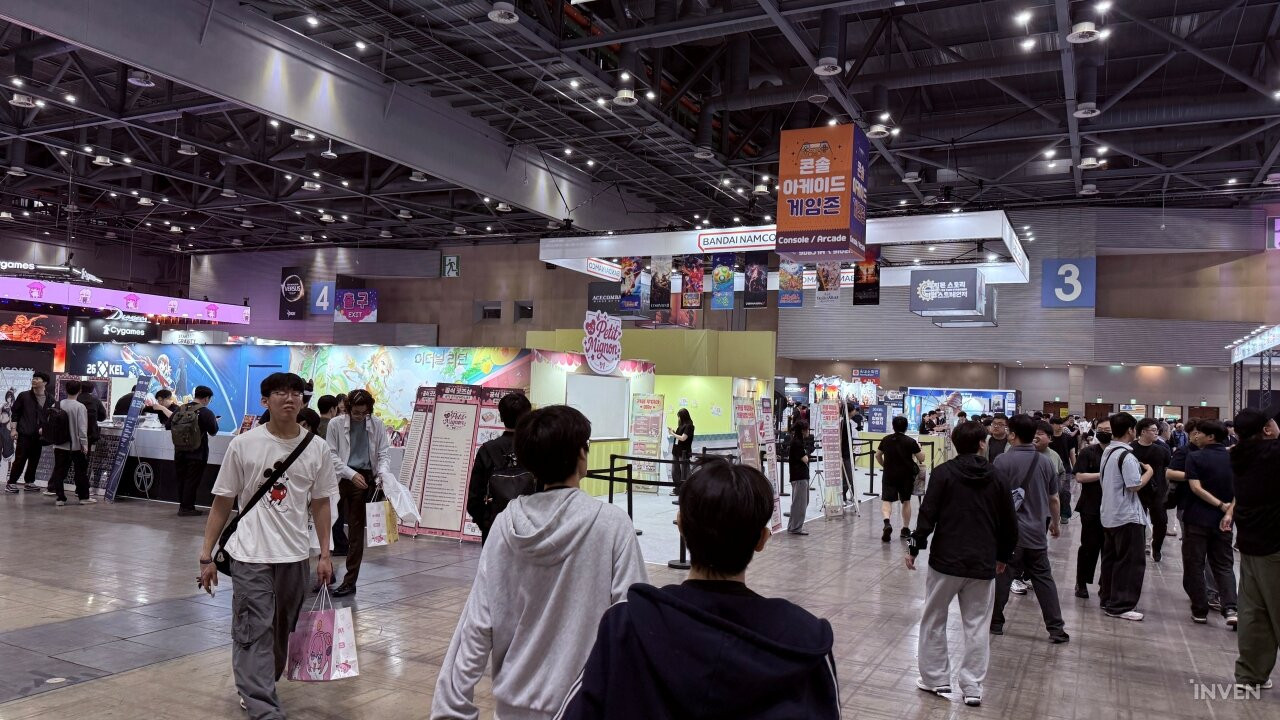
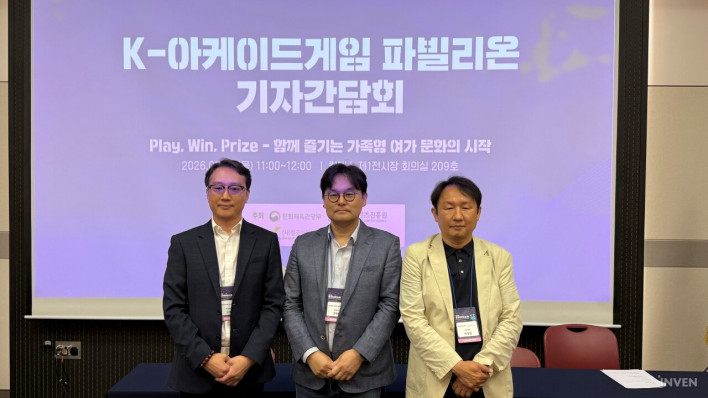
The Korea Arcade Game Industry Association (KAGIA) participated in PlayX4 2026, the largest game show in the Gyeonggi region, held at KINTEX in Ilsan from today (the 21st) through the 24th, with a 150-booth presence. To revitalize the K-arcade game industry, KAGIA operated a pavilion and a ticket-redemption arcade game zone alongside 11 member companies, while also outlining its future vision during a press conference.
"Moving Beyond the Stigma of "Sea Story" Toward Next-Generation Game Culture"
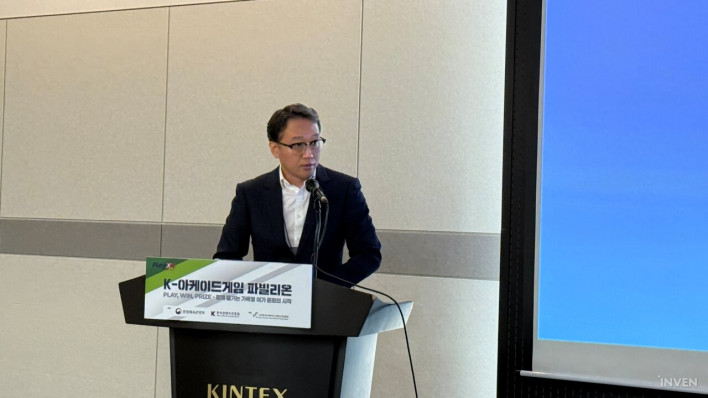
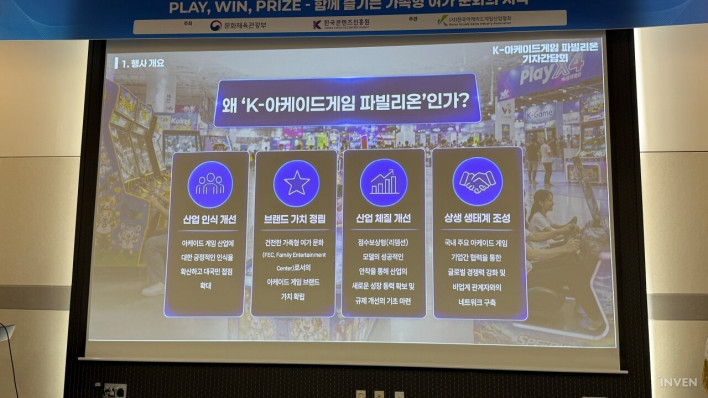
Founded in 2024, KAGIA is a non-profit organization dedicated to the development of the domestic arcade game industry, research into improving relevant laws and regulations, and building domestic and international cooperation systems. At this year's PlayX4, the association set up its exhibition hall based on four goals: improving industry perception, establishing brand value for arcade games, strengthening industry fundamentals, and creating a mutually beneficial ecosystem. Director Kim Jung-min added that through these efforts, the association hopes to shift the perception of K-arcade games—which has been stagnant since the 'Sea Story' scandal—and present a new benchmark for next-generation content and family-oriented game culture.
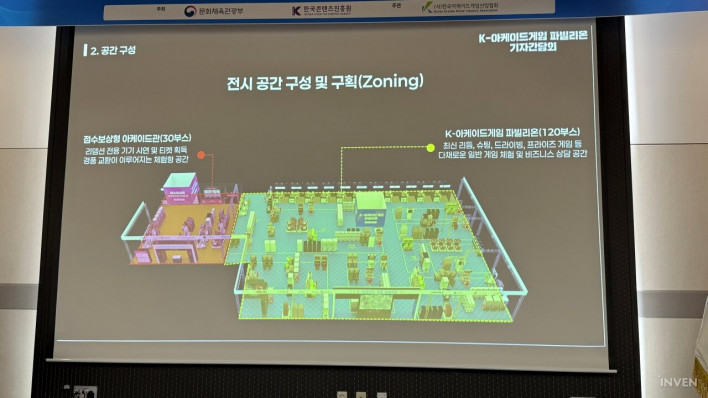
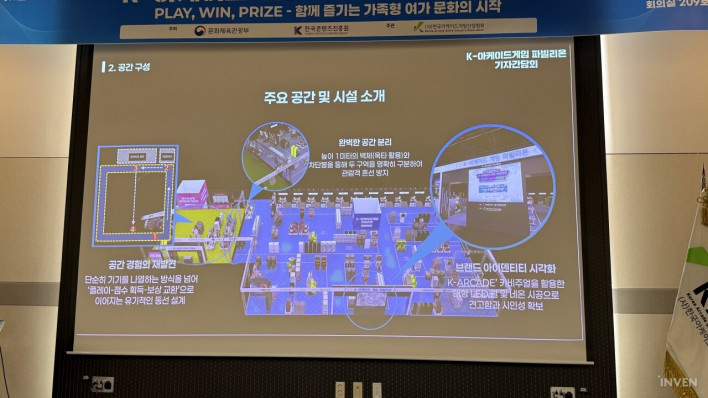
To this end, 120 booths were organized into the K-Arcade Game Pavilion, a space designed to introduce and allow visitors to experience a variety of existing arcade games. The pavilion features 85 flagship and new titles from 11 partner companies, along with various family-focused events. The remaining 30 booths comprise the ticket-redemption arcade zone, where visitors can demo 16 new machines from leading partners such as Andamiro, UNIANA, and Comuz, and experience the process of exchanging tickets for prizes.
The ticket-redemption arcade games introduced here are part of a regulatory sandbox project promoted by the Ministry of Culture, Sports and Tourism. These games allow users to collect points or tickets earned through gameplay and exchange them for desired prizes. They are differentiated from gambling games in that they provide fair rewards for scores earned through user effort and skill, rather than luck. As this is currently a regulatory sandbox pilot, the zone is partitioned off from the rest of the booth.
"K-Arcade Games: A Family Entertainment Industry and Beyond"
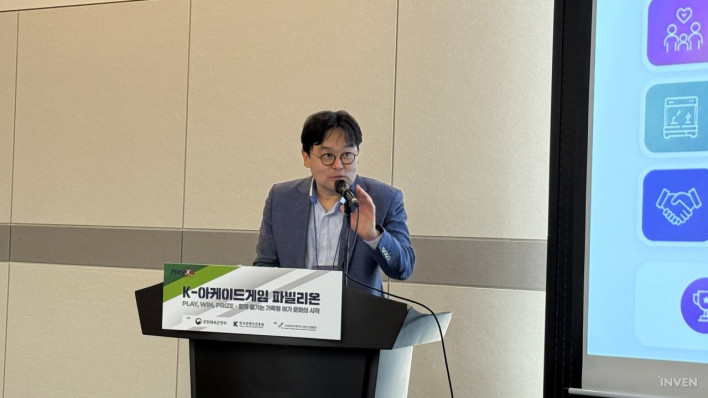
Policy Director Jo Hak-ryong identified the association's immediate goals as regulatory reform, enhancing the industry's image as a family entertainment sector, presenting a vision for next-generation business through ticket-redemption game pilot projects, and strengthening global competitiveness through cooperation with domestic and international organizations. He noted that the biggest obstacle remains the negative perception of arcade games that took hold after the 'Sea Story' incident. He pointed out that most subsequent legislation under the Game Industry Promotion Act has focused on regulating arcade games out of fear of a repeat, leading to an overall regulatory-heavy environment for the game industry.
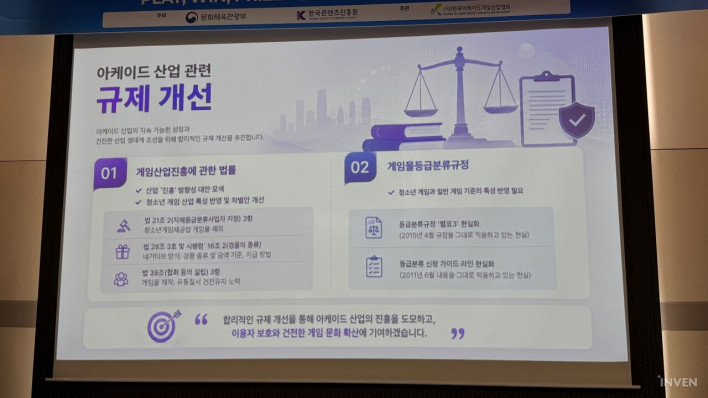
As a solution, he first cited deregulation. In particular, arcade games have been excluded from the self-rating system due to fears of a 'second Sea Story.' He also noted that there are many restrictions on the types of prizes allowed, mentioning that this issue is not limited to arcade games but has recently caused problems with events in online games as well.
In this regard, Director Jo explained that by referencing the Japanese model, there is a need to expand the types of prizes allowed to include food and a wider variety of products. Beyond these regulatory improvements, he emphasized the need to reform the current treatment of arcade games, where applications must be filed based on categories defined in 2011, while content rating system classifications are based on separate provisions established in 2015.
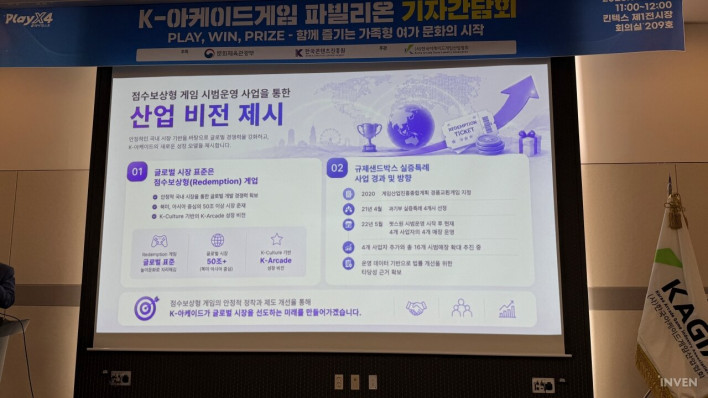
Following these calls for improvement, he explained the association's internal efforts. First, he identified the immediate goal as advancing toward a family entertainment industry. He added that since COVID-19, gamers with children have begun to take notice of arcade games that require visiting a physical space, and the association is currently working on an 'Arcade Game White Paper' to better align with global standards. He also pointed out that the current Game White Paper covers only 30% of the entire arcade game sector.
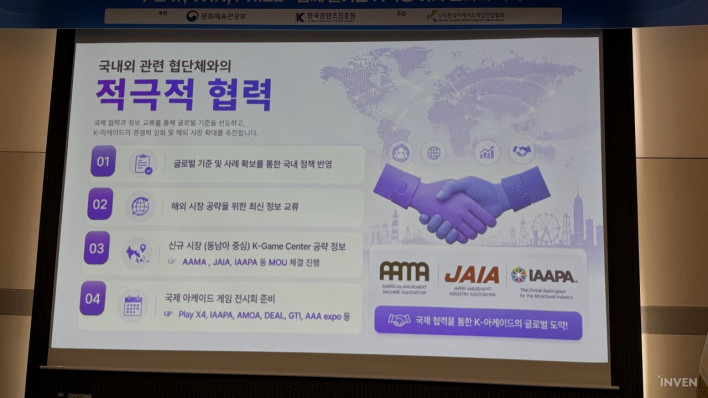
Additionally, he highlighted ticket-redemption games as a key topic in the global arcade market. Director Jo explained that a global market worth over ₩50 trillion has formed, and in relation to this, the association has been conducting a regulatory sandbox project since 2021 in cooperation with the Ministry of Culture, Sports and Tourism and the Ministry of Science and ICT. He added that they plan to increase the number of pilot sites, conduct further verification, present a clear business vision, and gradually ease regulations. He also stated that they are actively pursuing cooperation with domestic and international organizations, including signing MOUs to exchange the latest information for overseas market expansion.
Q&A
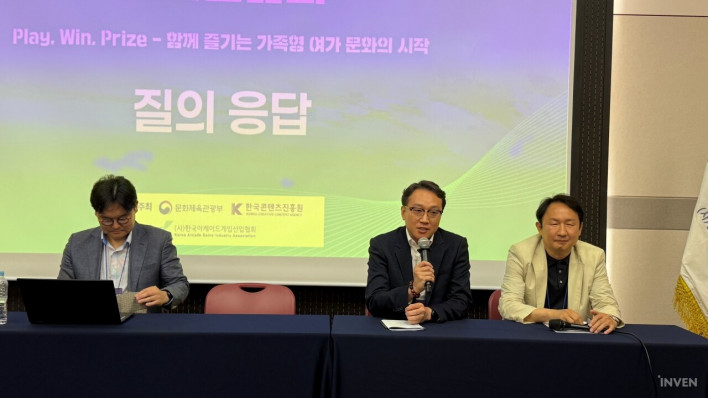
Q. With the recent increase in prize centers, various issues have arisen in the licensing industry due to the distribution of counterfeit or non-domestically sold products. What countermeasures are you planning to take?
Jo Hak-ryong = This is a point that is consistently raised in discussions with the Korea Creative Content Agency (KOCCA). There is a gap between the association and the companies providing the prizes. While it is realistically outside our direct control, we ultimately want to refer to the Japanese case. In Japan, regulations allow for the provision of prizes within a certain monetary value, and there is such variety that some goods are produced exclusively as prizes.
The reason I mentioned food items earlier is that because the range of available prizes is so limited, stores are increasing in number, but they cannot choose their lineups and end up selling whatever is available. I believe that by allowing a wider variety of items, such as food, we can buy time to resolve issues like copyright infringement. In the future, we also plan to discuss forming partnerships with domestic IP companies to build a prize business exclusive to arcades.
Q. Looking at the data, there is a discrepancy between the scale tracked by the association and what is mentioned in the Game White Paper. What is the reason for this?
Jo Hak-ryong = The main reason we released this data was to verify whether the arcade game industry was truly only worth about ₩200 billion, as stated in the Game White Paper.
The Game White Paper claims to be based on Statistics Korea data, likely using standard industrial classification codes for businesses. However, there is a blind spot. In the gaming sector, there are companies that use codes other than those for electronic game arcades. Some companies involved in arcade games use codes for operating software, other software development, or online game supply, but the Game White Paper seems to have only included electronic game arcades. For instance, it stated there were 515 arcade game centers as of 2024, but the actual number is surely higher. If you include claw machine arcades, the number must be much larger.
We referenced the 'youth game provision business' data from the Ministry of the Interior and Safety. This operates on a reporting system, and we collect data from each local government daily. It records everything from active businesses to those that have been canceled, totaling over 30k. As of the end of April, more than 6k were registered, and 120 were added just yesterday. We believe about 3200 of those are related to what we commonly call arcade games.
In short, the primary cause is that our statistical criteria differ from those of the Game White Paper. Furthermore, the generally negative perception of arcade games is a problem. There is a need to distinguish between youth game businesses and adult game businesses, and I feel there has been a lack of effort to find and analyze this data properly. The association needs to work harder to correct this.
As part of that effort, we are planning a full-scale survey of arcade game centers. We need to know the exact situation to respond properly.
Q. You mentioned the separation of youth arcade games and adult games as the most important issue. What measures are you preparing to achieve this? Also, what is the reaction from the political sphere?
Lee Woo-sung = We believe now is the time to act actively and strongly, and we have delivered our opinions to the Regulatory Reform Committee and the Ministry of Culture, Sports and Tourism.
Regarding this, we have not yet heard any clear commitment from the political sphere. We are working very hard on image improvement to encourage a more positive approach toward arcade games, and our participation in PlayX4 was for that very purpose.
Kim Jung-min = We are also continuously monitoring the legal operating status of game centers in countries like Japan and the U.S. to build a foundation for regulatory improvement.
Q. You pointed out issues with the Game White Paper earlier. Since it is an important reference for policy, what efforts are you making to ensure your data is reflected?
Jo Hak-ryong = Since our association was not included in the existing contract for producing the Game White Paper, we could not provide specific data. We believe the priority is to provide the data we have collected so far to the writers, including KOCCA, so that we can be involved starting this year. If that is not possible, we will publish our own 'Arcade White Paper.' We intend to prepare for both rather than choosing just one.
Q. Looking at the overview of ticket-redemption games, it seems necessary to have a means for arcades, brands, and the association to manage them. How are you preparing for this?
Jo Hak-ryong = First, institutionalization must come first. Looking at leading global companies, they issue cards that can be used at each branch. The association should approach this from the perspective of monitoring and managing to ensure that gambling-related businesses, which the government fears, do not emerge.
Regarding the current situation of ticket-redemption games, since it is a pilot project, usage is currently limited to within a single store. This is a part that needs to be developed through discussions with the Ministry of Culture, Sports and Tourism and the pilot project sites. It is also linked to the Game Rating and Administration Committee, so we must continue consultations with relevant ministries.
Q. You mentioned 'family entertainment' as a global standard, but looking at the domestic situation, there is a growing trend of prize-based arcades that can be set up in spaces as small as 15-20 square meters and operated like unmanned stores. Given this, the path to family entertainment seems distant. What is the basic framework for an arcade space envisioned by the association?
Lee Woo-sung = There are Japanese models and special models derived from Southeast Asia, but currently, we are referencing the American model. The basic model of family entertainment the association is looking at is the American one. Based on that, we aim to move toward a 'Korean-style family entertainment' model. The pilot project is set for spaces of 500 square meters or more; anything smaller does not meet the criteria for various reasons, including concerns about gambling.
Kim Jung-min = We believe it should be a space that accommodates a variety of arcade games, like the American model. However, due to the nature of our country, there are limitations on where such spaces can be opened. In the U.S., it is common to provide food and beverages in large spaces, and it is true that prize-based arcades are popular here due to these constraints. However, we believe it is not desirable for the industry to move only toward prize games, and that ultimately, these should be established as entertainment spaces where families can come and enjoy themselves beyond just being game centers.
Q. The topic of food as prizes came up earlier. Unlike PC bangs, haven't arcade game centers historically not sold food in the same space? I understand that food sales account for a large portion of revenue for PC bangs. Are there restrictions in current law regarding this, and how do you plan to respond.
Kim Jung-min = Under the law regarding youth game provision businesses, you can operate other businesses at the same time when opening. However, they must be partitioned. In other words, you have to split the space, using one side for the youth game business and the other for the food business. You cannot provide food and beverages in the same space as in the U.S. We believe this part also needs to be amended to realize family-style entertainment.
Lee Woo-sung = In addition to operating the game center, selling food and beverages requires registering as a complex distribution business, which involves health and sanitation laws. Beyond that, as mentioned, the areas must be partitioned. The biggest problem is the requirement to separate the zones.

Sort by:
Comments :0