
Admiral Yi Sun-sin is a hero who saved his nation and a legendary admiral for the ages. His strategic brilliance and courage are recognized not just in Korea, but across the globe. In the Battle of Hansan Island, he famously used a feigned retreat to lure the enemy into a kill zone, where he concentrated his firepower to annihilate them. This active tactical maneuver—difficult to execute even on land—showcases his command and tactical perfection at sea. Achieving this while suffering from a chronic lack of supplies makes his legacy all the more revered by both his contemporaries and future generations.
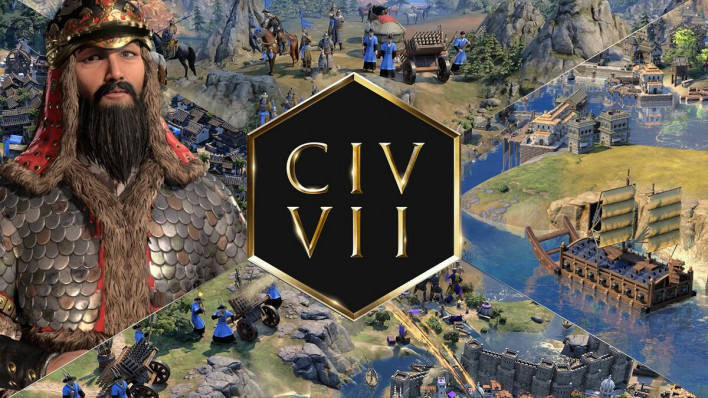
His tactics are defined by thorough preparation and aggressive, decisive strikes. Yet, the war itself was a defensive struggle against an invading Japanese force, fought under overwhelming odds. The tactical prowess of Yi Sun-sin, newly added via the 'Brush and Sword' Collection in Civilization VII, goes beyond this defensive image. As the only leader capable of utilizing a 'Commander' (the naval equivalent of a General) in the Ancient Era, he becomes a king of the seas who can single-handedly dictate the flow of battle regardless of which civilization he leads. In short, his abilities are geared more toward proactive naval dominance than mere defense.
It is worth noting that this power is no accident. Civ VII has seen cases where unintended flaws became character traits, such as the 'Nuclear Gandhi' meme. But Yi Sun-sin is different. His unique leader ability, 'Three-Province Naval Commander,' seems designed from the ground up for the singular goal of 'naval dominance,' and that design has resulted in the formidable early-game naval combat capabilities we see today.
A Different Path from Blackbeard: Range Over Quantity
Like Edward Teach (Blackbeard), Yi Sun-sin possesses abilities specialized for naval combat, but his approach is entirely different.
Teach specializes in a 'quantity-over-quality' approach, gaining gold from naval combat and increasing his fleet size through unit capture. This allows for a playstyle focused on earning gold through battle and using it to build infrastructure. The core of this strategy is the need for enemy naval units to capture, which makes it difficult to leverage in the Ancient Era, where naval units are less prevalent. Furthermore, while increased naval maintenance costs are manageable in the late game, they are a significant burden in the gold-starved Ancient Era.
Yi Sun-sin is a leader who secures naval supremacy through strategic range rather than sheer numbers. By researching 'Discipline' in the Civic tree, he can immediately acquire a Commander at a Harbor. Since Discipline is one of the first things you can learn, and he is the only leader who can operate a Commander in the Ancient Era, he gains a distinct range advantage. Leveling up a Commander twice to learn 'Recon' increases attack range by 1. Against a player attacking from beyond the reach of melee tiles, other civilizations' navies have no choice but to endure a rain of arrows and sink to the bottom.
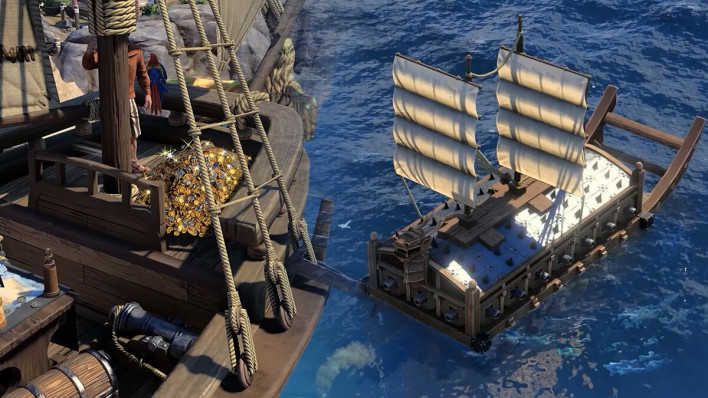
Furthermore, combat power gained from defeating units at sea is converted into Science, and EXP translates into gold per era. This allows him to leverage military strength into a scientific lead. Constructing Science buildings also grants Commander EXP, creating a virtuous cycle where gold, science, and aggressive Commander-led play reinforce one another.
However, acquiring a Commander via Discipline is only possible in the Ancient Era. If you start in the Age of Discovery or the Modern Era, you won't have a high-level Commander early on, meaning you cannot secure immediate naval dominance. Even so, by leveling up Commanders through Science buildings and focusing on naval units, you can still maintain a scientific advantage.
Silla-Goryeo? Yi Sun-sin Belongs to Joseon
While Toyotomi Hideyoshi is primarily associated with Sengoku Japan, Yi Sun-sin is registered as a leader for all Korean civilizations: Silla, Goryeo, and Joseon. However, not all of these civilizations' traits align perfectly with his strengths.
Silla is trade- and diplomacy-focused, while Goryeo is culture- and diplomacy-oriented. Neither offers unique naval units or traditional combinations that fully exploit Yi Sun-sin's potential. Goryeo can, however, be used to shore up a weak land game by combining the Hwacha—a Castle Siege unit that deals splash damage—with the Tobang, which grants bonuses for occupying special districts. If you are playing an aggressive, war-focused game, Goryeo's influence is helpful for managing war weariness.
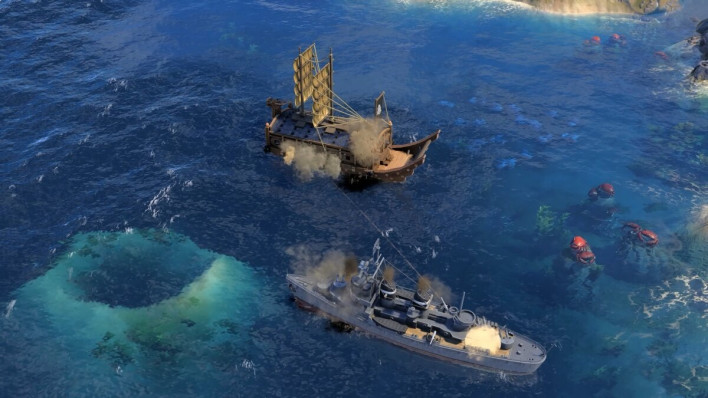
Joseon, on the other hand, is a perfect match for Yi Sun-sin. The unique Turtle Ship unit gains combat strength in coastal waters, allowing you to move along the coastline and devastate enemy cities. Its low movement speed is not a major issue, as it can be attached to a Commander to bypass such limitations.
The only catch lies in Joseon's growth mechanics rather than its unique units. Its production is driven by the combination of the unique 'Hyanggyo' building and the 'Seowon' library, which increases the capital's population when built in villages. The 'Traditional Yangbeopmi' tradition also boosts capital growth by increasing food in specialized villages. As a civilization that hits its stride in the late game, building a solid foundation from the Ancient Era is key. Alternatively, playing as Joseon from the start and using the 'Trials of Time' tradition to manage happiness and specialists is also a viable strategy.
In truth, Yi Sun-sin's base stats are so strong that if you are on a map with many coastal settlements, playing through all three eras as Silla-Goryeo-Joseon, or just Joseon, is perfectly feasible.
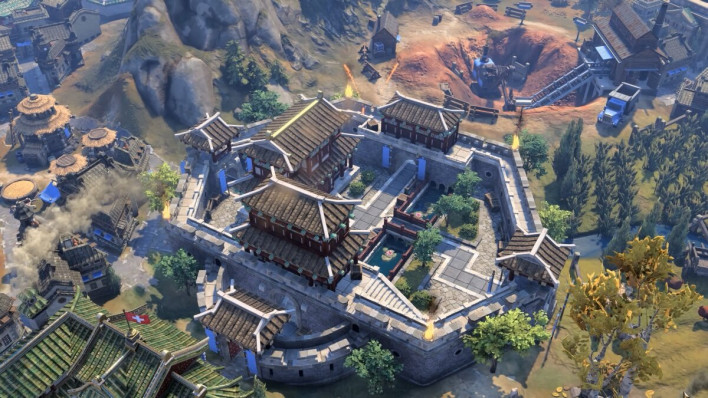
Optimal Combinations: Carthage and Chola
The civilizations that utilize Yi Sun-sin most efficiently are Carthage and Chola. Carthage's 'Quinquereme' tradition increases the range of heavy naval units by 1. Combined with Yi Sun-sin's naval traits, which allow for early Commander bonuses, he can attack from a range of 3 while others are stuck at 1. Given the generally weak naval capabilities of the Ancient Era, a fleet with a range of 3 is essentially a bomber squadron.
Chola is a trade-focused civilization, so not all its options align perfectly with Yi Sun-sin. However, it excels in combat-focused play by utilizing the 'Kalam' (which can attack twice per turn) and the high-mobility 'Othuru' Commander, who can gather and lead those Kalams.
While it is common to transition to Joseon or England in the Modern Era, achieving a military victory by the Age of Discovery is quite possible if you start with Carthage or Chola. The downside of such an aggressive tech tree is a lack of late-game momentum in domestic affairs, so balancing this with a more economy-focused civilization can be beneficial.
This demonstrates that Civ VII is a game where the fun lies in discovering how to utilize and combine leaders with various civilizations to either patch up weaknesses or amplify strengths.

Performance Fit for a God of War: Yi Sun-sin
Toyotomi Hideyoshi, included in the same 'Brush and Sword' Collection, and his Sengoku Japan civilization are entirely focused on war rather than domestic management. His unique leader ability—doubling both damage dealt and damage received—and the mechanic of gaining Culture/Science/Influence through combat at the cost of happiness, all point to this.
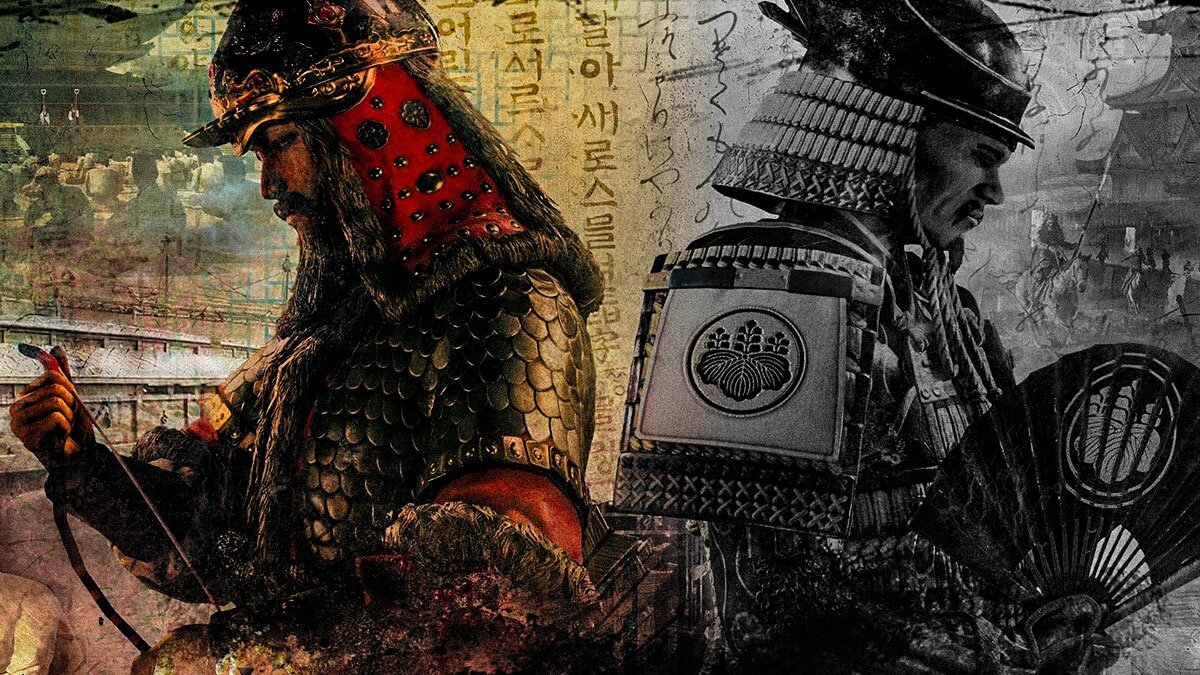
If Yi Sun-sin, depicted as his rival in the key art, had underperformed compared to Hideyoshi, it would have been a disappointment. But unlike Hideyoshi, who excels with ground forces, Yi Sun-sin's focus on naval play to drive civilization growth and combat superiority provides a different, equally satisfying combat experience.
Some might point out that he is perhaps too powerful in terms of balance, but... he is Yi Sun-sin. Isn't that just as it should be.

Sort by:
Comments :0