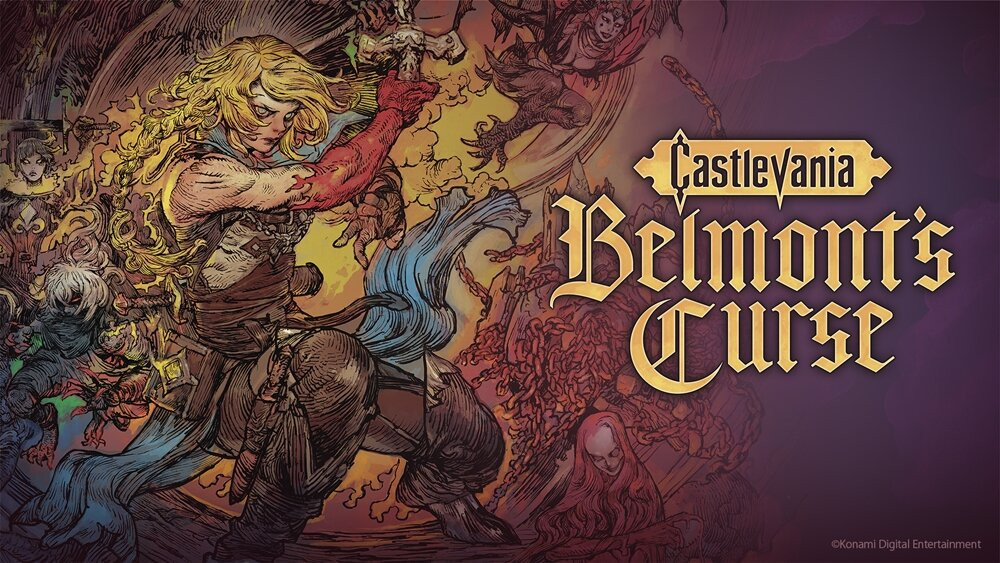
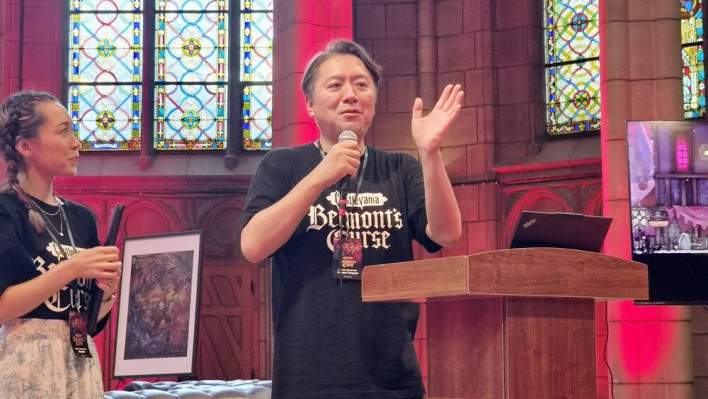
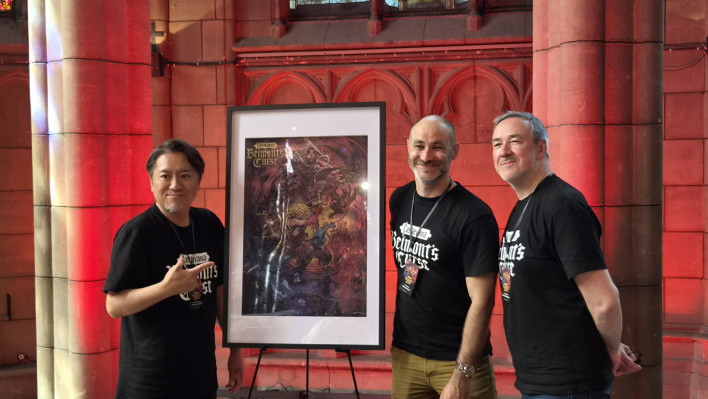
In June 2026, a showcase for the new title 'Castlevania: Curse of the Belmonts' from KONAMI and Evil Empire was held at the 'Joan of Arc Chapel' near Paris, France. The event, which hosted global influencers and media from across Asia, was attended by KONAMI producer Tsutomu Taniguchi, as well as key developers from the French collaborative studio Evil Empire, including Emmanuel Nouai and Bérenger Dupré.
The event was concise. Producer Tsutomu Taniguchi first provided a general introduction to the game, followed by several hours of hands-on playtime. After all sessions concluded, I had the opportunity to speak personally with Producer Taniguchi and the development team from Evil Empire.
The 'Castlevania' series has traditionally revolved around Dracula and the Belmont clan. This title expands the world-building to include historical Paris and real-life figures like Joan of Arc. How did you decide which elements to reinterpret and which to maintain as the series' core identity?
Emmanuel Nouai = Our top priority was always to respect the world and lore of 'Castlevania'. These are the foundational elements of the series, and we worked closely with KONAMI to maintain consistency throughout the work.
The relationships between characters, the lineage, the chronology, and the events connecting the story had to remain consistent with established lore. That was a principle we had to uphold from start to finish.
On the other hand, setting the stage in the historical city of Paris and weaving real-life figures and locations like Joan of Arc into the story was an intentional choice. We believed these elements would enhance the realism and persuasiveness of the narrative while making the scale of the work more grand and enriching Rose's journey.
Furthermore, this approach served to reinforce the mythic atmosphere inherent to Castlevania. While Joan of Arc was a real historical figure, she has become a legendary symbol over time. We felt this naturally resonated with the Belmont clan, who have also become legendary figures across generations.
Ultimately, history and the fiction of Castlevania complement each other. History lends the world realism and credibility, while the Castlevania universe expands it into a more mythic and epic tale. We wanted these two elements to strengthen one another.
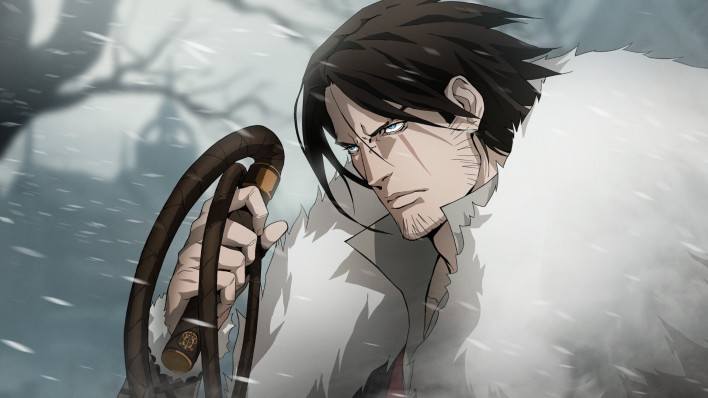
Many users were first introduced to 'Castlevania' through the Netflix animation. What was the most difficult part of satisfying the expectations of both animation fans and long-time game fans?
Tsutomu Taniguchi: Everyone has a different idea of what 'feels like Castlevania,' and expectations for a new title vary widely. This was one of the things we agonized over the most throughout the development process.
'Our top priority was to create the ultimate experience that would satisfy long-time fans while remaining accessible and fun for players encountering a Castlevania game for the first time,' they explained. 'Whenever we faced difficult decisions during development, we always returned to this principle to discuss and determine our direction with the team.'
As a result, I believe this title, as a successor in the lineage of 'Castlevania III: Dracula's Curse' and 'Curse of Darkness', offers nostalgic elements for long-time fans while introducing familiar characters for animation fans.
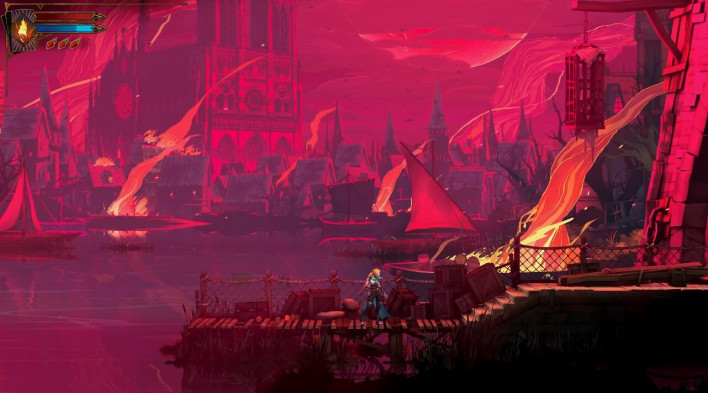
Additionally, the series' iconic 'whip' not only returns as a traditional weapon but also serves as a tool for free movement across the map. The whip has become a core system that tightly links combat and exploration. Long-time fans will feel nostalgia just by using it, and the dynamic gameplay feel—where attacks and movement flow naturally—will be enjoyable for all players, including newcomers.
This is the first authentic new 'Castlevania' title in a long time. What did the development team consider the 'Castlevania-ness' that must not be missed or must be maintained?
Tsutomu Taniguchi: There are many elements we consider important. In terms of setting, it's the story and characters; in terms of gameplay, it's the whip-based action, exploration, and growth systems. Above all, as this is the first new canonical entry in a long time, we prioritized returning to the series' roots: '2D exploration-based action'.
Also, as a successor to 'Dracula's Curse' and 'Curse of Darkness', we structured the story to maintain consistency with existing lore while fully bringing out the charm of the characters. As a result, it has become a title where existing fans can feel both nostalgia and new discoveries, while the controls and gameplay feel have been carefully polished so that new users accustomed to modern 2D exploration-based action games can enjoy it naturally.
Emmanuel Nouai = There are elements in 'Castlevania' that are absolutely indispensable. The rich world-building, characters, gothic atmosphere, exploration, and the joy of discovering new things are all core to the series' identity. However, we did not view these as constraints. Instead, we embraced them as the greatest source of inspiration for creating new ideas.
It was a great honor to have the opportunity to develop a title with such a long history and deep world, and we are deeply grateful to KONAMI for entrusting us with the role of continuing that legacy. Our goal was not simply to recreate past works. It was to respect the legacy of the series while creating a new experience that long-time fans would recognize as 'Castlevania'.
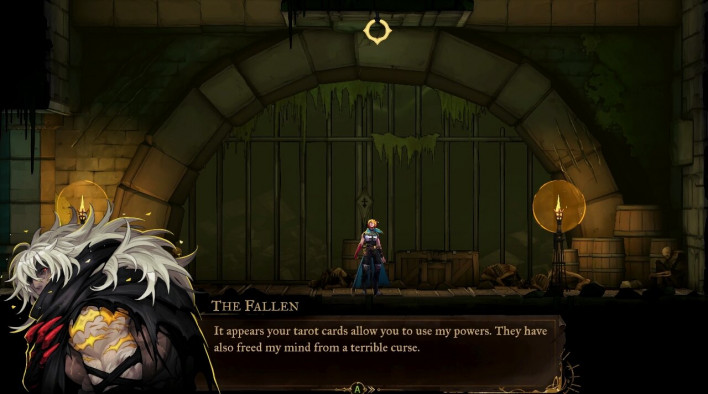
The Metroidvania Genre has evolved significantly over a long time. There must be many references bound to gamers' minds; how did you try to harmonize the expectations of the player base with the traditional game design of 'Castlevania'?
Tsutomu Taniguchi: 'Curse of the Belmonts' is the first new console Castlevania title in a very long time. Therefore, respecting the charm of the series was the most important thing. However, both the hardware and the environment surrounding the IP have changed significantly. The standards players expect from games have also changed greatly from the past.
So, rather than just recreating past experiences, we wanted to make a game that feels fresh even when played today. The whip is the best example of that philosophy. While it appears as the traditional weapon representing the series, it is also used as a core system for moving freely through stages.
Through this, the whip tightly connects combat and exploration, providing nostalgia for existing fans and a new gameplay feel for all players where attack and movement are linked as one. Honestly, there were many times during development when I couldn't sleep because I was worrying about it. Still, I am very happy to be able to present this work to you all.

Emmanuel Nouai = One of the most difficult things during the development process was how to meet the expectations of long-time fans.
Since we are also fans of Castlevania, we were always conscious of how players would receive our interpretation of the series. That sense of responsibility was a great motivator, but it also constantly presented us with the challenge of finding the right balance between respecting the series and trying new things.
Whenever we had concerns about the direction, we listened to the opinions of the Evil Empire members who have loved the series for a long time and exchanged honest opinions with the KONAMI development team to keep confirming that our choices were in the right direction.
Ultimately, I hope players feel both our respect for the series and our desire to deliver new surprises through this work. If we were able to convey that balance well, I believe we have achieved the goal we set out to reach with 'Castlevania: Curse of the Belmonts'.

Joan of Arc seems to play an important role in this work. When introducing such a widely known historical figure into the game, what parts did you decide to maintain and what parts did you decide to reinterpret?
Emmanuel Nouai = How to depict a historical figure, especially someone everyone knows like Joan of Arc, is always a difficult task.
When we proposed this idea to KONAMI, we received a very positive response. The entire development team agreed that the character of Joan of Arc could further elevate the tension and drama of the story. Of course, why she meets Rose and how their relationship develops are important spoilers, so I cannot talk about them in detail right now.
To express our approach in this work in one word, it was to combine the historical image of Joan of Arc as a 'noble warrior burned at the stake' with the intense presence and charisma unique to Castlevania.
To do this, we first thoroughly researched the real historical Joan of Arc. We deeply analyzed what made her such a person, what trials she went through, and why she remains a symbolic figure to this day. This process became the foundation for constructing her personality, dialogue, and principles of action.
On top of that, we added the imagination of 'how would Joan of Arc have changed if she had experienced the events occurring in the Castlevania world?' While maintaining her symbolism as a historical figure, we sought to reinterpret her as a stronger and more attractive existence suitable for the Castlevania universe.
We structured the story around what choices she made in the past, how that influenced her in the present, and whether she would grow upon meeting Rose or re-examine her own beliefs.

The enemies and bosses seem to reflect not only traditional monsters but also French historical and cultural elements. What was the most important principle you considered in enemy design?
Emmanuel Nouai = Every starting point was the story and background. This work is set in Paris 23 years after 'Dracula's Curse'. Therefore, the decision of which enemies to include was based on that era and place.
Also, all enemies had to be naturally acceptable from the perspective of the protagonist, Rose. Whether they were beings derived from French legend or traditional monsters from the Castlevania series, it was important that they were beings she was encountering for the first time.
In this process, we also worked closely with KONAMI. We believed that bringing back popular characters representing the series should not be a choice made simply to stimulate nostalgia. Every character had to have a reason to appear in the story and play a meaningful role in Rose's growth.
Of course, we didn't want to miss the joy of introducing unexpected characters that long-time fans would be happy to see. However, we believed that this, too, should be done within the limits of not harming the chronology and flow of the story.

The 'Castlevania' series has also been much loved for its music. Compared to previous works, how did you intend to express the musical identity unique to 'Curse of the Belmonts'?
Emmanuel Nouai = Music is one of the most important elements representing Castlevania.
The series has masterpieces that are still loved, performed, and newly arranged by countless fans to this day. From the beginning of development, we thought we shouldn't try to compete with that music. That is because they have already become the identity of Castlevania and, furthermore, a part of game culture. Instead, the goal was to create a musical personality unique to this work.
The music of 'Curse of the Belmonts' focused above all on expressing Rose's journey. We wanted to convey through music not only the emotions, conflicts, and resolve she feels, but also the mystery, tension, and loneliness she encounters during her travels.
Also, we added modern sounds and restrained electronic music elements centered on a classical orchestra to match the places she visits and the events. Through this, we sought to realize both a gothic atmosphere and a cinematic scale.
Every track was designed not as simple background music, but as an element that builds the space and story together. While respecting the musical legacy of Castlevania, we hope it becomes a soundtrack with the unique personality of this work.
There will be gamers who experience Castlevania for the first time through 'Curse of the Belmonts'. What do you hope they enjoy most impressively?
Tsutomu Taniguchi: Above all, I hope they enjoy the action of using the whip.
The whip is an iconic weapon that has represented the series for a long time. In this work, it appears as a traditional weapon while also being used as a means to move freely through stages.
Through this, the whip has become a core system that connects combat and exploration into one. I believe it will deliver nostalgia to old fans and a dynamic gameplay feel where attack and movement flow naturally to players experiencing it for the first time.
And if I may add one more thing, I hope you also feel interested in the Castlevania universe itself through this adventure with Rose. If you continue to support the series in the future because of this work, I would be happier than anything as a developer.

Sort by:
Comments :0