The release of 'The Relic: First Guardian' (hereinafter 'The Relic'), the debut title from Project Cloud Games, is just a month away.
First revealed in a 2020 trailer, 'The Relic' immediately captured the attention of gamers worldwide. It showcased visuals and action that were hard to believe came from a small team of just nine developers. This wasn't just limited to the trailer; subsequent demos at various game shows proved that the footage was no illusion. A tangible, highly anticipated title from a small studio—that is how the excitement for 'The Relic' continued to grow.
After about six years of development, 'The Relic' is finally set to launch on July 31. The team is currently in the final stages of polishing the game ahead of its official release. What will the final product look like? I had the good fortune to get hands-on time with the latest build from Project Cloud Games. After spending about six hours playing, dissecting, and experiencing 'The Relic' firsthand, I’m ready to share my impressions.
Korean Folklore Added to a Familiar Concept
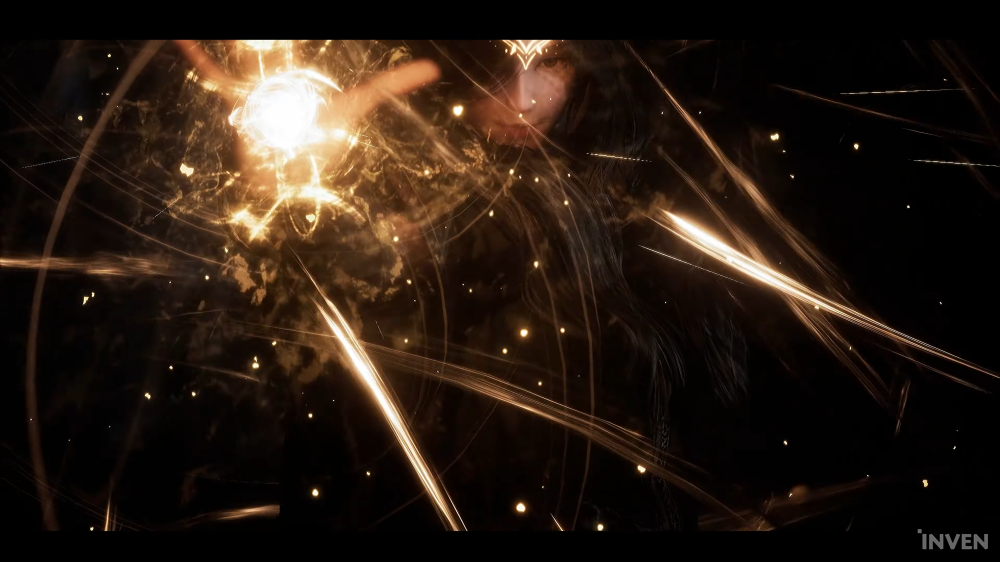
The world of 'The Relic' feels familiar to anyone accustomed to the dark fantasy genre. The 'Relic' that brought prosperity to the world is destroyed for unknown reasons, giving birth to the 'Void.' Those affected by the Void transform into monsters called 'Brutals,' and civilization begins to collapse. The situation worsens as even those carrying fragments of the destroyed Relic succumb to the Brutals.
Against this backdrop, a mysterious woman awakens the protagonist—the First Guardian (hereinafter 'Guardian')—and the story begins in earnest. Upon waking, the Guardian follows the woman's guidance to rebuild the Relic, reclaim its fragments, and set out on a journey to save the world.
The broad framework of the world and the starting point of the story resemble dark fantasy works, particularly those in the Soulslike genre. While this may feel familiar, the details within tell a different story. This is especially true for the event-based Quests. Although the setting is a Western-style dark fantasy world, the narratives within are based on Korean folktales and legends.
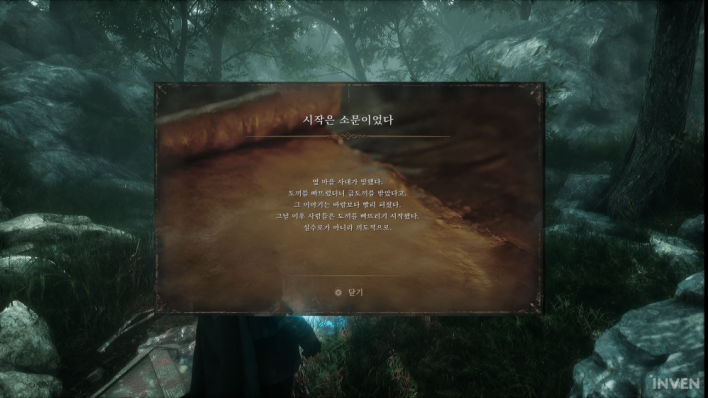
Prominent examples include the 'Golden Axe, Silver Axe' and 'The Fairy and the Woodcutter' legends. The 'Golden Axe, Silver Axe' Quest follows the structure of the original tale almost exactly. Rumors spread about a woodcutter who accidentally dropped his axe into a pond, answered the mountain spirit honestly, and became rich by receiving gold and silver axes. Other woodcutters try to imitate him, but out of greed, they end up suffering losses.
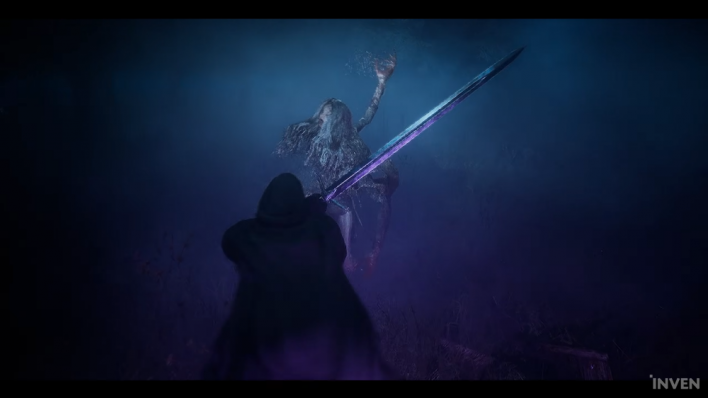
On the other hand, the reinterpretation of 'The Fairy and the Woodcutter' to fit the dark fantasy atmosphere is impressive. While not a real fairy, a woman praised by villagers for her beauty is consumed by madness and turns into a horrific monster. The narrative progression and the Boss fight direction show a high level of polish, confirming that the developers' interpretation goes beyond simple parody.
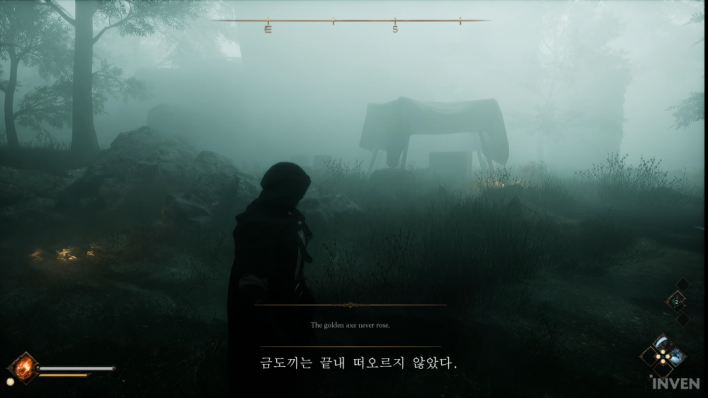
What was interesting was the way these stories are delivered. Generally, storytelling methods fall into two categories. One is where a NPC explains the events directly—for example, telling the player that woodcutters tried to get rich quick by throwing axes into the pond and failed, or that the woman called a fairy went mad and became a monster.
Conversely, the Soulslike genre relies primarily on indirect narration. Players are left to infer the story themselves through notes left in the environment or Item descriptions obtained after defeating a Boss. 'The Relic' sits somewhere in between.
Taking 'Golden Axe, Silver Axe' as an example, records left along the path to the pond allow players to piece the story together. Adding a presentation style that feels like a grandfather telling an old tale creates a unique atmosphere. It effectively blends Korean folklore into the familiar framework of dark fantasy, which has become a standard formula. This variation is likely to feel like a fresh appeal to both domestic and international gamers.
No Levels, But Stats Through Equipment
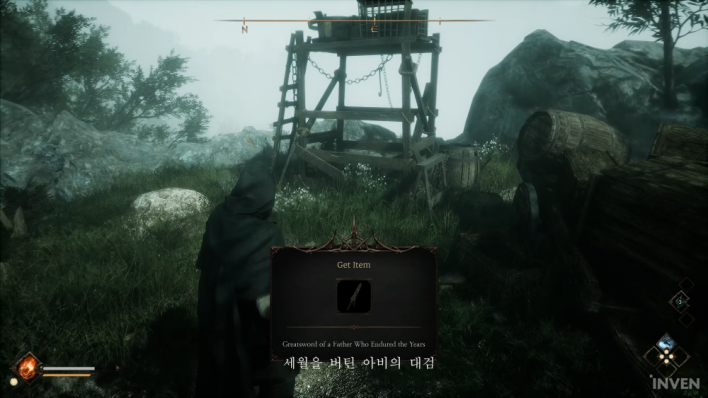
There is no level system in 'The Relic,' and naturally, no character Stats. However, this doesn't mean all Weapons and stats are fixed from start to finish. In short, while there are no levels or stats, the structure allows players to enhance their abilities and build their own loadouts through Equipment and artifacts.
Equipment is divided into three categories: Weapons, Armor, and artifacts. There are five Weapon families—Sword and Shield, dagger (dual wield), Sword, two-handed Weapon, and Staff—each subdivided into various types. This structure seems designed to highlight the unique characteristics of each Weapon.
CEO Park In-hyuk explained, "Usually, early-game Weapons are discarded later, but in 'The Relic,' there is no problem using early Weapons until the end. Each Weapon simply has different stats; there is no concept of one being inherently better or worse than another."
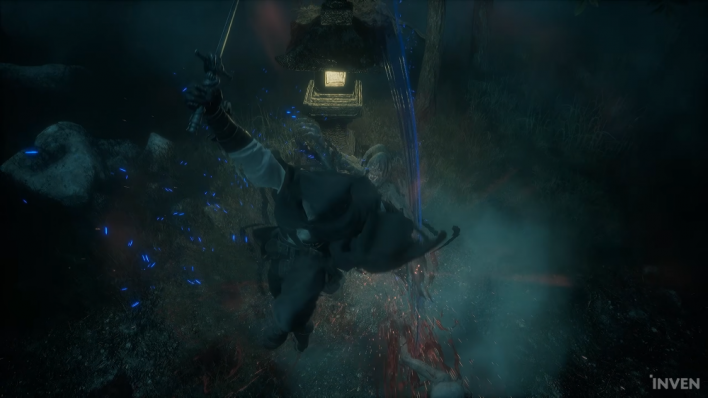
Indeed, there was no clear hierarchy among the Weapons in 'The Relic.' During the demo, I obtained two types of daggers: one with lower Attack but a poison effect, and another focused on Attack and Crit chance. Each Weapon had a distinct identity.
The same applies to other Weapon families. Even within the two-handed Weapon category, one might consume more stamina while guarding but less while dodging, while another has the exact opposite trait. This forces players to choose based on their playstyle, even within the same Weapon family—whether they prefer to fight centered on guarding or dodging.
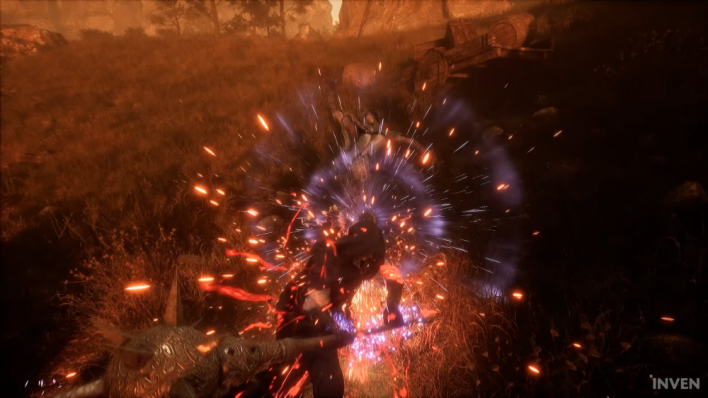
Armor follows a similar direction. Some are specialized for survival, such as +80 HP or 10% damage reduction, while others focus on aggressive play, such as Skill cooldown reduction or reduced stamina consumption for dodging. During the demo, I found myself swapping Equipment depending on the enemy or situation.
If Weapons and Armor determine the basic playstyle, artifacts act as accessories that support combat. They are categorized into three types: rewards for defeating main Bosses, rewards for mini-Bosses, and artifacts found through exploration.
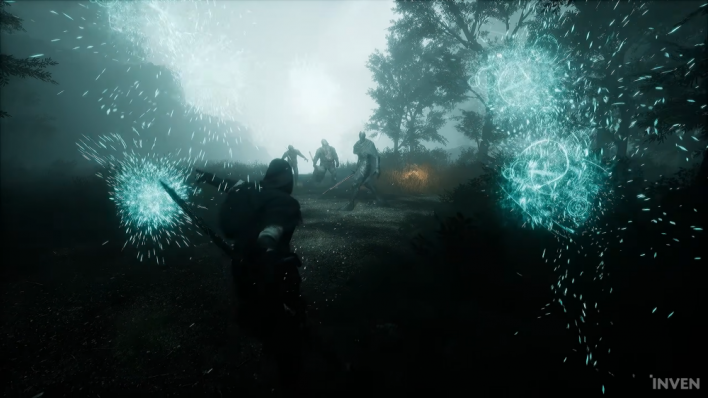
Artifacts obtained from main Bosses are particularly powerful. With useful options like increased max HP, HP recovery upon enemy Elimination, and HP leech on attack, they are essentially mandatory. However, since I could only obtain one or two such Rare artifacts during the demo, the remaining Slots had to be filled with other items.
Artifacts from mini-Bosses and exploration were by no means inferior. For instance, an artifact that increases two-handed Weapon Attack by 20% felt essential if you main that weapon type. There is a wide variety, ranging from those that increase HP or stamina to those that boost resistance to elements like fire or curses. Naturally, players will adjust their settings based on their playstyle and the Boss they are facing.
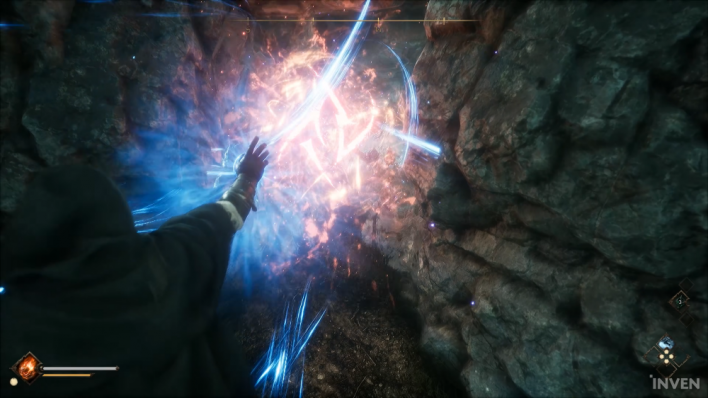
The aforementioned fairy is a prime example. Getting hit by her attacks builds up a curse gauge, and reaching the maximum results in instant death. The problem is that the gauge accumulates very quickly during combo attacks, making her feel like a wall when you first approach her. However, once I equipped an artifact that provided curse resistance or increased elemental resistance, the difficulty of the Clear became noticeably lower.
Slot expansion is also a growth element. By defeating hidden Bosses throughout the game, you can obtain items to unlock artifact Slots, which can be taken to the woman who awakened the Guardian to open additional slots. This naturally encourages players to explore the map. While there is no level system, the process of finding hidden Weapons and Slot-unlocking items serves as a form of progression. It is different from traditional stat-based growth, but it provides a sense of accomplishment unique to 'The Relic.'
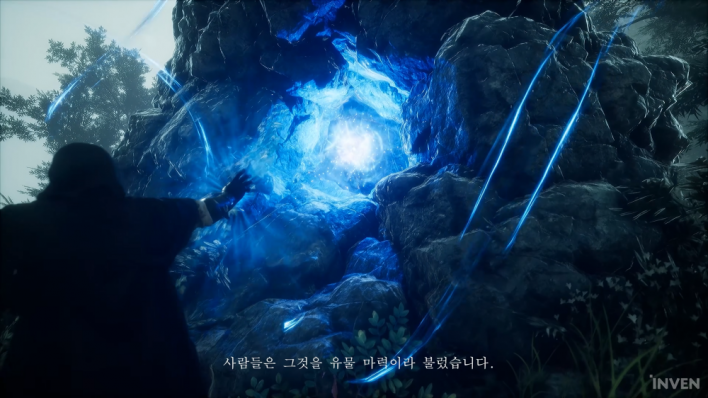
Not a Soulslike, but a Hardcore Action Adventure
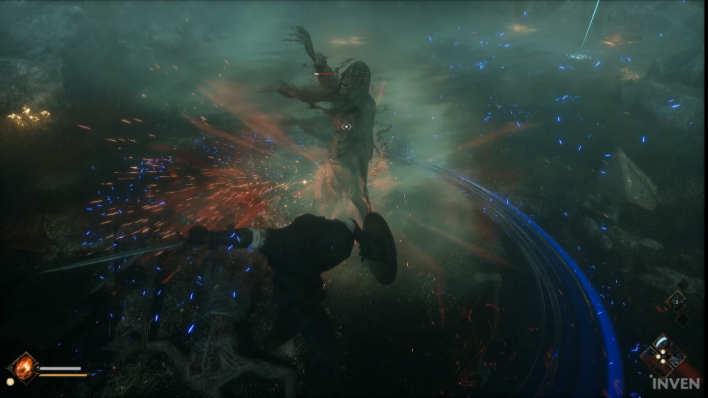
If I had one misconception about 'The Relic,' it was regarding its genre. Until now, it has often been referred to as a 'K-Soulslike.' Given its focus on hardcore action, that seemed like the most fitting description. However, after spending significant time with the game, it’s clear that 'The Relic' is quite different from traditional Soulslike titles in many ways.
The first thing that stands out is the core game system. Generally, a Soulslike implies that every action consumes stamina, combat involves precise exchanges, and resting at a checkpoint (like a bonfire) causes enemies to respawn. It also includes a growth system where currency acts as EXP. 'The Relic' does not fully conform to these standards. Resting at a save point does not respawn enemies, and since there are no levels or Stats, there is no Soul-like growth system. While gold exists, its role is not significantly different from other action RPGs.


While the combat system is somewhat similar, it is not identical. Although dodging consumes stamina, attacks do not use any stamina at all. This means players can play more aggressively rather than calculating stamina for every swing.
The same applies to artifact Magic and Skills. They do not require mana or resources, only a Cooldown. Skills are powerful but have long animations and cannot be canceled mid-use. While there is a constraint that they must be used during openings, their performance makes this trade-off acceptable.
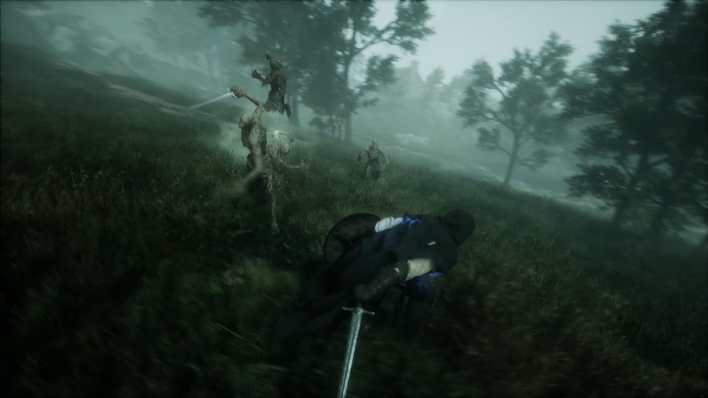
Based on these systems, combat in 'The Relic' feels quite fast-paced. It maintains the tension characteristic of a Soulslike, but the overall tempo is much faster. You can Parry by guarding at the right moment and incapacitate enemies by filling an invisible Groggy Gauge.

Conversely, some attacks cannot be guarded and must be dodged. Compared to stylish Action games, it requires more careful and precise responses, but compared to a Soulslike, it encourages a much more aggressive playstyle. It sits somewhere in between.
This was evident in the flow of combat. While typical Soulslikes favor a 'roll and hit' approach, 'The Relic' is more about pressing the advantage when an opportunity arises. You whittle down HP with artifact Magic and Skills, create an opening with a Parry, and then unleash a flurry of attacks. As a result, the rapid back-and-forth between offense and defense creates a significant sense of speed.

However, one thing to keep in mind is that 'The Relic' is not easy. You can quickly deplete a Boss' HP early on by chaining Magic and Skills, but you can also die in just a few hits. I died several times when I recklessly approached Bosses with combo patterns. Even so, it didn't feel unfairly difficult. It is challenging, but it didn't leave an impression of being malicious. In short, Boss fights in 'The Relic' offer a balance of tension and speed.
This is the biggest reason I want to call 'The Relic' a hardcore action adventure rather than a Soulslike.

A Distinct Identity

Over the course of my six-hour session, I was able to play through about half of the first chapter. When I finished, the first thing that came to mind was that this game definitely has a unique identity. Aside from its somewhat standard dark fantasy setting, I found 'The Relic's' own distinct personality in every aspect, from combat and progression to exploration.
The stable optimization and rich Open world design were also impressive. I intentionally played on a GeForce RTX 2070; while not the highest settings, I experienced no discomfort. This is a welcome change, considering many recent games suffer from optimization issues and high system requirements.
The Open world design is similar. Sub-quests and growth elements placed throughout the map naturally stimulate the desire to explore. It is not just a large space; there are traces of an effort to create a Open world where there is a reason to wander.
With all preparations complete, 'The Relic' will officially launch on July 31. Over the past six years, countless indie games have appeared and disappeared. Many never made it to full release, and some were canceled despite high expectations.
Nevertheless, Project Cloud Games has quietly continued development. The 'The Relic' I experienced is a game that seeks to forge its own path rather than follow others. The answer to how this six-year challenge will turn out will be revealed on July 31.

Sort by:
Comments :0