The soulslike genre has never had more entries — and never had a harder time separating the extraordinary from the merely competent. In 2025 alone, players worked through Elden Ring: Nightreign, The First Berserker: Khazan, Lies of P: Overture, and a half-dozen smaller challengers. Amid that crowded field, one title cut through cleanly. According to critics at New Game Network, Wuchang: Fallen Feathers delivered some of the best combat and build variety the genre had seen in years — high praise from a publication that does not hand out scores lightly. That critical consensus, backed by over one million copies sold by March 2026, makes Wuchang worth examining not just as a game, but as a template. What exactly did developer Leenzee get right — and what does it reveal about where the soulslike genre needs to go?
The Formula Has Always Been There. Executing It Hasn't.
Since FromSoftware codified the genre with Demon's Souls in 2009 and refined it through Dark Souls, Bloodborne, and Elden Ring, the blueprint has been widely understood: punishing but fair combat, interconnected world design, meaningful progression, and a setting thick enough to carry the difficulty. The problem is that understanding a formula and executing it are very different things.
Most soulslike challengers fail at the second step. They absorb the surface aesthetics — the bonfires, the stamina bars, the cryptic lore — without internalizing why those elements work. The result is games that feel like homework rather than adventure. What Wuchang: Fallen Feathers demonstrates is that the formula only becomes a gold standard when every pillar earns its place.
Pillar One: Combat That Rewards Learning, Not Just Memorization
The most common failure point for soulslike clones is combat that confuses difficulty with cheapness. Unpredictable hitboxes, camera lock-on failures, and enemies that punish aggression without rewarding it produce frustration rather than satisfaction.
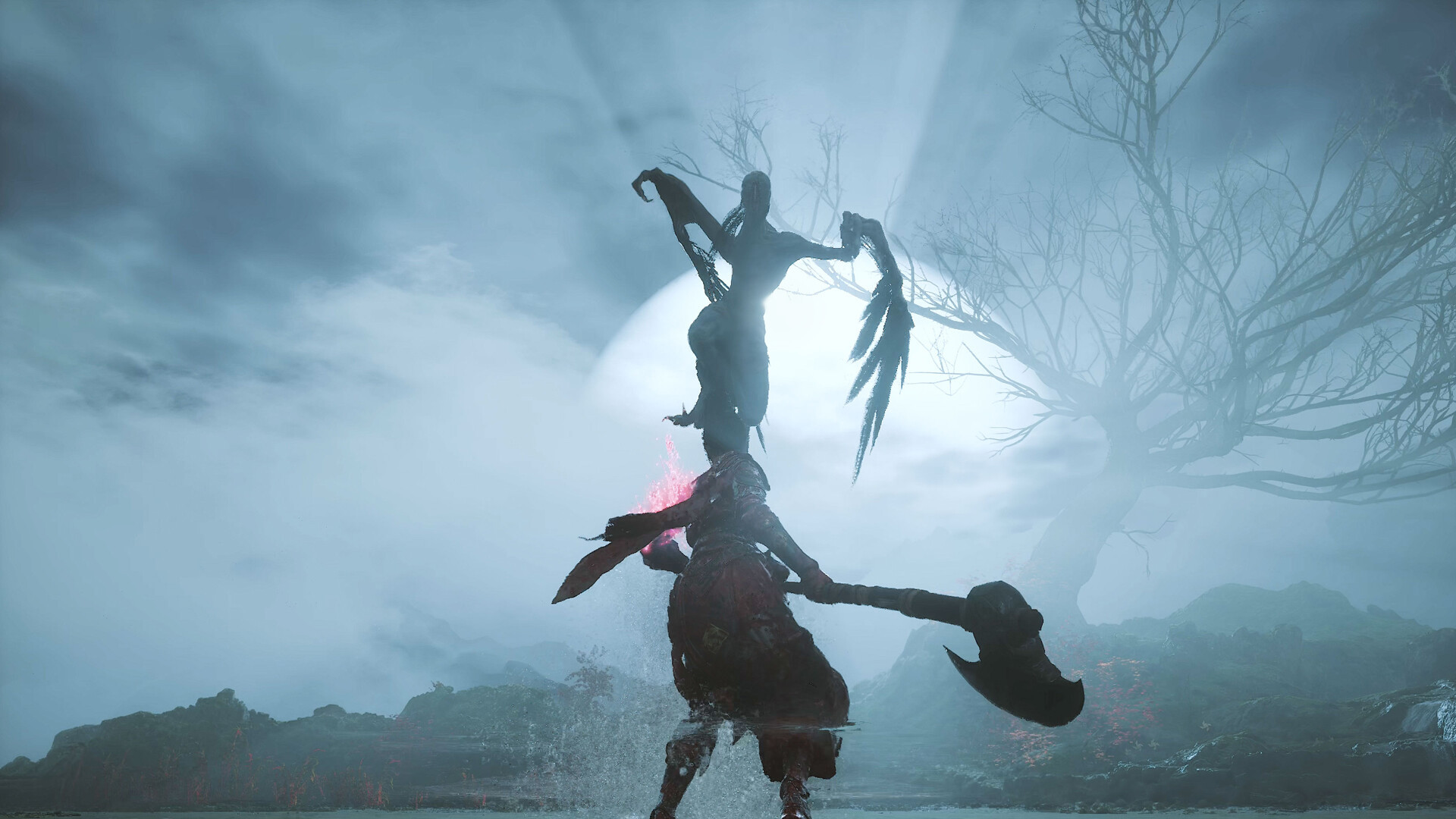
Wuchang sidesteps this by building its combat around the Skybound Might system — a resource charged through aggressive, well-timed attacks that then unlocks powerful spells and abilities. The mechanic rewards pushing forward rather than turtling, creating an aggressive rhythm that feels distinctly different from the defensive parry loops of Lies of P. The Madness system compounds this further. Dying or killing human enemies causes protagonist Bai Wuchang to lose her sanity, raising the stakes of every fight: at high Madness, you deal and receive more damage, and if you die in that state, your Inner Demon manifests and hunts you from the spot of your death. It starts as a punishment and becomes, with the right build, a deliberate strategy. That evolution — from obstacle to tool — is exactly the kind of mechanical depth that separates memorable soulslikes from forgettable ones.
Pillar Two: World Design That Respects the Player's Curiosity
Elden Ring did not simply make a good open world — it made an open world where exploration felt like the game's central reward. Every corner held something that justified the detour. That standard is now the baseline expectation for ambitious soulslikes.
Wuchang: Fallen Feathers does not try to replicate Elden Ring's scale. Instead, it leans into the classic Dark Souls model: a tightly interconnected world that constantly folds back on itself, where opening a door and finding yourself back at the game's starting area is a genuine moment of architectural awe. Multiple reviewers cited the world design as one of Wuchang's strongest attributes, calling it one of the most intricately interconnected worlds since the original Dark Souls.
This matters because world design is where the soulslike conversation often goes quiet. It is far easier to critique combat mechanics than to articulate why a world feels alive and worth exploring. Wuchang earns that quality through deliberate design rather than sheer size — a lesson the genre still needs to internalize. The growing wave of Asian-developed soulslikes, including Korean titles like V.E.D.A. — which made its Gamescom debut with praise for its solid fundamentals and high-quality graphics — suggests developers across the region are paying close attention to exactly these principles.
Pillar Three: Build Variety That Makes Replays Feel Different
A soulslike without genuine build variety is a soulslike you play once. The game needs to give players enough tools that two different playthroughs can feel architecturally different — not just cosmetically.
Wuchang handles this through a skill tree system where each level-up grants a point spent not on a flat stat increase but on a branching network of abilities, weapon techniques, and passive modifiers. Weapon types — longswords, dual blades, axes, spears — each have their own skill ecosystems, meaning switching weapons is a mechanical pivot rather than a cosmetic choice. Combine that with the Madness system's synergy with specific builds, and the game supports genuinely different playstyles across multiple runs.
The First Berserker: Khazan took the opposite approach in 2025 — boss-rush design with tight, focused combat but limited build breadth. Both approaches can work, but Wuchang demonstrates that build depth is what gives a soulslike long-term community legs, keeping players theorycrafting and sharing discoveries for months after launch.
Pillar Four: Cultural Identity as a Gameplay Foundation
This is where Wuchang may matter most for the genre's future. For years, most soulslike challengers set their games in vaguely European dark-fantasy settings, borrowing FromSoftware's aesthetic vocabulary without adding their own. Black Myth: Wukong broke that pattern in 2024 by rooting its entire mechanical and visual identity in Chinese mythology — and its 25 million+ copies sold demonstrated the appetite for that kind of authenticity.
Wuchang deepens that argument. Set in an alternate-history Ming Dynasty China ravaged by the supernatural Feathering plague, the game's visual design, enemy typology, and lore are inseparable from its setting. The Feathering is not just a narrative device — it is the mechanical backbone of the Madness system. Culture and gameplay are fused rather than layered, and that integration is felt in every fight. For developers currently building soulslikes, this is perhaps the most transferable lesson: a distinctive cultural identity does not just differentiate a game aesthetically. When properly integrated, it generates mechanics that could not exist anywhere else.
What Wuchang Still Gets Wrong
No fair account of Wuchang's achievements can ignore its rougher edges. The story is genuinely difficult to follow — a constellation of shifting NPCs, opaque motivations, and historical context that rewards players who bring knowledge of Chinese history and frustrates those who do not. Several NPC questlines are so poorly signposted that critical story moments can be permanently missed without any indication.
The early game balance also allows players to assemble powerful builds that trivialize mid-game encounters, which dilutes the tension the Madness system is designed to generate. These are not fatal flaws, but they are genuine gaps between Wuchang and the tightest FromSoftware releases.
The New Gold Standard — For Now
What Wuchang: Fallen Feathers establishes is a proof of concept: a non-FromSoftware soulslike can compete on the genre's most important axes — combat depth, world design, build variety — while bringing something genuinely new to the table. The 1 million copies sold figure and broadly positive critical reception confirm that players recognize and reward that achievement.
The genre is more crowded and more competitive than it has ever been. That pressure is producing better games. As 2026 develops, with titles across Korean, Chinese, and Western studios continuing to challenge FromSoftware's dominance, Wuchang: Fallen Feathers represents the clearest recent example of what the bar looks like — and how high someone has to aim to clear it.
-
 Guest Reporter
Sort by:
Comments :0