In the gaming industry, esports tournaments are usually seen as money-spending events. They are viewed as marketing expenses to retain existing players or raise game awareness by renting venues and offering prize pools. This is even more true for MMORPGs, where differences in spending and time investment widen as characters grow stronger. There is a strong perception that the gap between established veteran players and late-joining newcomers is too wide to form a fair competitive sport.
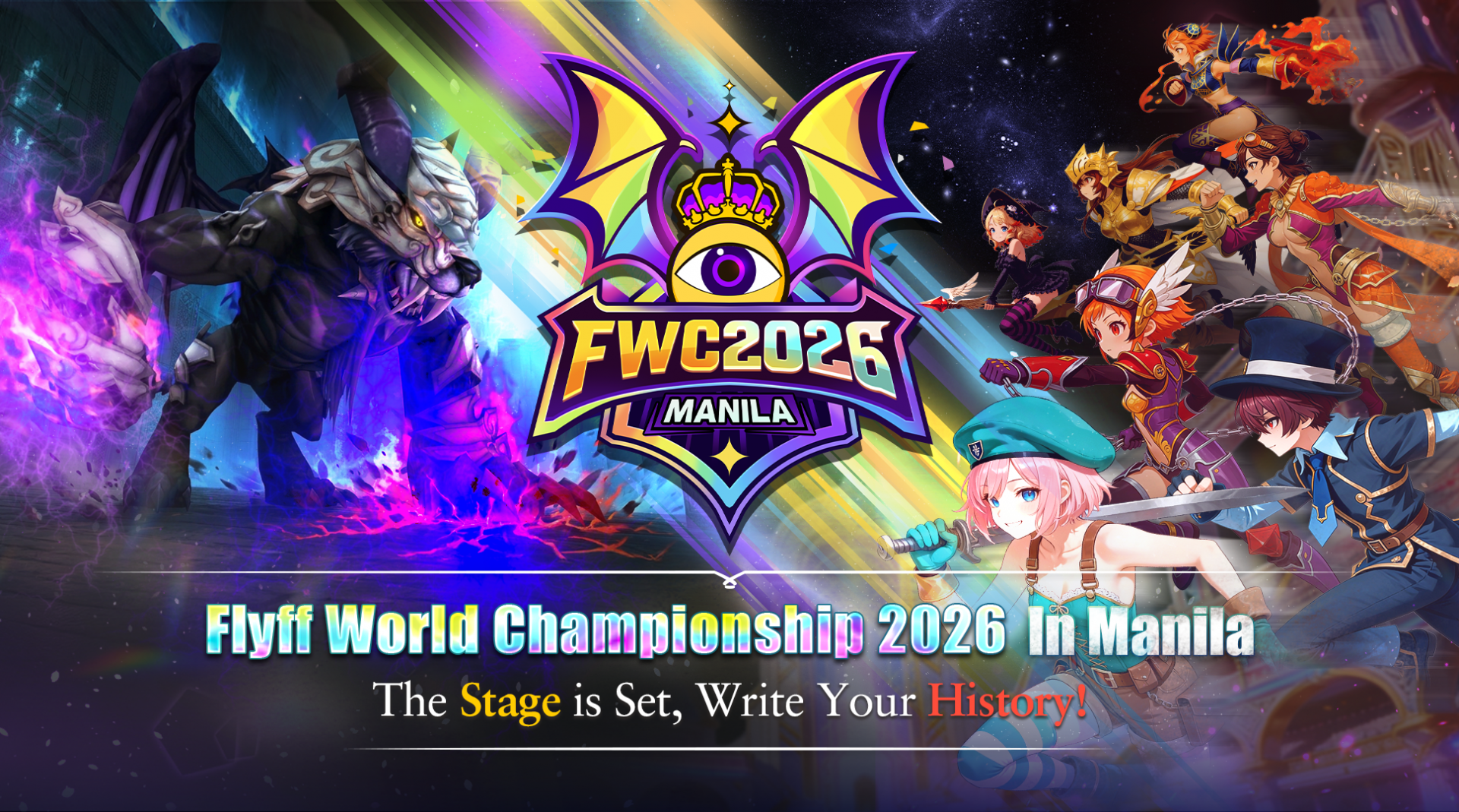
Yet, one game has defied both of these common beliefs, running an annual world championship for four consecutive years. That game is Flyff Universe, a web browser-based HTML5 MMORPG developed by Gala Lab and published by Wemade Connect. On October 24, the Grand Finals of the Flyff Universe World Championship (FWC) 2026 will kick off at the SM Mall of Asia Music Hall in Manila, Philippines. What stands out is clear: rather than being a one-off event that ends in a single day of final matches, FWC has established itself as a massive six-month progression season and a core revenue driver for the publisher.
Not just a stage for pro players... The magic of the 'boosting server' that quadrupled revenue
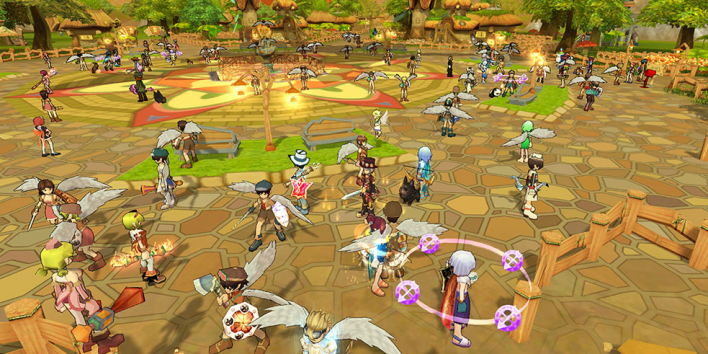
The driving force that allows Flyff Universe to host this tournament every year lies in its unique format. The competition is not decided using existing characters built up over years on live servers. Every year when the season begins, a dedicated "FWC Server" is opened, placing everyone—from tournament competitors to casual players—at the exact same starting line with Level 1 characters. Yudan Kim, Head of Global Business at Wemade Connect, stated in an interview, "It is a system designed to eliminate the gap between early starters and latecomers."
Opened on April 23, the dedicated server functions as both the tournament qualifier venue and a high-speed progression "boosting server." It doubles experience points, item drop rates, and standard enhancement success rates compared to live servers, while applying a 1.5x bonus to ultimate enhancement success rates. Furthermore, under established transfer rules, players can transfer their leveled characters and gear intact to live servers after the season ends to continue playing.
The result produced by this structure is intriguing. Even without the goal of winning a world championship, everyday players flock to this server in droves. New and returning players leverage the rapid progression benefits to settle into the game without pressure, while existing live-server players use it as an opportunity to test new classes or skill combinations they were curious about and build a second main character.
While top-tier teams race fiercely to optimize their tournament characters and equipment, countless casual players roam the same hunting grounds, trade, and spend currency on the server. Paid items sold during the season, such as FWC-exclusive buff items and battle passes, sell naturally along the way.
The results are proven by the numbers. According to Wemade Connect, revenue during the first 30 days after opening this year's dedicated FWC server surged approximately fourfold compared to the preceding 30-day period. This also represents roughly 18% growth compared to the same period last year. Rather than simply spending money to host a tournament, the company established a sustainable model where opening a season attracts players and drives revenue growth. This is why the publisher continues to expand the tournament's scale and invest heavily in this stage every year.
The tendency of global players to view esports eligibility more flexibly than in Korea also supports its success. Instead of limiting competition to pure mechanical skill under perfectly standardized arena specs, they enjoy the six-month preparation process—gathering comrades, leveling characters, and farming gear—as part of the competition itself. As Kim emphasized in an interview with Inven, stating that "anything can become esports," the shared effort spent leveling and building up characters creates the legitimacy for the final stage in Manila.
Astral aims for three straight titles, while 'Opponent Selection' shakes up the field
The contenders who survived the grueling six-month progression race to reach the final stage in Manila are eight teams composed of players from seven countries, including the Philippines, the United States, France, and Chile. Competing for a total prize pool of $110,000 (approx. 146 million won), they will clash in a 4-player party PvP tournament based on character data finalized as of October 15.
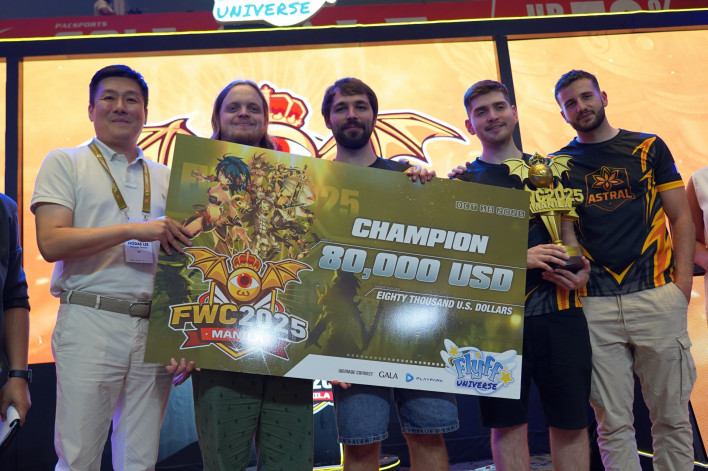
The narrative drawing the most attention is undeniably defending champion Astral's quest for a three-peat. Having conquered the tournament in both 2024 and 2025, Astral secured a spot in the main event once again this year, seeking to solidify its dynasty. Of course, last year's path to victory was far from smooth. After suffering a blow from rising powerhouse Blackout in the upper bracket, Astral dropped to the lower bracket. However, they met Blackout again in the Grand Final and swept three consecutive sets to pull off a dramatic comeback victory. Their adaptability and focus—immediately patching weaknesses exposed earlier to exact revenge—stood out.
Blackout, who went undefeated until last year's finals and pushed the champions to the brink, also made the roster heading to Manila this year. With both protagonists of last year's final advancing to the main tournament, whether Astral will achieve an unprecedented three-peat or a determined Blackout will avenge last year's disappointment has emerged as a key focal point.
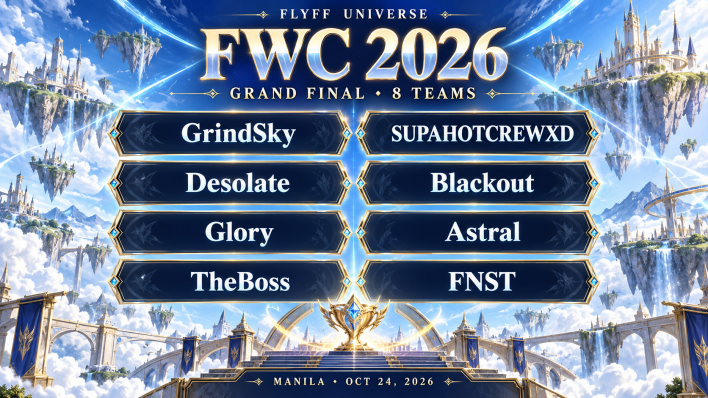
On top of that, the newly introduced "Opponent Selection" system creates intense psychological warfare right from the bracket drafting phase. The three teams that took 1st place in their respective regional qualifiers across three time zones earned the right to select their bracket position and opponent for Round 1 of the Grand Finals. Based on qualifier seeding priority, GrindSky gets to pick its opponent first, followed by SUPAHOTCREWXD and Desolate.
While the top team from each time zone cannot choose one another, two-time champions Astral and runner-up Blackout are valid targets. Whether to call out a formidable title contender from match one to gain early momentum or choose a team perceived as easier to secure a smooth advance to higher rounds lies entirely in the hands of the selectors. High tension is guaranteed from the very first match as teams aim to prove their judgment by defeating their chosen opponent, or risk being sent straight to the lower bracket by a retaliating pick.
The main tournament follows an 8-team double-elimination format where losing once still allows revival through the lower bracket. However, as most early rounds are single-elimination matches, a momentary mistake immediately drops a team to the lower bracket or eliminates them. The upper bracket finals and lower bracket finals are best-of-three, while the long-awaited Grand Final is best-of-five. Notably, the team advancing to the Grand Final undefeated receives a "1-win advantage." With no bracket reset, the upper bracket finalist needs to win only two sets to claim the trophy, making an undefeated run to the finals the surest shortcut to victory.
An offline festival in Manila to meet guildmates beyond the monitor

Inside and outside the arena where fierce battles take place, the venue will be filled with an offline festival for fans. In Manila, the event will feature a special celebratory performance by popular Filipino girl group KAIA, along with cosplay stage shows and influencer participation events. Photo zones, four-cut photo booths, an official merchandise store, and exclusive on-site in-game rewards are also prepared for visitors.
Programs bringing the tight-knit community characteristic of MMORPGs offline also draw attention. Highlights include the "Guild Rally," open to guilds with 20 or more members gathering on-site, as well as a guild raffle event. On October 23, the day before the finals, a "Meet the Devs" event will be held for premium ticket holders, where core developers—including the general producer—will meet and interact directly with fans.
Players and guildmates from around the world who previously interacted only online gathering in person to greet and reunite at the venue is what Kim cited as the most rewarding part of operating the tournament and FWC's greatest asset. The bond forged by sharing highs and lows on the same boosting server throughout the season transitions seamlessly into the passion at the offline venue.
The 'FWC 2026' Grand Finals matches will begin on October 24 at 1:30 PM KST and will be broadcast live via official YouTube, Facebook, and Twitch channels. Multilingual broadcasts by partner streamers will run simultaneously for global fans, covering major matches, the award ceremony, and local celebratory performances. Three special in-game coupon codes will also be revealed during the live broadcast.
Although only one team will lift the championship trophy in Manila, the countless players who completed this season are left with leveled-up characters and comrades to carry over to live servers. A unique festival where the tournament drives the game's success and that momentum fuels the next season, Flyff Universe's signature celebration now awaits its final showdown.