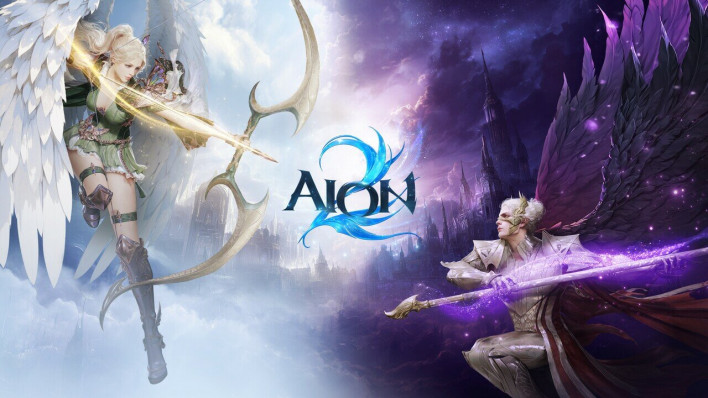
Looking at metrics alone, it is peculiar. The initial global track record for NC's PC MMORPG 'AION 2' is undeniably impressive. As soon as early access opened on September 30 for paid Founder's Pack buyers, the game topped the Steam top-sellers chart in eight countries including Brazil, France, and Thailand, eventually reaching number one in 15 countries throughout the early access period after adding the United States and Germany. Following the launch of the free-to-play official service on October 5, the peak concurrent player count on Steam surged to 397,905. Two European servers were added on October 8, and the 24-hour peak concurrent player count checked at 10:06 AM on October 16 still reached 292,931. Even in its second week after launch, the game continues to maintain a scale with hundreds of thousands of concurrent players.
However, the scoreboard recorded on Steam on the same day tells a markedly different story. Out of approximately 32,000 total reviews across all languages, the positive rating stands at around 59%, leaving the overall review score at "Mixed." Just because a game draws a large player base does not mean players are eager to recommend everything they experience within it. Reviews for AION 2 reflect both fond memories of enjoyable exploration and frustration with constraints that impede progression. What captured overseas gamers who had been waiting for a major MMORPG after a long drought, and at what point did their fingers hover over the "Not Recommended" button? We cross-referenced the top 40 Steam reviews sorted by "Most Helpful," eight hands-on impressions from six media outlets across North America and Europe, and domestic and international operational records to look behind the curtain.
A 'Collection Marathon' that kept even players who clicked 'Not Recommended' playing for tens of hours
Checking the top 40 Steam reviews sorted by "Most Helpful" on October 14 revealed that only 6 were positive ("Recommended"), while 34 were negative ("Not Recommended"). What is intriguing is the playtime and tone of some negative reviews. While leveling sharp criticism, they also mention that the early process of roaming the world and engaging in combat was enjoyable in itself. Even a negative reviewer with over 100 hours of playtime recalled being favorably impressed by the beautiful world at first. In essence, the charm that captivates users early on and the issues that make them hesitate to recommend it later coexist within the same game.
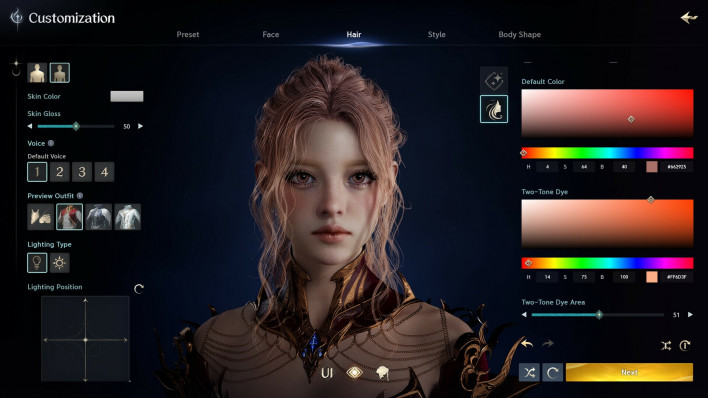
The first charm highlighted in some reviews is "the link between collection and progression, where what you see becomes your goal." A positive review marked as "Helpful" by 669 users praised the detailed customization and flight alongside the mount system, stating, "The mount system is really fun. You can capture and ride most monsters." Dressing up a character crafted to one's liking in cool outfits and taming a monster fought just moments ago to ride around offer enjoyment separate from gear competition. However, this reviewer also extensively pointed out late-game monetization and progression limits, leaving a conditional recommendation to enjoy the early exploration for about a week.
Furthermore, the process of steadily building character stats served as an engaging sense of progression for another reviewer. A positive review with 318 "Helpful" votes compared progression in AION 2 to a marathon, noting, "Whatever you do contributes to the overall strength of your character." The reviewer cited examples such as obtaining mounts by defeating monsters and accumulating permanent stats by killing them a certain number of times. Making a cool monster your mount and making your character stronger work hand in hand. Since time spent filling up collection logs connects to combat power, even if players cannot acquire top-tier gear immediately, they gain a clear next goal to pursue. This reviewer also noted that the relatively simple controls of each class relieved burden when tackling complex mechanics in high-difficulty dungeons and raids. They found fun in a structure where minor collections lead to stat boosts, and a character built that way can then challenge boss encounters.
Flight that removes invisible walls, turning scenery into paths
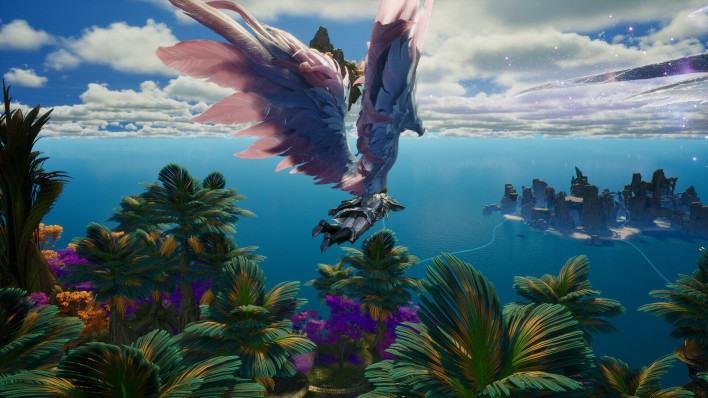
While collection and progression loops stood out in player reviews, overseas gaming journalists focused on the "three-dimensional sense of space" supporting that process. By integrating gliding and flight into travel between quest points, AION 2 received praise for turning travel itself into a form of play.
In a launch review in progress, Joseph Bradford of North American media outlet MMORPG.com described it by saying, "It's fun every time you soar along a cliff face or stop to gather floating nodes in midair." Despite never having played the original AION, the reporter cited flight as his favorite feature. MassivelyOP also named world design as the game's greatest strength in a pre-launch test impression, praising that they "kept going off the beaten path expecting to hit invisible walls, but it never happened."
This creates synergy with the collection mechanics praised by Steam users earlier. For instance, while heading toward a quest location, players might veer off to grab an airborne gathering node that catches their eye. Flying or swimming to travel while seeking out small dungeons and collectibles allows the world to function like a playground. Combat also offers room for mastery, as Dutch outlet intheGame explained: "The longer you play a class, the better you recognize these skill synergies." It comes down to tactical decisions in boss fights—repositioning while chaining appropriate skills, or holding back a skill momentarily for a stronger combo. The enjoyment of combat varies based on when and how familiar skills are pressed.
Wanting to push further only to find doors closing... The glass ceiling facing 400K concurrent players
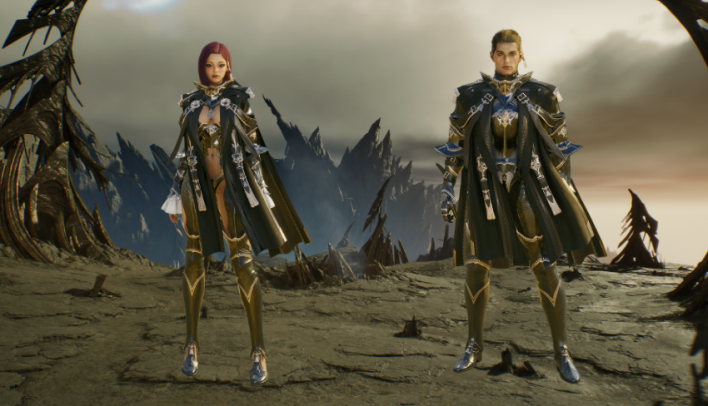
The problem emerges when players who have engaged with the game begin to delve into it deeper. While the 34 negative reviews contained various complaints such as combat repetitiveness or language support, several acknowledged early-game fun while raising issues with monetization and reward limits. The core grievance was that, just as new goals opened up to enjoy, restrictions were placed on the speed and manner in which players could chase them.
The biggest hurdle cited is the membership structure that narrows the scope of free-to-play gameplay, alongside reward caps. While basic access is free in the global version, buying and selling items on the player market requires a paid membership. Furthermore, membership and certain paid perks are subject to server and character restrictions. This creates issues where players cannot use already paid benefits when joining friends on another server or raising a new class.
Reward limits represented by "Odyle Energy" drew particularly harsh criticism in reviews. Even after clearing a dungeon, players need Odyle Energy to open reward chests, but because this resource is limited, acquiring desired rewards as much as one wants proves difficult. A negative reviewer who garnered 3,120 "Helpful" votes criticized Odyle Energy, content schedules, and RNG crafting, stating, "I don't want an MMO deciding when I'm allowed to enjoy my favorite content." Though players become attached to collecting and dungeon farming, their chances to open reward chests remain restricted even with repeated clears. While different from being locked out of dungeon entry, limiting rewards drains motivation for players running toward progression goals. Foreign media journalists also commonly pointed out the complex UI overlaid with multiple currencies and shop menus.
NC is also adjusting related systems. On October 7, a patch allowed skin rewards from Founder's Packs to be used by characters across all servers, and on October 9, the flight power of four quest-reward wings was increased by 500 each. Starting October 14, the fee for the first account server transfer on early access servers was waived. Transfers are restricted to within the same region and faction, and the cost of adding extra character slots remains separate. In the same day's patch, during the server transfer period, the weekly per-server purchase limit on bound Odyle Energy sold by Wind Breeze Merchants was removed, and the per-character cap was increased from 4 to 20. While these adjustments broaden opportunities to earn rewards, the requirement of energy for dungeon loot and the paid membership condition for the market remain in place.
Behind the global celebration, cries of 'test server' erupt from Korea's live server
Adjustments to service design were also made for the global version, which launched later than the domestic build. Expanding overseas the game that debuted first in South Korea and Taiwan in November last year, NC excluded Heroic-tier gear at the start of global Season 1 to maintain progression balance. In a pre-launch interview, the global lead explained that Expedition and Transcendence party sizes were expanded from 4 to 5 players, and Sanctuary raid parties from 8 to 10 players. In a domestic broadcast, developers revealed that percentage-based stat inflation was restricted in the global version. Experience from the earlier-serviced region was clearly reflected in adjustments for the late-launching version.
However, these adjustments collided with fierce backlash from Korean players. A live stream held by the domestic development team on October 13 served as a platform to soothe angry sentiment, offer explanations, and deliver apologies. Criticism from Korean users was clear: seeing improvements that Korean players had given feedback on implemented first in the global version led them to ask if Korea had become a paid test server. This was compounded by a sense of loss from having spent large sums to upgrade gear only to suffer losses with each update, delays in roadmap features like housing and sailing alongside a lack of content, and a surge of demands for class change vouchers.
The developers replied that they would do their best to bring features that received positive global feedback to the domestic service as well. They explained that server lag during large-scale battles and macro efficiency issues experienced by Korean players were intertwined with inflated stats. High attack speeds increased effect trigger frequency and server network traffic, impacting large-scale combat latency, and they are putting efforts into optimization. While global suppressed percentage-based stat increases, the domestic version has high attack speed and cooldown reduction figures, making macros more efficient than manual play. The team promised that even if correcting inflated issues is difficult, they will seek ways to reinforce the fun of manual play.
Regarding the content drought controversy, they explained that dungeon difficulty had been tuned low to lower entry barriers, promising to change operational approaches starting from the next chapter by separating difficulty levels so existing players can enjoy content without feeling penalised. Class change vouchers will not be pursued for the time being. They noted that housing was delayed due to extra work enhancing customization freedom—such as wall/floor decorating and furniture resizing—and is currently undergoing final quality inspection. The team added that they are pondering solutions for PvP issues and preparing "Abyss Outlands," where 100 players start on equal terms to acquire gear and buffs while competing for rankings.
Ultimately, what AION 2 demonstrated in its early launch period is the gap between eye-catching fun and the conditions for long-term engagement. Core mechanics—flying through the sky to capture monsters and turning small collections into character strength—remained appealing in overseas reviews. However, the game faces challenges: globally, "the reward and market barriers confronting players who want to keep playing," and domestically, "discontent over failing to protect the investment value of early adopters." How NC, having gathered nearly 400,000 concurrent players, resolves these two grounded tasks remains to be seen.