As generative AI and automated development tools fuel a surge in knockoffs cloning upcoming indie games, a new form of extortion demanding money under these threats has emerged.
On October 18, Takashi Mochibe, developer of the upcoming Steam tactical RPG 'Dragon's Chronicles: Twin Stars of Reginleiv' (hereafter 'Dragon's Chronicles'), revealed on his official X (formerly Twitter) account that he had received an absurd extortion email.
According to the developer, the sender threatened to duplicate and release 'Dragon's Chronicles' first, demanding $200 (approx. 270,000 won) to prevent it.
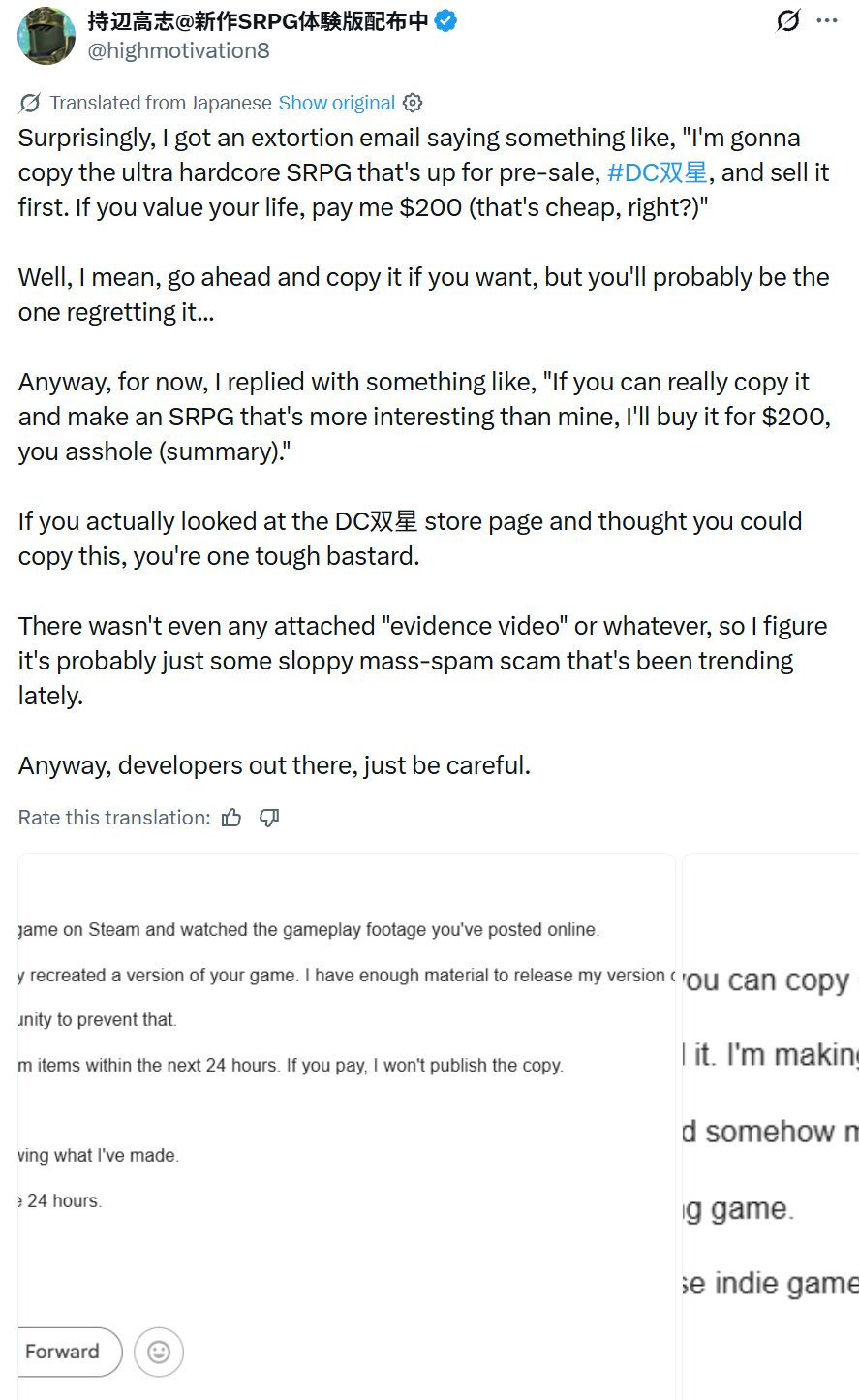
In response, the developer quipped regarding the $200 demand, "Isn't that pretty cheap?" adding, "Feel free to copy it if you want, but you'll probably be the one regretting it." 'Dragon's Chronicles' is a classic tactical RPG inspired by masterpiece SRPGs from the '90s and 2000s, boasting deep systems and expansive content. The developer expressed confidence, stating, "If you looked at the store page and genuinely thought you could copy this, you must have nerves of steel," pointing out that surface-level AI cloning tools can never replicate the core essence of an SRPG built around intricate level design and deep strategy. He also noted that the email lacked any video or attachment proving an actual clone existed, suggesting the incident was likely a spam phishing attempt randomly targeting indie developers. Nevertheless, he urged fellow developers to remain cautious of similar threats.
Meanwhile, similar extortion emails have reportedly been circulating quietly among Western indie developers since late September. On September 30, Weasel Pit, developer of the indie title 'Iron Pilgrim', gained significant attention on social media and Reddit by sharing their story: "Someone cloned my game using AI and sent an extortion email threatening to release it on Steam first unless I send $200 worth of Steam items within 24 hours." At the time, the developer warned others by posting comparison videos of the cloned game alongside the full text of the threat email, gaining widespread sympathy from gamers and fellow developers, which translated into a massive boost in wishlist additions.
However, investigations by foreign gaming media and online communities raised suspicions that the incident was a staged hoax aimed at inflating wishlists. Tracking the Reddit post history of the developer who claimed to be a victim revealed that just weeks prior to the revelation, they had posted threatening comments on another indie developer's promotional thread using the exact same tactic, writing, "I'll clone your game and upload it to Steam." In essence, the developer re-used the exact threat they had previously directed at others to pose as a victim for viral marketing.
The problem is that after the 'Iron Pilgrim' case received widespread publicity in online communities, actual scammers emerged copying the tactic. Indeed, on October 2, Psicodart Games, developer of the action roguelike 'Circusar', mentioned receiving a similar email.
This series of incidents is tied to the broader issue of "AI copycats" emerging in the global gaming industry. With the increasing accessibility of AI-based development tools such as image generators and code assistants, cases of extracting trailers, screenshots, and assets from upcoming indie games listed on platforms like Steam to rapidly churn out shallow imitations have surged.
While low-quality clone games were previously mass-produced through "asset flipping," the trend has now evolved into cyber extortion, targeting the anxieties of small indie developers preparing for launch with demands to pay up or risk having their wishlists and awareness hijacked. In light of this, Takashi Mochibe and other developers and industry figures advised via social media that even if developers receive extortion emails, they should never pay money or comply with the sender's demands.