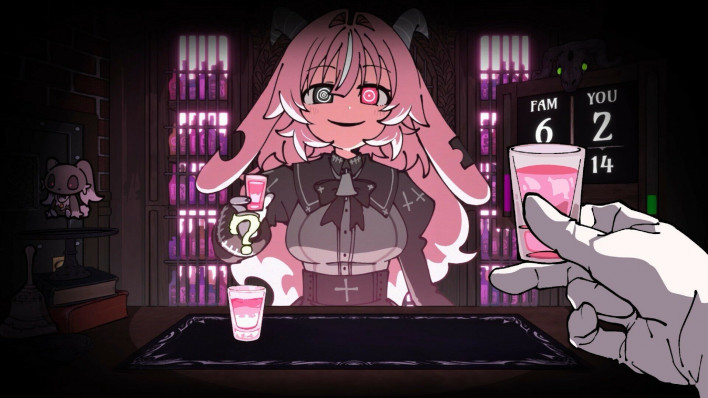
An unreleased indie game has canceled its public demo distribution over fears that AI-assisted clones could appear first. With lookalike titles mimicking the concepts and titles of unreleased games surfacing on Steam in rapid succession, developers are beginning to change how they promote their games.
On October 16, Alliance Arts and WHO YOU announced via the official Steam community for 'Drunken Goddess Reflux' that they are canceling the public demo distribution originally scheduled for October 19. Instead, they will host a closed online play session with a limited number of participants.
The developers cited two main reasons. While they initially planned to place certain restrictions on posting and streaming demo footage, they determined that managing such rules effectively would be difficult. They also feared that copycat projects mimicking the game's presentation and gameplay mechanics based on the public demo could be rapidly created using tools like AI and released before the original game.
Indeed, Steam has recently seen a string of cases where lookalikes of unreleased games appear on the store before the originals.
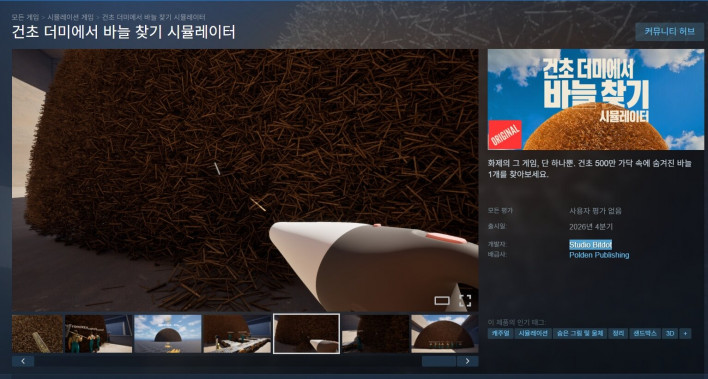
A prime example is 'Needle In A Haystack Simulator.' Featuring a simple concept where players search for a single needle among roughly 5 million pieces of hay, the game went viral online, prompting at least eight titles with similar names and concepts to surface before its official launch. The situation escalated to the point where developer Studio Bitdot added the word 'ORIGINAL' directly to its Steam store images so users could identify the original game.
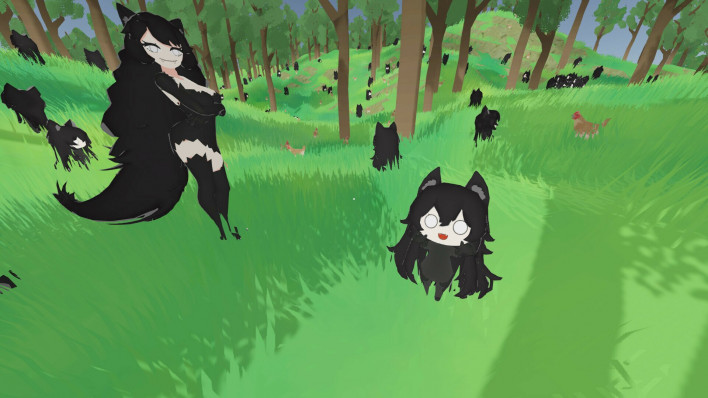
The recently viral title 'Family Time' tells a similar story. Featuring a unique premise of raising thousands of children with a werewolf partner, the game climbed to the upper ranks of Steam wishlists, only for a lookalike using the identical name 'Family Time' to appear prior to release. While the copycat swapped the wolf for a fox and added co-op elements, substantial portions—including the game description and store page layout—were highly similar to the original. Creator 'sgthale' stated that a DMCA takedown request was submitted, citing copyright infringement of banners, descriptions, and layouts.
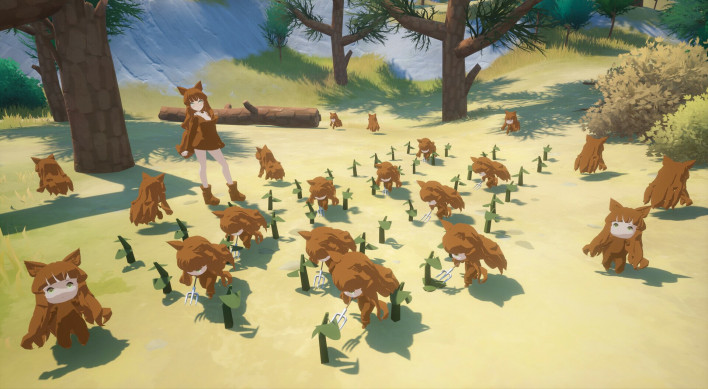
So-called 'copycats' that imitate a game's ideas are not a new phenomenon. However, as generative AI and game development tools advance, concerns are growing among developers that the time and cost needed to turn a trending concept into an actual playable game have drastically dropped. Ultimately, the team behind 'Drunken Goddess Reflux' chose a closed playtest over a public demo. Participants must agree to video posting and streaming guidelines in advance and are selected on a limited basis via a raffle. Feedback after playing will also be collected through their official Discord.
The familiar promotional strategy for indie games—releasing demos to as many players as possible to build awareness—may now be shifting in the opposite direction toward holding games back from being shown too early.