NC's new title 'Astrae Oratio' showcased a playable build for the first time at Tokyo Game Show 2026, which opened on September 17. Since first being revealed under the working title 'Project AT', information including its official title, lore, and characters was sequentially unveiled in 2026, alongside the launch of recruitment for its first CBT. The game, previously known mainly through its name, setting, and videos, has now reached a stage where players can experience its actual gameplay firsthand.
Rather than revealing everything at once, 'Astrae Oratio' has gradually introduced its world, characters, and key lore. From its setting of "Tokyo in '89" to its unique mix of magic and administration, the Special District Bureau, Trials of Domination, and regional wizards and organizations, the game has systematically fleshed out its background and settings.
With actual gameplay revealed for the first time at TGS 2026, players were able to see how the previously introduced lore and characters are implemented in-game. Although many elements remain unrevealed as the game is still in development ahead of CBT, the information released so far provides a clear overall picture of what 'Astrae Oratio' is about.
Here is a comprehensive breakdown of the major details revealed so far about 'Astrae Oratio', along with the new information confirmed at TGS 2026.
# 1. What Kind of Game Is 'Astrae Oratio'?

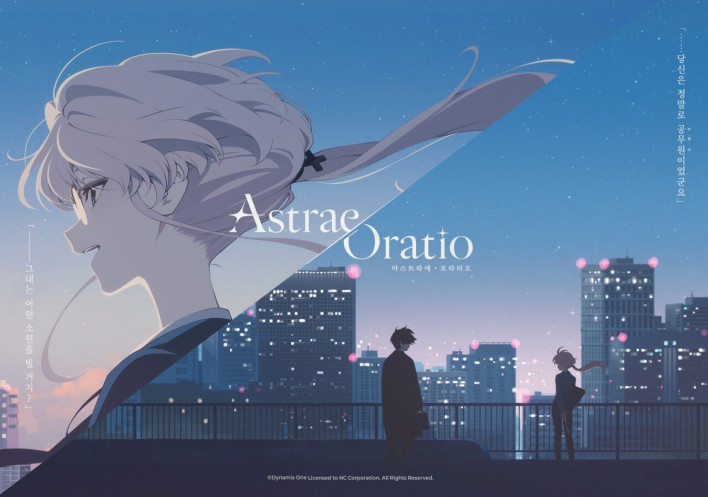
'Astrae Oratio' is a new subculture RPG developed by Dynamis One and published globally by NC. In its early development stages, it was known as 'Project AT'. It came to light in January 2026 when NC made a strategic investment in Dynamis One and secured global publishing rights. Subsequently, in April of the same year, its official title was confirmed as 'Astrae Oratio'.
Full-scale development for 'Astrae Oratio' is reported to have begun in September 2024. Key developers include scenario director isakusan, art directors In Kim (hwansang) and DoReMi, and character art director and supervisor Mx2j.
When 'Project AT' was first introduced, it was described as a "subculture hero-collector RPG," but since the official title reveal, it has been actively marketed as a "Shin-denki subculture RPG themed around magic and administration." Instead of merely emphasizing character collection, the game highlights the nature of its lore and narrative.
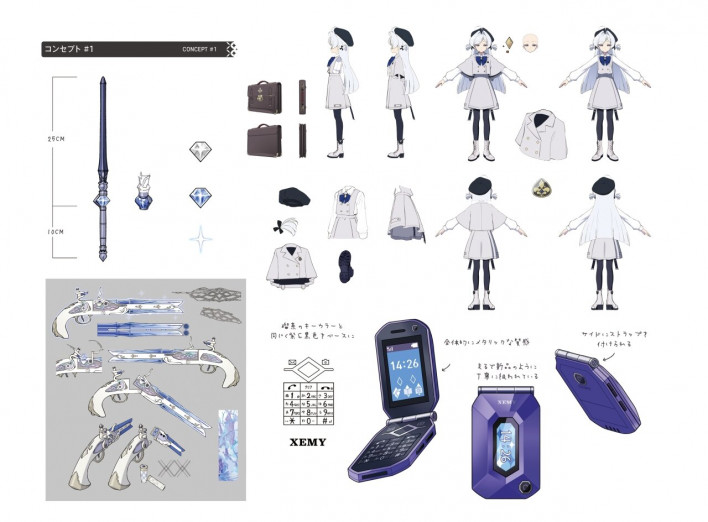
Ahead of official launch, the development team is putting substantial effort into sharing the game's world and characters with players. The teaser artbook presented at Comic Market originated as a guidebook created to align creative direction between developers and collaborating departments. Art Director In Kim likened it to a "movie pamphlet" for understanding the world and characters before the main narrative unfolds. The team plans to continue communicating through tangible, readable, and experiential materials.
In 2026, Astrae Oratio rapidly released world details, character reveals, and gameplay videos. With CBT recruitment underway and its appearance at Tokyo Game Show to meet players in person, the game has officially entered its full reveal phase.
The developers envision the long-term format of the game as closer to a serialized series with an ongoing narrative rather than a standalone title. Game Director Jong-gyu Lim described the CBT as a pilot program to test the loop of worldbuilding, characters, story, combat, and daily life. AD In Kim also cited the experience of waiting for and enjoying new stories and content upon each release as the core strength of live service.
# 2. Tokyo, Magic, and Civil Servants
The setting of 'Astrae Oratio' is "Tokyo in '89." However, it is not a period drama that strictly reproduces actual 1989 Japan. The game world is an alternate Tokyo whose technological development accelerated compared to real history due to magical and anomalous phenomena. To this, elements reflecting the era—such as analog devices, urban landscapes, and period aesthetics—were added to establish the game's unique atmosphere.
The reason developers chose Tokyo connects directly to the game's "Shin-denki" genre. Director Jong-gyu Lim explained that just as Westerns naturally evoke the American wilderness, Tokyo carries strong iconic representation within the Shin-denki genre. Choosing Tokyo was not simply about replicating 1980s Japan, but about constructing a stage to modernize the conventions of the Shin-denki genre.
In terms of art, this world is defined by the keyword "lyrical analog." AD In Kim explained that the goal is to recreate the nostalgia of analog aesthetics, fondly remembered from the past, tailored to modern trends. Actual locations and landmarks like Tokyo Tower were built based on on-site research, while elements such as maps, suits, documents, ID cards, seals, and nameplates were used to evoke the atmosphere of "administration," another core theme of the work.
This nostalgia is not merely an attempt to reproduce the atmosphere of older works. AD In Kim noted that after nearly a decade dominated by repetitive takes on isekai and post-apocalyptic settings in subculture media, the search for a fresh perspective led them back to classic genres and aesthetics. The developers' desire to pass along the feel of the works they enjoyed during their childhood to modern players also influenced this direction.
In the world of Astrae Oratio, wizards are the most prominent figures. Using keys called "Kleis (κλείς)," wizards traverse the boundaries between reality and unreality, wielding "Artifacts" that manifest their will into reality. Furthermore, magic is intertwined with the in-game administrative system, with wizards possessing their own respective "Territories". The administrative agency governing these is the Behind-the-Scenes Territory Special District Bureau—shortened to the "Special District Bureau". NC highlights the Special District Bureau and Territories as core lore elements of Astrae Oratio.
However, the protagonist controlled by the player is not a wizard. The story begins when the "Chief," an ordinary civil servant stationed in the local provinces, is suddenly transferred to the Special District Bureau. Tasked with managing magic-world administration, the Chief becomes embroiled in various incidents, meeting diverse wizards along the way—including Special District Bureau Director Ai Hiwagishiakari.
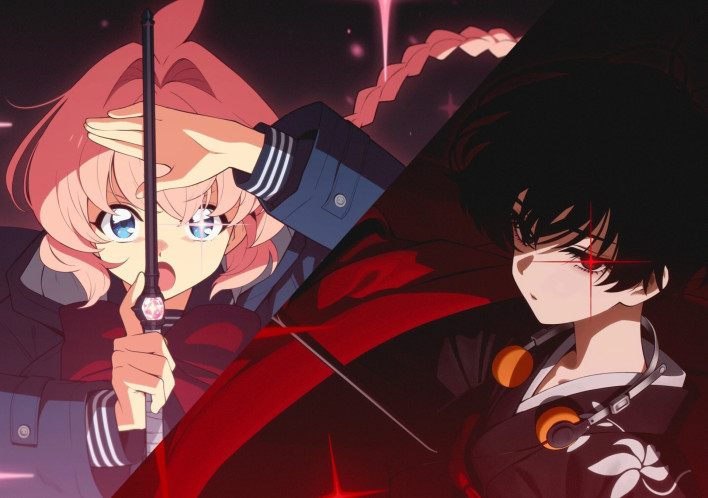
To resolve disputes among wizards, the system of "Trial of Domination" exists. As the name suggests, it is a judicial system where wizards settle conflicts through combat, blending the fantasy concept of magic with practical institutions like administration and trials. Characters are organized around various regions and groups. So far, several factions have been revealed, including the Special District Bureau, the Territory Management Association - Special District Bureau Branch, Minato Ward Girls' Magical Activities, Seiran Association, Akina Occult Research Club, and Rose of Bunkyo.
As such, 'Astrae Oratio' fuses the twin themes of "magic and administration" throughout its world design. Interlocking lore elements—from wizards and territories to the Special District Bureau, the civil servant Chief, and Trials of Domination—combine to build the game's unique setting.

This world and its characters are delivered primarily through standing illustrations, cut-ins, and voice acting. The main story features full Japanese voice acting, covering both character dialogue and monologues. While everyday storytelling maintains a relatively calm narrative pacing, key moments and Territory Declarations feature heightened cinematic density. The development team aimed to maximize the impact of climaxes by contrasting peaceful daily life with the underlying crises.
At official launch, around 30 characters will be featured, with playable characters belonging to roughly 10 groups. The actual scenario features even more groups. Rather than targeting Japan first and expanding later, the service aims for a simultaneous global launch, targeting audiences across Korea, Japan, North America, and Europe who grew up enjoying Shin-denki and related works from the 1990s and early 2000s.
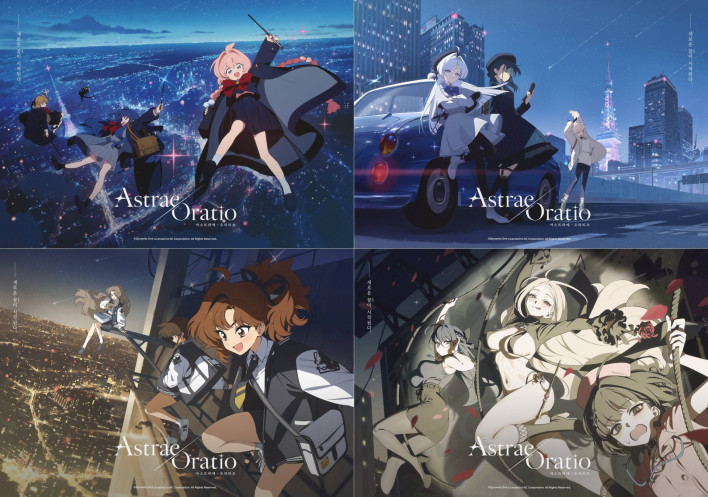
# 3. Combat System: ATB Combined with Combos, Parries, and Tagging
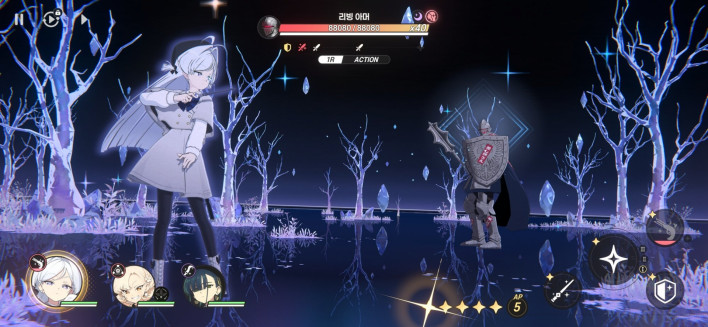
Through the hands-on demo at TGS 2026, 'Astrae Oratio' revealed detailed combat mechanics. While fundamentally structured as a turn-based RPG, it distinguishes itself by incorporating real-time response mechanics against enemy actions during battle rather than strictly alternating actions in a fixed turn sequence.
Character actions consist primarily of basic attacks, combat skills, and ultimate skills. Actions consume AP (Action Points), and players can chain multiple attacks in succession as long as AP remains. Combat skills carry individual cooldowns, allowing players to weave basic attacks to reduce cooldowns before executing another combat skill. Ultimate skills require charging a dedicated gauge before activation.
Mechanics to counter enemy attacks are also available. Regular enemy attacks can be interrupted by striking first, while heavy attacks can be parried via well-timed counters, allowing players to absorb the blow and regain momentum. Conversely, certain attacks highlighted in red cannot be countered, requiring players to tag out or take the damage. Enemies also possess action gauges, allowing players to proactively react to enemy turns when allies act first.
Combat follows a tag-team system with a three-character squad. Only one character is active on the field at a time, but players can switch characters depending on the situation to sustain combos or bench damaged units. Specific tag-in effects trigger depending on the character or role. Since benched characters can still take damage from certain area-of-effect (AoE) attacks, players must monitor the health of off-field squad members as well.

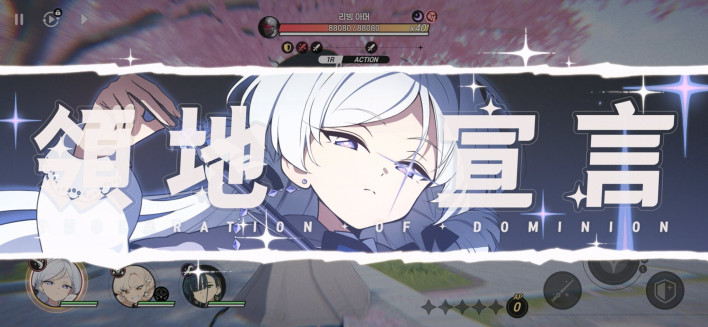
"Territory Declaration" is another core combat mechanic. Players can trigger Territory Declaration upon meeting individual character conditions; activation restores AP and resets combat skill cooldowns. This enables continuous offensive momentum, allowing players to spend AP, activate Territory Declaration, and immediately chain further attacks to maintain control.
Additionally, the combat system incorporates an elemental weakness mechanic to deplete the enemy's Break Gauge. Targeting weaknesses to inflict a Break state, combined with managing AP, skill cooldowns, tagging, and Territory Declarations, forms the core loop of combat.
In summary, combat in 'Astrae Oratio' is turn-based at its core, but elevates real-time interaction through enemy action gauges, counters, and tagging. Because players can link multiple actions within a single turn as long as AP permits, the focus shifts away from passively waiting for turns to use a single skill, emphasizing efficient attack execution and reactive combat choices.
This structure was not designed merely to inject real-time controls into a turn-based RPG. Director Jong-gyu Lim stated that the goal of combat is to deliver "both the strategy of turn-based gameplay and the tension of real-time action". The team aimed to deconstruct the tension of fighting games—where players read and counter opponent moves within simple rules—and infuse it into turn-based combat. Rather than sitting back to watch static ultimate animations, players actively string together attack flow and combos by combining AP, counters, tagging, and Territory Declarations.
However, as the TGS build was a time-limited demo, detailed battle rules such as character-specific Territory Declaration conditions, tag effects, status ailments, and buffs/debuffs could not be fully analyzed. The detailed mechanics of these systems are expected to become clearer during the upcoming CBT.
# 4. Ahead of CBT, Astrae Oratio Prepares to Make its Official Impression
'Astrae Oratio' is currently recruiting CBT participants. The application period runs from August 19, 2026, until noon on September 21, with selected users able to participate on Android and iOS platforms. Specific start and end dates for the test have not yet been announced.
The content volume is designed to accommodate roughly 3 to 5 days of gameplay. Rather than providing an isolated snippet of story or combat, the early portion of the game was densely arranged to allow players to experience the fundamental cycle of transitioning between combat, story, and the Special District Bureau's administrative management. Through this, developers plan to evaluate not only individual content elements but also how smoothly they connect into a unified gameplay flow.
The recommended specifications for the test on Android are Snapdragon 8 Gen 2 or higher, 8GB RAM or higher, and Android 14 or higher. For iOS, recommended specs are A16 or higher, 6GB RAM or higher, and iOS 18.0 or higher. Minimum specs for Android are Snapdragon 7 Gen 1 or higher, 6GB RAM or higher, and Android 12 or higher, while for iOS they are A14 or higher, 4GB RAM or higher, and iOS 16.0 or higher.
This CBT targets a global audience. Text language support includes Korean, Japanese, Traditional Chinese, and English, with voice acting provided in Japanese. In-app purchases will not be supported during the test, and all player data—including characters, currency, and story progression—will be reset after the test concludes. NC stated that it plans to showcase the game's world and key content through the CBT and incorporate player feedback into future development.
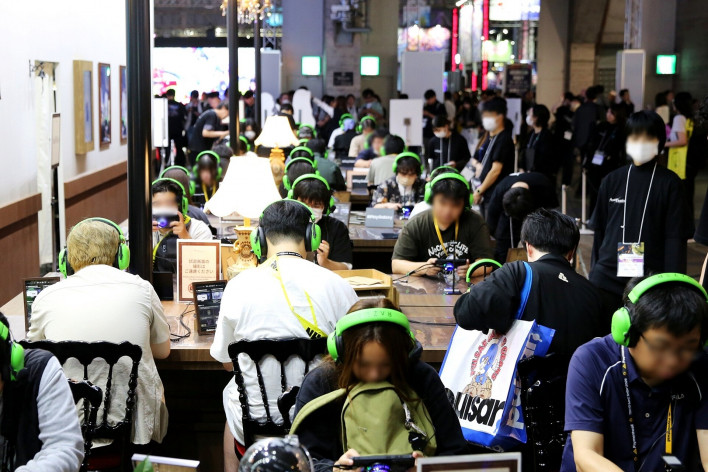
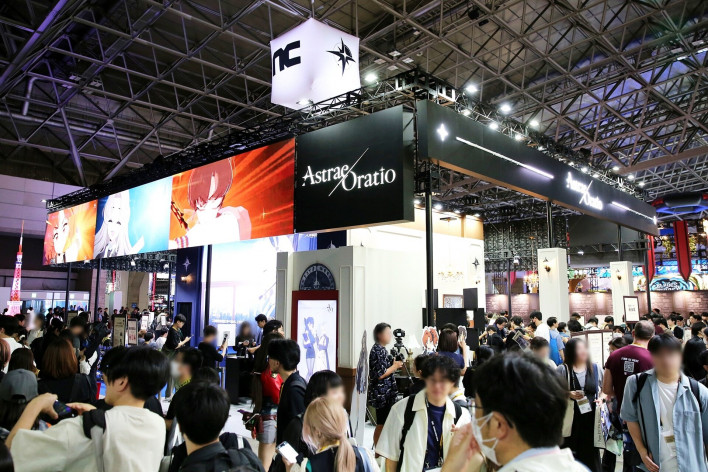
Prior to the CBT, a demo version of 'Astrae Oratio' was revealed for the first time at Tokyo Game Show 2026, which opened on September 17. The on-site demo allowed visitors to choose between experiencing the Scenario Build or the Combat Build. The booth also hosted a "Prologue Scenario Screening" covering the early story, while a new video summarizing key prologue content, the "Prologue Digest PV," was released on official channels on September 17.
Platform strategy is currently focused on mobile. The PC version will not be supported during this CBT. Although an internal PC build exists and a PC version is under long-term consideration, the developers prioritize delivering the initial experience on smartphones since the game was originally designed as a smartphone title. Director Jong-gyu Lim explained that the goal is not to clone the exact feel of classic Shin-denki, but rather to reinterpret it modernly for the smartphone environment.
Until now, 'Astrae Oratio' had released information sequentially, centered on worldbuilding and characters. Although actual combat and scenario scenes were partially introduced through videos, players had no opportunity to play the game directly before TGS 2026. Through the upcoming CBT, players will be able to see more specifically how the lore and characters revealed so far are realized within the actual game.