
Apple's new mobile AP, the A20 Pro, scored 4,042 points in Geekbench 7 single-core testing, breaking the top record for the category. The figure surpasses the M5 Max, Ryzen 9 9950X3D, and Intel Core i9-14900KS.
The latest SoC in Apple Silicon's mobile lineup, the A20 Pro, was spotted on Geekbench under the identifier 'iPhone 19,3'. The hardware identifier is presumed to correspond to the iPhone 18 Pro Max.
While pre-release performance leaks on Geekbench have happened many times, what stands out this time is the actual benchmark score. The highest single-core score is currently recorded at 4,042 points—the highest single-core score on Geekbench 7. This figure outperforms the single-core score of 3,731 points achieved by the M5 Max featured in the latest MacBook Pro. It also leads desktop CPUs, outperforming the Ryzen 9 9950X3D by about 26% and the Intel Core i9-14900KS by about 32%.
The gap with competitors has also widened. Based on Geekbench 7, Qualcomm's Snapdragon 8 Elite Gen 5 and Xiaomi's XRing O3 score around 3,000 points, putting them on par with Apple Silicon's A18 Pro from two years ago.
The A20 Pro features a 2nm process, a 6-core CPU, a 7-core GPU, and a dual 16-core Neural Engine. On top of that, memory bandwidth has increased by 50% compared to its predecessor. Significant attention was also given to thermal design. Similar to the M-series chips used in Macs and iPads, the silicon die and memory are placed side by side to separate heat dissipation paths. This structure allows a vapor chamber to be attached directly.
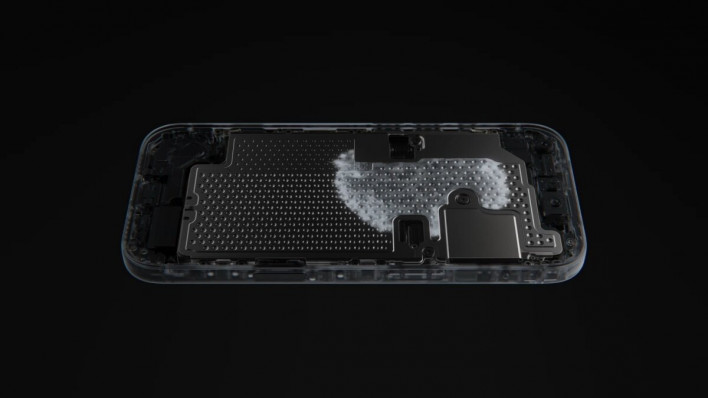
Up through the A19 Pro, RAM was stacked on top of the processor die to save space and reduce latency, but this had the weakness of RAM blocking the heat dissipation path. Thanks to the new architecture, the A20 Pro achieves higher stability in sustained performance. Apple's claim of a 40% improvement in sustained performance stems directly from this packaging redesign and the vapor chamber.
Of course, these scores were measured using a new version of Geekbench 7 that updated its calculation method. Furthermore, factors such as firmware and power limits could differ in retail versions. In particular, when compared to chips with higher core counts, it lags in multithreaded performance.
However, it is hard to deny that Apple has made another major leap forward in single-threaded design. The A20 Pro will power the iPhone 18 Pro and iPhone Duo.