The Dragon Quest Monsters series, a monster-collecting spin-off based on Dragon Quest, has returned with its latest entry: 'Dragon Quest Monsters 4: Bianca and Nera of the Parched Land' (hereafter DQM4).
Considering that the previous game, DQM3, signaled the revival of the series after 22 years, there were a fair number of disappointing aspects as well. Released amidst an era of visually dazzling titles, DQM3 could hardly be called a graphical marvel, and its online battles—a core element of the game—drew criticism for only supporting Nintendo Switch. Even so, driven by anticipation for a new DQM game after 22 years, it achieved global cumulative sales of over 1 million copies.
Perhaps thanks to that success, DQM4 seems to have taken its predecessor as a lesson in many ways. Featuring adorable character designs for its two main protagonists, Bianca and Nera, as well as Debora, the game demonstrates improvements over the previous title across various areas, including online battles and synthesis—the game's core mechanic.
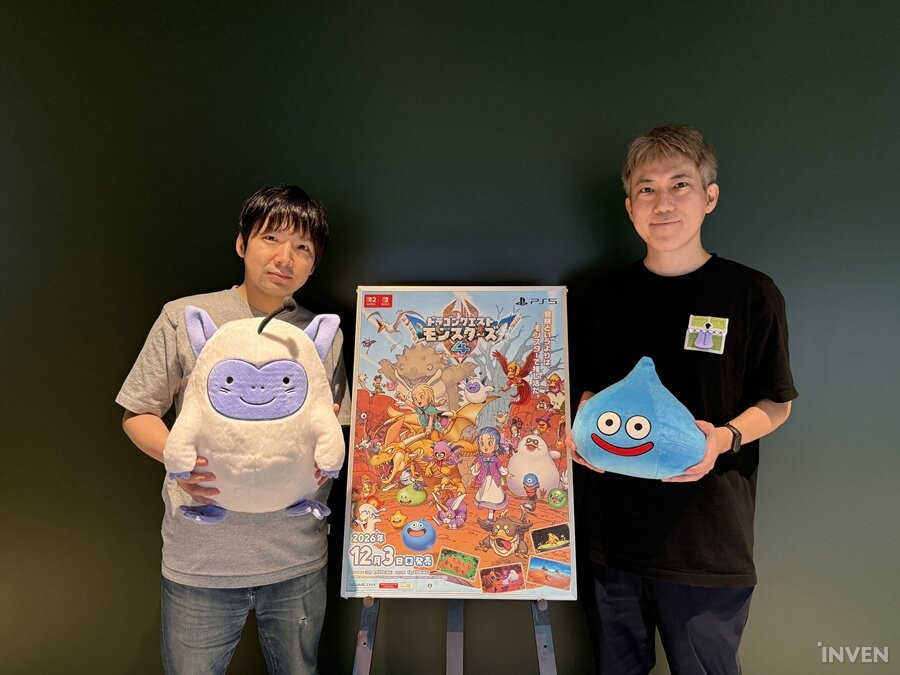
Three years after the previous entry, we were curious to find out what kind of progress DQM4 has made compared to its predecessor, and why Bianca and Nera were chosen as the protagonists. We met with Director Kento Yokota and Producer Takuma Shiraishi to hear all about DQM4.
DQM3 arrived after 22 years, whereas DQM4 is coming out just 3 years after its predecessor, which feels remarkably fast. This was likely influenced by the positive reception of the previous title. How do you feel about this?
Yokota: The previous game was the first in the series to launch simultaneously worldwide. Thanks to that, I think many people played it not only in Japan but also overseas. Because DQM3 was released that way, we received a lot of feedback. While there was positive acclaim, there were naturally quite a few areas that needed improvement. Based on that feedback, we reflected those insights into this title by enhancing what worked well and improving what received poor reviews.
Considering recent trends in game development, releasing a new game in 3 years feels like a very fast turnaround. I believe we couldn't have built it this quickly without both our producer and development team, so I am deeply grateful to them.
The DQM series has finally reached its fourth numbered entry. From a developer's perspective, what is the core of the DQM series, and how was it carried forward in DQM4?
Yokota: While this is the fourth numbered entry, considering the first game was released in 1998, it's a series that has spanned 28 years. It is the longest-running spin-off series in the Dragon Quest franchise, carrying a rich tradition. What matters most in the DQM series is undoubtedly the synthesis system. As the core of the DQM series, it's a system that must continue to evolve alongside the franchise, so we have treated it with great importance in this title as well.
Bianca and Nera appear as the main protagonists, and Debora joins them as well. In the original Dragon Quest V, these Heavenly Brides are depicted as meeting for the first time as adults. However, in DQM4, they meet each other as children, which might create a lore consistency issue with DQ5—a potential plot hole, so to speak. How did you resolve this?
Shiraishi: First of all, please understand that we cannot reveal at this time whether DQM4 connects to DQ5 or exists in a separate parallel world.
Rather than revealing something right here, we want to leave it for players to discover, debate, and speculate on how closely it connects to DQ5 as they play. Furthermore, since Bianca and Nera enter the world of DQM4 rather than staying in the world of DQ5, we made sure the game can be enjoyed even by players who are unfamiliar with DQ5.
Meanwhile, Debora, who was added in the Nintendo DS version, is not a main protagonist, but she plays a very significant role in the story. Sharing too many details would be a spoiler, so I cannot explain further, but please look forward to it.
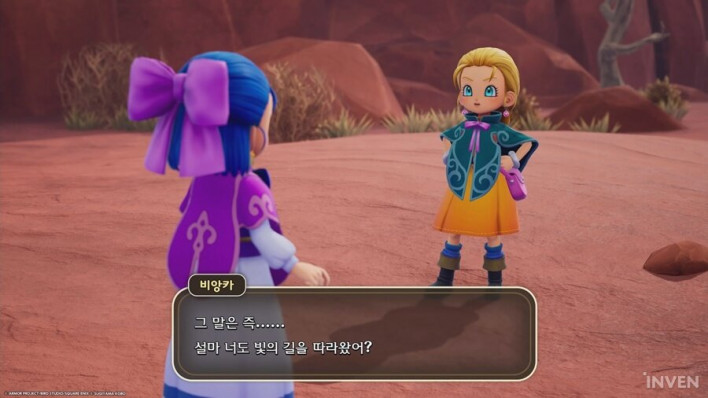
Personally, the visual improvement compared to the previous game stood out the most. How would you describe the visual direction DQM4 strives for in a single phrase?
Yokota: The visual contrast with the previous title should be striking at first glance. Regarding first impressions, we set our direction toward this current visual style from early development. Since both protagonists are young girls and have small proportions while moving across the field, we focused on a bright, cute feel characteristic of the Dragon Quest series to maximize their cuteness.
Of course, even while aiming for cute, we avoided making it excessively so. If it's overly cute, how should I put it—it might feel a bit embarrassing for adults to play. So we balanced it appropriately. On the flip side, we were conscious not to make it too scary for kids, intending a design that people of all ages and genders can enjoy.
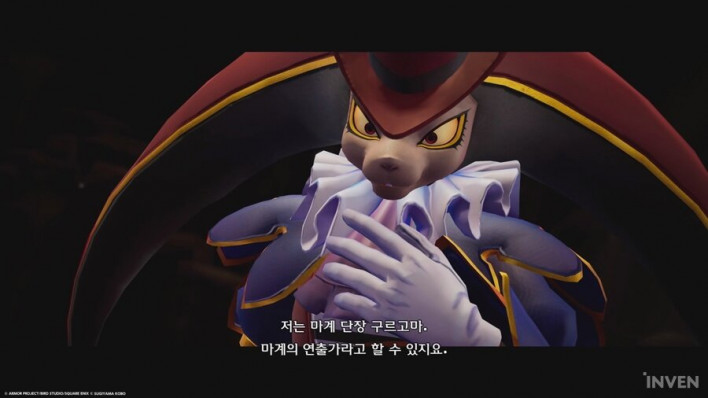
Shiraishi: To add to that, while the overall theme is intended to be bright and cute, the monsters themselves are not stylized or chibi-fied, preserving the cool original designs of certain monsters as well as evil, formidable monsters like Demon Lords. We designed the world so players can enjoy the diverse lineup of monsters in DQM4, so if any players are worried that the monsters might also be overly cute, I'd like to take this opportunity to reassure them not to worry.
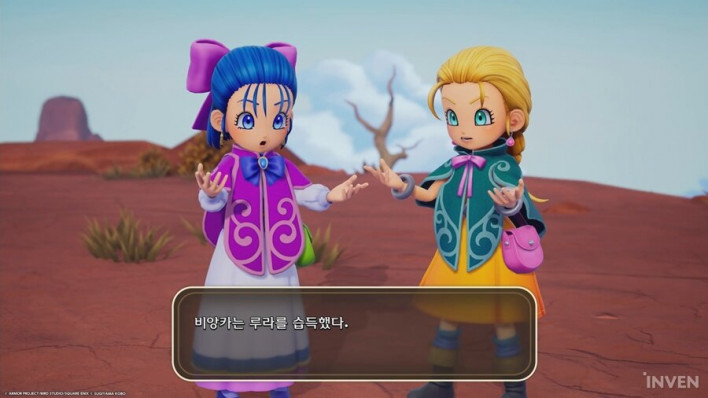
The setting of DQM4, the Parched Land, was a region that was only mentioned in passing in the classic games. A location that existed only in lore for decades has finally been fully realized. What was the reason behind this, and how will the environment of the Parched Land affect monsters and gameplay?
Yokota: As you mentioned, the Parched Land is a mysterious kingdom that was only mentioned in passing in the original Dragon Quest I. To be honest, I had always wanted to explore the Parched Land at least once. However, even in DQM3, the world wasn't closely tied to DQ1 or DQ2, so it remained just a vague idea.
Personally, it bothered me that it was only mentioned in lore without ever being expanded upon. While developing DQM4, I consulted with series creator Mr. Yuji Horii about it, and he agreed, saying, "Indeed, that's true." Combined with choosing Bianca and Nera as the protagonists and the atmosphere of the overworld, this felt like the perfect title to feature the Parched Land. So, with the thematic sense of returning to a world of the past, we decided to make the Parched Land the setting for DQM4.
Shiraishi: Because of that, in DQM4, we incorporated the concept of reviving the Parched Land into both the worldbuilding and game systems. For example, mechanically, you can water withered seeds to make them sprout, attempting to create a seamless fusion between the game's lore and actual gameplay.
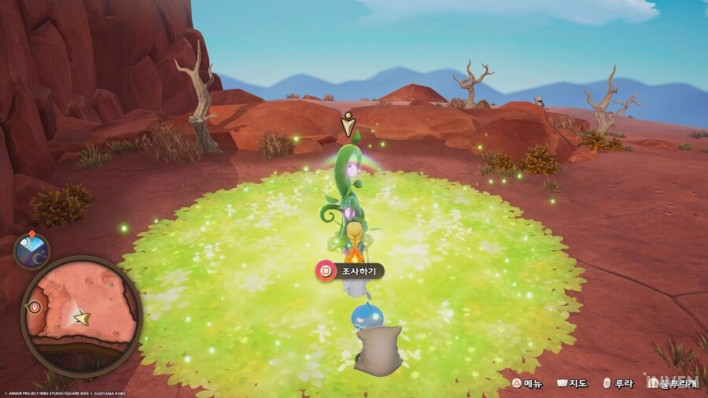
We noticed that the world takes on a shape close to a small sphere, with terrain curving up beyond the horizon. Normally, game worlds are built in a wide, flat format. Is there a reason you chose such a unique shape? Also, because it's spherical, it can cause motion sickness—are there any measures to address this?
Shiraishi: As I mentioned earlier, our protagonists are cute young girls. You can think of the world's shape as incorporating those visual characteristics of the main characters.
As for motion sickness, it was reported among playtesters, so we were aware of it. That's why we prepared various motion sickness reduction options in-game, such as adjusting camera distance.
If the motion sickness is severe, players can turn on all anti-motion sickness options. While this inevitably delivers an experience different from our intended spherical world visual, we believe the top priority is ensuring players do not feel uncomfortable while playing. We have prepared various countermeasures, so please enjoy the game with options that suit you best.
Looking at Bianca's and Nera's traits, they are subtly different. Bianca leans aggressive, whereas Nera is defensive. Does the difficulty of the game change depending on which protagonist you choose? Also, does the unchosen character appear later as a rival or in another capacity?
Shiraishi: While there are differences in effects—such as which monster families are easier to recruit, or unique support skills called Master's Aura—the differences are not so massive as to break the game balance.
As you know, both Bianca and Nera are Heavenly Brides, and choosing whom to marry was a hot topic when DQ5 was first released. We wanted to offer that element of choice in DQM4 as well. It was also an intentional choice by Mr. Horii, but let me reassure you again—you can make your choice casually. It won't cause any issues in playing through the game.
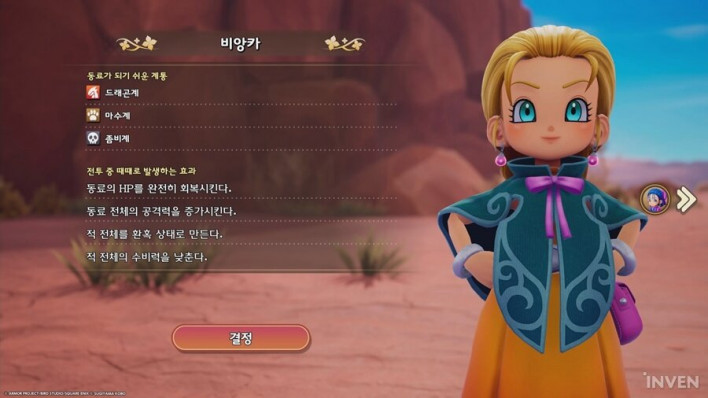
Because the overworld is spherical, it made me wonder: if you keep walking in one direction, is it possible to circle all the way around and return to where you started?
Shiraishi: Although it's spherical, the map is designed with boundaries, so walking straight in one direction will not bring you back around in a full circle.
Yokota: If we had made the world massive without blocking the edges, it might have been possible. But making it that large could cause issues, and it wouldn't fit the scope of DQM4, so we didn't design it that way. Of course, during development, someone did ask, "Can players lap the world on this spherical map?" (laughs).
Shiraishi: If players could roam completely without walls, they might keep spinning in circles and lose track of where things are. You can think of it as placing minor boundaries to prevent that. While the field structure is spherical, opening the map shows a flat map with cardinal directions, just like classic Dragon Quest titles.
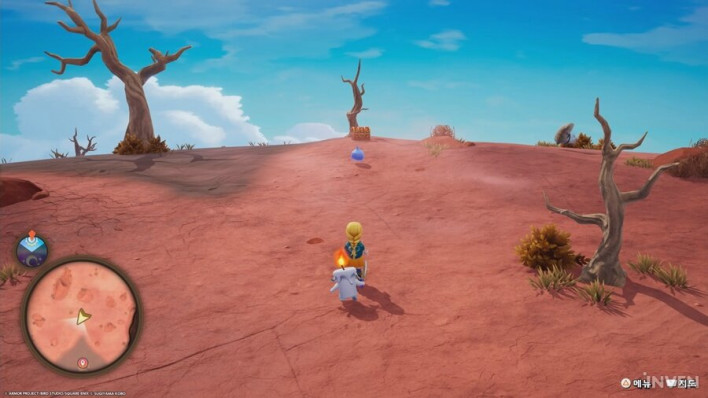
We understand that over 500 types of monsters appear in the game. You must have included both returning monsters and new additions; how did you balance the ratio between them, and what criteria were used to select newly added monsters?
Shiraishi: Fundamentally, whether a monster fit the world of DQM4 was the most important factor. Based on that, we adjusted which monsters to include or omit, as well as their ranks.
For new monsters, various proposals came up within the team. After narrowing them down based on system considerations, we re-evaluated them with deep respect for Mr. Akira Toriyama's original artwork. Since Mr. Toriyama has passed away, there are character and monster designs he didn't work on directly, but out of respect for the world he established, we selected monsters that fit that vision as closely as possible. Using those candidates, we made final decisions with input from Mr. Horii.
On that note, Director Yokota evaluates Mr. Toriyama's designs so strictly that he's practically a devout follower. If he said, "This monster doesn't fit Mr. Toriyama's work," it was cut immediately.
Yokota: I used to work as an advertising director, and back then I often commissioned illustrations from Mr. Toriyama, which might be why I became that way. Indeed, I hold a very strict standard regarding Mr. Toriyama's art, and I personally feel a responsibility to preserve the Dragon Quest world design.
Except for DQM2, all DQM games have featured main characters from numbered mainline titles as protagonists. It almost makes one wonder if future entries will continue featuring established characters. Is the development team aware of this sentiment, and what considerations do you have regarding it?
Shiraishi: We are aware of that expectation internally. However, at this stage, it is difficult to answer who the protagonist of a future entry might be.
Yokota: Deciding on the protagonist is a topic we agonize over every time. Featuring an existing character has both advantages and disadvantages. If we introduce an original protagonist, players might not show interest because they don't know the character, so as a spin-off series, it's something we ponder with every release.
However, that doesn't mean we will strictly use existing characters in the future. I don't even know yet whether we will make a sequel, let alone who the protagonist would be (laughs).
In the case of DQM3, there are still players enjoying online multiplayer battles to this day. However, we understand there was a lot of discussion around multiplayer. You must have received a substantial amount of feedback on this. How was that reflected in DQM4?
Yokota: To be honest, with DQM3, we simplified the battle system in hopes of welcoming many new players. Naturally, there were also many balance adjustments. Because of that, rather than being a flawless title, I think there were a fair number of shortcomings—meaning there were quite a few areas needing improvement regarding battle balance.
Since balance is a crucial element in online battles, we paid close attention in DQM4 to prevent the same issues from recurring. Above all, since the gameplay feel in online battles varies greatly depending on monster abilities, we thoroughly re-evaluated monster parameters for DQM4 so that certain monsters aren't repeatedly used simply because they are overpowered.
Shiraishi: It was something we reaffirmed through DQM3, but seeing how online battles keep players engaged over a long period, we improved the online battle specifications in DQM4 so players can enjoy them more comfortably. A prime example is cross-platform play. Unlike DQM3, players on different platforms can now battle each other, so we expect even more players to enjoy it.
Come to think of it, the protagonist of DQ5 was titled "The Legendary Monster Wrangler." That aligns nicely with the concept of Monsters. Given that the Heavenly Brides from DQ5 are the main characters, will the DQ5 protagonist make an appearance as well?
Shiraishi: We want to leave it to the imagination of players whether DQM4 is a world connected to DQ5 or a separate parallel universe, so please understand that we cannot reveal at this time which characters might appear.
However, as you may know from trying out the demo, DQM4's main characters Bianca, Nera, and Debora enter the world of DQM4 from the world of DQ5, so the feel will be different from the original game. We specifically designed it so that players can enjoy it without having played DQ5, so we'll leave the rest to your imagination.
Yokota: Considering that the DQ5 protagonist becomes the Legendary Monster Wrangler, it would make sense for him to appear as a DQM protagonist, but how should I put it... You could call it a rule of the Dragon Quest series.
A protagonist from a previous game has never reappeared as the main character in a subsequent title. The same was true for Terry, the protagonist of DQM1. Whether this is a strict rule set by Mr. Horii or not, it has become something of an unwritten law, so we intend to honor it.
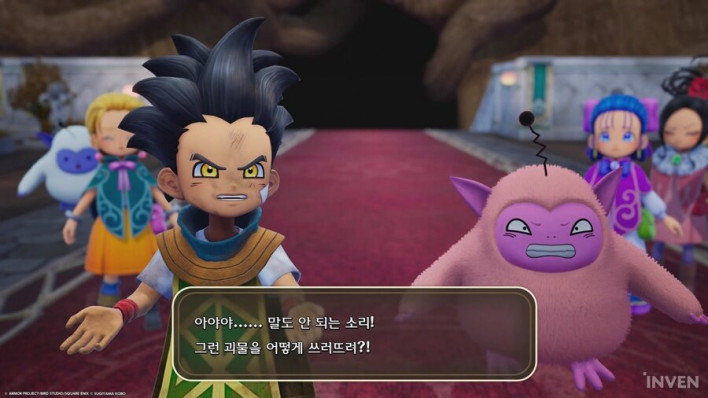
We're curious why Debora was excluded from the main protagonist roster. In the Nintendo DS version, she was added as a bride candidate—was there a specific reason?
Shiraishi: In our initial consideration phase, since the three of them together are known as the Heavenly Brides, we planned to include her as a protagonist candidate. However, based on Mr. Horii's judgment, it was narrowed down to Bianca and Nera. That was likely because Debora wasn't in the original game and only appeared in the DS remake.
However, that doesn't mean Debora's role is minor. Although she was added in the DS version, she plays a vital role for us and in DQM4. While her position is different from Bianca's and Nera's, she is treated as extremely important in the scenario. I think everyone will fall in love with Debora after beating the game.
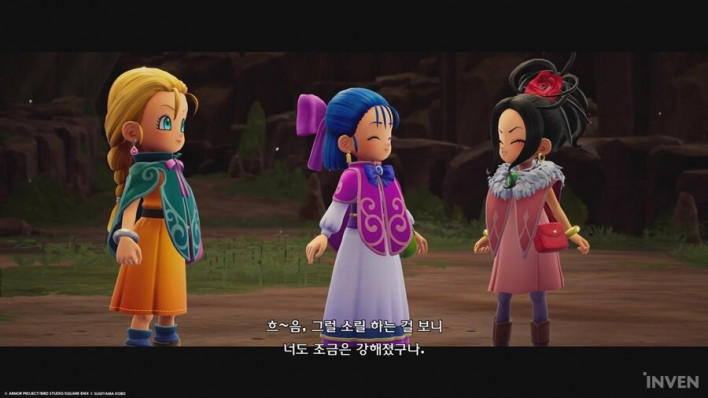
Finally, do you have a message for Korean players?
Shiraishi: A wide variety of monsters appear in DQM4, and I'm sure there will be monsters that you love. We hope you find those monsters and enjoy playing the game.
Yokota: DQM4 belongs to the RPG genre, but it is structured with a lighthearted narrative and a story easy enough for children to understand. That doesn't mean the game lacks depth, however. Through its signature synthesis system, we designed it so players can experience the unique fun of the Monsters series.
Our goal was to create a title that people unfamiliar with gaming or the Monsters and Dragon Quest series can enjoy casually. We would be grateful if those players give DQM4 a try as well.