Working in the gaming industry, you occasionally get asked this question.
"What game changed your life?"
As I get older, my answer shifts slightly, but standing on the threshold of forty, looking back now, it was World of Warcraft. Because of it, I got academic probation three times and ended up becoming a gaming journalist. Let's tweak that frequently asked question: not the game that changed your life, but what is the most memorable game?
Naturally, it's 'Onimusha'. The three desperate duels against the greatest swordsman of the Genma realm, followed by my father storming in, shouting, "All this kid ever does is play games!", a broken DualShock, a despairing me, and my showdown with Gogandantess delayed by a month. How could I ever forget that?
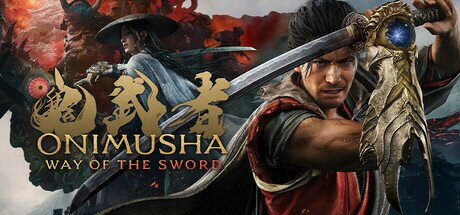
After crushing the first and second games and thoroughly savoring the third (skipping Dawn of Dreams...), even as that boy grew into a middle-aged man, there was no news of a sequel. That is, until 'Onimusha: Way of the Sword' (hereafter 'Way of the Sword') arrived. Thus, today's review will be packed with an overwhelming amount of affection, emotion, and obsession.
※ This article contains minor story spoilers for 'Onimusha: Way of the Sword'
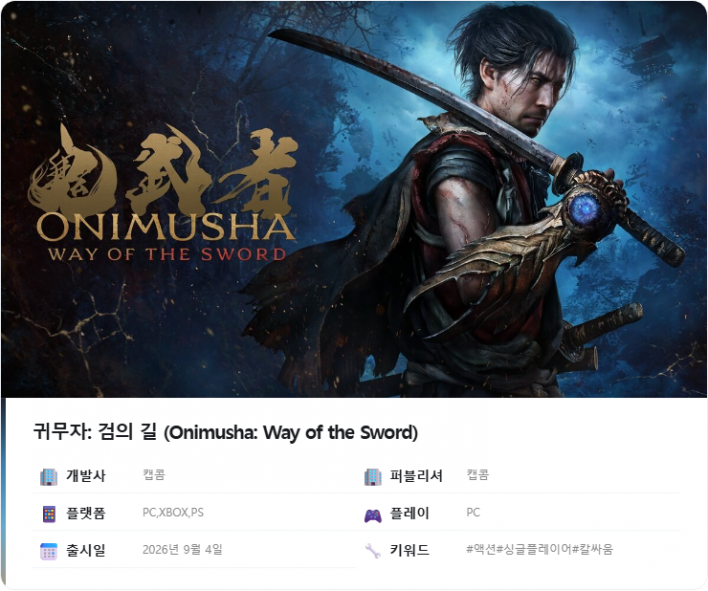
'Kengeki': Capcom's Action Peak Is Right Here
To sum up the plot of Onimusha as briefly as possible: in the underworld, there were once the 'Oni', guardians of humanity, and the 'Genma', a bizarre evil force, but the Oni were overwhelmed by the Genma and wiped out. The Genma constantly try to invade the mortal world by enticing those in power, and the warrior chosen by the gauntlet left behind before the Oni fell—the 'Onimusha'—stops them. This is the foundational storyline of the previous Onimusha series.
And this entire struggle unfolds at the edge of the protagonist's blade. Samanosuke Akechi, the hero of Onimusha 1 and 3, and Jubei Yagyu, the protagonist of Onimusha 2, are both master swordsmen who slice apart all kinds of Genma in the game with a single blade. (Granted, there was also a Western warrior played by Jean Reno who pulled off Issen counters using a whip and guns.)
The term 'kengeki'—sword action drama—is practically synonymous with the Onimusha brand. True to the developers' determination to inherit Onimusha's original identity, this latest installment pours the team's very soul into its swordsmanship action.

The essence of action games lies in mastery and response. Reaching a level of mastery where you don't even need to consciously think about a skill's effect or application, and responding correctly to various situations encountered in battle, form the core dynamic of action games. Combat skills that require no mastery and situations that cannot be countered are taboos in action gaming.
'Onimusha: Way of the Sword' packs in everything possible under this overarching principle. From basic normal attacks and heavy attacks to guard-breaking skills, six distinct Oni Armaments with unique applications, and a bow—every single technique serves its own dedicated purpose.
When it comes to 'response', the options expand even further. Beyond basic blocking and dodging, 'Onimusha: Way of the Sword' offers five counter-response methods: parrying triggered by timed blocks, deflecting activated by pressing an extra button during a block, concise 'Reflex Dodges' that evade incoming attacks, 'Grab Counters' to hit back against command grabs, and finally, the most difficult to execute yet overwhelmingly powerful core identity of the series, the 'Issen'.


What's fascinating is that each of these defensive maneuvers serves a distinct role. Parrying builds the 'Blazing' gauge, breaking the enemy's stance to create openings and boost damage, but it isn't as effective unless countering weapon attacks. Reflex Dodges effectively evade swift physical attacks and build energy for 'Reflex Slashes', yet yield modest returns in normal situations. Deflecting heavily depletes enemy posture and reflects ranged attacks, but isn't effective against every attack pattern. Grab Counters only work against grabs. And while the Issen is the most devastating, it is by far the hardest to pull off and carries immense risk upon failure.
Calculating and utilizing all of this in the heat of battle might sound daunting at first, but smart game design makes it feel intuitive. Reflecting Capcom's accumulated expertise across countless action titles, the game scales its complexity gradually, giving players ample time and opportunity to adapt until they naturally execute every skill in seamless, fluid succession.

On top of this sits the presentation. The combat direction in 'Onimusha: Way of the Sword' goes beyond excellence to reach a transcendent tier—simply put, no other game immediately comes to mind that can compare.


There are countless action games with wildly different directions, but within the realm of sword combat, 'Onimusha: Way of the Sword' delivers a level of action direction that eclipses everything else. The psychological mind games when trading blows with opponents, the spark-flying blade locks that ignite when weapons clash, the counter cinematic animations that deflect an incoming attack into another enemy, and the myriad boss mechanics leave absolutely nothing to fault.

All of this converges to create pure fun.
Games succeed or fail for many reasons, but an action game must first and foremost be fun in its combat—the fighting itself. In a genre where you clash constantly, if combat becomes tedious, it's a total disaster. Fighting in 'Onimusha: Way of the Sword' is immensely enjoyable. In fact, it makes you want to replay defeated boss fights that offer no further rewards simply because they are so thrilling.
Protagonist 'Miyamoto Musashi', Who Expresses Everything Through His Expressions
If the action described at length above forms the skeleton of the game, another element serves as its muscle and skin: the protagonist Miyamoto Musashi and the characters surrounding him. Capcom has crafted Musashi into a terrifyingly captivating protagonist.
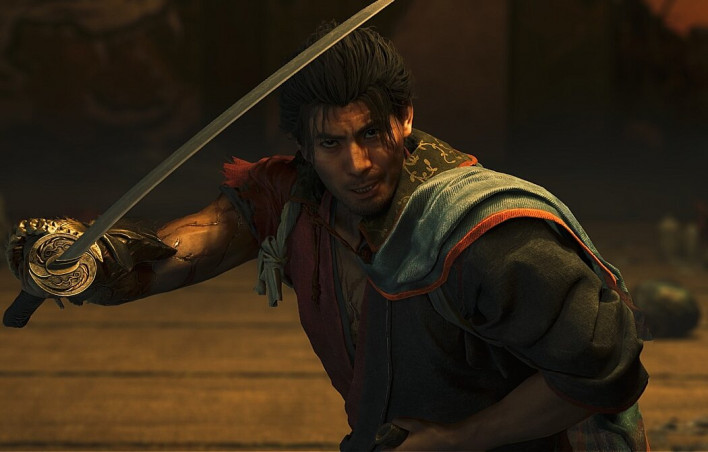
In the game, Miyamoto Musashi is a brash young wandering samurai roaming near Kyoto to prove his martial strength. Devoted to the 'Way of the Sword'—proving his worth purely through steel—he is suddenly ambushed and killed by a horde of Genma. Upon receiving the Oni Gauntlet, he gets a second chance at life, kicking off the journey.
Capcom's rendition of Miyamoto Musashi literally knows nothing except fighting. He is even more clueless than Jon Snow. He doesn't know how to care for people, cook meals, or even that you need oars to row a boat. Knowing zero history, when the spirit inside the gauntlet reveals her true name, when a writer staying at a temple introduces himself, or when the final boss's identity is exposed—while everyone else gapes in shock—Musashi stands there blankly thinking, "Who's that?"
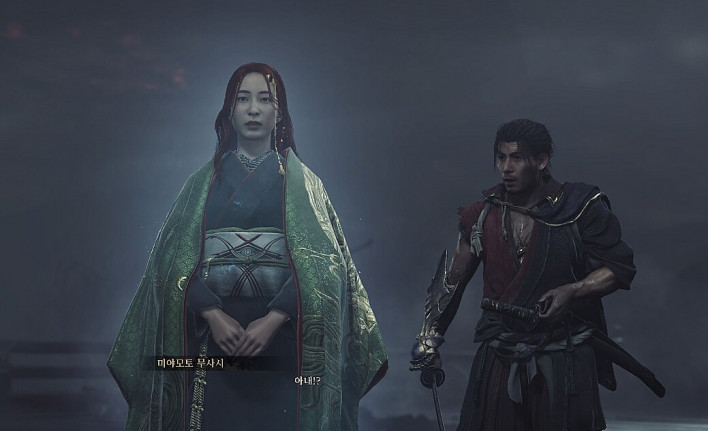
When it comes to combat, however, he is an absolute demon (figuratively speaking) who never bows to any foe. He also harbors a surprisingly firm philosophy regarding strength.
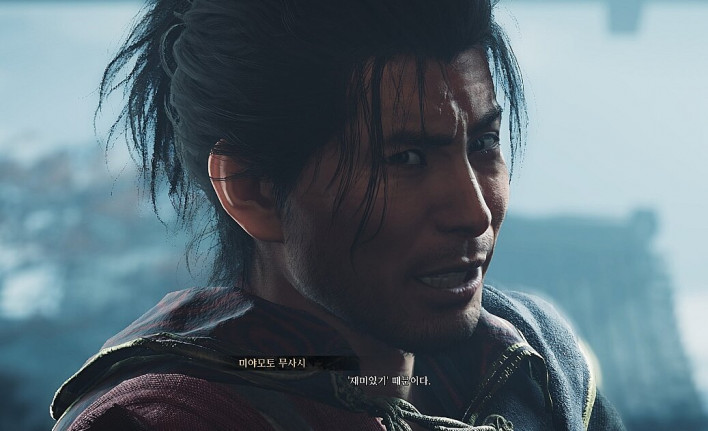
Capcom portrays this distinct personality completely unfiltered. He spits out curses the moment things go sideways, yet rarely slays humans, prizing the duel itself; he acts nonchalant and grumbles incessantly, yet gets the job done; he bristles with excitement before challenging formidable foes; he makes no attempt to hide his bewilderment or genuine fury at the Genma's atrocities; and he even sheds tears of bitter grief when parting with those he grew fond of despite his gruff demeanor.
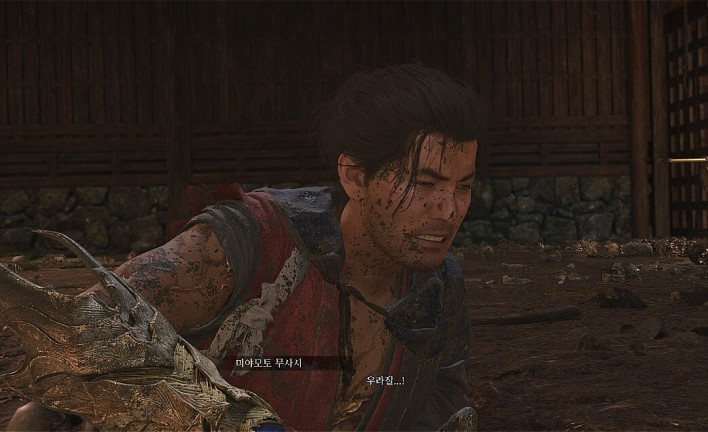
Thus, amidst the supernatural backdrop of transcendent Oni and Genma, the game continuously highlights the protagonist's grounded humanity—an element that could easily feel trivialized—lending the narrative immense immersion and conviction.
While it is explicitly a story-driven game where events unfold and Musashi reacts, playing it makes you feel, "Yeah, Musashi would definitely do this." Even while completing somewhat tedious side quests, you naturally go through with them, believing that Musashi would grumble all the way while fulfilling everyone's requests anyway.
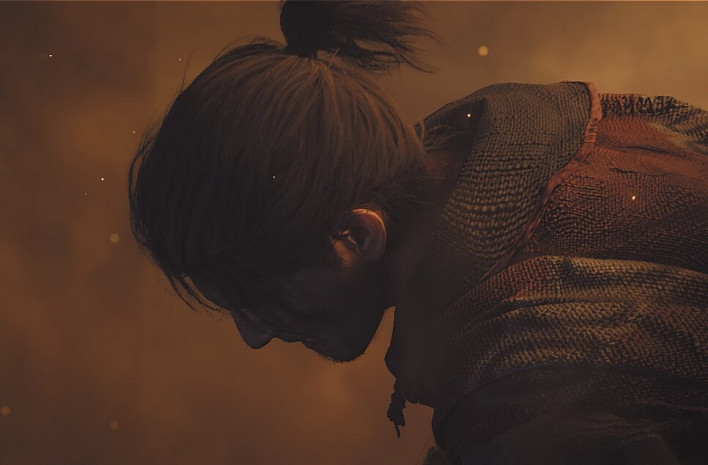
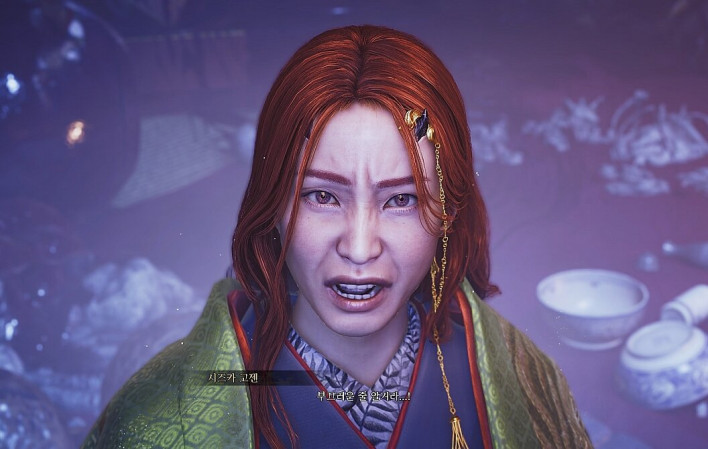
Furthermore, the characters around Musashi aren't limited to serving simple functional roles; they act as primary driving forces guiding the narrative alongside him. Izumo no Okuni, consumed by vengeance after losing her companions to the Genma yet lacking the martial power to exact it, and Shizuka Gozen, residing within Musashi's gauntlet to guide and advise him, both display multi-faceted depth as they pour out joy, sorrow, and rage.
The fascinating aspect here is that the foundation of all these emotional performances lies in character facial expressions.
'Onimusha: Way of the Sword' constantly zooms in on character faces. In these close-ups, characters express emotion so intensely that it almost looks exaggerated, and this dramatic presentation becomes another powerful driving force for the gameplay. Because it is so unreserved, emotional beats hit players straight on, allowing them to deeply empathize with each scenario.
And this connects directly back to the action mentioned earlier. The emotional buildup cultivated through cinematics before facing a rival spills straight into the ensuing clash, fueling the motivation behind boss fights. Some bosses initiate duels with cheerful levity, seeking purely to test martial skill against Musashi, keeping the player's mood light. In those instances, the fights unfold cheerfully; conversely, encounters with heavy emotional buildup escalate into desperate, agonizingly tense showdowns.
Kyoto Is Overcast Again Today
Having examined the two main pillars of 'Onimusha: Way of the Sword'—action and character depiction—it is time to look at other aspects. The biggest departure from previous entries lies in its level design. Past Onimusha titles were linear, arcade-style games focused on carving through foes while pushing forward. While several stages in this entry maintain that structure, an open area called Eastern Kyoto is embedded at its core.
And this Eastern Kyoto zone happens to be one of the game's rare disappointments. Eastern Kyoto hosts various side quests under the names 'Karmic Bonds' and 'Kyoto Tales', alongside various crafting and upgrade materials. As you progress, exploring Eastern Kyoto becomes practically mandatory rather than optional. Keeping up with increasingly formidable enemies requires unlocking new skills and upgrading gear, and materials gathered solely from linear story segments fall short of what is needed.
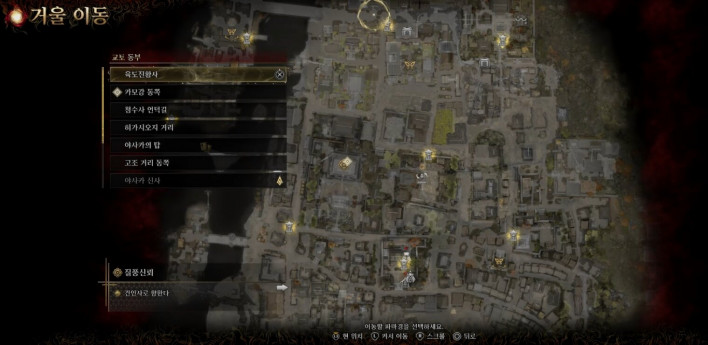
The problem is that Eastern Kyoto feels paradoxically small yet unnecessarily spread out.

For an open area, it's quite small. However, considering Musashi travels everywhere on foot, traversing it gets tedious. While 'Warding Mirrors' scattered across the map allow fast travel, if a side quest lands in an area without a nearby mirror, you have no choice but to grit your teeth and run all the way back.
Combats scattered across the open area aren't unplayable since the core mechanics are inherently fun, but because enemy variety isn't particularly expansive, fights feel repetitive. By late-game, you simply slice through mobs using three familiar skills. Furthermore, hidden treasure spots and quest destinations occasionally feature bizarrely convoluted pathways, making navigation itself feel like a frustrating chore.
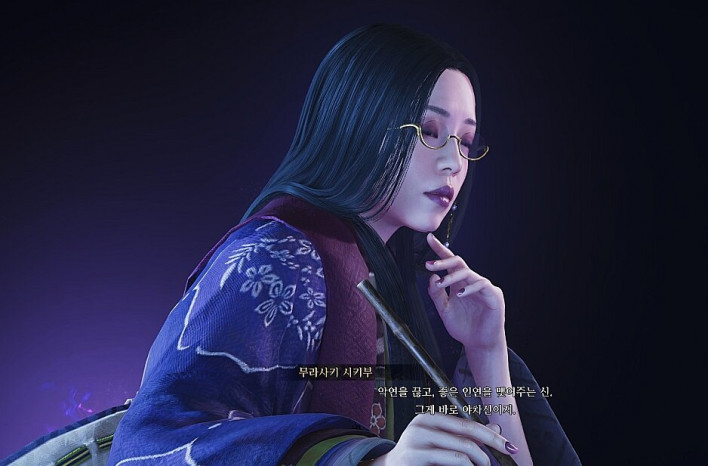
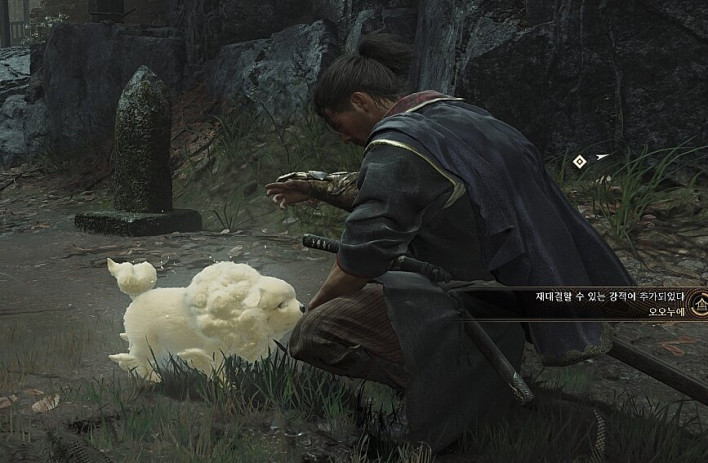
Although this open section doesn't take up an overwhelming portion of the game, it stands out as the single area where you feel genuinely bored. Since upgrades are practically mandatory, you are forced to trek through the same region repeatedly.
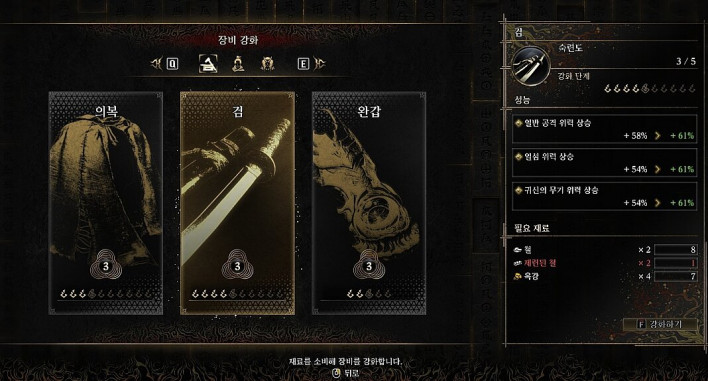
Furthermore, the gear upgrade system feels rather dry. While skill upgrades utilizing Power Stones and Oni Stones feel satisfying as new capabilities continuously unlock, enhancements for clothing, weapons, and gauntlets merely bump up flat stats. Across nearly 40 upgrade tiers, there are no cosmetic changes or new features—just minor stat adjustments like +3% attack power or +20 health. While unavoidable if you want to handle late-game enemies, incorporating parts of the skill tree here or offering visual changes would have provided far better motivation for upgrading.

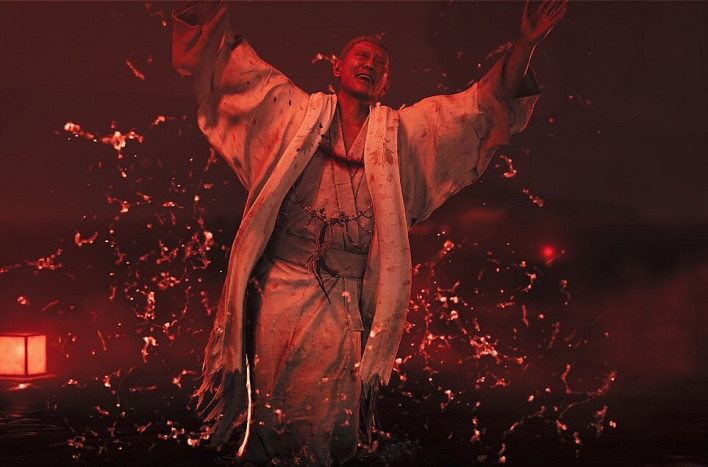
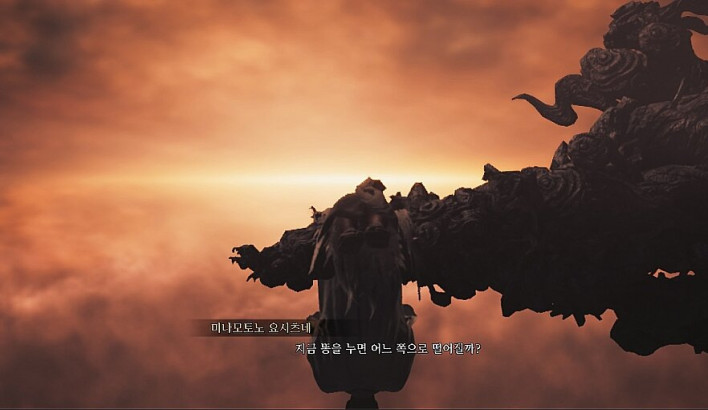
There is one more minor disappointment: the characterization of Minamoto no Yoshitsune, the game's main villain and final boss. In the narrative, Yoshitsune has slaughtered the entire Oni clan, taken command of the Genma realm, and is harvesting souls to open the Gates of Hell. Although established as a former Onimusha prior to his corruption, the story lacks a clear explanation for why he fell from grace and became a villain in the first place.
While historical lore portrays him with a questionable character, that alone feels insufficient. In-game, Yoshitsune offers no rationale for his actions, simply dancing around in madness while screaming "Make it red!" Granted, as the final boss, he delivers an exceptionally formidable fight.
Musashi and Players Walking the 'Way of the Sword' Together
In summary, 'Onimusha: Way of the Sword' is a powerhouse carriage driven by two steeds: peerless combat action and compelling character/emotional direction. Though the narrative adheres to classic genre tropes, emotional motivation driven by finely crafted characters pushes the player forward, while the pure delight of combat accelerates the momentum.
And throughout this journey, the true meaning of the subtitle 'Way of the Sword' shines through.
In the game, Miyamoto Musashi constantly seeks to walk the 'Way of the Sword'. To Musashi, the 'Way of the Sword' means proving strength—in short, victory is all that matters. Yet his mindset is somewhat rigid. To him, 'proving strength' means cutting down everything in his path using solely his own prowess and a single blade. Consequently, he despises the 'Oni power' thrust upon him against his will, even attempting to slice off the gauntlet with his sword before realizing doing so would end his life.
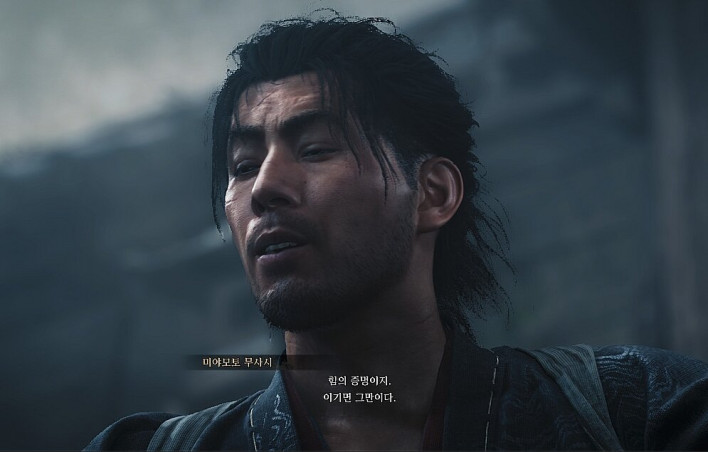
However, as the game unfolds, Musashi gradually grows, and his perception of the Way of the Sword evolves. He realizes that while he never sought the Oni's power, it was a power others desperately wished for, and that he must leverage it to protect those dear to him—returning to his original belief that victory is what truly counts. Even while borrowing that power, he clearly distinguishes that it is not his own, but merely a borrowed strength entrusted to him.
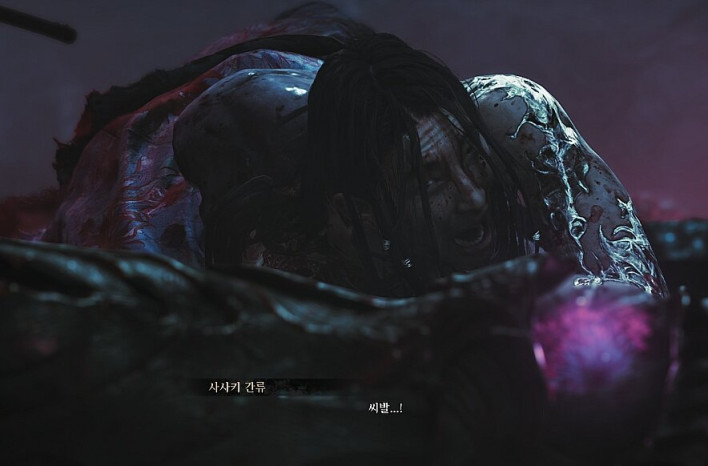
Conversely, Sasaki Ganryu—Musashi's rival encountered multiple times throughout the story—crosses the line by obsessing over power itself despite acquiring a gauntlet of his own. Through their conflict, the game contrasts viewing power as a means versus an end. Musashi, who uses borrowed power to walk his own path, ultimately sheds the gauntlet and reclaims his freedom; Ganryu, who made power his ultimate objective, clings obsessively to the gauntlet and souls even as his body tears apart.
Narratively, the 'Way of the Sword' undergoes a transformation. Initially, Musashi views relying strictly on human flesh and a single sword as the true Way of the Sword, but he comes to accept the Oni's power upon recognizing that it is a necessity for others who lack it. Famous as the founder of the dual-blade 'Niten Ichi-ryu' style, Musashi typically wields only one sword throughout the game. Yet at the climax, when delivering the final blow to his ultimate enemy, Musashi draws upon his entire strength along with the Oni's power to wield dual blades and strike down Yoshitsune.
While historical records note that Musashi founded Niten Ichi-ryu near his fifties, contextually, this moment signifies Musashi concluding the grand war against the Genma and stepping onto his true Way of the Sword, unassisted by borrowed strength. Afterward, Musashi absorbs the myriad souls pouring out from the collapsing Genma castle and finally removes the gauntlet.
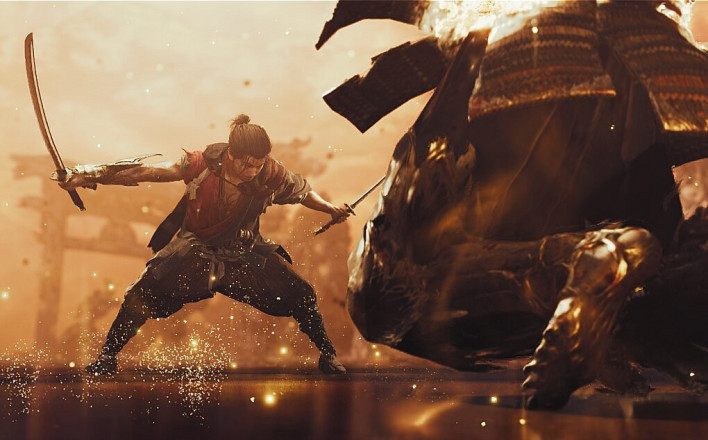
From a gameplay perspective, while players unlock countless techniques, swordplay against opponents remains paramount. As you slice and get sliced through endless battles, your skill improves—true to Capcom action game tradition—until you catch yourself landing Issen counters instinctively. While Musashi temporarily strays onto the Oni's path before returning to the Way of the Sword, players carve out their very own 'Way of the Sword' through fierce exchanges and intense duels.
And that journey is immensely enjoyable and fun—just as Musashi feels.
- Top-tier action and presentation
- Intense, memorable characters and emotional depictions
- Classic yet cleanly wrapped-up narrative
- Somewhat tedious open-world section
- Overly simplistic equipment upgrades
- Somewhat lacking enemy variety
Reviewed on: PC (Release Build)