This year's gamescom drew around 1,600 companies from 67 countries. With an exhibition space of 233,000 m², it filled Koelnmesse almost to capacity, marking the largest turnout in the show's history. Naturally, it is private companies that account for these numbers. Each studio competes in its own way to showcase its games to players and buyers from around the world. Above this private-sector battleground, however, lies another layer: B2B national pavilions.
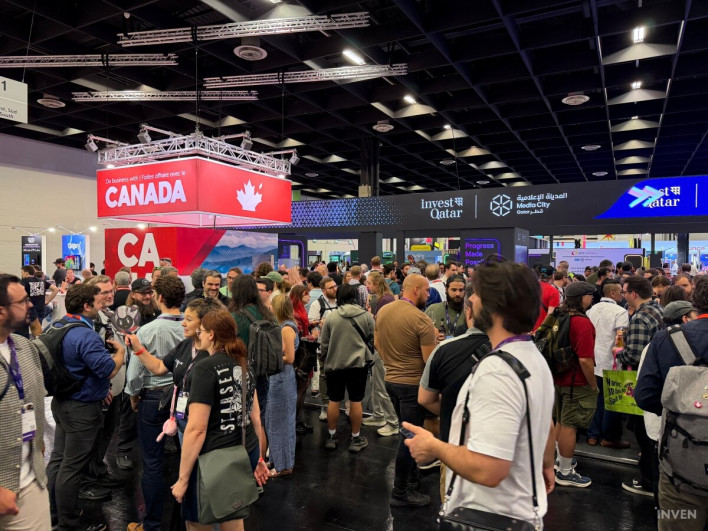
The message from countries setting up national pavilions is always the same: "Invest in our games." Though the phrasing and presentation vary, the underlying message converges into one. Up to this point, it reads like a standard state-support initiative. Step back, however, and a different picture emerges.
Gaming is leisure. A nation that has not resolved the basic livelihoods of its citizens can hardly place the promotion of the gaming industry on its national agenda. Seeking entertainment and industrializing play come after that baseline is secured. When a country stands on an international stage and says "Invest in our games," it is also declaring that it has already passed that foundational stage. A national pavilion serves not only as an industry showcase, but also as a venue displaying a nation's level of development and surplus resources. That is why national pavilions are diplomacy.
Diplomacy is exchange, but it is also competition. While national pavilions standing side by side may look like cooperation, in reality, they are structured to compete for the limited time of the same buyers. A crowded booth for one country means the neighboring country's booth was just as quiet.
In fact, national pavilions often adopt the formal structure of diplomacy. France is a prime example. At the French Pavilion operated by Business France, a reception breakfast was held with French Consul General Etienne Sur in attendance. It is a setup where a diplomat stands at a B2B exhibition booth to greet guests.
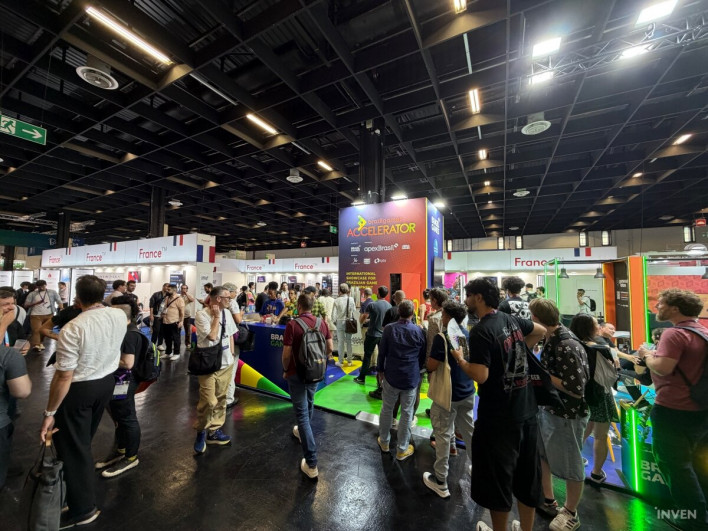
It is also noteworthy that the French Pavilion does not showcase games alone. Engines, middleware, sound, localization, and education—the entire range of services and infrastructure surrounding games—are grouped together under the single umbrella of "Pavillon France." Rather than selling individual games, this approach sells a country that builds games. Added to this is a financial structure that supports up to half of the participation costs through regional export programs.
The most impressive national pavilion on-site this year was Brazil's. The Brazilian Game Developers Association (Abragames), together with the trade and investment promotion agency Apex-Brasil, brought a delegation of 78 studios and companies. Additionally, the list of sponsors included Embratur (the Brazilian Tourist Board), Sebrae (the micro and small business support agency), as well as startup support agencies at both the city and state levels of São Paulo.
This speaks to how Brazil understands gaming. It means they view gaming as a national brand asset. In the background lies policy and institutional overhaul. Brazil revamped its legal framework to regulate development, distribution, and commercial use while incorporating investment attraction and tax incentives. The national pavilion is a physical showcase of those policies.
On the floor, the Brazilian booth was crowded. This matters because the success of a national pavilion ultimately stems from foot traffic. If the success of a trailer at Opening Night Live (ONL) is measured by the cheers of the audience, the success of a national pavilion is measured by how many people gather in front of its booth. A B2B exhibition area is no different; the target audience simply consists of publishers, investors, platform representatives, and foreign media rather than general attendees.
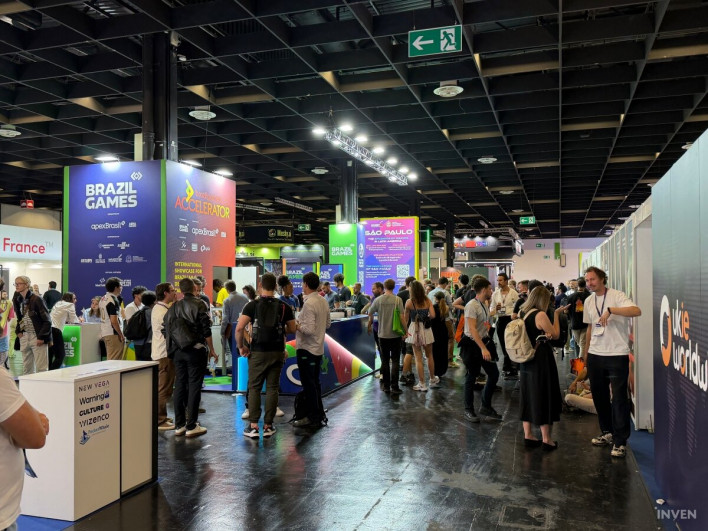
National pavilions that attract crowds share a common trait: they draw people in by any means necessary. They host receptions, serve light drinks, and offer refreshments. They create hooks to catch the eye of buyers walking past the meeting tables. The more people gather, the higher the exposure for the participating companies. Exposure itself is the true metric of state support.
Since the performance of a B2B joint pavilion is typically measured by the number and monetary value of business meetings, one might argue that crowd size is not the primary objective. However, that perspective holds true only when reducing a national pavilion to a booth rental agency service. The added value a national pavilion can generate lies in the moment someone not on the pre-scheduled meeting list stops in their tracks—and that is precisely what Brazil and France designed for.
In that sense, this year's Korea Pavilion felt like a lowercase "i" squeezed between uppercase "E"s. This is not to say it was wrong, but rather a point of regret. First off, it was quiet. The booth was tidy and meetings took place, but there were no noticeable features to catch the attention of passersby. It illustrates the difference between simply providing space and actively creating opportunities.
Of course, differences in crowd-drawing capacity can be explained by booth conditions. Budget dictates booth size, and size directly impacts exposure along visitor flow. The number of passersby alone varies depending on hall placement and whether the booth faces a main aisle. There are undeniably variables beyond the control of national pavilion organizers.
Yet tracing those variables back one by one leads back to the same fundamental point. Budget determines booth size, and the size of the budget reflects where this initiative falls on the list of priorities. Securing prime locations requires negotiation, and negotiation is built on years of participation history and delegation size. Brazil bringing 78 entities and France bundling adjacent gaming sectors under one banner were not outcomes achieved overnight.
It was not conditions that created the results, but attention that created the conditions. Game for game, there is no reason Korean entries should fall behind Brazilian ones. Brazil's gaming market ranks among the top 10 globally at around $2.6 billion per year, and South Korea's annual gaming export volume is even larger. Yet the country with the heavier industrial weight stands behind at the national pavilions.
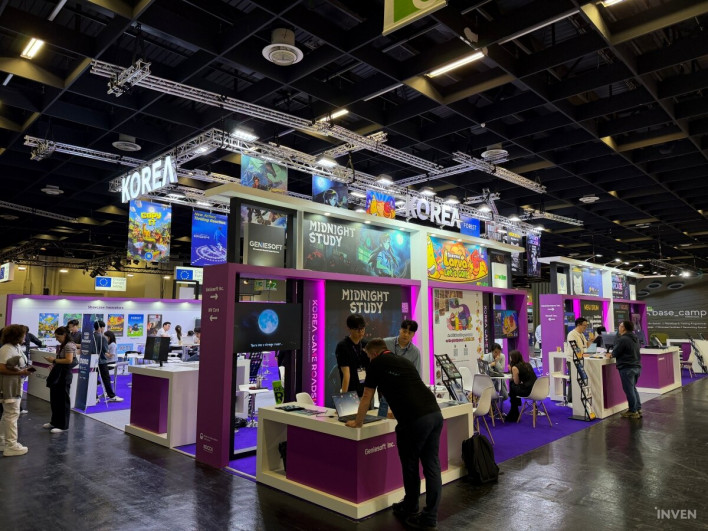
It comes down to how a national pavilion is defined. A country that views it as a stage for competition and a country that views it as a window for state support perform entirely different roles in the same hall.
In an interview last year, Krafton Chairman Chang Byung-gyu cited Brazil as a newly targeted market in the company's push to focus globally. While Korean gaming companies look to South America as their next frontier, that market's government brought 78 studios to Cologne. It is clear which side is turning the other's interest into an asset for its own industry.
What is needed is not a demand for a budget increase, but a redefinition of purpose. Shifting the definition of national pavilions from an overseas exhibition support project for SMBs to a national branding and diplomatic initiative changes the entire blueprint.
This year, the National Assembly visited gamescom for the first time. The delegation was led by Representative Cho Seung-rae of the Democratic Party of Korea, alongside Representatives Kim Seong-hoe (Democratic Party), Jeong Yeon-wook (People Power Party), and Lee Hae-min (Rebuilding Korea Party). What they needed to observe in Cologne was not how well our games are crafted, but rather who we are competing against and what is truly at stake.