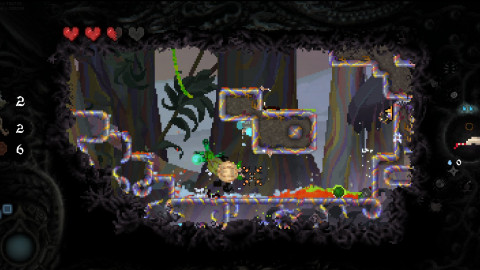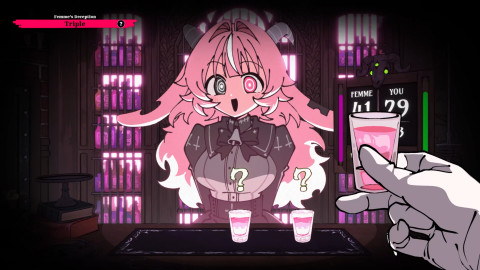
WEMADE founder and Chairman Park Kwan-ho has sold his entire 39.33% stake (13350738 shares) for ₩920 billion. The sale price per share was ₩68,910, which includes a management premium approximately 3.6 times the closing price on June 30 (₩19330). It is a rare 'complete exit' in the domestic gaming industry, with the founder leaving without retaining a single share.
This sale carries significant implications, as it involves a Chinese capital entity, utilizes a novel transaction structure, and marks the departure of a figure who represents the first generation of the Korean gaming industry.
Is Park Kwan-ho's Exit a 'Drain of National Wealth'
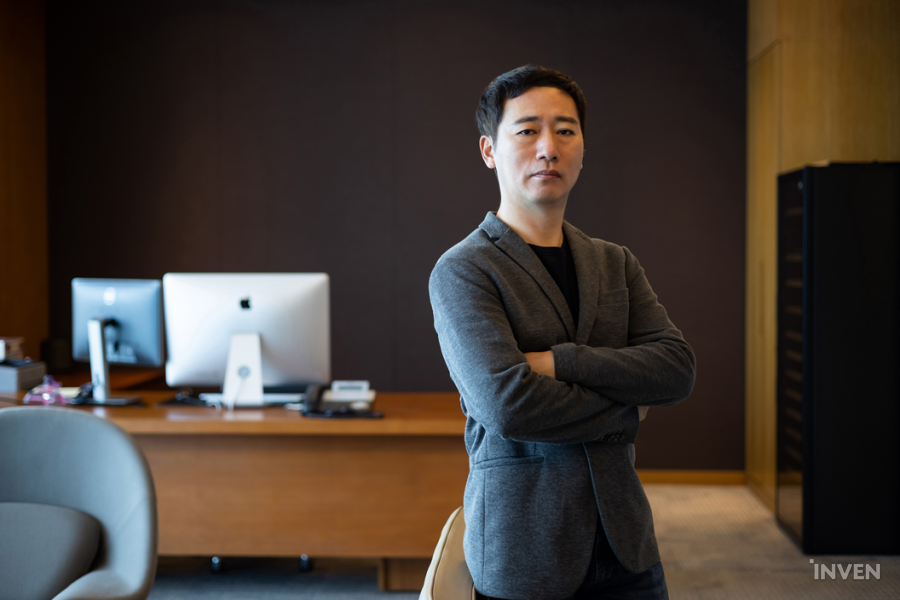
The ₩920 billion in cash is flowing from Chinese capital to a Korean founder. Looking strictly at the cash flow, it is more of an 'inflow.' Concerns over a 'drain of national wealth' typically refer not to the sale proceeds themselves, but to: #1 the future flow of profits being transferred abroad via dividends, and #2 the structural transfer of control over strategic assets to external parties. Resolving market skepticism regarding capital dependency and the outflow of future profits remains a task for the future.
WEMADE has unique characteristics. The primary revenue source for its core asset, the Legend of Mir IP, was China from the start, and WEMADE has effectively failed to protect its rights in that market. Even after winning multiple international arbitration cases, the company has been unable to collect ₩840 billion in damages due to delayed enforcement in China and the concealment of assets by opposing firms.
The current situation involves capital linked to the Chinese ecosystem acquiring and directly monetizing value that Korea was unable to effectively recover. This differs from the conventional view that 'national wealth enjoyed by Korea is being drained.'
Another factor defining the nature of this sale is its timing and context. WEMADE had been in a downturn following the two-time delisting of WEMIX and poor financial performance. According to the investment banking (IB) industry, the acquirer, NeoPulse, had already entered the scene in November 2025 to trade WEMADE's existing shares, resolving liquidity and contractual risks that had been entangled between Chairman Park and financial investors.
This transaction is less about the total seizure of a valuable asset and more about the alignment of interests between a founder seeking a way forward and Chinese capital aiming to enter the Korean market.
In an internal message, Chairman Park himself described the sale as a 'choice born of necessity,' noting the value the Mir IP generates in China and the opportunities in the North American and European markets. He stated, "To fully convert these two pillars into our own growth, we needed partners and resources commensurate with that goal."
Nevertheless, there is a clear aspect that could be termed a 'drain.' Actoz Soft, a co-copyright holder of the Legend of Mir IP, was acquired by China's Shanda (now Shengqu Games) in 2004. If even WEMADE, which had maintained an independent path, is incorporated into Chinese capital, the rights and profit structure of 'Legend of Mir'—a representative first-generation Korean IP—will effectively fall entirely under the influence of Chinese capital.
What is being drained is not cash, but control over the IP. Ultimately, the answer to whether this constitutes a 'drain of national wealth' depends not on the direction of the cash, but on how one defines the scope of national wealth regarding control and future earnings.
A Different Path from Tencent... The Alibaba Camp 'Just Buys It'
The standard until now has been the Tencent model. Tencent has secured positions as the second-largest shareholder in major gaming companies like KRAFTON, Netmarble, and SHIFT UP, but has refrained from touching management. It is a strategy of gradual 'stake encroachment' that avoids formal control while exerting influence through levers like publishing and game licensing (ISBN).
The WEMADE deal crosses that line. It is a complete acquisition of management rights, involving not a minority stake but a 40.25% controlling stake and the replacement of the board of directors. The transaction was led by capital known to be part of the Alibaba camp. On the surface, the buyer is NeoPulse, a domestic entity established in October 2025, with 100% of its shares held by Hong Kong-based Shengsong Investment. It is not a structure where Alibaba is listed as a direct shareholder.
Nevertheless, the IB industry reports that Chen Wei, the CEO of NeoPulse, is connected to the Alibaba side, and that Alibaba personnel led the negotiations during the deal review process. The explanation is that an indirect structure was intentionally chosen to account for public sentiment regarding Chinese capital's investment in domestic gaming companies.
The difference in method stems from a difference in strategy. While Tencent's interest lay in game publishing and leveraging licensing, the Alibaba camp's calculations include not only game IP but also the WEMIX-based blockchain and payment ecosystem. The nature of capital tied to e-commerce and fintech has acted in a way that secures both game IP and payment infrastructure at once. This transaction is interpreted as a foundation for practical cooperation to expand game and blockchain payment models into the global market.
In summary, this transaction is a method of definitively purchasing management rights while using a domestic entity with an offshore parent company to soften domestic backlash and the scrutiny of regulatory authorities.
The problem is that there is virtually no system to filter such trends. When rumors of an acquisition by a global conglomerate surfaced in 2025, there were calls to designate the gaming industry as a national strategic industry and to prepare institutional countermeasures against foreign acquisition attempts. The 'management acquisition' that was only discussed as a hypothetical has now become reality with WEMADE. If the same structure targets a top-tier market-cap gaming company next, it will be even harder to find the justification or means to stop it.
The Exit of a First-Generation Founder Signals Industry Limits
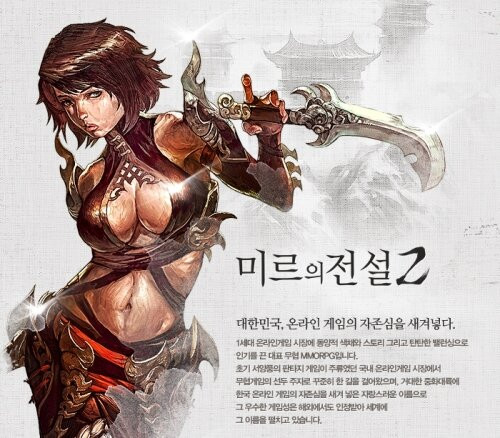
Chairman Park Kwan-ho, a former development team leader at Actoz Soft, founded WEMADE in 2000 and is a symbolic figure of the first generation of Korean gaming, having turned 'Legend of Mir 2' into a hit in the Chinese market. In an internal message, he wrote, "WEMADE is like a child to me," adding, "Just as a parent sends a grown child off into a bigger world, when that day comes, I intend to step back and sincerely cheer for its growth."
While this decision to leave, comparing the company to a child, is a personal choice, it is also a scene that shows the growth model of a generation has hit its limits.
Chairman Park himself clarified the background of the sale. He stated, "The gaming industry is no longer completed within a single country. The era of envisioning a company's future based solely on the Korean market has passed," adding, "Expansion into a larger market is now a condition for survival, not a choice."
This concisely illustrates the structural constraints shared by the domestic gaming industry, beyond the circumstances of WEMADE alone. The domestic market is saturated, and the largest adjacent market, China, is blocked by licensing requirements. The scale of investment required for AAA-level development and AI transformation is growing. The very environment where 'selling everything' of a company built by a first-generation founder becomes a rational option reveals the limitations facing the Korean gaming industry.
The ownership model, in which first-generation founders created IP and led companies for decades while holding management rights, is reaching an inflection point across the gaming industry, which has been reorganized into a global and capital-intensive sector.