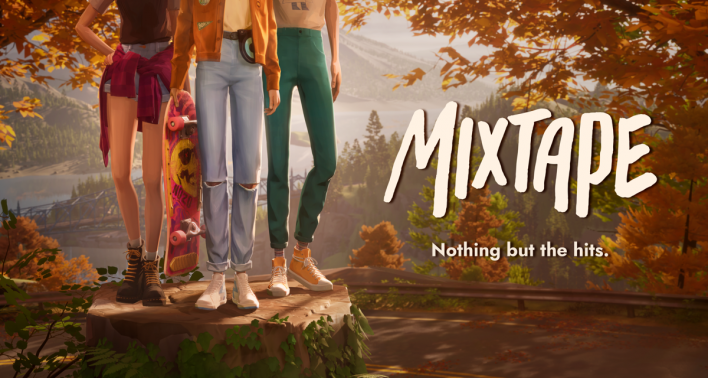
The recent release of the game 'Mixtape' has raised a fundamental question: can it truly be considered 'indie'? The game features nearly 20 commercially licensed songs. Given that the licensing fees for a single commercial track are by no means cheap, it is clear that a significant budget was poured into its production. Nevertheless, the game was released under an 'indie' label and has received high praise, with a 85 on Metacritic and a 87 on OpenCritic. Are we actually in a position to judge whether this game is indie or not?
Similar controversies have arisen before. Clair Obscur: Expedition 33 won nine awards at The Game Awards 2025, including Best Indie Game. Its developer, Sandfall Interactive, is a 33-person team, and the production quality and scale are quite far from the conventional image of an indie project. While it was widely acclaimed as a 2025 Game of the Year contender, its status as an 'indie' game sparked significant debate within and outside the industry.
This phenomenon is even more blatant on Steam, the global PC gaming platform. Currently, more than half of the games on Steam carry the 'indie' tag, which developers apply themselves. This includes projects with dozens of staff members and offices in multiple countries. The 'indie' tag is applied arbitrarily by anyone, and naturally, there is no mechanism to verify it.
The root of this confusion is clear: the definition of 'indie' itself is ambiguous. While the dictionary definition refers to games independent of the capital and control of major publishers, the reality is far more complex. Various criteria—such as financial or aesthetic independence and counter-cultural ideas—are intermingled, and no single metric can clearly distinguish between indie and non-indie titles.
The same game is often classified differently depending on factors like Japan's 'doujin' culture, whether it found success in Western or East Asian markets, or whether it was designed for mass-market sales. Ultimately, there has never been, and currently is not, a clear standard to categorize indie games.
However, the ambiguity of the 'indie' label is not just a conceptual debate; it translates into tangible benefits. It is an open secret in the industry that critics often 'grade on a curve' when evaluating indie games. The same flaw that would draw harsh criticism in a major studio title is often met with a lenient perspective in an indie game, with reviewers noting it is 'impressive for a small team.' This is not a matter of individual critic bias, but a structural difference in expectations created by the 'indie' label.
Pricing policy also plays a role. According to a study presented by Humble Games at the 2023 Game Developers Conference (GDC), consumer expectations skyrocket once a game's price exceeds $25, leading them to compare it directly with AAA titles. Conversely, this implies that expectations are set lower for games in the 'indie' price range from the start.
The word 'indie,' once a symbol of purity and originality, is rapidly devolving into a marketing term. Without a definition, there is no verification; without verification, there is no restraint. As long as this title continues to serve as a shield for criticism, this trend will only intensify. When we evaluate certain games, are we perhaps uncritically awarding high scores based solely on the 'indie' label?
'Indie' is not an unconditional mark of quality. The moment that title becomes a convenient excuse, the true value of indie gaming disappears along with it.


Sort by:
Comments :0