In June 2026, I had the rare opportunity to sit down with the developers of 'Diablo Immortal' for an online interview.
Blizzard's preview event this past February was packed with an unprecedented amount of news, enough to be considered a blessing for the Diablo fandom. The highlight among these announcements was the 'Spiritborn,' a new class coming to Diablo II, Diablo IV, and Diablo Immortal.
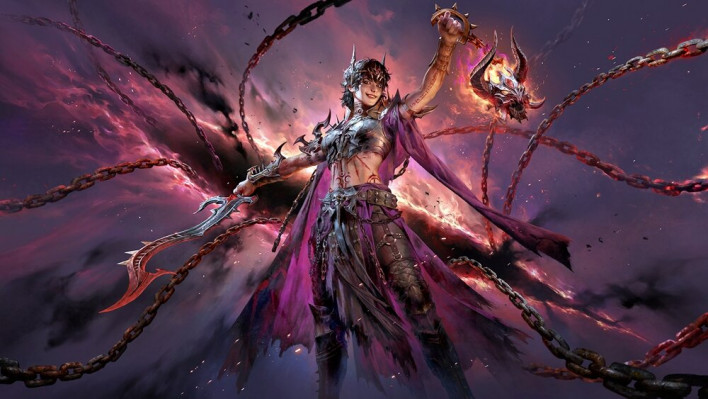
Interestingly, the Demon Slayer appears with a completely different concept in Diablo II and IV despite sharing the same name. In Diablo II, the Demon Slayer was somewhat aristocratic and arrogant, utilizing summons along with fire and poison elemental magic, whereas in Diablo IV, the class felt like a half-crazed lunatic—a theme reflected in their skills as well.
The 'Immortal' Demon Slayer is different again. Compared to the previous two, this version is relatively young and full of ambition. If the Diablo II Demon Slayer is a battle-hardened veteran and the Diablo IV version is a gritty field operative, the Immortal Demon Slayer feels like a fresh-faced 'MZ generation' recruit.
What about the actual gameplay and background? I spoke with the development team to find out.
I'm curious about the background of the Demon Slayer's story and gameplay mechanics compared to other titles. Also, the revealed footage shows the Immortal Demon Slayer as a relatively young woman. Could you explain any lore related to her personal history
Ryan Quinn = Certainly. The Diablo Demon Slayer is someone who has decided to utilize the knowledge and magic of the Vizjerei, a very ancient order of mages. The Vizjerei were among the first to summon demons into Sanctuary in ancient times, for which they were condemned and exiled by other mage clans because their knowledge and power posed too great a threat to Sanctuary and its people.
As time passed—moving from the era of Diablo II and Diablo Immortal to Diablo IV—people began rediscovering ancient records, tombs, and texts containing the true names of demons. With demons already present throughout Sanctuary and the war turning against humanity, some felt they had to try a different approach. The Demon Slayers are those who decided to use the power of the Vizjerei, knowing full well the risks. Sometimes they might ignite a fire they cannot control, but they take that risk to harness the power.
Additionally, the 5 patch will include an Origin Quest that covers the origins of the Demon Slayer. Players will infiltrate a Vizjerei tower, encounter the power of demon summoning for the first time, and experience the process of connecting with the Soul Eater, the Demon Slayer's core summon.
The Immortal Demon Slayer has a unique concept of summoning and sacrificing demons to continue combat. What is the key differentiator the development team wanted to emphasize compared to other versions of the class
Nan Jian = The biggest difference is that Diablo Immortal is a mobile-first game. We put a lot of effort into designing the class so that players in a mobile environment can have a diverse combat experience even with limited controls.

In Immortal, the number of skills you can use at once is limited. So, rather than simply increasing the number of skills, we wanted to make each skill versatile. For example, the Demon Slayer's 'Whip of Pain' is an attack skill that deals damage to enemies, but it can also be used on your own summons to stimulate and empower them.
We wanted to create various combinations and interactions within a limited number of buttons. Allowing a single skill to perform multiple roles was the key differentiator in the Demon Slayer's design, enabling players to create more diverse combat styles.
Some users often ask, 'If they had these abilities, why didn't they appear in previous series?' when a new class is added. The 'Demon Slayer' has been praised for solving this by launching in multiple titles simultaneously. Was this intentional?
Ryan Quinn = Yes. That sense of connection was exactly what we were hoping for. In fact, a character who deals with dark powers and summons demons is an idea that has been discussed several times during my time at Blizzard. It was a concept that fit very naturally into the Diablo universe, and the Vizjerei have been an important part of the lore since Diablo I.
As the Diablo series celebrated its 30th anniversary, we had the opportunity to introduce the Demon Slayer to Diablo II, Diablo Immortal, and Diablo IV simultaneously, and we thought this could be the perfect bridge connecting the three titles. It was also a kind of love letter to all the fans of Sanctuary.
Nan Jian = One of the interesting things about the Diablo series is that classes change over time. Some disappear, some are inherited in new forms, and others appear completely anew.
Not every class has to start in Diablo II. A class that first appears in Immortal might influence later works, or conversely, it might disappear. Just as professions in real history appear and vanish over time, Diablo's classes follow that same flow. I think that's part of the fun of enjoying the world-building.
According to the revealed information, the Demon Slayer is a ranged caster who can also act as a commander of a demon army. I'm curious how you balanced summon-focused play with direct combat, and which build you expect players to use the most.
Nan Jian = That's a great question. When designing the Demon Slayer, we developed it around four core pillars.
The first is, of course, demon summoning. The Soul Eater is the central entity for the Demon Slayer. The second is skill interaction—skills like the 'Whip of Pain' that can be used on both enemies and your own summons. The third is a secondary resource system called Hellfire. The Demon Slayer accumulates this resource whenever they take damage, and when the gauge is full, they can enhance certain effects of their next skill. The last is the portal. Many of the Demon Slayer's skills are designed around the concept of utilizing portals.
Rather than forcing these elements to compete for balance, we focused on allowing players to freely choose and combine these compelling elements. Some might play focusing on summons and skill interactions, while others might choose utility-focused play using Hellfire.
It's difficult to predict which build will be used the most. Instead, we focused on providing as many options as possible so that players can create their own Demon Slayer.
I suspect the Soul Eater's predation mechanism will be the core of the Demon Slayer. I'm curious how you came to design that mechanism and what kind of play you envisioned.
Nan Jian = That's correct. While there are many systems, the Soul Eater is the core of the Demon Slayer. It is a summon that stays with the player permanently, which is a quite unique design not only for Diablo Immortal but for the entire Diablo series.
Existing Necromancer or Druid summons are often summoned for specific situations—to deal with specific enemies or perform specific roles. But because the Soul Eater is always by the player's side, it had to be able to respond to a much wider variety of situations.
So our biggest concern was, 'How do we make a single, ever-present summon useful in various combat situations?' Our conclusion was not to make the Soul Eater a static entity.
The predation system is the result of that. The Demon Slayer can summon various temporary demons during combat, and the Soul Eater can devour them to become more powerful. It's not just a summon that follows you around; it becomes an entity that grows and changes according to the combat situation.
Also, the Soul Eater links with other skills in various ways. We put a lot of effort into ensuring that no matter which build you choose, the Soul Eater remains central to the Demon Slayer experience.
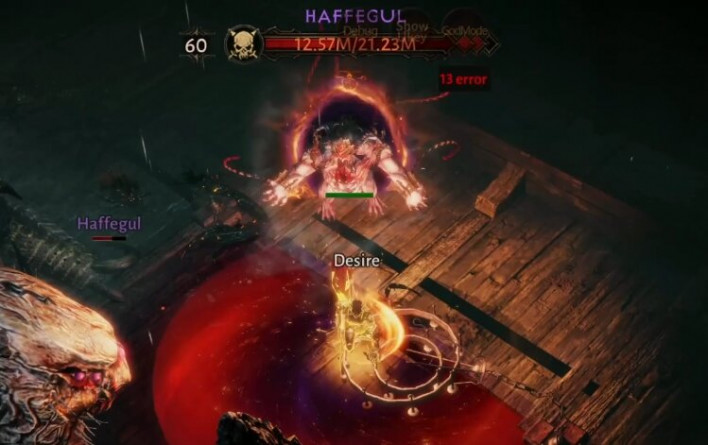
I'm curious about the design philosophy behind the Legend items used by the Demon Slayer.
Nan Jian = When designing a new class, very interesting and bold ideas always come up. However, we can't put every idea into the base skill set because some are too complex or only meaningful in specific situations.
For example, the Demon Slayer can basically summon three types of temporary demons. We thought playing with even more summons would be fun, but putting that into the base configuration would make it too complex and visually confusing.
So we put these ideas into Legend items. For instance, you can play by summoning many more demons through Legend items.
The portal skill is the same. Basically, it's focused on movement and utility, but through Legend items, you can change it into a portal that passes through Hell, gain buffs during movement, or create entirely different effects.
Our basic philosophy is clear. The base skill set focuses on delivering the core fantasy of the Demon Slayer. Unique and experimental ideas that are only meaningful in specific builds or situations are put into Legend items. Our design direction is to have roughly 90% reinforce the class identity, while the remaining 10% consists of elements that can completely flip the existing playstyle.
In the previous 4.3 'Heist' update, we could only go up to the gates of Lut Gholein. I'm curious about the Lut Gholein area being added in the 5 update. What changes have occurred, and how will it appear in the actual game?
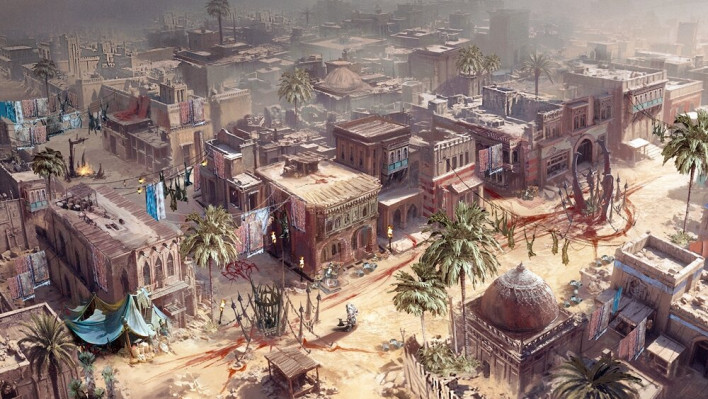
Ryan Quinn = That's a great question. Nearly 10 years have passed since Diablo II, and a lot has changed in Lut Gholein. People have aged, and the city has changed. We introduced the changes to Lut Gholein through the comic 'The Crippled City.'
Above all, for the past year, Lut Gholein has been completely occupied by Andariel and her demons. Players already witnessed the beginning of that curse at the end of the Heist storyline.
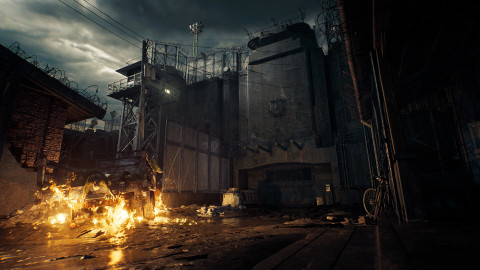
In the 5 update, 'Blood Gems,' you can see the harbor area where Andariel has been kidnapping people. You will also go deeper into the heart of Lut Gholein, where there is a horrific coliseum built by the demons.
Through this, we wanted to show the suffering the citizens of Lut Gholein are currently enduring. And in the story after the third quarter of this year, you will explore the demon-occupied Lut Gholein even further.
There seems to be a need for further lore development regarding how 'Spiritborn' survived organizations like the Viz-Jaq'taar, and how a playable Spiritborn can fight alongside characters like the Crusader. However, since some official Blizzard novels have not been translated into Korean, some Korean users are concerned that the narrative surrounding the Spiritborn might be told exclusively through novels. Is there a possibility that the Spiritborn's narrative expansion will be handled through novels?
Ryan Quinn = That's a very good question. We are trying to deliver all the narrative elements we've discussed in as many ways as possible.
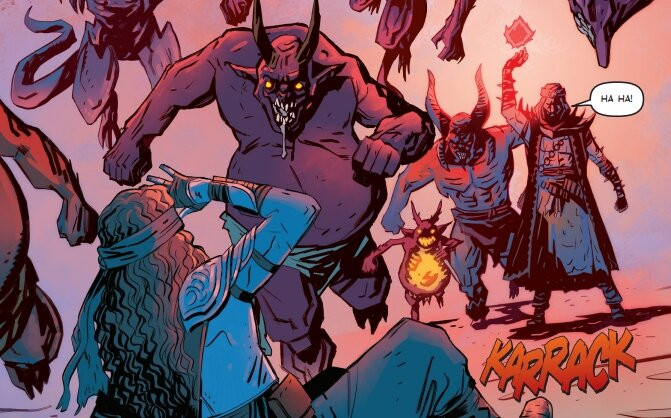
First, the relationship between the Viz-Jaq'taar and the Demon Slayer is covered in the recently released 'Sin Eater' comic. That comic has already been translated into Korean and released.
However, we don't want to rely solely on external content to convey this lore. We avoid structures where players must read every novel and comic to understand the setting. We believe external content should play a role in helping understanding and enriching the experience.
So, the history and background of the Demon Slayer are also included in Legend equipment descriptions, and you can experience them firsthand in the Origin Quest, 'Power's Price.' We also plan to continue covering the Demon Slayer's history and identity in the upcoming Lut Gholein storyline.
In particular, the supporting villain 'Caregiver' who appears in this story is a prime example of what happens when a Demon Slayer relies too heavily on demon summoning and the power of Hell. We plan to continue expanding the Demon Slayer's narrative within the game in this way.
Overall, the Immortal Demon Slayer's skill set looks closer to Diablo IV. However, if we faithfully follow the timeline of the entire series, Immortal is set between the second and third games, so even if the skill system evolved over time, it should theoretically be much closer to the second game. I'm curious about the planning intent behind the current skill design.
Ryan Quinn = From a lore perspective, we interpret the evolution of the Demon Slayer from Diablo II to Diablo Immortal and then to Diablo IV as a process of reaching for increasingly dangerous powers.
As time goes on, Demon Slayers begin to use more dangerous and reckless powers. That power leaves scars not only on the Demon Slayer's own soul and mind but also on the world around them. By the time we reach Diablo IV, the Demon Slayer reaches the level of transforming into a demon, which is an example of how deeply they have stepped into the power of darkness.
Through the three titles, we wanted to show the process of the Demon Slayer embracing deeper dark powers and even becoming desensitized to the boundaries of what is dangerous.
Nan Jian = From a design perspective, it wasn't our initial intention to make it similar to Diablo IV. It is true that we had several discussions with the Diablo IV team during the early stages of development, but what we considered most important was not following a specific title.
We referenced the lore and looked at what players wanted. At the same time, our top priority was making the most fun and satisfying Demon Slayer for the mobile environment.
We proceeded with the design based on the four core pillars mentioned earlier and chose the direction that best realizes the core fantasy of the Demon Slayer as we envisioned it. As a result, some elements may look similar to Diablo IV, but that was not our goal from the start.
We are a mobile game, and our most important goal was to create a class that mobile players can enjoy and play with satisfaction.
The prevailing opinion among users as to why the Demon Slayer isn't added to Diablo III is, 'Why would I use the power of a pathetic demon when I have a Nephalem who has defeated the Prime Evils?' I'm curious about your personal opinion on whether we will ever see it in Diablo III, even though the development departments are different.
Ryan Quinn = That's a very interesting question. First of all, I cannot answer what will be added to Diablo III in the future.
However, I can talk about the timeline and the Nephalem. At the time of Diablo Immortal, Nephalem barely appear. Valla, the Demon Hunter from Diablo III, is one of the representative examples in the actual game.
The Worldstone in this era was destroyed relatively recently, and the process of humans awakening to the power of the Nephalem is still ongoing. You could say that the overwhelming power of the Nephalem seen in Diablo III has not yet been fully revealed.
But I can say one thing. Diablo Immortal covers the era between Diablo II, where the Worldstone was destroyed, and Diablo III, where the Nephalem take center stage. And our content designers are very excited about the process of that era getting closer.
We are also very excited about what stories we can show as we get closer to Diablo III.
In terms of character personality, the Diablo IV Demon Slayer is somewhat cautious because they are clearly aware that they are not welcomed by those around them due to their existence and way of fighting. However, the Immortal Demon Slayer, as you progress through the in-game quests, shows a somewhat dogmatic, confident, and not-so-hidden nature about being a Demon Slayer. I'm curious if we will see more of this personality or tendency change in Immortal in the future.
Ryan Quinn = There are two main aspects.
The first is the character's personality itself. We wanted players to have a different experience every time they play different Diablo titles. So we set the Immortal Demon Slayer as a reckless, bold, and fearless character. This was a choice to differentiate them from the more cautious and academic Demon Slayers seen in Diablo II or Diablo IV.
However, just because the personality is different doesn't mean the way the world views them changes. Whether it's Diablo IV or Diablo Immortal, most people would think someone carrying a demon's head and performing sacrificial rituals is a dangerous person.
In fact, there are many exclusive NPC lines for the Demon Slayer in Immortal. Many NPCs react with wariness and distrust toward the Demon Slayer.
However, the world of Immortal is in a very desperate situation. Some people might try to avoid the Demon Slayer at first, but their minds might change when a giant demon appears in front of them. They might think it's better to receive help from a dangerous human than to be eaten by a demon.
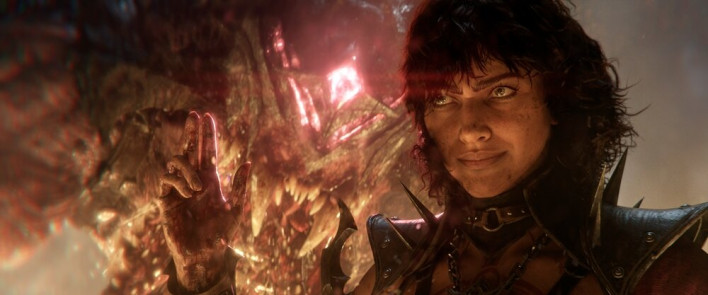
According to the roadmap, new quests are scheduled for each quarter. The showdown with Andariel is this year's quest line. I'd like to hear what you focused on most while presenting the main quest of this long one-year journey.
Ryan Quinn = We wanted Andariel to feel like a true mastermind. Andariel is not just a demon who kills people, but an entity that spreads anguish and mental suffering. So in this year's storyline, we are focusing on how she inflicts pain on humans.
Also, naturally evolving Lut Gholein into the timeline after Diablo II was an important goal. Players will feel like they are visiting an old friend. Some things will remain as they were in their memories, but others will have changed to be much darker and more horrific.
We wanted to show not only huge, cruel, and grotesque moments but also moments filled with human emotion. The core of this story is that while demons have occupied where you live, they aren't killing you.
So there is one question we want to ask: 'What is the worst pain a demon can inflict on a human?' We intend to show the answer in this story.
Lastly, please share a word for the Korean community.
Ryan Quinn = I am sincerely grateful for the passion of Korean players. Korean users are very passionate, very good at the game, and don't miss even the smallest details. As developers, we live by valuing those parts the most. Thank you for playing and enjoying Diablo Immortal. And good luck with the World Cup.
Nan Jian = I am also very grateful to Korean players. Korean users dig deep into even the most detailed parts of gameplay. Sometimes they play the game in ways we, as developers, didn't expect and show interpretations we never thought of.
They are very creative, highly dedicated to the game, and have a great competitive spirit. New challenge content is also prepared for the 5 update, and we plan to expand various content based on regional competition or cross-server play in the future.
We never forget players in any region, and we are striving to make a game that all players can celebrate and enjoy. Thank you for your continued support.

Sort by:
Comments :0