The announcement of the nominees for The Game Awards (TGA) 2025 on the 18th was as expected. Yet, the fact that it was expected is, in itself, quite a surprising event.
The biggest feature of TGA 2025 is the remarkable achievements of indie games. Because "Clair Obscur: Expedition 33" (hereinafter referred to as "Expedition 33") was classified as an indie game, three out of six nominees for this year's TGA Game of the Year are indie titles: "Expedition 33", "Hades II", and "Hollow Knight: Silksong". In the past, there has been only one nominee, such as "Balatro, Stray, It Takes Two, or Hades." Considering that not a single indie game was nominated last year, this represents a major shift.
The game that stands out among the nominees is Expedition 33. Expedition 33 has an astonishing 12 nominations, including Game of the Year, Game Direction, Narrative, Art Direction, Music, Audio Design, Role-Playing, and Acting. This is the highest number of nominations ever in the history of the TGA. Additionally, "Hades 2" and "Hollow Knight: Silksong" are also discussed as games that could potentially contend for Game of the Year. There are also mentions of indie games that are deserving of nominations but were unable to make the list due to a lack of available slots.
In particular, at the Golden Joystick Awards, where fans directly vote to determine the winners, "Expedition 33" swept major categories such as Graphics, Narrative, and Sound, winning the Game of the Year and achieving a record-breaking 7 wins.
 ▲ Guillaume Broche, CEO of Sandfall Interactive, representing Expedition 33, which set the record for winning 7 Golden Joystick Awards
What has moved indie to the center of game awards? This signifies more than just the number of 'three GOTY nominees'. It represents the advent of the concept of indie and III (Triple-I) games.
The state of indie games today shaped by change
1-1 Standardization of Technology Enhancements, Indie Games are Possible
With III, similar to the term AAA, the emergence of these large indie games has transformed the landscape of the indie game market, and more broadly, the video game market. At the core of this change lies the backdrop of 'popularization of production technology - distribution revolution - large-scale funding'.
The most significant factor is the closure of the technology gap through commercial engines. In the past, AAA game studios required hundreds of personnel for top-level graphic rendering and a dedicated engine that could be handled professionally for their games. Specifically, dedicated engines required improvements over time, which necessitated specialized staff and led to higher development costs.
However, with commercial engines such as Unreal Engine and Unity, it is now possible to create high-quality games with a certain level of graphical representation and technical completeness. Clair Obscur: Expedition 33 was also a small-scale studio developed by 33 developers at Sandfall Interactive, but it showcased a level of quality that was previously impossible to achieve by utilizing technologies and tools such as Nanite, Lumen, and MetaHuman in Unreal Engine 5.
In particular, the use of commercial engines has made it easier to secure specialized personnel. As the trend of using commercial engines increases even among AAA game developers, the possibility of developing games of the same quality has opened up.
The impact of change on indie games today
1-2 Opportunities for Indies in Digital Formats on Physical Discs
In this situation, the existence of Steam has brought about a change in the traditional distribution method.
In the past, game sales required licensing agreements with console manufacturers for physical disc (cartridge) sales, and relationships with offline retailers or wholesalers acting as intermediaries were also important. This was the role of the publisher. Historically, the publisher handled localization, promotion, server maintenance, and financing, but the establishment of launch strategies and distribution networks was one of its core competencies.
Publishers were also hesitant to invest in indie games. In the distribution process mentioned above, manufacturing discs and shipping costs became additional investment expenses. As a result, up to $100,000 or more was spent solely on game services. Only games that have proven their popularity through these initial investments are selected by publishers. For that reason, indie developer Brian Provinciano caused a huge impact on the market by releasing "Retro City Rampage" without a publisher, simply by packaging it himself.
However, with the expansion of digital distribution, the focus of sales is shifting to online. Initially, there was a period of curation where early Valve employees would personally select and list only a few indie games on the Steam page. However, in the mid-2010s, the Steam Direct publishing era opened, allowing games to be directly published by simply paying a registration fee.
The number of Steam users and PC gamers has steadily increased, making it possible to provide game services to gamers worldwide through Steam without any separate contracts. From the perspective of indie developers, unlike the previous method where they could only keep around 30% of the revenue, they could keep the remaining amount after deducting the 30% Steam fee. Additionally, there were no separate costs for disc production or distribution.
This change is becoming evident in recent profitability. At the 2025 Summer Game Fest Showcase, Geoff Keighley commented on the altered atmosphere, noting that indie games like "R.E.P.O.” and Schedule I were included among the top 10 selling games on Steam.
The state of indie games today shaped by change
1-3 From Distribution to Marketing, the Publisher's Transformation
As games that generate sufficient revenue without additional assistance emerge, many indie game companies are releasing their games through self-publishing without a separate publisher. This is based on the reasoning that success can be achieved without involving an intermediary publisher and splitting the revenue. However, in this market, publishers have also started to focus on indie games or create indie game-specific publishing labels to provide services tailored to indie games.
With the advent of Steam, the game distribution process has moved away from the core focus, and the primary role of publishers has shifted to game marketing and supporting developers. Indie publishers professionally take over the limitations of non-expert self-publishing, such as social media outreach and direct influencer contact. Furthermore, publishers manage PR tasks that are challenging for developers to handle independently, including large media promotions, participation in game shows and online showcases, and influencer marketing.
Developmental support continues here as well. Localization efforts for global services allow for a much larger market entry through more regional services than single-language services. Porting work for various platform launches is also conducted with the support of publishers. Additionally, pre-launch game testing and development site support, which would have been impossible with a relatively small team, are implemented.
For such services, there are publishers with specialized capabilities in the indie game sector, including Devolver and Annapurna, while large game companies like EA have also launched indie-focused publishing labels. In Korea, NEOWIZ has successfully diversified its portfolio through indie publishing by providing services for Skull, SANABI, and Shape of Dreams. Smilegate is also working on building an indie ecosystem by expanding its platform services and publishing with Stove Indie.
AAA in the Spotlight
2-1 Massive Budgets and Uncertainty
The growth of indie games is driven by improvements in their own development systems and changes in the market that can accommodate them. Furthermore, analysis continues to suggest that the decline in the credibility of AAA games, which were once in opposition to indie games, is also propelling the growth of indie games.
AAA, comparable to blockbuster movies, refers to key franchises or games produced or distributed by major game companies. As such, enormous budgets are invested. Furthermore, the manpower allocated to a single game is increasing, and the already substantial budget is growing to levels that are unprecedented compared to the past.
In fact, excluding Final Fantasy VII, which showcased a level of marketing that was unprecedented in the video game market of its time, the development cost of AAA games in the 2000s was around $20 million. Major blockbuster titles recorded around $30 million, and the development team consisted of about 100 people. However, in the 2010s, the development cost for the Call of Duty series, which received top-tier budgets, exceeded $150 million. By the 2020s, the average development cost of AAA games surpassed $200 million. In particular, major games had development budgets estimated to exceed $500 million, with GTA6 exceeding $1 billion, and it is estimated that over 1 trillion won was invested in development.
With the rise in development costs, the scale of development has increased from a few hundred people to over 2,000, and the development period is also extending, with more projects being developed for more than 5 years. This increase in costs is leading to uncertainty.
AAA Under the Spotlight
2-2 The Identity of AAA Born from Risk Aversion
With hundreds of millions of dollars invested in development, AAA games have become a business that cannot afford to fail. The assurance of a large budget has led to stagnation. However, beyond just the survival of the studio, the responsibility to the company's investors and shareholders also varies based on the game's results.
In terms of minimizing risk, it has become necessary to leverage the power of already well-established franchises. This has led to a market that relies heavily on safe sequels, remakes, remasters, and reboots. While these ensure verified sales figures, they inevitably limit creativity due to the already established frameworks. In particular, games like Concord, which invested $500 million but resulted in a service shutdown within just two weeks, have only increased the risk associated with new AAA games.

However, the repetition of similar games has led to increased fatigue towards AAA titles. Mid-sized studios, which should have continued creative experiments that large developers could not undertake, largely vanishedin the 2010s, resulting in a significant decrease in the development of AA-grade games. Ultimately, indie games have taken on that new role.
In the past, indie games were a category that struggled to satisfy everyone due to lacking craftsmanship and direction compared to AA games. However, the advancements and investments in technology mentioned earlier have laid the groundwork for indie games to compete with AAA titles. We are now in an era where games loved by the market for their unique creative play and games with craftsmanship comparable to AAA can all emerge from the indie market.
AAA in the Spotlight
2-3 Full Price Resistance as An Opportunity for Indies
The discussion of raising game prices naturally followed the large-scale budget invested in game development. The unified price of AAA multiplatform games, commonly referred to as full price, was around $50 in the early 2000s and remained around $60 until the 2020s. However, many major game companies raised their prices, with "NBA2K21" setting the console version price at $70. Additionally, Nintendo introduced an $80 game for the Nintendo Switch 2, raising concerns about the increase in AAA game prices once again.
In response to these price increases, game companies argue that the prices of games have remained unchanged for too long despite significant increases in development costs. On the other hand, users are expressing strong opposition to the price hikes, stating that it is undesirable to raise prices even though digital game sales have surpassed traditional physical disc sales due to innovations in distribution.
In this situation, the relatively low price of indie games is becoming a competitive factor. More and more users are finding it hard to justify investing in full-price games for the highest level of gaming experience. This increase in preference for social games and humor-based Co-op games, particularly among Generation Z, is also contributing to this trend (you can find more information on this in the article [New Generation of Steam, Why Focus on 'Cooperation and Humor?']).
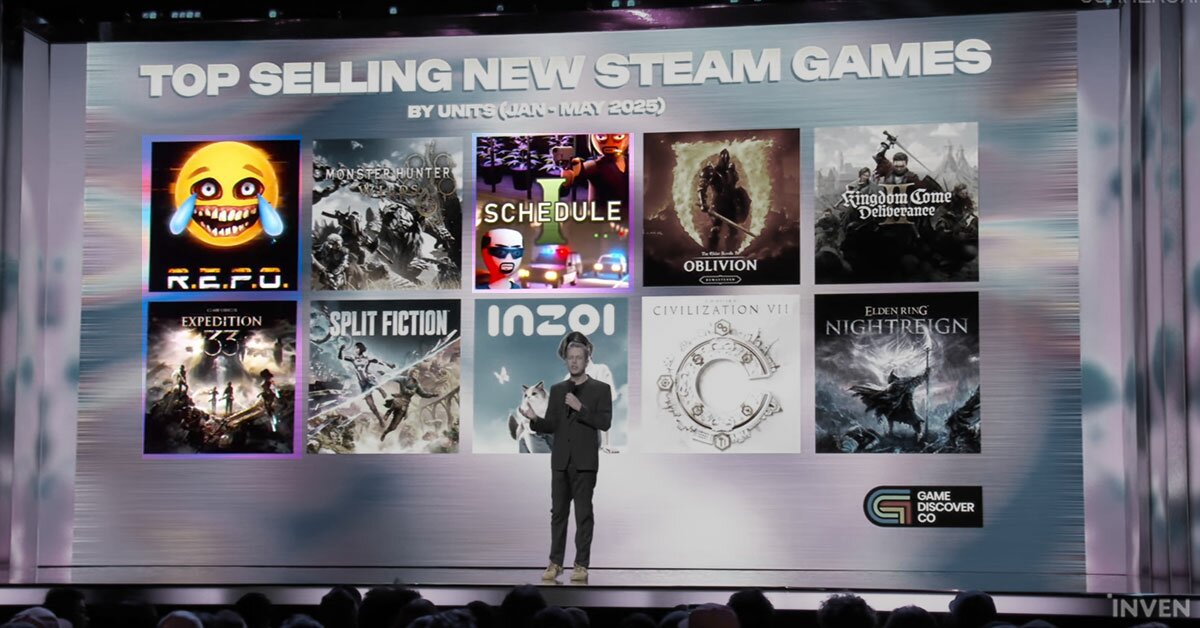 ▲ Indie games that have made their name among the top sales on Steam
Discount events also fuel this phenomenon. In the past, the prices of physical discs would only drop after a significant amount of time had passed since their release or due to excess inventory. If the supply was insufficient, even used copies would be sold at a premium, forcing gamers to purchase games at higher prices. However, in the digital market, even games with top-tier development invested are promoted with discount events led by game companies and distributors after a few months. The change in sales culture is increasing resistance to purchasing at full price.
The media is shifting from viewing game critiques merely as a marketing tool for AAA companies to evaluating indie and AAA games equally. This transition is playing a role in enhancing the exposure of indie games in game evaluation metrics.
3 Independence, Not Size, Is the New Standard for Indies
The rise in the technical growth, scale, and external quality of indie games is depicting the possibility of the vanished AA market being replaced by indie games. However, this is soon shaking the very definition of indie games. With the emergence of the term "III," there arises the question of how far we can consider a game that receives investment and has substantial development costs as an indie game.
AA games began to be actively reintroduced into the market after the release of Ninja Theory's Hellblade series. With development costs around $50 million, AA games have the advantage of providing a higher level of experience compared to indie games, while also presenting lower risks for large game companies, allowing them to experiment with new approaches. In fact, major game companies have started to assume the roles of mid-sized developers in this manner, leveraging their financial capabilities.
So, how can we distinguish between indie games and those that are not? In fact, this question has gained significant traction in Korea due to the global success of "DAVE THE DIVER."
DAVE THE DIVER was nominated for Indie Game at The Game Awards 2023. In reality, it had a small-scale development in terms of team size, and even at the completion stage, the team did not exceed 30 members. However, PD Hwang Jae-ho, who led the game development, stated that they do not consider themselves indie developers, as they receive regular monthly wages and development support. While others may perceive the game as indie, he expressed his respect for indie developers and his intention to avoid encroaching on their territory.
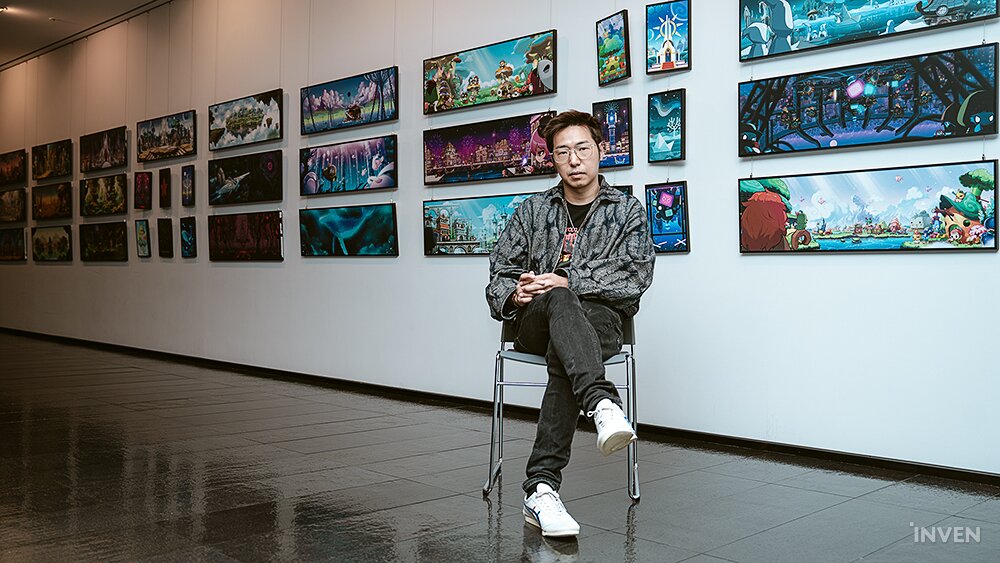 ▲ PD Hwang Jae-ho of MINTROCKET
"Expedition 33" was also produced with large-scale investments from Epic Games and NetEase. It received assistance from a publisher called Kepler Interactive. However, there is a strong tendency to classify "Expedition 33” as indie, particularly in the Western world. This is due to its small size of fewer than 100 people and the guarantee of creative independence.
And the game that first took this path and achieved worldwide success is "Baldur's Gate 3." "Baldur's Gate 3" was developed over approximately 6 years by Larian's seven global studios, with an estimated development cost of about $100 million. The game itself showcased top-notch quality and direction, earning several Game of the Year awards in its release year. It thus meets the investment and quality standards considered AAA game standards.
However, the background of Larian as an indie studio, its self-publishing service, and its independence and philosophy based on indie games have led some to view the game as an indie game. Therefore, some evaluate the game as an AAA indie model.
4 Creativity, the Value Proven by Indie Games, and Beginnings
The definition of indie games has always been ambiguous, and the criteria and evaluations have changed over time. High-quality games can be created even on a small scale, and indie games can also attract large-scale investments while maintaining creative independence.
Hideo Kojima, known for Death Stranding, has also expressed a similar opinion. Director Kojima leads his own indie studio and has stated that he embodies an indie developer who manages everything from game design to producing, promotion, and writing the scenario [Planning] Half of the GOTY nominees are indie games himself. However, he has clarified that he still creates AAA games, aiming to distinguish the complex meanings associated with indie.
Ultimately, the definition of indie games can no longer be defined solely by the scale of development or budget. Nevertheless, it is clear that games with the indie label are increasingly gaining recognition in the market by offering distinct fun and experiences. In the past, games that were small in scale or unable to deliver the deep experiences of AAA titles were often underrated.
The emergence of the new term, III, symbolically reflects this change. While not all games can receive large-scale investments, they might showcase something beyond AAA with a smaller budget by prioritizing creative independence.
 ▲ An era where the value of games is recognized beyond the terms AAA, AA, III, and Indie
The Golden Joystick Awards, TGA, and other game award ceremonies in 2025 may just be the beginning. The passion for good games that has been constrained by the AAA label, and the maturing market that recognizes this, may shine even brighter in the future. Indie games are not alternatives; they are positioning themselves as mainstream.
This article was translated from the original that appeared on INVEN.


Sort by:
Comments :0