Riot Games' 'Teamfight Tactics (TFT)' is taking its first steps onto a new engine with its 18th set, 'Enchanted Wilds.' The game is moving to Unreal Engine, a process that involves replacing the entire foundation of the game.
Riot Games unveiled the key details of Set 18 during an online briefing on July 8. Gameplay Director Alex Cole opened the presentation, and the announcement regarding the engine transition preceded the set introduction, underscoring that 'Unreal' is the central theme of this update.
The scale of this transition is significant. Director Cole described it as an unprecedented project, given the size of TFT, its live service nature, and its player base. The development team has spent the last few sets familiarizing themselves with Unreal Engine and preparing for its implementation. Nevertheless, the team acknowledged that there may be more bugs than usual on the live server, and they are committed to addressing any issues as quickly as possible.
The impact of the transition is most visible in cosmetic items. Because thousands of cosmetics accumulated over seven years must be adapted to the Unreal environment, not all will be available at launch. To compensate, Riot Games will temporarily provide players who own at least one strategist of a certain grade with access to all strategists of that grade. This is a temporary measure that will remain in place until the transition is complete. The dedicated TFT PC client is slated for an October release, after which Unreal-specific features will be rolled out sequentially with each set.
The Forest Spirit 'Guardian Spirit', the Second Tale of Sorcery
The theme of this set is 'Enchanted Wilds,' an ecosystem where power flows and shifts according to the cycles of day and night, life and death. It draws inspiration from Eastern mythology and the rugged wilderness and nature of the Runeterra universe.
The core mechanic is the 'Wisp.' Evolving from the 'Charms' system in Set 12, 'Magic Mayhem,' this system introduces fantastical creatures like foxes, deer, fish, phoenixes, and rabbits into the shop. Wisps appear as one-time temporary effects that assist in combat, providing resources like EXP or gold, or offering risky trades with the forest's inhabitants.
Here is how it works: You can purchase up to one Wisp per round, and they appear in the rightmost slot of the shop every other round. Most effects last for only one round. Wisps grow stronger as the game progresses, and more powerful Wisps come at a higher cost. Once the planning phase ends, the Wisp disappears, revealing the unit hidden behind it. Even if you don't buy a Wisp, it effectively allows you to see one additional unit in the shop, which could lead to finding that elusive 5-cost unit you were hunting for at level 7.
It is not just a simple rehash. The developers have categorized Wisps into seven color-coded types for easy identification during rerolls and restricted their purchase to the planning phase. From Stage 5 onwards, the Wisps that appear every other round are guaranteed to be combat-oriented, a feature designed to improve the competitive experience in the late game.
From Blossom to Coven: Distinctive Traits

Enchanted Wilds introduces a host of unique traits.
'Blossom' is a trait designed for players who want to actively utilize Wisps. Blossom units gain Attack, Ability Power, and Max Health, and their interaction with Wisps strengthens as the trait tier increases. At 3 tiers, all Wisps are empowered; at 5, Wisps appear in every shop; at 7, you gain gold when purchasing a Wisp. At 9 tiers, you can buy up to two Wisps per round, and at 11, Wisps are upgraded to Prismatic grade.
'Canyon Beast' is a flexible trait that utilizes the Alpha Mark. Activating three units grants an Alpha Mark, which can be applied to a chosen Canyon Beast to grant a unique buff. Applying it to the 1-cost unit Cinderling turns it into a scaling carry that gains Attack every time it casts its skill, while applying it to Scuttle Crab provides a team support effect where allies below 50% health recover 15% of their Max Health. Applying it to the 2-slot Elder Dragon even grants a Summoner's Rift buff.
'Tree Spirit' is a summon-based trait where positioning is key. You gain plants that you place manually at each tier. At 3 tiers, you acquire Stonebark Tree and Life Blossom; the former explodes to stun enemies when destroyed, while the latter should be placed in the backline as it buffs allies the longer it survives. At 7 tiers, Stonebark Tree and Deepwood Protector are added, thickening the frontline.
The Yordle trait 'Nimble' brings a large, fluffy Willump into the forest. This time, Yordle friends and Rammus ride on Willump's back instead of Nunu. The mounted unit gains Health and Attack Speed, and at 5 tiers, a portion of the effect spreads to the entire team. If you secure a Nimble Emblem, units like Elder Dragon or Hecarim can also be mounted.
'Coven' is a high-risk, high-reward trait that encourages losing streaks for greater payouts. Similar to Heartsteel from Set 10, 'Remix Rumble,' you accumulate Essence by eliminating enemies or losing player combat. Once you reach 40 Essence, you can choose to cash out or take the risk to aim for the next tier.
'Eerie Power' demands a scapegoat. When combat begins, an ally placed on a designated tile is sacrificed, and in return, the entire team gains Health, while Eerie Power units gain bonus stats based on the scapegoat's role, grade, and cost. At the maximum 6th tier, the scapegoat is not sacrificed but instead receives empowered stats. The variety of effects depending on what you sacrifice leaves plenty of room for experimentation.
'Hellfire' applies Burn and Wounds to enemies. While the effect is familiar, it now stacks with other burn effects like Morellonomicon or Sunfire Cloak. In the early game, even 1-cost units can help you maintain a winning streak, and in the mid-to-late game, higher tiers set shop slots on fire. Burning slots offer units that are 1-cost higher than usual, allowing you to skip mid-cost units and transition directly into high-value compositions.
5-Cost Units Reshaping the Battlefield with Unique Traits
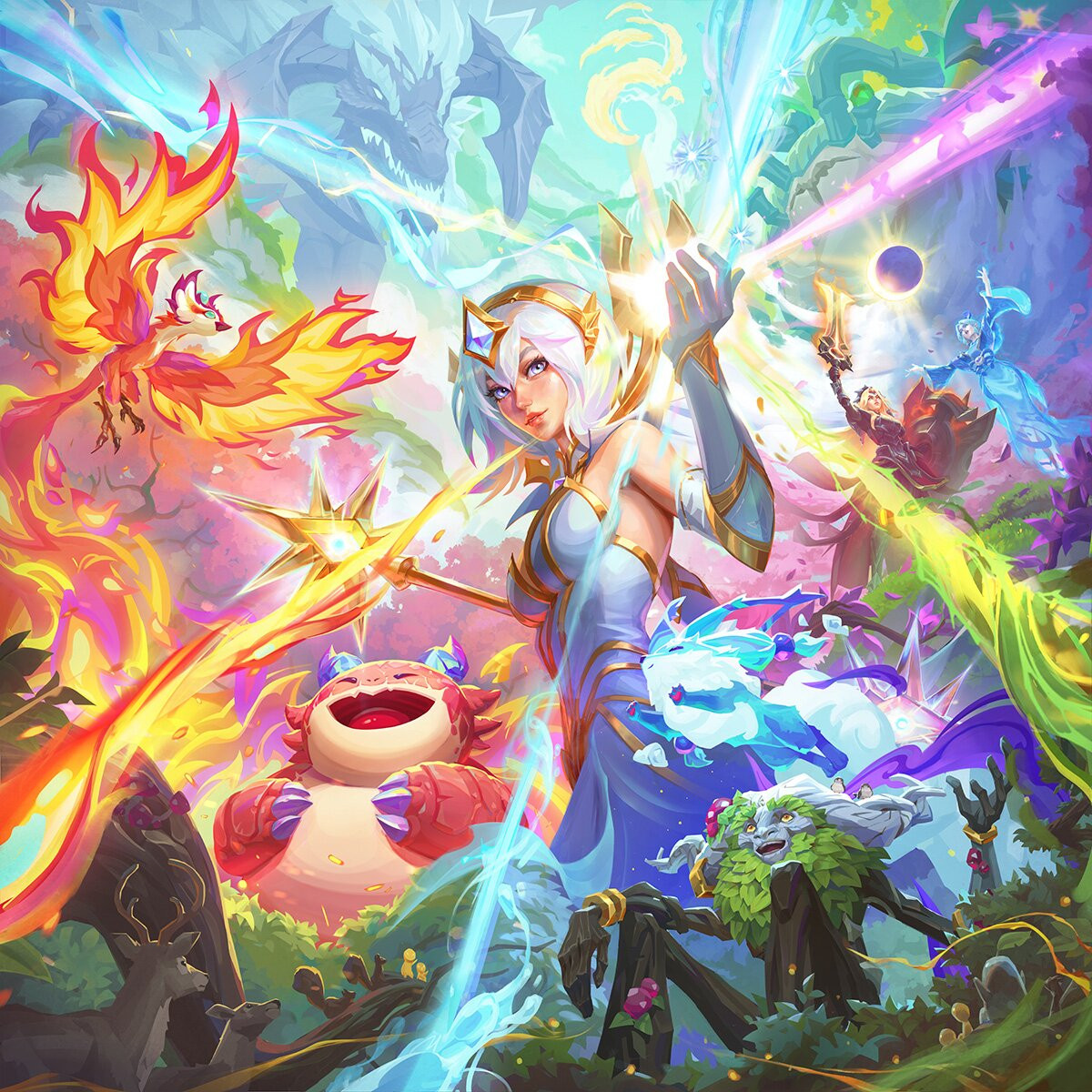
The 5-cost units in this set offer flexibility through unique traits.
Ivern possesses only the 'Green Father' trait. Each time he casts his skill, he collects seeds to create biomes like swamps, canyons, or waterfalls, each of which buffs units on those tiles differently. Water tiles grant Mana regeneration, mountain tiles grant Attack Speed, and forest tiles grant Health. Completing the 'Divine Willow' planted in the center of the battlefield yields a massive reward.
Draven is a unit for players who enjoy chaos. His basic attacks target random enemies within range to apply Bleed, and his skill throws two giant axes at the enemy with the most Bleed stacks, dealing the remaining Bleed damage instantly. His unique trait, 'Bounty Hunter,' lets you choose one of three missions, with harder missions offering greater rewards. Other additions include Maokai and Lux, who returns from Set 2. Every time Lux appears in the shop, she chooses one of the set's unique origins, increasing the trait count for that origin by two.
More than 10 units without general unique traits will also appear. Reflecting feedback that Set 17 lacked 5-cost frontline tanks, flexible tanks like Maokai and Taric have been added.
Cosmetics and the New Online Tournament 'Tactician's Gauntlet'
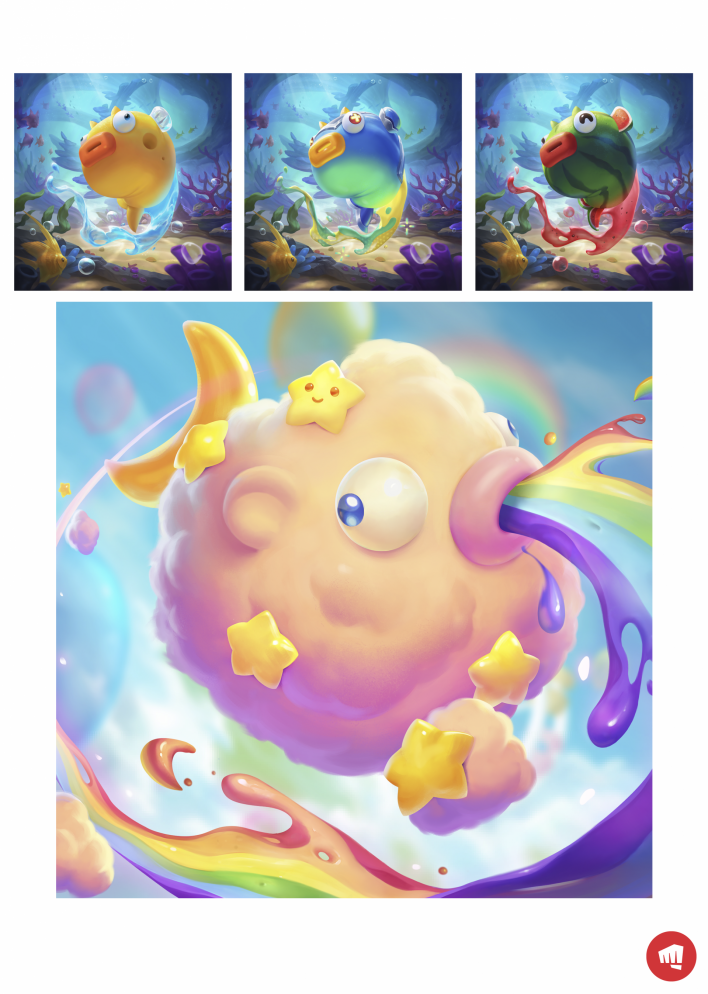
Among the cosmetics, 'Soul Fighter Jinx' with a TFT-original design was revealed first. It depicts her riding a rocket through the Soul Tournament using awakened soul power. The 'Jinx's Chaos Tournament' Arena, revealed alongside it, features Jinx providing commentary on the match after level 7. Other items include Liberated Spirit Blossom Aphelios, Mini Office Aatrox, and Liberated Coven LeBlanc.
Esports news was also shared. Dylan Fraley, Esports Product Manager, announced a new online tournament, 'Tactician's Gauntlet.' It is a competition where players from around the world compete for in-game rewards, with an entry fee of $10 per attempt. 32 players compete in 3 rounds, and you must place in the top 4 each round to advance to the next stage. In September, the 'Vegas Qualifier' will be held, offering a chance to earn a pass for the Vegas Open. The Vegas Open, the largest tournament of the year, will increase its participant count to 1024 and be held under a new name, 'Convergence Fest,' in conjunction with 'Rift Bound.'
The development team defined this set as the starting point for the new engine. They explained that the transition to Unreal has enabled visuals previously impossible on the old engine, such as 3D lobbies and 3D shared carousels, and has expanded design possibilities by making it easier to attach UI elements to traits and champions. A major overhaul of the Augment system is planned for Set 20, which will be able to utilize Unreal more effectively.


Sort by:
Comments :0