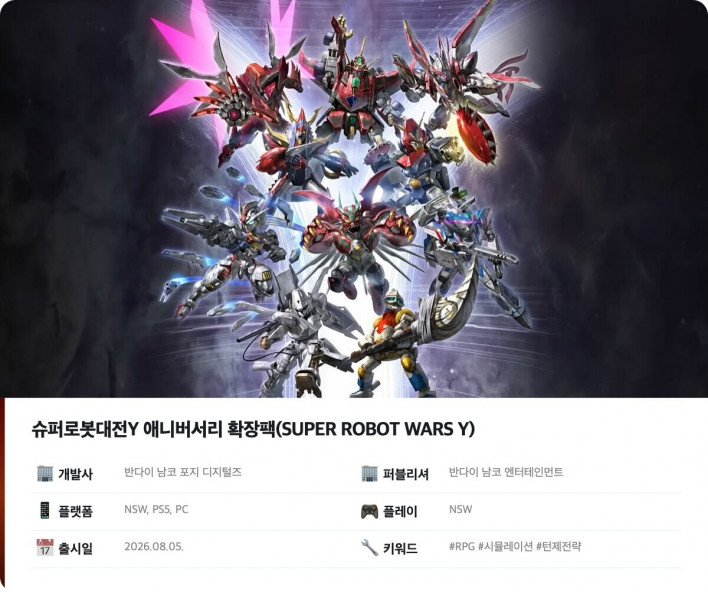
Super Robot Wars Y released its new 'Anniversary Expansion Pack' on the 5th. As the name suggests, it celebrates both the 35th anniversary of the Super Robot Wars series and the milestone of 20 million units sold. With no new standalone title arriving for the 35th anniversary, this expansion effectively serves as the series' latest major release.
In this sense, the expansion, titled ~Accelerating Future~—which appears to be the final one for Super Robot Wars Y—acts as a conclusion to the game's narrative. Unlike previous expansions that focused primarily on increasing the roster of playable units through new entries, this one features the long-awaited inclusion of Mobile Suit Gundam: The Witch from Mercury Season 2, along with the 'Final Dynamic Special' (Mazinkaiser, Mazin Emperor G, and Getter Arc), and introduces a variety of long-absent crossover combination attacks.
While this conclusion highlights the chronic issues that have plagued the series since its shift to global, multi-platform releases starting with Super Robot Wars V, it also holds value as a 35th-anniversary commemorative work that reassures fans that there is still a future for the franchise.
The Final Expansion for Super Robot Wars Y: The Witch from Mercury Season 2 and Crossover Combination Attacks
Unlike the expansion for Super Robot Wars 30 or the first expansion for Super Robot Wars Y (~Infinite Dimension~), this pack is not a simple mission add-on played within an existing save file. Instead, it is provided as a new 'playthrough' event. If you have cleared data, you can carry it over—retaining mission progress and upgrade levels—but the story branches into a new path distinct from the original ending.
As revealed in the trailer, the game begins by returning to a point in time when Messer was still present, before the battle with Godzilla. The core experience involves navigating this new branch, which introduces a previously unseen antagonist to create a narrative distinct from the main story.
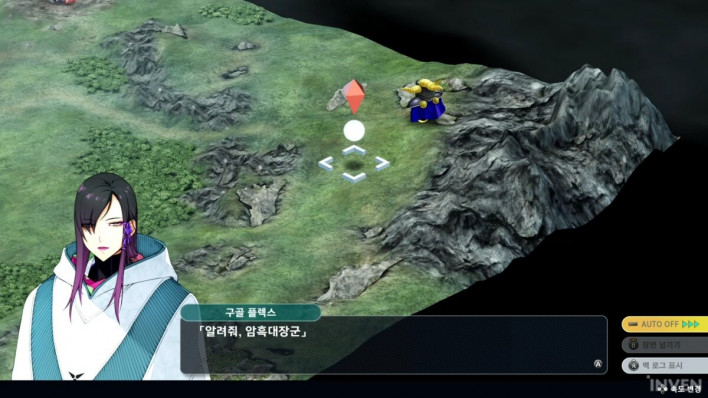
As mentioned at the outset, the overall feel of the work is that of a definitive conclusion to Super Robot Wars Y. As teased during the 35th-anniversary broadcast, this expansion deviates slightly from the previous trend of having numerous new entries converge across galaxies, space-time, and universes. Instead, it centers on The Witch from Mercury Season 2, weaving it into the original story and driving that narrative to its conclusion.
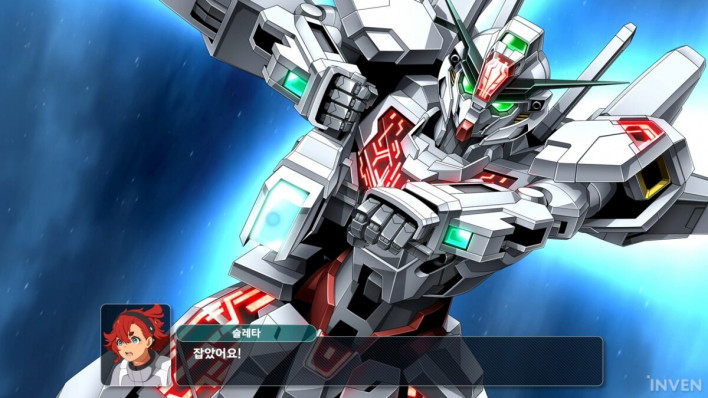
Thanks to this, The Witch from Mercury Season 2 fills in the gaps from Season 1, giving significant weight to key events within a relatively short episode count. Suletta's shocking kill scene is recreated, and naturally, new units like the Gundam Calibarn appear as playable characters. This is also why the path toward the original boss feels more focused, unlike the fragmented structure of the main game.
A major appeal of Super Robot Wars is experiencing the original stories anew through dialogue in the adventure segments and in-game events. However, many fans find the true joy of the series in seeing multiple universes blend together. This expansion delivers exactly those kinds of moments for such fans.
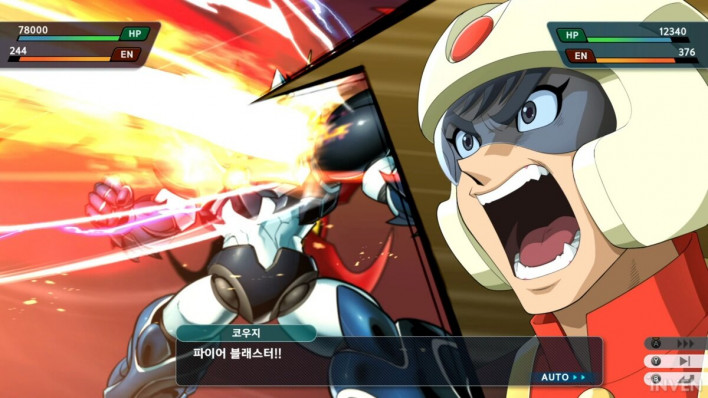

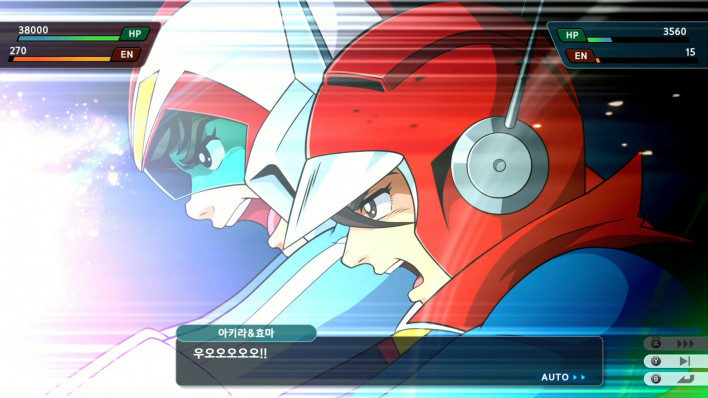
A prime example is the crossover combination attack. These joint attacks between robots from different series have been handled quite poorly in recent entries. While the number of these attacks is small, the game features iconic combinations like Combattler V and Raideen, or Bilbine and L-Gaim Mk-II—the kind of staging only possible in Super Robot Wars. The mission structure is also designed as a showcase for these combination attacks and new units.
Thanks to the 'Tactical Area Select' system introduced in Super Robot Wars 30, which allows players to choose missions while traveling between regions, the game can depict stories that transcend the boundaries of individual works through ace pilot conversations and crossover-exclusive adventure segments. Still, the satisfaction provided by the combat animations themselves is undoubtedly the highlight. Furthermore, the production quality generally feels more polished than previous DLCs.

A systemic drawback is that because this expansion story is essentially an 'IF' scenario that returns to the past relative to the ending, the content cannot be accessed by starting a fresh game. However, since you can continue playing through the expansion content repeatedly after its own ending—rather than returning to the very beginning of the game—the burden of starting over to enjoy the story of ~Accelerating Future~ is reduced.
Of course, because the game is designed with the post-ending state in mind, DLC characters participate naturally in conversations outside of their own specific story arcs. This further reinforces the feeling that this is the definitive end to the Super Robot Wars Y narrative.
Lingering Flaws from V and Ongoing Improvements: The Path Ahead for Super Robot Wars
Nevertheless, there are shortcomings. Animations where unit movements feel disconnected, such as the 'G-Meteor Formation' combination attack of the Gundam Wing quintet, remain disappointing. This has been a recurring issue in the global series from V-X-T-30 to Y. While illustration-based cutscenes are used heavily in combat, the variety of unit motions and movements is inferior to games from the PS2 and PS3 eras.
This problem is not unique to the Super Robot Wars series but is a limitation facing the entire robot animation industry. There are fewer animators capable of drawing robots, and interest in space-themed content is waning. Compounding this are the aging and stagnation of the core fan base, the mannerism resulting from repetitive, standardized structures, and the shrinking toy sponsorship model. Companies with the capacity to distribute robot toys on a large scale have narrowed down to BANDAI NAMCO and Takara Tomy, and even legendary studios for robot animation have stepped away from the genre.
As the number of animators who can draw robots dwindles, cutscenes featuring characters or static units have increasingly filled the void in combat sequences. In the high-resolution era, the difficulty of drawing has increased, while the workforce capable of handling it has decreased. The use of cutscene-heavy direction has become a sort of solution, making it a problem that is difficult to resolve quickly.
Furthermore, rising costs and limited demand make heavy investment difficult. Robot crossover games face cost-increasing factors like acquiring rights for numerous works and hiring original voice actors, yet it has become difficult to expect sufficient profitability. Many crossover titles—such as the Battle/Real Robot Front by Banpresto-Winkysoft, the Another Century's Episode (A.C.E.) series developed by Banpresto and FromSoftware, and the Sunrise Heroes simulation game—have all ceased to exist.
Single IPs are no different. Starting with 'Getter Robo: Armageddon' in 1999, Bandai Visual released an OVA series that continued through 'Getter Robo vs. Neo Getter Robo' and 'New Getter Robo,' while also introducing games centered on Getter. In particular, coinciding with the 30th anniversary of Getter Robo creator Ken Ishikawa's debut, they released 'Getter Robo Daikessen!', a simulator game featuring only the Getter Robo series. Although it was relatively free from copyright issues, it ultimately ended as a standalone title.
In the current era, Gundam is effectively the only single robot IP capable of simultaneously expanding its game presence and achieving commercial success. There is no guarantee that other popular works from the past will sell today.
Takanobu Terada, the former producer of the Super Robot Wars series, mentioned these commercial challenges in an interview with Dengeki Online during the 30th anniversary. He noted that if they were to make a Super Robot Wars game featuring only 'Showa' works (robot anime from the 70s and 80s), it would only sell in small quantities, requiring a price tag of ¥50k. The Showa era saw the birth of countless masterpieces, from the golden age of super robots starting with Mazinger Z in the 70s to the era of real robots ending with Mobile Suit Gundam: Char's Counterattack in 1988.
However, if such a game were released today, the target audience would be limited to those in their 50s. Therefore, the roster must include not only games for fans in their 50s who cherish those memories but also works for the younger generation discovering robot anime. Despite its long history, the Super Robot Wars series is not a blockbuster that sells millions of copies. Its expansion into the global market was born out of these very difficulties. Thus, the series continues amidst the voices of fans and realistic limitations, which inevitably leads to some points of frustration.
Extended Development Cycles, Remasters Filling the Void, and the Future
That is why this expansion, despite its flaws, shows that the developers understand, at least in part, what the fans want. It is not just about expanding the game's content through a high-priced expansion. It is about creating an immersive story and realizing the imaginative combinations of various works in a single world. Even if they aimed for that, they did not execute it 100% perfectly.
The Super Robot Wars series is, in the end, a game with no substitute. This does not mean they can simply keep doing what they have always done. Rather, they must move in a direction that satisfies both the fans who left the series long ago and the younger fans who have no interest in robot anime. To do this, they must go beyond patching gaps with DLC and increase the satisfaction provided by each individual title.
Some of these efforts can be seen today. The series, which used to be released annually, has extended its development cycle starting with Super Robot Wars 30, with a three-year gap for 30 and a four-year gap for Y. By not rushing production, developers can afford to invest more resources into a single title. Remasters have been introduced as a way to fill the gaps between these releases. 'Super Robot Wars Z2: Hakai-hen,' the first in the series to receive a remaster, was originally released on the PSP and is now difficult to play; beyond that, it features a combination of participating works from various eras that can attract new fans. Furthermore, the remaster approach allows for relatively cost-effective production.
Super Robot Wars Y made an effort to secure the long-term future of the series by switching from its long-standing engine to Unity. Based on that, they are preparing for the next 35 years of the series. Whether remasters and new titles can truly reflect the voices of fans and become the games they hope for—that is the mix of concern and expectation I feel after finishing this expansion.

Sort by:
Comments :0