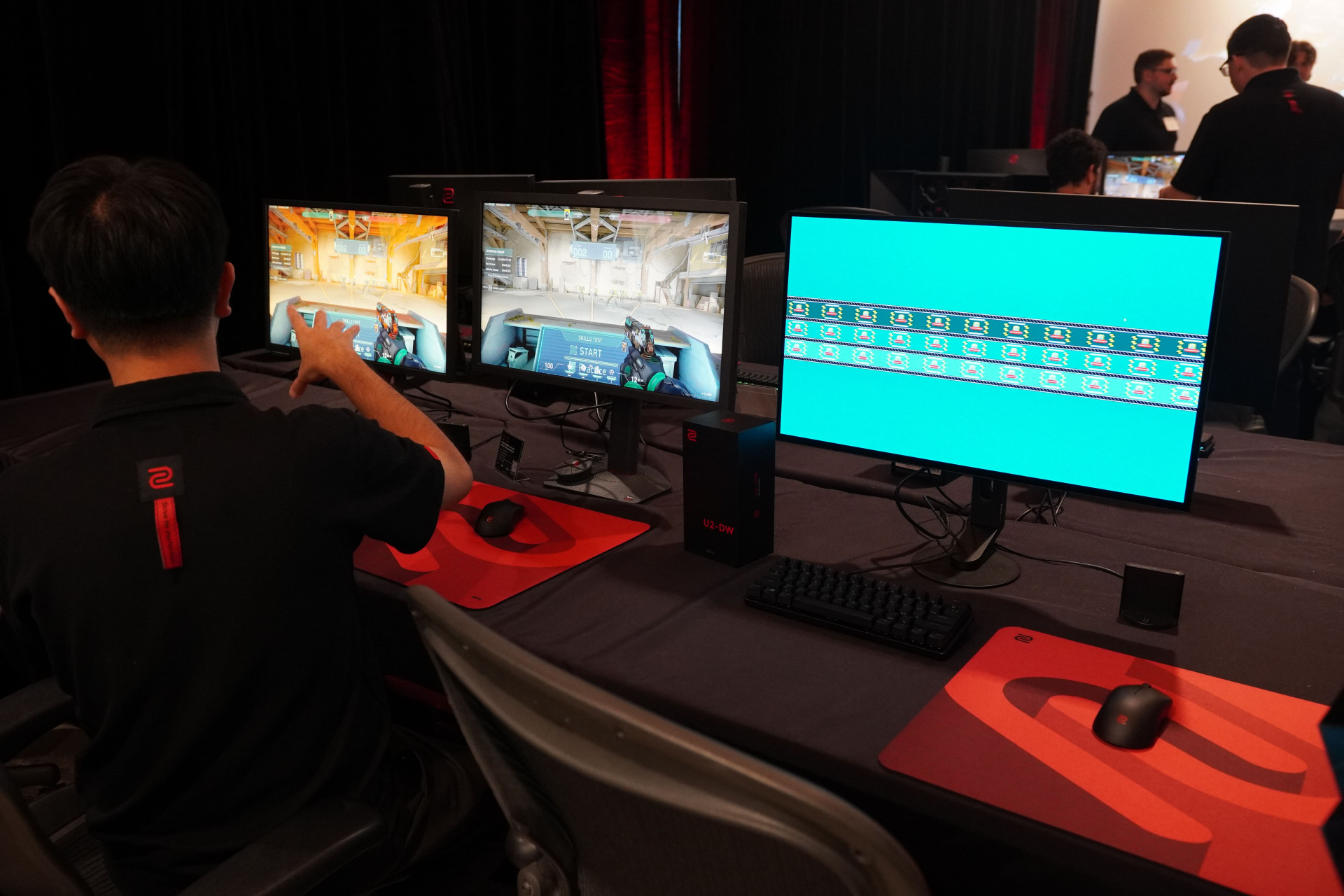
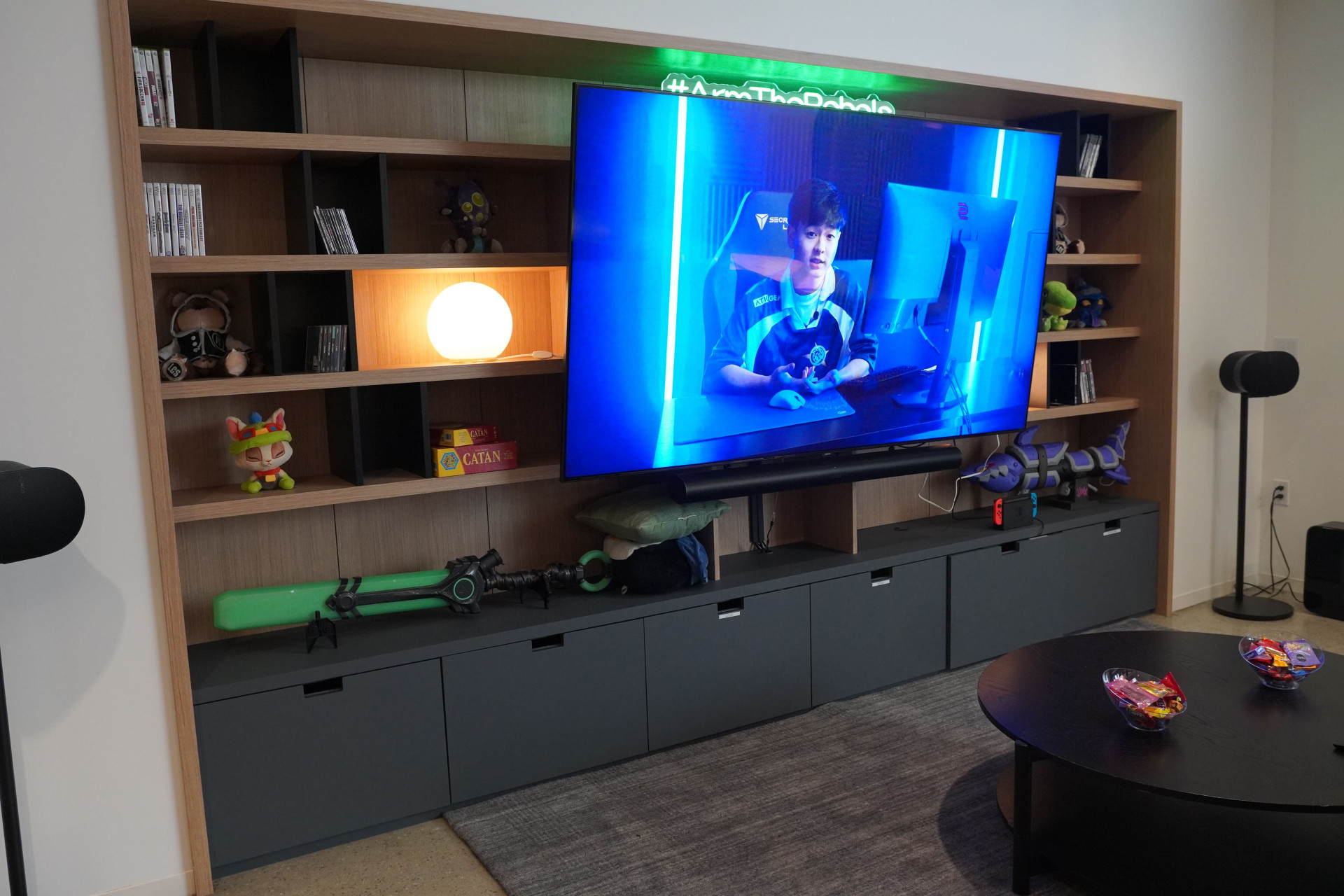
In July, ZOWIE held its first ZOWIE Day in the United States, gathering media, creators, pro players, and members of the VALORANT community at Shopify Rebellion's Playa Vista office, the same building where Team Envy practices during VALORANT Champions Tour Americas Stage 2. The afternoon included presentations from BenQ and ZOWIE leadership, a Q&A with two Envy pros, and a hands-on demo area with monitors, mice, mousepads, and audio gear.
The event itself was standard press fare. What made it interesting was how much of the company's history and internal thinking came out during it, from a logo drawn in Windows Paint to the origin of one of its best-known monitor technologies.
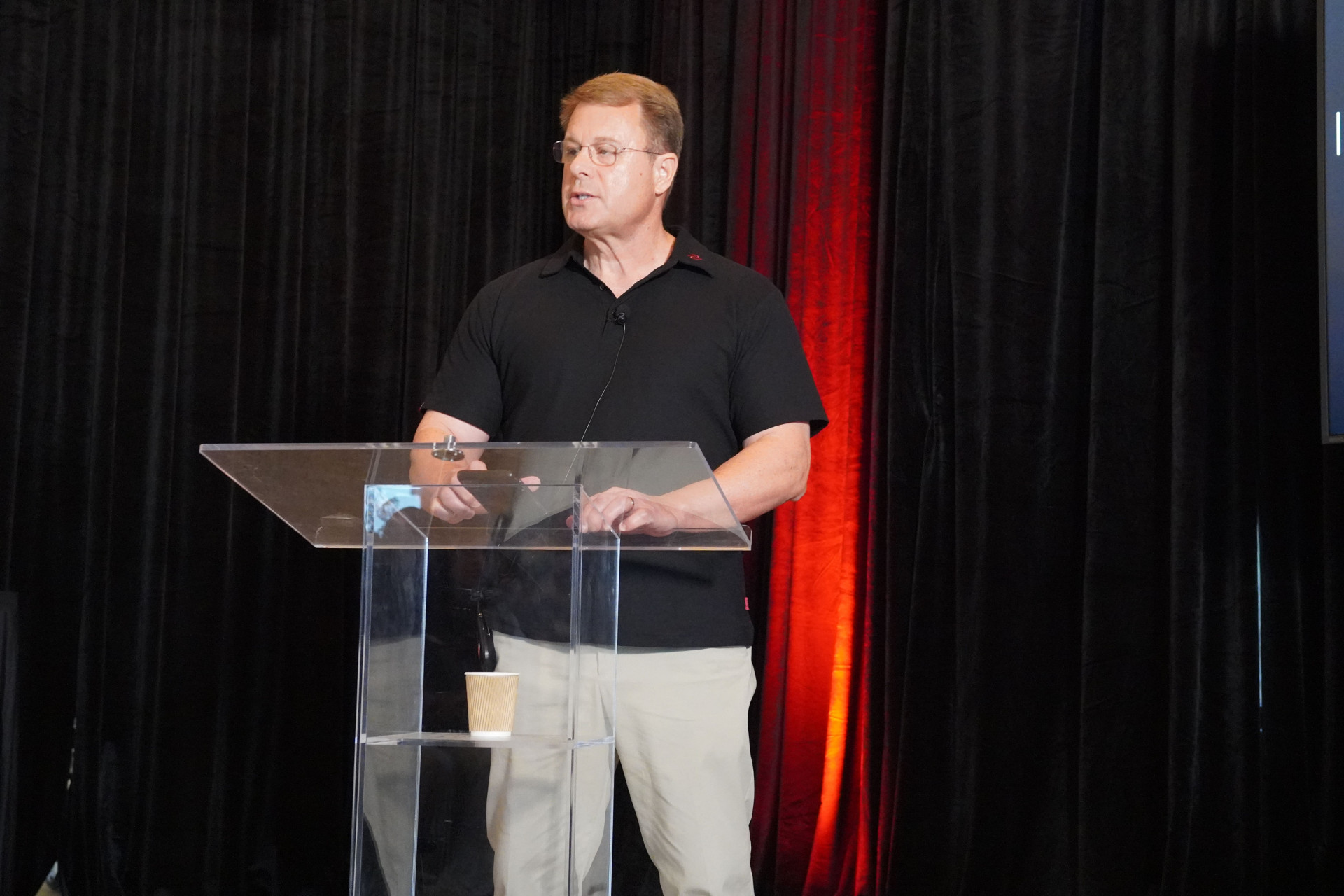
Lars Yoder, President of BenQ North America, opened the day, but did not open with spec sheets. BenQ acquired ZOWIE in 2015 to serve as its esports division, he explained, and the operating theory since then has been simple. In a team game, nobody wants to let their teammates down. Mistakes happen, but nobody should lose because their monitor or their mouse failed them. ZOWIE calls this a player-first philosophy: design based on listening, measuring, and collecting data rather than following trends, some of it gathered at the company's Sports Science Centers, where engineers track motion, response time, and even muscle fatigue.
Then he did something unusual for a hardware briefing. He quoted Tolstoy, then Maria Shriver, then Vince Lombardi, all on the subject of the company's slogan, "Strive for Perfection," and the problem that perfection is something you chase and never catch. His favorite definition, he said, comes from Friday Night Lights, and he retold Coach Gaines's halftime speech nearly in full: being perfect is not the scoreboard, it is being able to look your friends in the eye and know you did everything you could. The Permian Panthers lose that game, Yoder reminded the room. By the coach's standard, they were perfect anyway. It was an odd thing to hear at a monitor event, and it was clearly sincere.
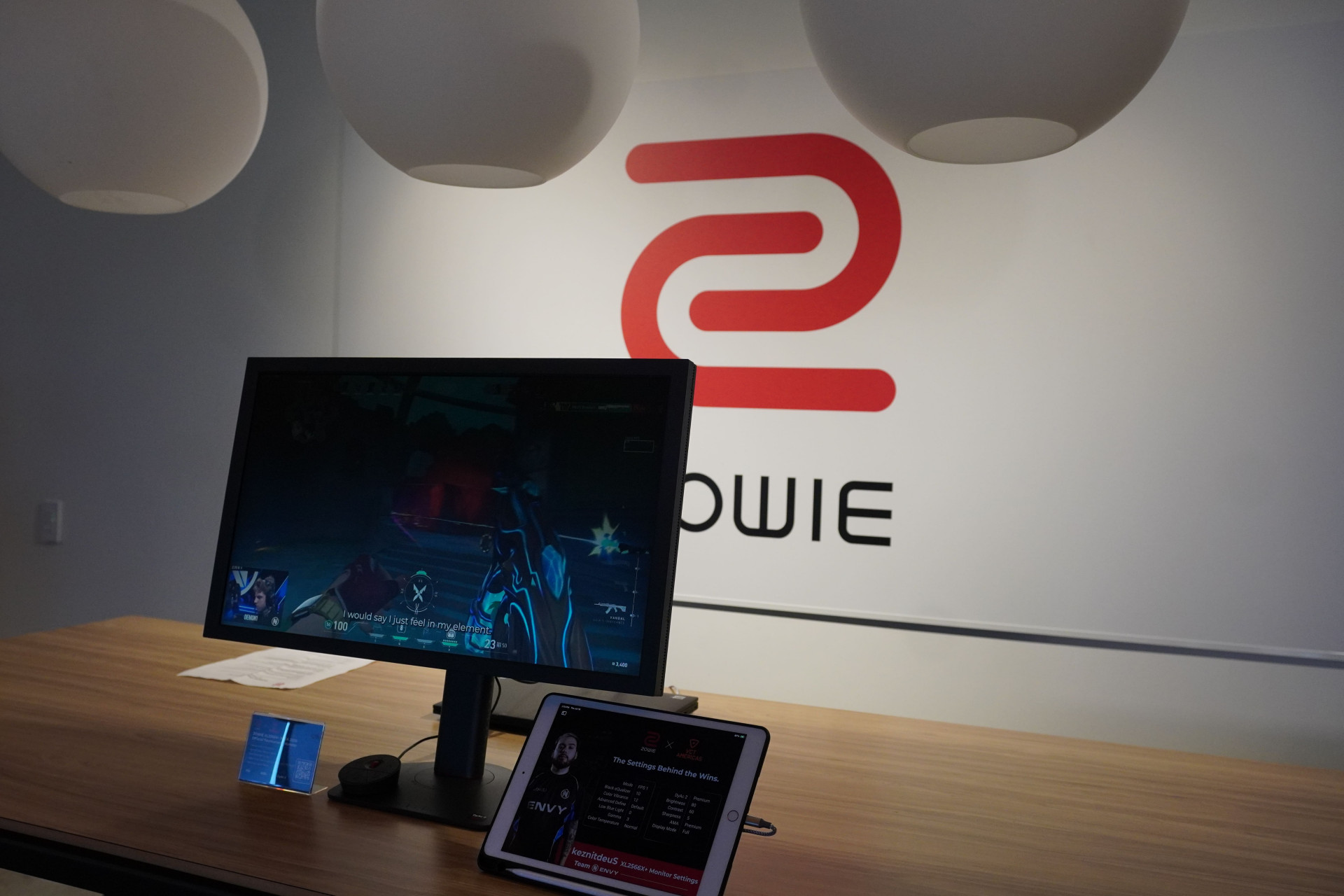
Riot Games appeared on tape to back up the partnership. In a video message, Matt Reschke, product lead for VCT Americas, said the league surveys its players on equipment preferences and found that most of them prefer ZOWIE monitors, which made putting them on the official stage an easy decision. The XL2566X+, the official monitor of VCT Americas and the screen pros play on during broadcast, was set up in the demo area a few feet away.
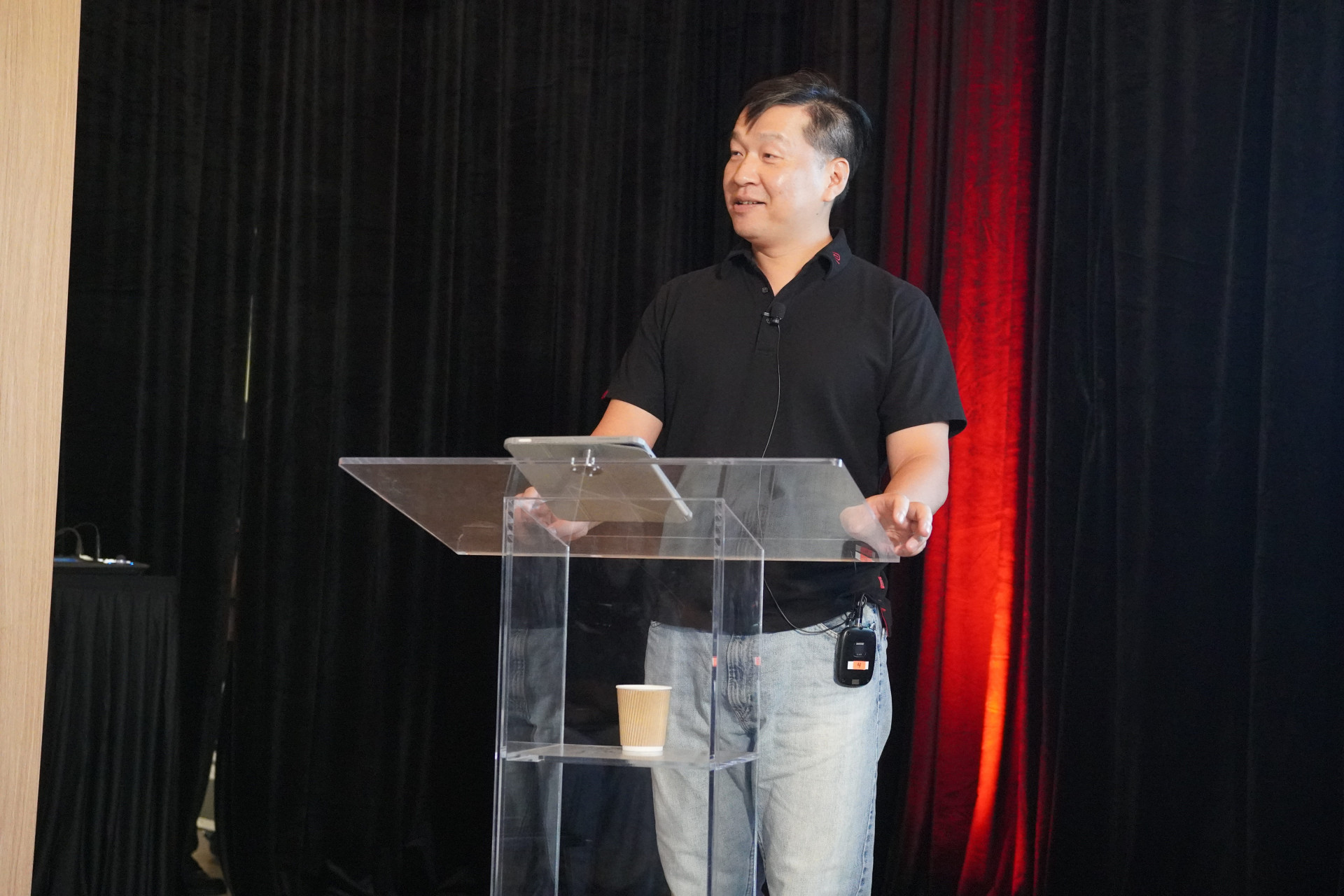
Then Chris Lin took the microphone. Lin runs ZOWIE's product division out of Taipei, was the brand's first monitor product manager, and dates himself to the generation that played Half-Life before Counter-Strike existed. He warned the audience he would have to keep checking his notes to stop himself from wandering into old memories. Then he asked a question that summed up the company's view of itself: "Have you ever believed something before anyone else did?"
That, he said, is how ZOWIE began. When the brand was founded, esports was not an industry. To most people it was just a game. There was almost no money, no attention, no resources. The original logo, a mouse sliding across a pad with two circles added so it would look less plain, was drawn in Windows Paint because they could not afford anything better. The first product was not built from scratch either; it grew out of a Microsoft mouse shape that FPS players loved and that Microsoft, for its own reasons, had stopped making. The logo was simple, Lin said. The belief behind it was not: competitive players deserve something special, because they are special.
From there Lin moved to the present. He walked through the XL2566X+ and its DyAc motion clarity technology, along with the visibility tools pros rely on, Black eQualizer for brightening dark corners and Color Vibrance for making enemy silhouettes stand out. Most of the session, though, went to new hardware. ZOWIE's new XQ series, launched just weeks earlier, runs 1440p at 360Hz with the company's new DyAc 3 backlight technology, aimed at battle royale titles where fights happen at mid and long range and the extra resolution actually matters. Side-by-side test footage showed DyAc 3 holding motion clarity against OLED panels running far higher refresh rates, with the double-image ghosting Lin calls crosstalk almost entirely gone. The series adds a color filter tuned per game, designed to cut through the colored haze of a PUBG or Apex zone so enemies stay visible, plus a companion app that stores your monitor settings on your phone. Walk into a LAN center or a tournament, tap to connect, and your settings transfer over.
The peripherals reflect how much the FPS genre has changed. ZOWIE's next generation of mice, the EW series, keeps the shapes the company spent over a decade refining, but much of the rest has been redesigned for the Valorant and Fortnite era. The mice are lighter, because modern movement demands it. The biggest change is the new split button design. ZOWIE's roots are in Counter-Strike, where clicks per second are low and what matters is a solid, stable press with a strong tactile rebound. Newer games reward rapid fire and ability spam, which favors a faster, softer click at the cost of that stability.
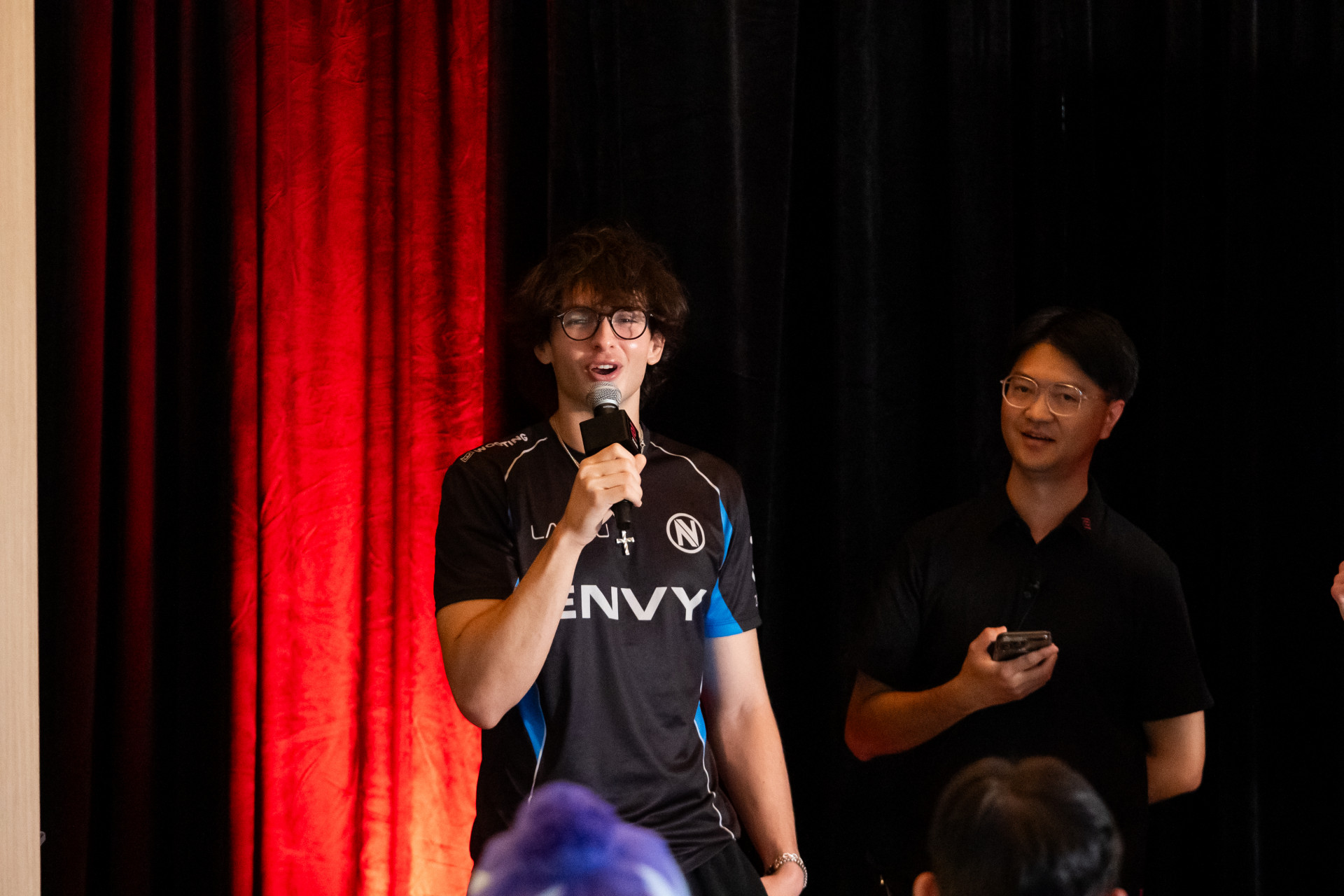
The pros closed out the formal program. Envy's Rossy and P0PPIN joined Lin on stage, and neither sounded rehearsed. Rossy started on ZOWIE at fourteen, with his first 144Hz monitor, and has never switched. Asked why he still uses the brand, he shrugged. "All the other ones suck, to be honest." He credited DyAc for making the series' hardest kills manageable, the Jett dashing across your screen, the Raze flying through the air on a satchel, and he had a pointed request after qualifying for an international event in Shanghai where a different brand's monitors were on stage: please make sure that never happens again. P0PPIN described switching from a 240Hz Alienware to a 240Hz ZOWIE as a second monitor and briefly wondering whether someone had shipped him a 360Hz panel by mistake. "ZOWIE does it different," he said. His favorite feature now is Color Vibrance; he sets enemy highlights to purple in VALORANT and pushes that channel to maximum.
In a sit-down interview after the presentations, I asked Yoder and Lin about the industry winter that has thinned sponsorships and folded organizations across esports. Yoder was unbothered. The pro player remains the same, he said, and the tournament still sets the standard. He also sees room to grow in North America, noting that roughly 30 percent of esports team revenue comes from the United States, a market where ZOWIE has not yet matched its position in Asia.
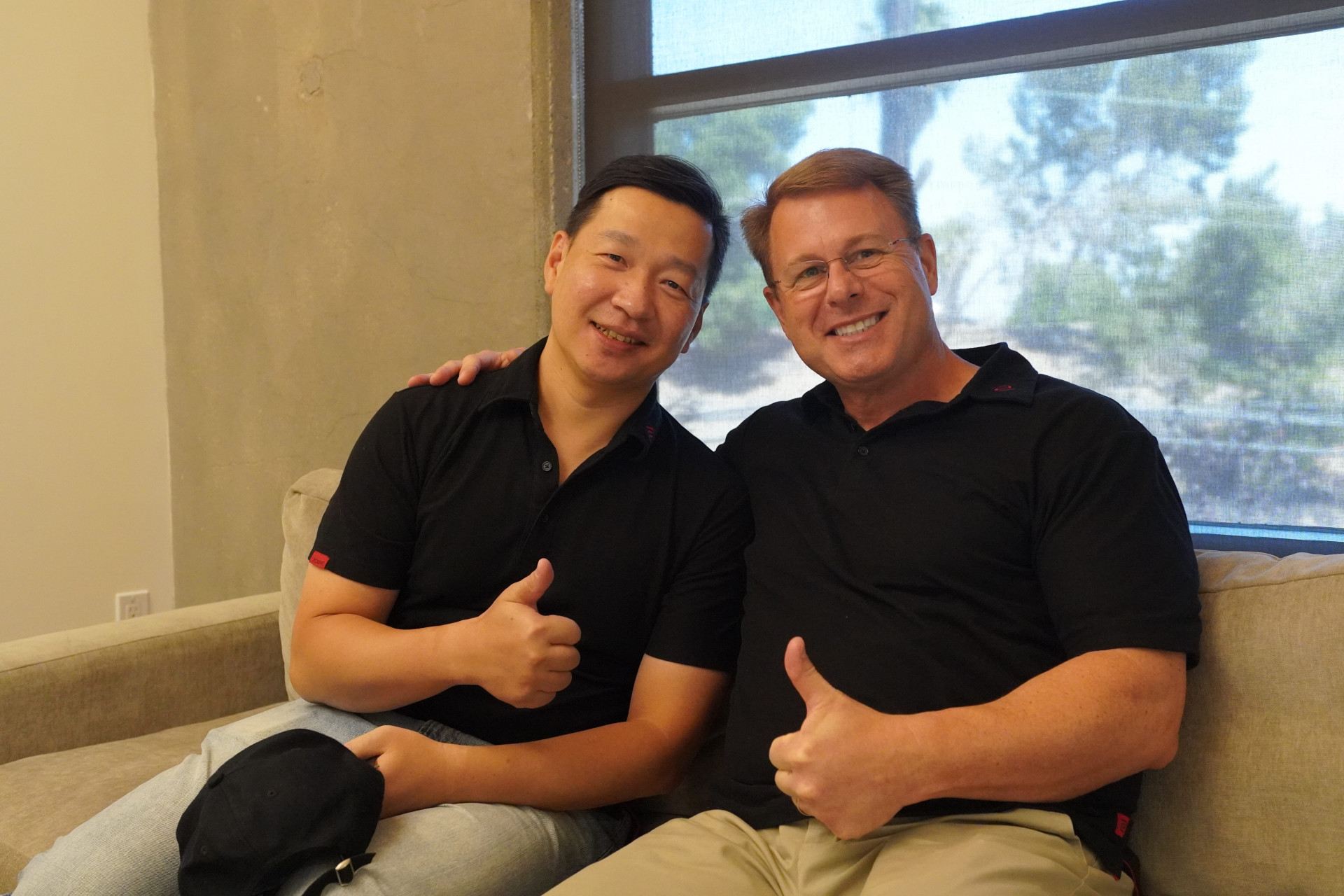
Lin's answers explained where that position in Asia comes from. The company treats players as friends, not customers or influencers, often building relationships years before a player turns pro, because that is the only way to get honest feedback from people whose entire focus is winning. He told a story from early in his career, when he was sent to the boot camp of the Korean StarCraft team StarTale with one month to pull a product feature out of players too polite to criticize anything. Panicked and pale, he watched instead of asking, and on his final day noticed the players adjusting settings to make the minimap more visible. They wanted one part of the screen brighter without changing the rest. That observation became Black eQualizer, one of ZOWIE's signature technologies. The lesson, as Lin put it, is that players never say the useful thing out loud. You have to be patient enough to notice it.
That patience now extends to physical spaces. In China, ZOWIE licenses LAN centers under a "ZOWIE Suite" standard that specifies everything from desk depth to internet speed, on the theory that as home PCs surpass cafes, the LAN center's future is on-site team competition rather than killing time. Korea, with its own PC bang culture, is next; Lin flew out the following week for a ZOWIE Day in Seoul.
Yoder ended our conversation with the numbers behind all of it: 76 percent of pro VALORANT players compete on ZOWIE monitors, a figure that rises to roughly 88 percent when you include Counter-Strike. Fifteen years ago this was a company drawing its logo in Windows Paint because nobody thought esports was a real industry. The people who thought otherwise are the ones running the demo tables now.
(Editor's Note: BenQ/ZOWIE paid for the reporter's travel and lodging to attend ZOWIE Day LA).