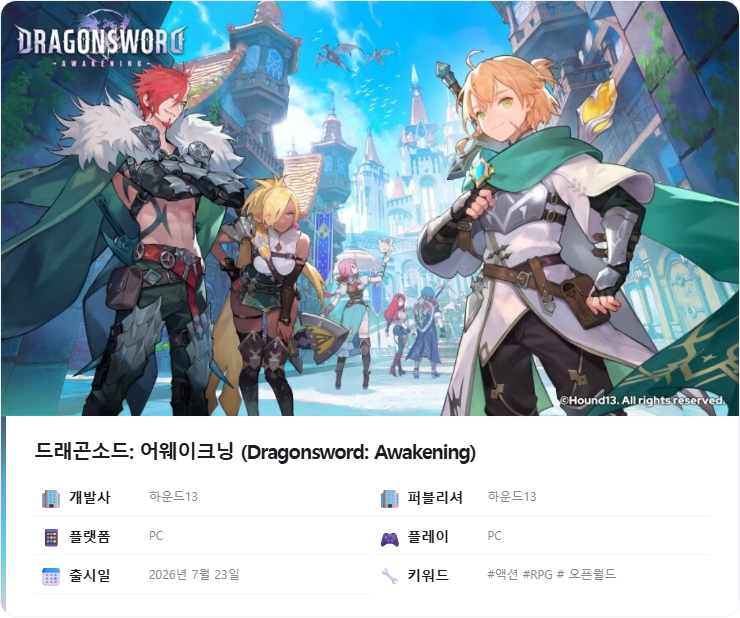
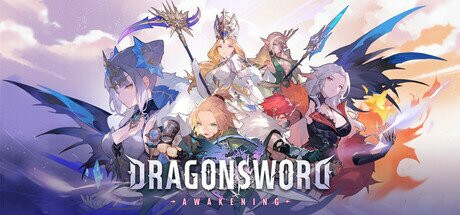
Hound 13's open-world action RPG, 'Dragon Sword: Awakening,' is set to officially launch on July 23 after a long and winding road. The reason for this turbulent journey is simple: the game was originally intended for live service via Webzen, but due to various issues—including Webzen's failure to pay the minimum guarantee—it became impossible to operate normally. Consequently, the developers decided to pivot and release it as a standalone package game.
Such background stories are, in truth, irrelevant when evaluating the game's internal elements. They don't add to the fun while you're actually playing. However, I mention this for a simple reason: this new title, which implements high-quality action in a way quite distinct from previous collectible action RPGs, was nearly cut down before it could even unfold its potential.
Of course, compared to the successful open-world collectible action RPGs on the market, 'Dragon Sword' differed significantly not only in its action but also in its graphics and narrative structure. Furthermore, its release timing happened to clash with powerful competitors, making it difficult to achieve success in its original form. However, 'Dragon Sword: Awakening'—having transitioned into a package game, albeit not by choice—focused entirely on refining its gameplay. It feels as though the foundation for its strengths to truly shine has finally been laid.
※This review contains some spoilers.
※This review was written after playing a pre-release build.
A Feast of QTE Action That Never Stops Once It Starts

As it began as an open-world collectible action RPG for mobile, the action formula of 'Dragon Sword: Awakening' is not entirely different from other collectible RPGs. The core remains 'tag action,' where you mix basic attacks and character skills, then switch to another character at the right moment to continue the combo.
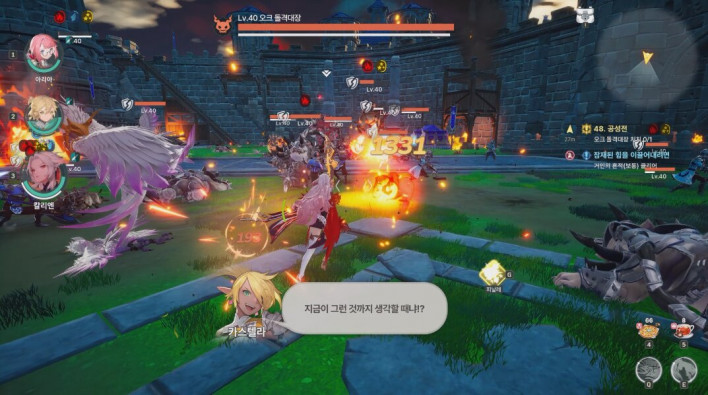
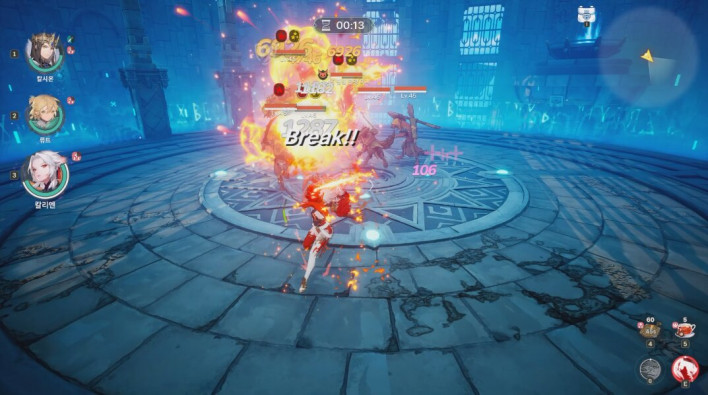

However, the details of the formula driving this tag action are quite different. First, unlike other collectible action RPGs, there is no ultimate skill. Instead, each character has two active skills that provide different performance and status effects, and the key feature is the 'Signal Skill'—a special QTE skill that triggers when those effects occur. When a status effect is triggered, the Signal Skill activates not only for the character on the field but also for those waiting to be tagged in. The action formula of 'Dragon Sword: Awakening' is to chain these skills continuously by switching characters. In short, if you effectively link active and signal skills to periodically trigger status effects, you can unleash a relentless assault as if there were no skill cooldowns.
This formula is not something Hound 13 is introducing for the first time. It is a system they refined through trial and error in their previous work, 'Hundred Soul,' and further polished through feedback from the live service version of 'Dragon Sword.' As such, the flow of action is unstoppable once it gets going. Even with the default starting party of Lute, Castella, and Aria, you can experience the thrill of a relentless assault: Castella's Q for stun -> switch to Lute for a throw via Signal Skill -> follow up with a second Signal Skill 'Relic Fall' on the downed enemy -> switch to Aria for bomb combos with Q and E -> add fire damage with the 'Switch On' Signal Skill -> switch back to Castella for a 'Battle Cry,' and so on.

In particular, some characters' Signal Skills change into a 'mount and stab' form when attacking giant bosses. If timed correctly, you can reliably suppress the boss regardless of its patterns and continue dealing damage. In the Lute - Castella - Aria party, Lute possesses a Signal Skill that allows her to mount a stunned boss. The cycle goes: build up the stun gauge with Lute's Q -> switch to Castella to increase stun and reduce super armor with Q -> break super armor with the 'Battle Cry' E-skill -> stun with the Signal Skill -> mount and suppress with Lute -> switch to Aria to deal damage with Q, E, and 'Switch On' -> switch back to Lute. The combos flow seamlessly.

As you progress through the story and recruit new heroes, researching new party compositions based on each hero's effects is another joy of 'Dragon Sword: Awakening.' For example, Calcion, obtained by clearing the main story, specializes in fire and airborne effects, making him a great fit for a fire party with Calien, or an air party mixed with Seris (specialized in freeze and air) and Reina (dedicated to air).


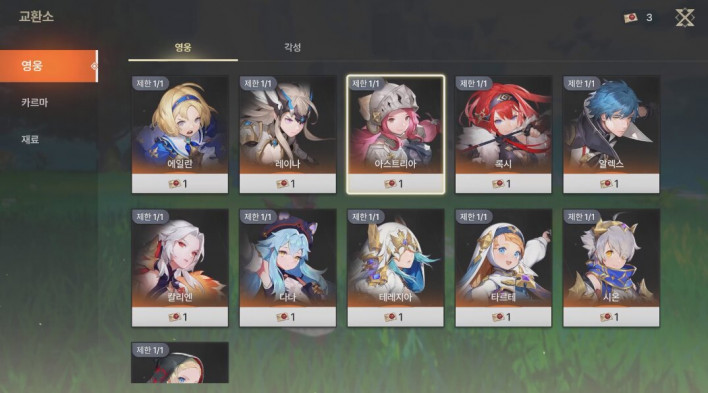
This potential existed before, but because heroes were obtained via gacha, it was difficult to build the exact party you wanted. Now, as a package game, you can obtain heroes through story rewards or by exchanging 'Invitation Letters' earned from in-game quests. This allows you to implement your desired action style with 100% reliability. Consequently, the game presents its unique action style much faster and more clearly than before.
Of course, with such an aggressive attack system, the invincibility window for dodging is very short, and there are no 'just dodge' mechanics like in other collectible RPGs. There is no parrying either, so you have no choice but to dodge enemy attacks by running, or stop them by triggering status effects before they hit you. Occasionally, you can also dodge by jumping.

In the previous version, there was feedback that these movements felt sluggish and had long air-time, but in this package version, the controls have been improved so that almost every action flows without hesitation. Furthermore, to support smooth controller play, a lock-on feature has been added, along with detailed options for auto-tracking and aim assist. While the dash-jump used in puzzle dungeons is slightly underwhelming, the combat feels like the QTE action 'Dragon Sword: Awakening' intended has finally blossomed. Sweeping away mobs with skill chains and smoothly transitioning through giant boss patterns with mounts before resuming combos is a rhythm that, once you're hooked, keeps you coming back for more.
In high-difficulty content like the Tower of Trials or Raids, enemy patterns become quite fierce. You have to calculate the short invincibility windows precisely to survive and maintain your offensive, keeping you on the edge of your seat. While the Tower of Trials is a solo challenge, Raids can be played solo or with up to three people, making it quite fun to invite friends or acquaintances via invitation codes to build a party and tackle them step-by-step.

Beyond the Initial Threshold: A Story Moving Toward Classic Fantasy Sensibilities
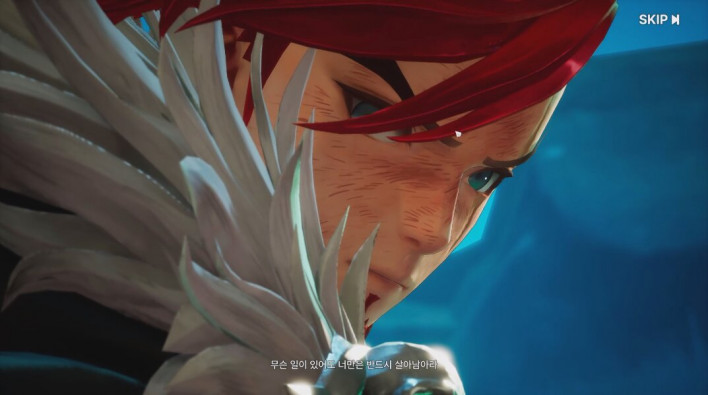
Personally, I don't discuss the story in detail unless there's a major issue, as the weight one places on it and the evaluation of the story itself vary greatly from person to person. Instead, I usually examine technical aspects, such as how well it adheres to the genre's expected narrative conventions, or how the direction is structured to convey the developers' intentions.
Dragon Sword: Awakening' actually started with a disadvantage in this area in its previous live service version. Since the success of 'Genshin Impact,' open-world collectible RPGs with cel-shaded graphics have primarily focused on stories where the protagonist—the user's avatar—takes the lead alongside characters in that world. This format, where new companions are presented via gacha in every version, continues to this day. In contrast, this game puts forward a separate protagonist named Lute and focuses on the story of the 'Johnny Mercenary Group' rather than Lute's personal journey.
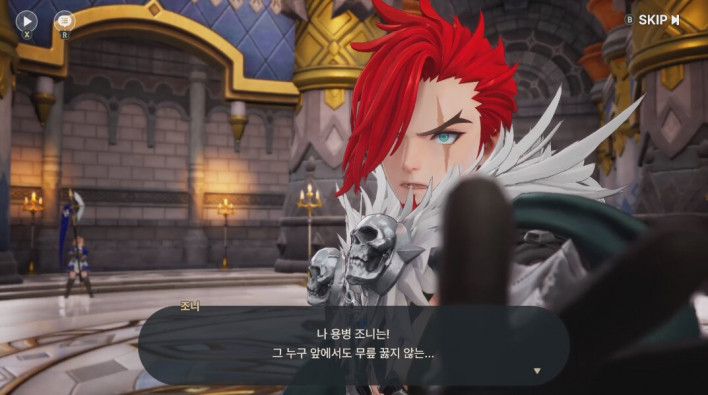
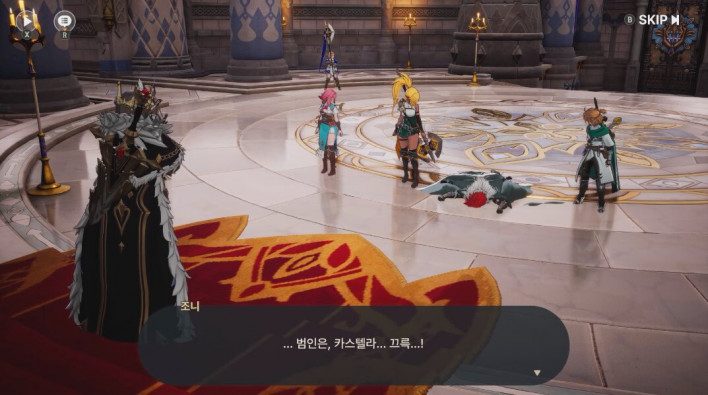
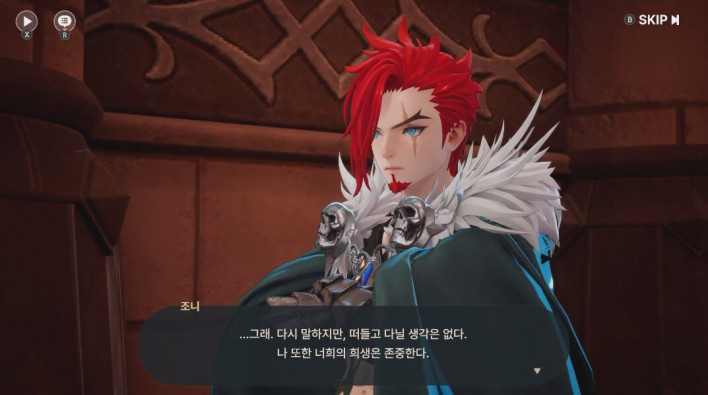
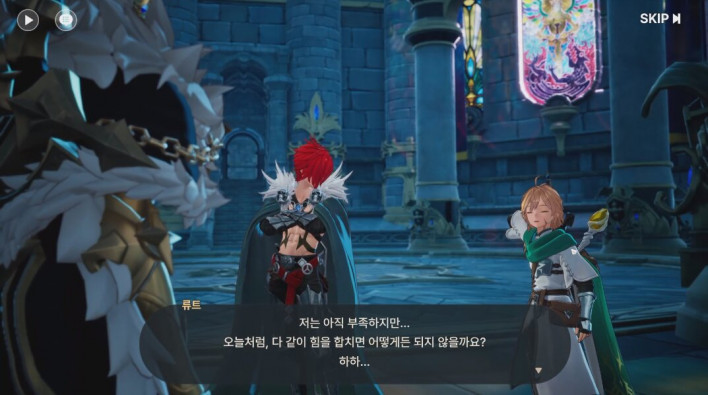
In particular, the mercenary captain 'Johnny' is a very classic troublemaker and headstrong character. He is full of baseless confidence, stubborn, and always acts before thinking, causing unnecessary trouble. Consequently, the early game often featured a dynamic where the timid Lute was dragged along helplessly. Naturally, this was disappointing for users who expected a story where the protagonist takes the lead and builds bonds with companions.
The reason users expected such a narrative in open-world collectible RPGs is simple. Obtaining characters requires significant effort and sometimes money. It is not unreasonable to hope that the characters you spent resources on are attractive, fit your tastes, and are reliable companions to the protagonist leading the story. Of course, Johnny does show his worth later on, but it was questionable whether players would stick around long enough to see that development.
By moving away from that framework—even if not by choice—'Dragon Sword: Awakening' can now be viewed from a slightly different angle. It follows the classic fantasy cliché of a timid protagonist with a hidden past joining a mercenary group that, despite causing trouble, is quite skilled, and setting off on an adventure to save the continent from crisis. The title 'Dragon Sword' itself refers to heroes who defeated dragons that plagued the world. Thus, it was always intended to be a story about heroes fighting against the dragons threatening the Orbis continent and the world.
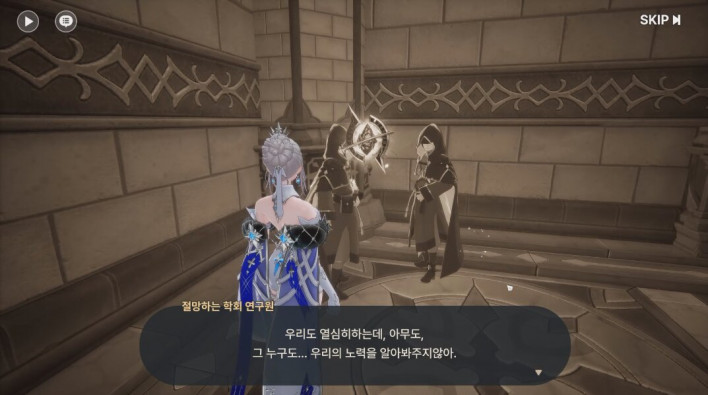
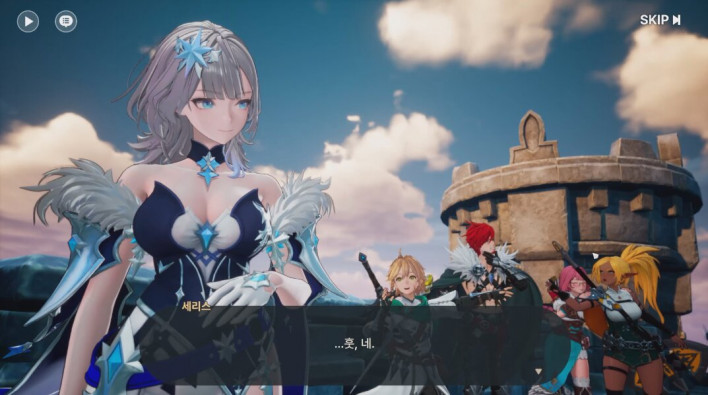
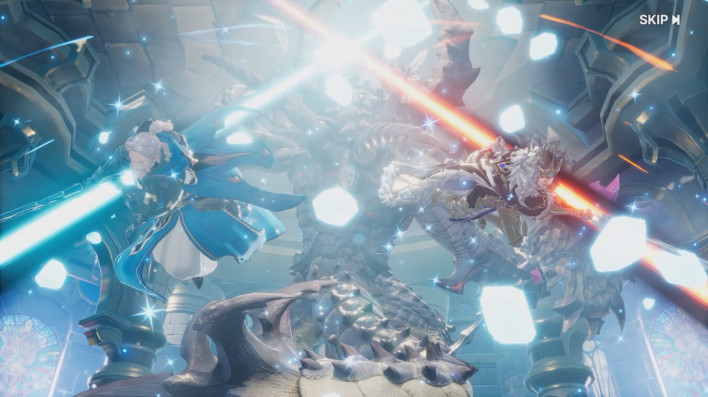
To match this, a cutscene of the mercenary group nearly being wiped out while fighting a dragon was inserted at the beginning to increase the impact. It might feel sudden to new players, but it clearly established that the game would tell a story related to dragons, as the title suggests. Indeed, after the initial chaotic adaptation period of the mercenary group, the story moves into quests related to dragon worshippers and eventually the dragons themselves. It progresses through the classic fantasy tropes—the ancient war between the goddess Organa and the Demon Dragon, the True Dragons born from the Demon Dragon's remains, the six heroes who defeated them, and the return of the True Dragons—at a very fast pace.
Previously, the narrative couldn't fully land because progress was gated by account level limits, as is common in other collectible RPGs. Since the story was already cliché, the pacing felt broken, and the game lacked the momentum to sustain interest in areas like field exploration or character backstories. Now that the story flows continuously, the game's structure of pushing through classic clichés finally stands out.
As you roam the fields, the flow of movement naturally leads you to regional requests, hero requests, and 'bond requests' involving characters you meet frequently. It completes a structure where you view the world from an observer's perspective while occasionally digging into the backstories of your companions, gradually developing an affection for exploring every corner of the world.
A Growth Journey Through Exchange and Exploration
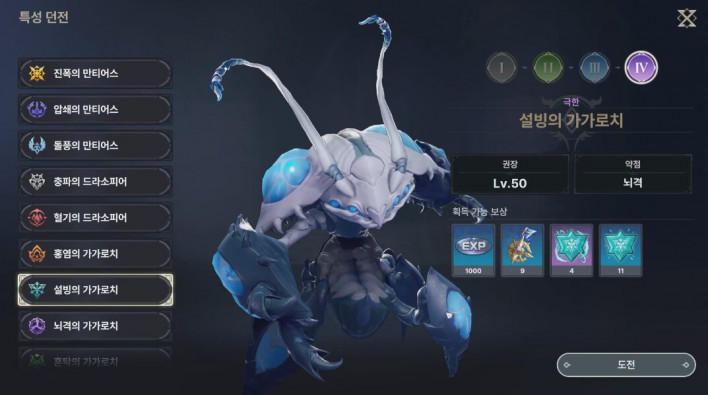
When a live game transitions to a package game, the biggest concern is whether the play patterns have been adjusted accordingly. Package games are generally designed for a single, continuous playthrough, whereas live games consider daily user engagement. Therefore, the character growth methods and level design are quite different, and domestic developers have often found this transition to console package games unfamiliar.
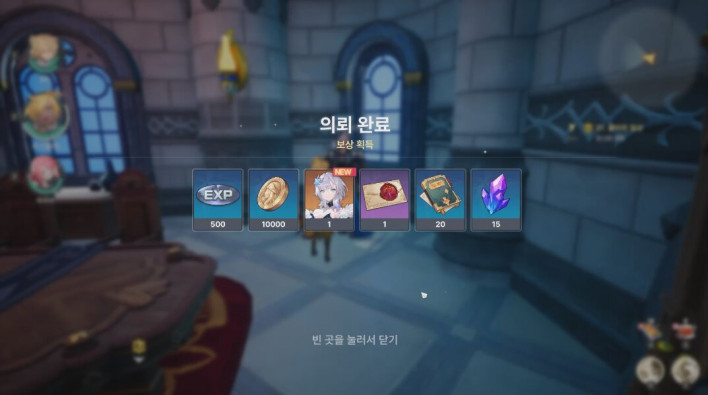
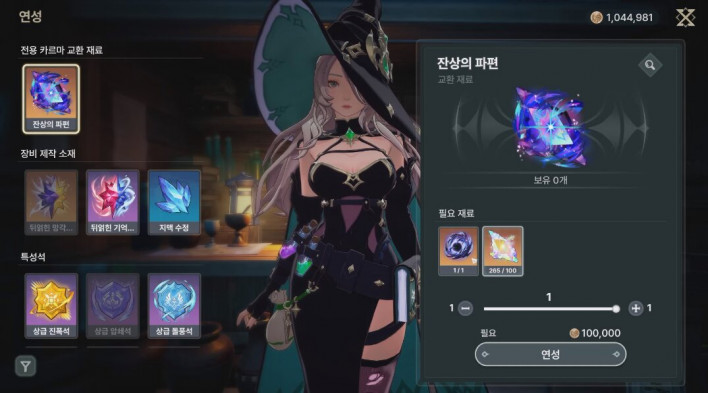
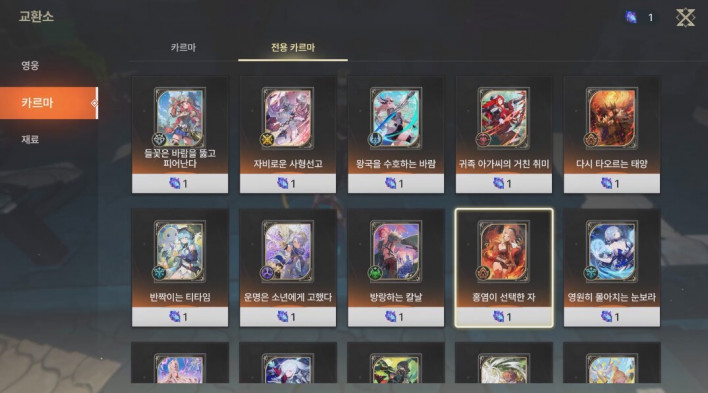
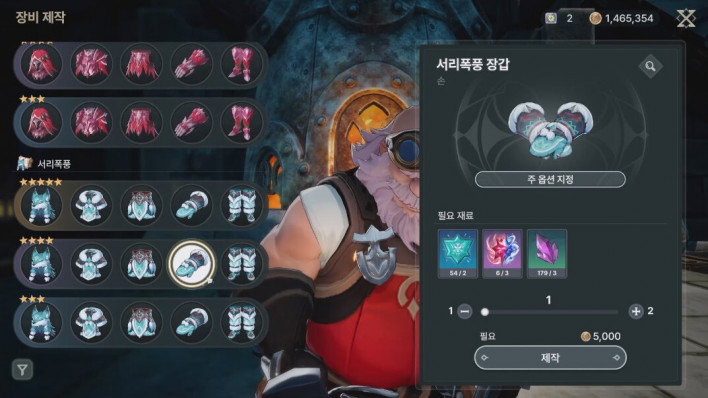
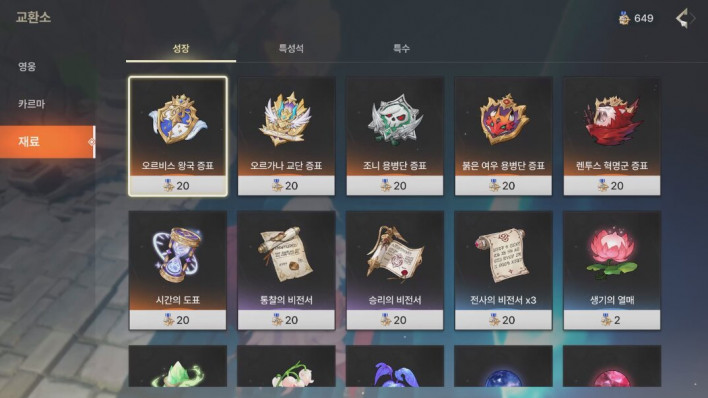
The basic structure of 'Dragon Sword: Awakening' hasn't changed much from the live version. It follows the familiar open-world collectible RPG method of farming set items called 'Relics' and various EXP resources in dungeons, while acquiring additional materials and skill materials by exploring fields or defeating bosses. Instead of simply removing stamina limits, the developers ensured that exchange materials called 'Seals of Adventure' are guaranteed drops to reduce the fatigue of repetitive farming. This minimizes unnecessary repetition for character growth. The acquisition of exclusive equipment, 'Karma,' has also been successfully changed to a system where rewards from World Bosses or the Tower of Trials are refined and exchanged.
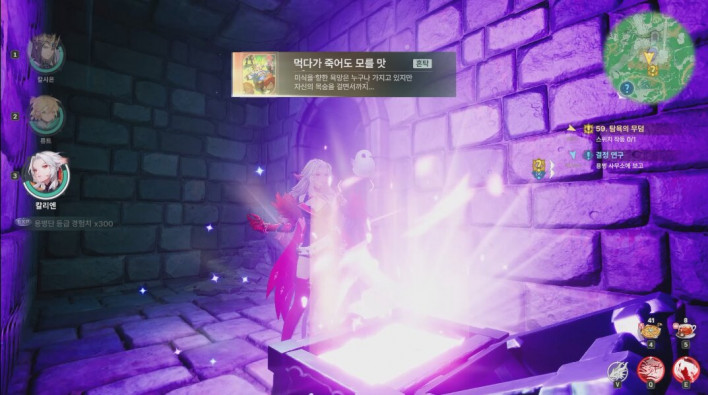
Beyond this 'grind,' the quality of field exploration is also key for an open-world game. In this regard, 'Dragon Sword: Awakening' is slightly lacking as the content isn't fully fleshed out. There is no fishing or similar activities; it's mostly about exploring the field, solving various gimmicks, and finding chests.
Compared to the diverse action utilizing various status effects in combat, field gimmicks are somewhat monotonous. They mostly involve placing, pushing, or throwing objects, or solving simple word puzzles. While there are occasional mini-games or dungeon challenges to activate Eona's legacy, they are mostly similar types of challenges. Although the game adds flavor with hidden dungeons or treasure maps, there isn't a huge difference in the process.
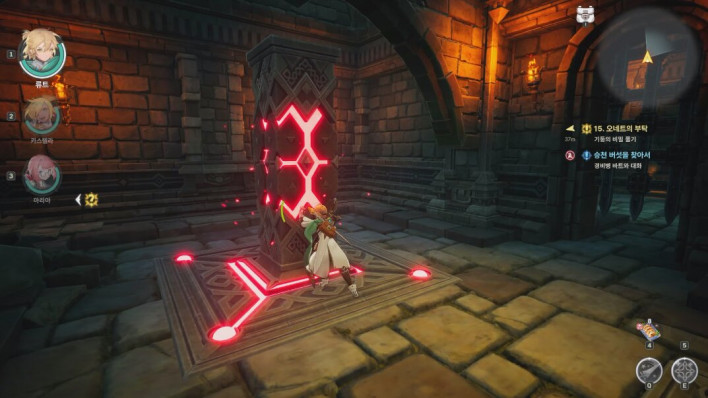
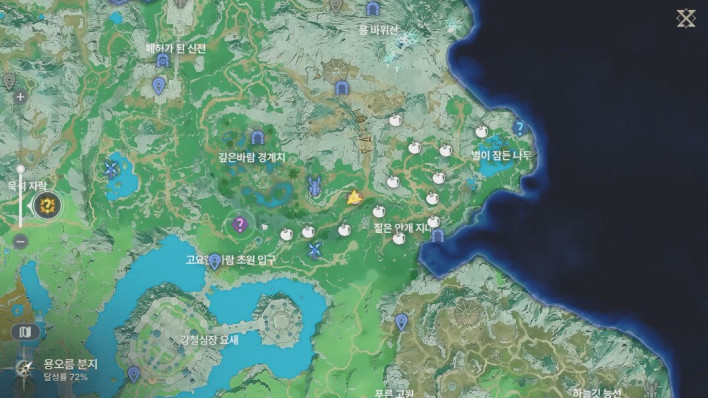
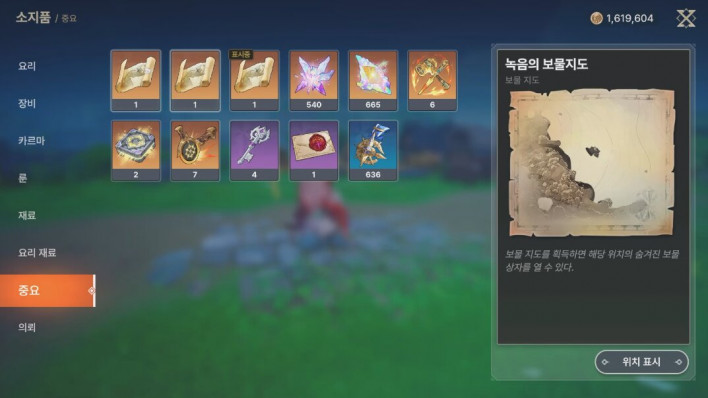
To prevent the game from becoming dull due to this monotony, 'Dragon Sword: Awakening' significantly increased the density of treasure chests and added elements related to 'Familiars'—the key to field movement—to achievement rewards. It encourages players to wander off the beaten path when they see chests, leading them to discover new things. While aimless wandering is fun, it doesn't sustain long-term play, so the game uses achievement rewards to guide players toward clear goals.
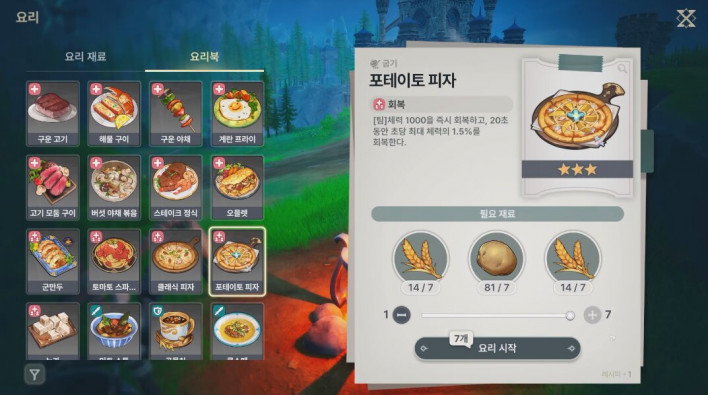
It is also notable that the game naturally fills in various gaps through side quests. For instance, recipes are not unlocked unless you try making them with various ingredients yourself, but to reduce that hassle, 'starving adventurer' quests are placed in various locations to help you learn the recipes. The design of quests and rewards is quite organic, such as finding high-grade treasure chests in blind spots that are easy to miss while doing regional quests.
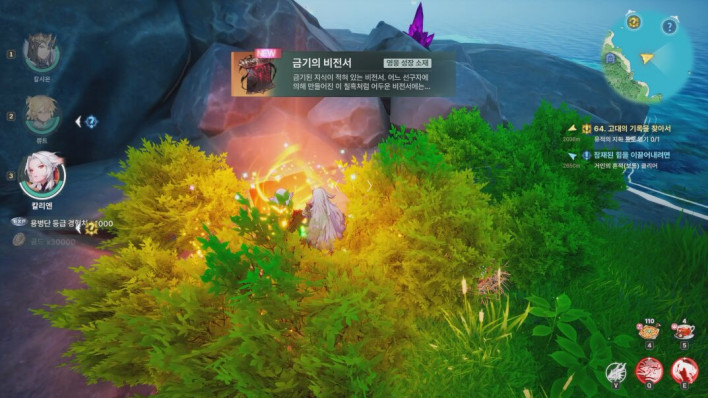
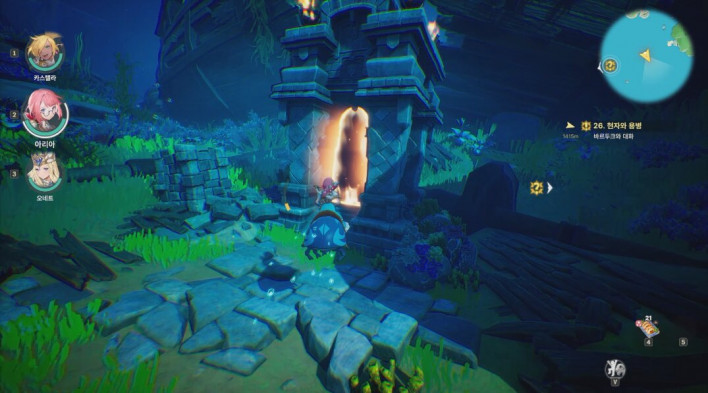
Furthermore, the hidden elements placed throughout the world, considering the high degree of movement freedom, were impressive. You can climb almost anywhere and dive quite deep when riding a Familiar, and the game takes advantage of this by placing treasure chests and even challenge dungeons in the deep sea. While side quests leading from such hidden elements are somewhat lacking, the design itself is decent enough that the process of obtaining materials for character awakening leads to exploration rather than simple repetitive labor.
Dragon Sword, Nearly Cut Down: May Its Potential Blossom in the Package Format
In truth, 'Dragon Sword: Awakening' hasn't changed drastically from the original 'Dragon Sword' due to circumstances. It has refined the controls, added features for controller support, rearranged some cutscenes, added a few hero requests, significantly increased stamina, added more treasure chests and hidden rewards, and reorganized the business model to fit a package game. In doing so, the potential that 'Dragon Sword: Awakening' originally possessed began to emerge, leading to achievements like being in the TOP 50 most-played demos at the Steam Next Fest and reaching 300k Steam wishlists with just one hour of main story content.
Dragon Sword: Awakening,' which refines this further, has successfully transitioned into a package game. By designing the game to minimize unnecessary repetition while increasing field density and quest weight, it encourages players to explore the field and enjoy quests rather than just grinding. Additionally, the high-quality switching QTE action can now be fully experienced from the start, as characters are now obtained reliably without burden. The story progression, which moves as quickly and smoothly as the action, also adds a sense of speed to the gameplay.
Of course, as it was originally made for live service and pivoted midway, the volume and density of 'Dragon Sword: Awakening' are still slightly lacking to be called a 'full' package game. The field gimmicks and quests, implemented with reference to open-world games with high freedom, are quite monotonous, and the narrative following the classic clichés of a troublemaking mercenary group was mostly within the expected range. While the developers attempted to cover this with direction, the classic feel was too strong to provide a major impact.
However, the high-quality action and the play tempo built upon it were at a surprising level. Although it might be an exaggeration, it would be difficult to find an action RPG in recent years that has systematically refined such a relentless switching QTE system. It is even rarer to find one that doesn't just spam skills but performs diverse actions like throwing or launching enemies for air combos, or mounting and stabbing like in hunting action games. Added to this is the unstoppable journey of the Johnny Mercenary Group, and the story moves quickly toward the climax without any hurdles. The 'tasty' experience of the combat remains consistent. Moreover, given that it is priced at half-price and offers over 15 hours of gameplay, the value for money is quite significant.
Although it has been refined for a package format, the story of 'Dragon Sword: Awakening' is not over yet. One attack by the True Dragons has been repelled, but reports of other True Dragons are coming in. And among the many regions, only Orbis has been revealed; it is hard to say for sure when other regions will be added. A floating island DLC has been announced, but it is too early to be 100% certain about what comes after. However, as the game has laid the foundation to wrap up the story and build anticipation for new narratives and action, I look forward to seeing the potential of a new open-world collectible RPG that unfolds in the form of DLC rather than the old gacha model, finally blossom.
- Relentless switching QTE action
- Growth and farming tempo supported by exchange and exploration
- Field gimmicks that simply bring the fun of finding rewards
- The early threshold: Johnny's relentless, headstrong story
- Insufficient introduction to switching QTE chains and combinations
- Mini-games where similar types are repeated
Review Platform: PC (1)

Sort by:
Comments :0