Sports Interactive recently explained the UI overhaul process and future direction of 'Football Manager 26' (FM26) directly to its Korean fans.
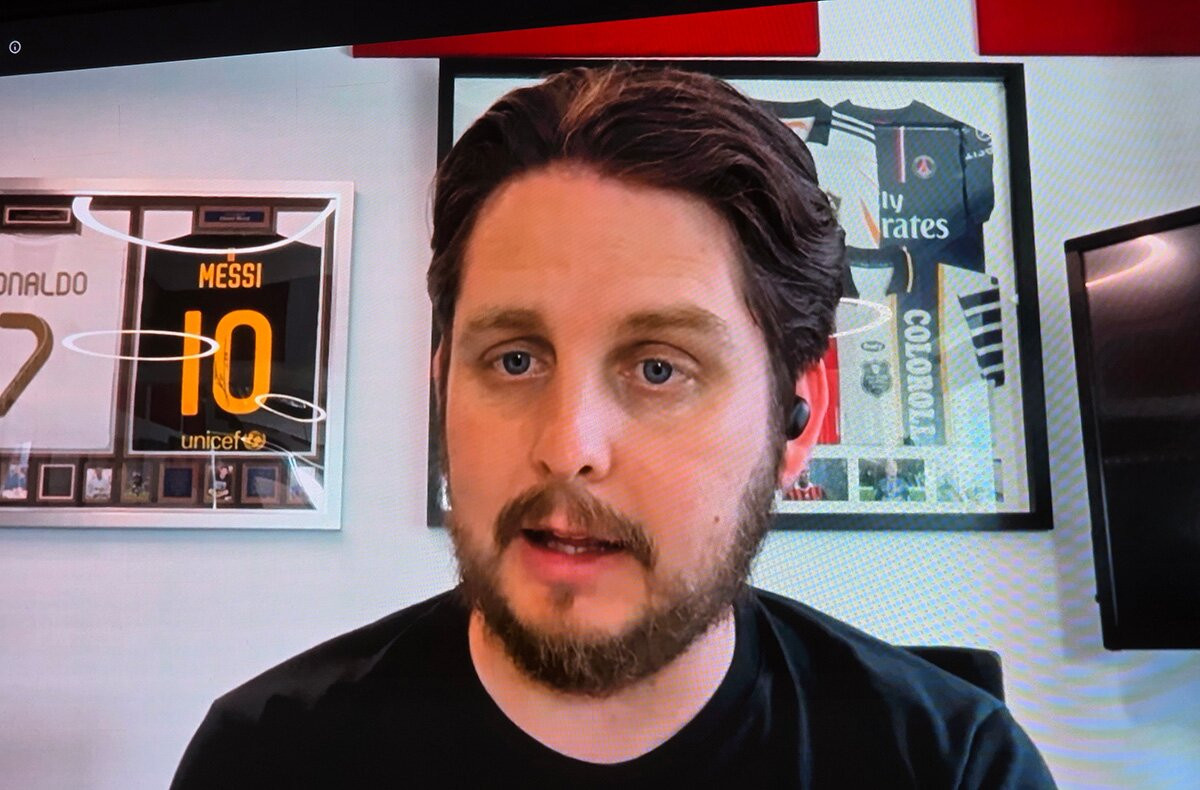
On Saturday, July 11, SEGA Publishing Korea hosted the 'FM26 Manager Meetup' at Gen.G GGX in Jung-gu, Seoul, featuring an online interview with Ant Farley, Senior Feature Designer at Sports Interactive. Farley addressed the most difficult decisions during development, remaining UI challenges, plans for match engine improvements, the researcher verification system, and the direction of future titles. Here is a summary of the Q&A.
Q. 'FM26' saw some radical changes. What was the most difficult part of the development process, and which decision sparked the most internal debate.
"This UI overhaul was a process of stripping away 30 years of accumulated complexity and redesigning it from scratch. There was constant debate throughout development, but the biggest point of contention was our attempt to change the 'FM' communication interface to mirror the Western messenger app 'WhatsApp.'
Just as people in Korea use 'KakaoTalk,' most Western users rely on 'WhatsApp.' We saw it as the most familiar UI for them. Since real-life managers communicate heavily via smartphones, we wanted to translate that experience into the game. However, once we implemented it, we realized 'FM' wasn't a game suited for mobile-style communication. We realized this late in the game and began the work of reverting to the current UI, where news is received via email on a laptop.
Because we had to scrap a system we had worked so hard on to return to an email-based format, the schedule became extremely tight. Ultimately, we concluded it was a better system than the previous one, and we confirmed that in practice. While the quality wasn't perfect, there was an internal consensus that it was at least a relief we didn't move toward a mobile-centric design. It was the right decision, but it wasn't easy to abandon, given how much time had already been invested in design, development, and QA for the mobile approach.
Q. Even after more than a year of updates following the major UI overhaul, many gamers still feel the UI and user experience are insufficient. Why hasn't this been resolved.
" The biggest reason we changed the UI was that we had to. Transitioning to the Unity engine made it nearly impossible to keep the existing UI. To leverage the strengths of Unity, we had to tear down the old interface and build a new one.
Designing, implementing, and testing the entire UI was one of the studio's largest projects. We faced many difficulties and learned many lessons along the way. In particular, while we viewed the tile system as a powerful feature during the planning phase, it created more issues than expected regarding usability and accessibility. We have been incorporating feedback since launch, and we plan to further evolve the UI in 'FM 27' based on this experience.
Q. When playing a single save for a long time, the match content and AI tactical management feel repetitive. It gives the impression of following fixed rules rather than responding flexibly to situations. What are your plans for developing a more realistic match engine and AI.
" One of the great appeals of 'FM' is that it can be played endlessly. It is a game where your own unique football story continues. While it is true that certain tactics or match patterns often repeat, the same thing happens in real-life football.
That doesn't mean we are stopping development on the match engine and AI. We are improving the match engine year-round, and we already have a roadmap for key improvements. The studio's goal is for 'FM' to remain the most realistic football simulation available. As always, we are collecting user ideas. I want to reiterate that even if it feels inconvenient, leaving feedback on our official forums ensures it will be reviewed.
Q. 'FM' uses a global network of researchers to survey and reflect player data. How do you evaluate the potential of players in leagues with relatively lower profiles, like the K-League? If a local researcher says, "This player has the talent to be the next Lamine Yamal," how much of that is reflected?
" We have researchers all over the world, and we are proud of the results. 'FMDB Pro' is an asset trusted even by real-world football clubs.
Even leagues that might be considered peripheral compared to Europe go through multiple stages of verification. First, a local researcher conducts an initial assessment. If they are confident that "this player will be the next superstar," we assign attributes and potential accordingly. Then, the head researcher managing that region reviews the data for a second verification.
Because researchers and head researchers have built trust over a long period, the process of exchanging opinions and making adjustments is natural and encouraged. Once it passes this, the internal research coordination team and QA team conduct a third verification. Because of this iterative process, there is a genuine opportunity for a superstar-level wonderkid to emerge from Korea. It's just that such a player hasn't been identified yet. I expect we will find not only the next Lamine Yamal but also the next Son Heung-min in the K-League.
Q. When asked why they enjoy 'FM,' players often point to the ability to actually become a manager. Are there plans to expand deeper into player relationships, club culture, locker room atmosphere, and the psychological elements of management in the next title?
" This is an area our users care about deeply. We have a lot of plans for this. Personally, I see this as the area with the greatest potential for 'FM' to evolve.
The ability to manage people is more important than the ability to manage tactics. You can see this by looking at legendary real-life managers. Sir Alex Ferguson of Manchester United, who was mentioned often here today, is a prime example. He was an excellent people manager and sometimes left tactics to his coaching staff. Yet, he remains one of the greatest managers in English history.
As a Senior Feature Designer, I manage ideas from the community at the development team level, and I am in charge of most of our future plans. I know what we are preparing, but it is difficult to disclose it right now. The most important thing when developing new features is listening to people in the real football world. That is why we regularly hold talk sessions with football professionals, including managers, to gain experience-based insights.
Q. The 'FM' series often sees bugs discovered and fixed after release, leading to a gap in quality between the launch build and updated versions. What are the practical difficulties between releasing a highly polished product from the start versus fixing it after launch?
" 'FM' is a game with massive data, covering not just countries but leagues and clubs, so it is somewhat inevitable that new issues will be discovered after launch. That is why we are working to make our bug tracking and fixing system more robust than it is now. Just looking at the multiple updates we released in the months following the launch of 'FM26,' you can see that we take all bugs seriously and strive to improve them as quickly as possible.
Our goal is to launch with zero bugs, but there is no such thing as "absolute." In software development, a flawless launch is realistically difficult. That is why we have improved our process over the last few years to have the QA team participate in development from the planning stage. We also plan to expand beta testing with direct fan participation, and we will share more details with Korean users in the future.
Q. Looking 10 years ahead, what kind of game do you want 'FM' to be? What is the ultimate goal you want to achieve through the series.
" The goal is always to create the ultimate football world simulation. That will never change. To do that, we must remain closely connected to real-world football. We must learn from real football, sometimes influence it, and evolve in line with the constantly changing football industry.
Functionally, we have a clear direction, and we have organized a vast array of ideas for both new features and improvements to existing ones. The reason we introduced save compatibility in 'FM 24' was to allow users to carry their football world into 'FM26.'
Business-wise, we are constantly exploring new technologies and platforms so that more people can enjoy 'FM.' At the same time, as we build a development culture where the team and the community are closer, user feedback is crucial. Our goal is to remain a fun game not just in 2026, but in 2056 as well. Ultimately, all these efforts are about building 'FM' together with our users and enabling everyone to realize their own version of football.


Sort by:
Comments :0